


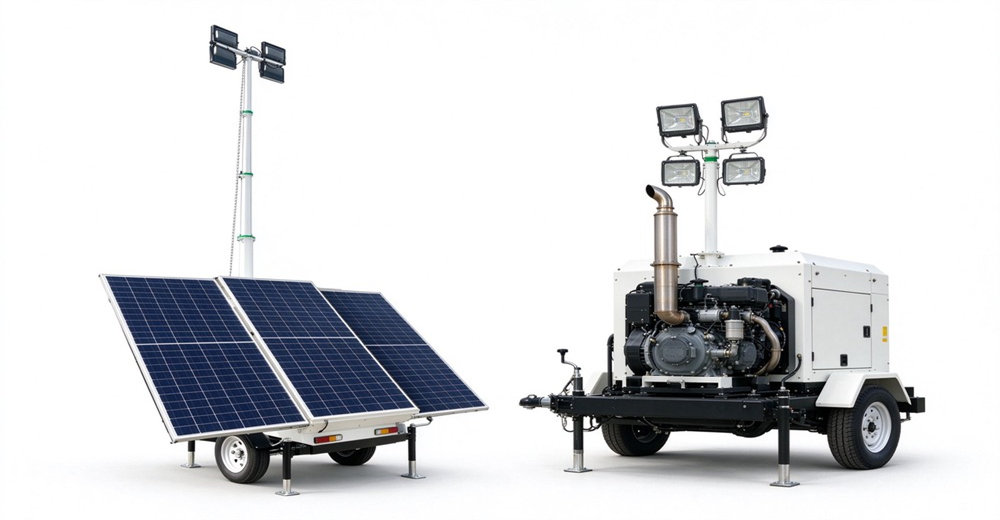
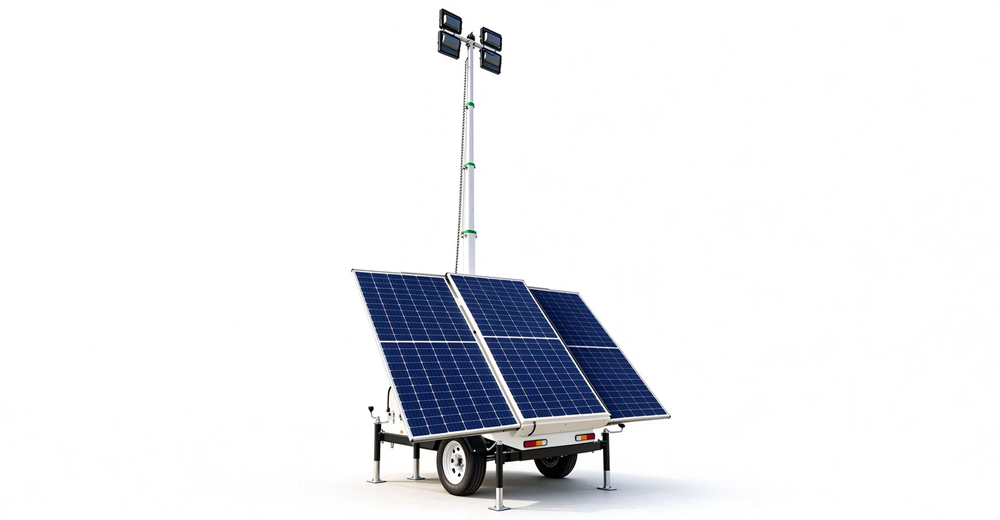
This trailer-based solar mobile light tower is equipped with high-efficiency monocrystalline solar panels, adjustable LED floodlights and telescopic mast. Powered by gel battery, it offers stable off-grid lighting for construction, disaster relief, remote outposts and emergency rescue tasks.
Note: Price for reference only. Exact price based on quantity, size, weight and custom details.
model no. :
LT-01Brand:
YRFmarket price :
$4200sale price :
$2100price range :
10-30/$2100Color :
Multiple Colorsport of dispatch :
Guangdong/GuangzhouPayment :
TT, Paypal, Western Unionmin order :
10original region :
Made in ChinaLead Time :
5-15days
Solar Mobile Light Tower for Disaster Camps and
Remote Sites
Last updated 13 October 2026. A solar mobile light tower runs on sunlight and a LiFePO4 battery, with no engine, fuel or noise, lighting disaster camps, border posts and off-grid work sites through the night.
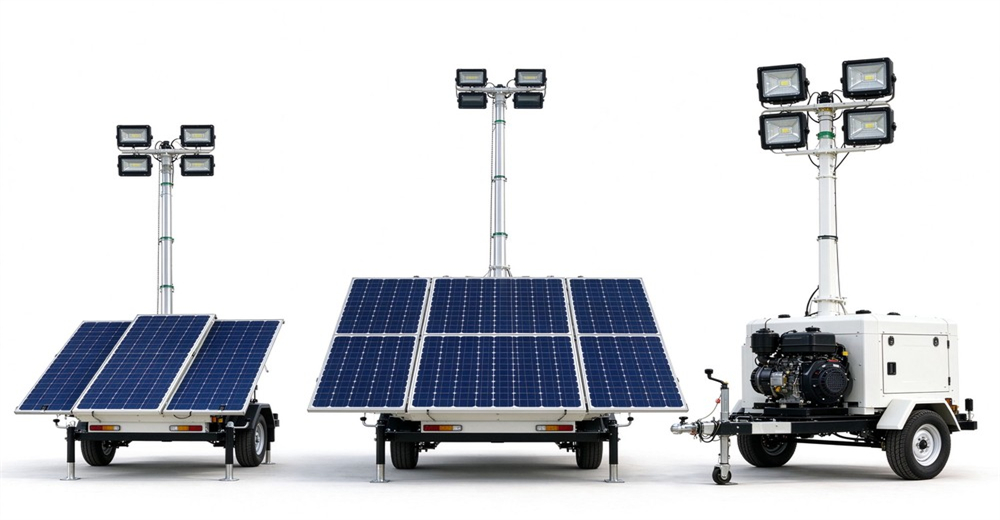


It combines tilted solar panels, a Gel battery cabinet and a telescopic mast with LED flood heads on one trailer, which is why buyers also call it a solar powered lighting unit. Each solar mobile light tower charges by day and auto-lights after dusk, supporting EN 12464-1 workplace illuminance for remote camps, highway works and emergency relief with zero running fuel cost.

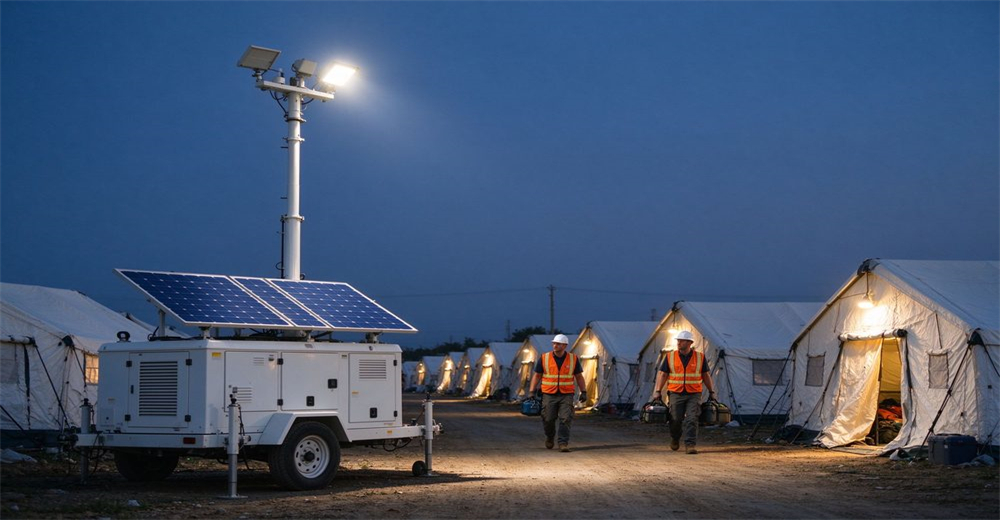
Whether you light a disaster camp, a night shift or a remote checkpoint, the goal is the same: even, glare-controlled light where people work, with quiet operation and zero on-site exhaust.
Compare the configurations below, then send your site dimensions and night-shift hours for a matched model shortlist. Every figure on this page is a planning range, confirmed in your contract.
When an earthquake, flood or storm cuts the mains power line, dark open space becomes a safety risk rather than an inconvenience.
Rescue teams need bright, even light over tents, access roads and material yards within hours, and they need it without waiting for a generator, a fuel tanker or a cable run.
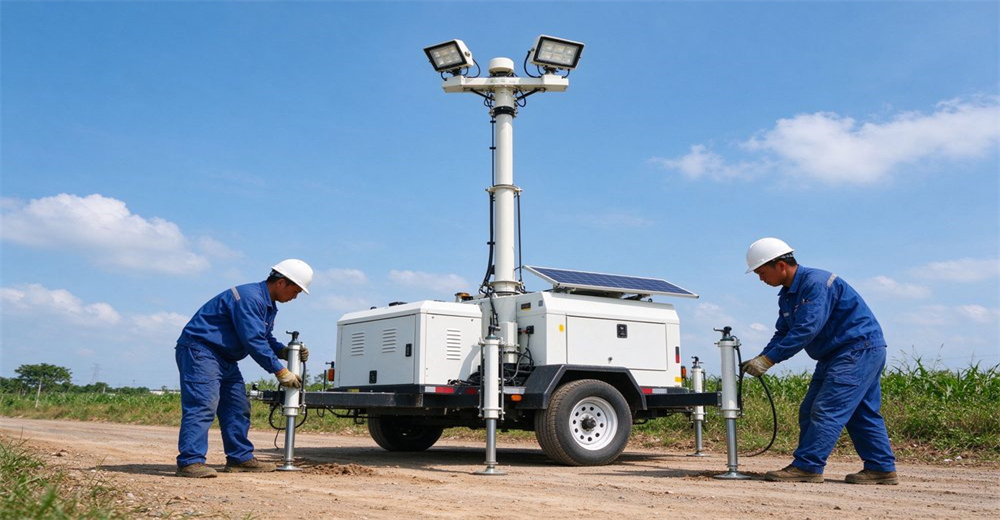
A towable solar unit removes that bottleneck: one person can pull it into place, lower the stabilizer legs and raise the mast, and the site is lit before the next shift starts.
The same independence that helps relief teams also suits business buyers who pay real money for diesel, noise permits and generator maintenance.
Every night of light that comes from sunlight is a night with no fuel delivery, no exhaust fumes and no engine hours.
Over a multi-week deployment, this difference shapes the total cost of ownership far more than the headline purchase price, which is why more buyers start their search from a solar unit first.
Product Overview: What a the unit Actually Is
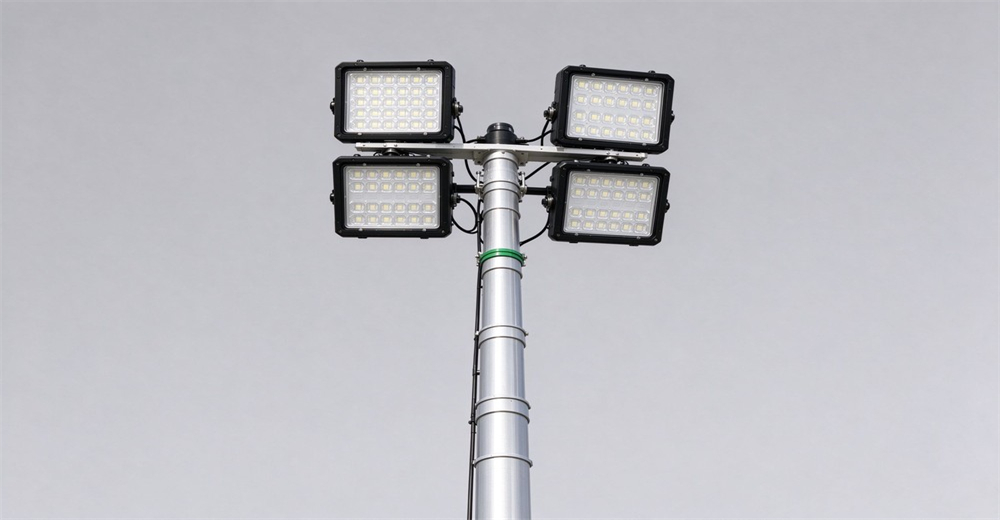
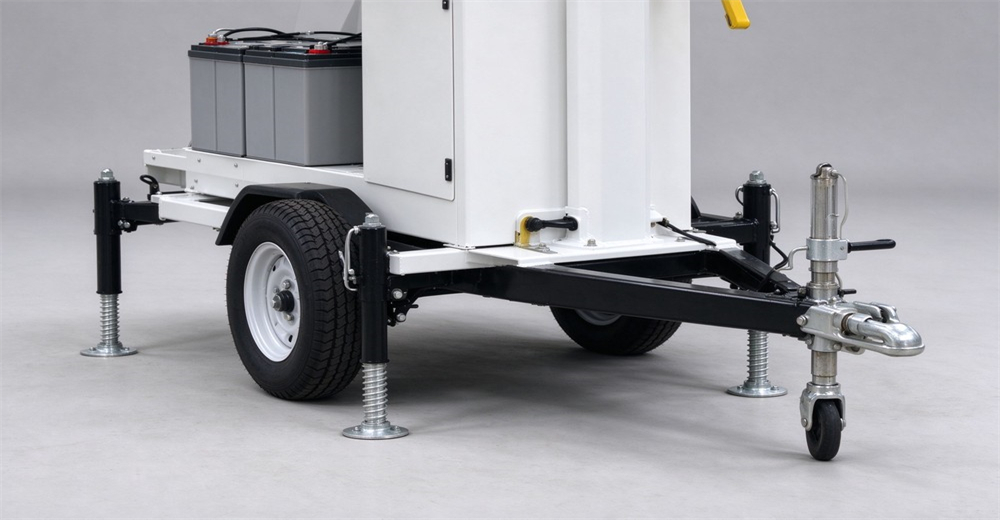
A this lighting rig is an off-grid lighting station built around four core components: an array of monocrystalline solar panels on top, a sealed Gel battery cabinet in the trailer body, a telescopic mast carrying the LED heads, and a steel trailer chassis with wheels and stabilizer legs.
There is no engine, no fuel tank and no plug.Sunlight charges the battery by day, and the battery feeds the LED heads after dark.
This makes the unit a true portable lighting unit rather than a fixed installation.
The definition is deliberately simple because the value lies in what it removes.
Unlike a generator set, this unit never needs refueling, never produces exhaust and never disturbs nearby people with engine noise.
Unlike a mains-connected floodlight, it does not depend on a grid that may be exactly what failed in the first place.
It is a piece of equipment, not an installation, and it leaves the site as easily as it arrived.
Why Off-Grid Sites Choose a Solar Powered lighting unit First
Field buyers usually describe the pain before they describe the product.
Camps, border outposts and road worksites share one problem: the nearest power outlet is kilometers away, and running a cable across rough ground is slower and more fragile than running sunlight.
A solar lighting unit pays itself back by eliminating fuel logistics, which is the single largest cost on sites far from supply depots.
On noise and exhaust, the contrast with diesel equipment matters in two settings.Around tents, sleeping staff and hospital-style rest areas, engine noise reduces rest quality overnight.
Around populated zones, exhaust fumes draw complaints.A solar unit is silent and emission-free while lit, so it can run all night next to people without waking them.
How the power chain works
The working chain has four steps.
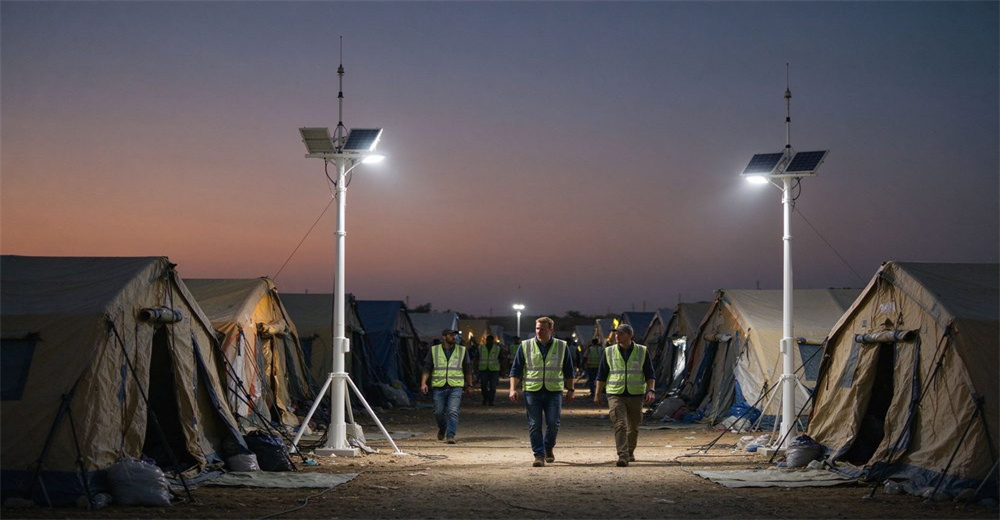
Panels capture sunlight through the day, an MPPT controller manages the charging current, Gel batteries store the energy for the night, and the controller switches the LED heads on at a set time or by light level.
Buyers do not need to understand the circuit detail; they only need to know that the chain is closed, automatic and requires no fuel.
Every configuration figure mentioned on this page is a range and is confirmed in the final contract.
This section is aimed squarely at B2B buyers - relief procurement officers, government tenders, rental fleet owners and project contractors - rather than individual consumers.
If your real question is how this unit compares against a diesel model, the comparison table later on walks through fuel, noise, maintenance and cost side by side, see industrial fire rescue equipment for emergency response.
Core Parameters: Area Light Output and Portable lighting unit Specs
Specifications decide whether one tower covers your site or whether you need three.
This unit is sold as an area light for open spaces rather than a narrow spotlight, so the two numbers buyers compare first are total luminous flux and coverage area.
The LED heads are available from 4 x 100W up to 6 x 200W, which puts total output in a wide band from roughly 36,000 up to 108,000 lumens, depending on the model and head configuration you order.
Exact figures are subject to contract.
Coverage follows the height and power you choose.
A 7m mast with four heads lights roughly 1,000 to 2,000 square meters, while a 9m mast with six heads can reach into the 3,000 to 5,000 square meter band.
These ranges come from field use and are not promises; the actual lit area depends on pole height, head tilt, ground reflectance and local weather, so a site survey is always recommended before you commit quantities.
Model lineup at a glance
The table above gives you a starting frame for choosing a portable lighting unit configuration.
Smaller sites and temporary camps usually land on the HMF971 or HMF972 with four heads, while large compounds and unmanned perimeter points step up to the HMF975 with six heads and a bigger battery.
All flux and area numbers are ranges and are confirmed against your exact order at contract stage. This spec table covers the core models in our emergency lighting equipment range.
Model
LED Power
Luminous Flux
Coverage Area
HMF971 (manual mast)
4 x 100W - 4 x 200W
up to 36,000 - 72,000 lm
1,000 - 2,000 sqm
HMF972 (electric mast)
4 x 100W - 4 x 200W
up to 36,000 - 72,000 lm
1,000 - 2,000 sqm
HMF975 (large dual axle)
4 x 300W - 6 x 200W
up to 54,000 - 108,000 lm
1,000 - 5,000 sqm
Second, what happens through rainy days?

Running cost per night drops to almost nothing, and the site no longer depends on a supply truck that may be stuck in traffic or blocked by a flood.
We refer to general humanitarian context and do not claim any partnership with relief organizations.For camp health and safety preparedness, see CDC emergency preparedness guidance.
The table above is a starting guide for planning quantities.A camp with long internal roads usually places one tower per main walkway rather than one giant unit, because coverage quality improves with a few lower-mounted lights than with one very bright one.
Numbers are planning ranges; the final layout should follow your site assessment, and you are welcome to send us a rough map for a suggested placement plan.
Scenario
Recommended Model
Suggested Qty
Coverage
Notes
Disaster / refugee camp
HMF971 / HMF972
2 - 4 per camp
1,000 - 2,000 sqm each
quiet next to tents
Remote border / unmanned post
HMF975
1 - 2 per site
up to 5,000 sqm
large battery reserve
Urban noise-restricted site
HMF972 electric
1 - 3 per zone
1,000 - 2,000 sqm
no exhaust, no engine
Outdoor event / market
HMF971 manual
1 - 2 per area
1,000 - 2,000 sqm
fast, low-cost setup
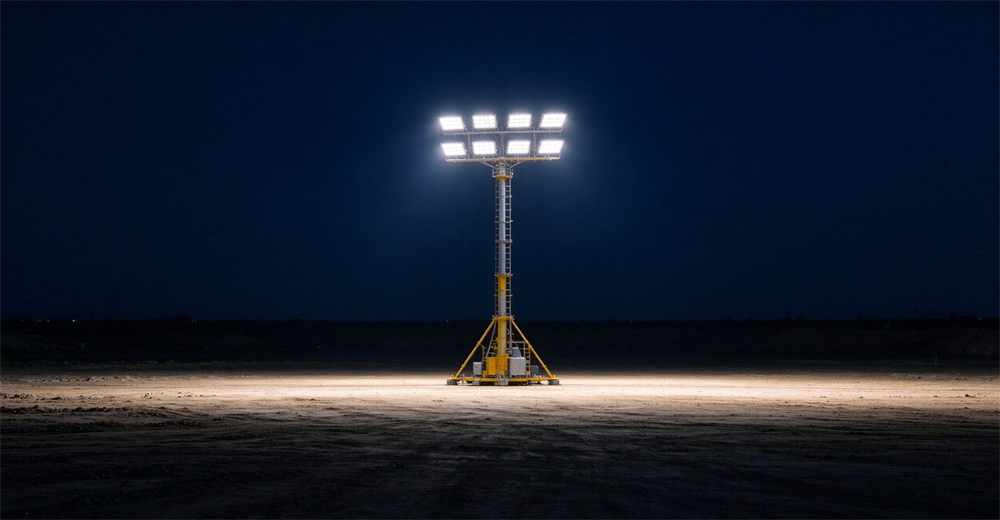
A solar mobile light tower for construction site use case is the most common starting point.
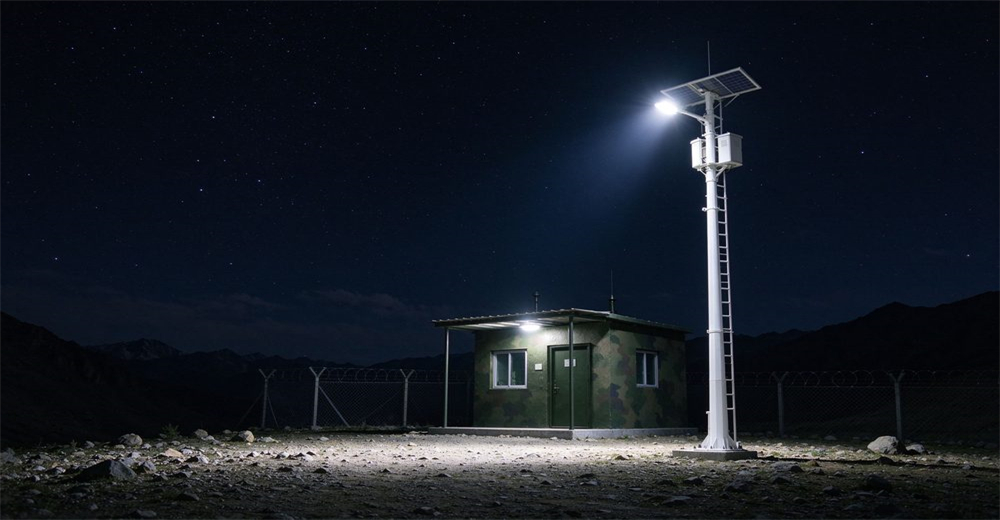
For workplace lighting and safety standards on construction sites, see OSHA workplace safety guidance.
The comparison table above frames the trade-off without bias. Solar has a higher purchase price but a low running cost; diesel has a lower entry price but keeps adding fuel and service costs every hour.
We do not print dollar figures here, because pricing depends on configuration and quantity, and final numbers live in your quotation.
Many larger projects actually mix both: solar for the quiet, long-term areas and diesel for the high-intensity short shifts.
Dimension
Solar Tower
Diesel Tower
Solar Better When
Diesel Better When
Fuel cost
none
continuous fuel needed
long deployment, sunny site
short urgent job
Noise
silent at night
engine noise
near tents or residents
remote, no noise limit
Emissions
zero on-site
exhaust fumes
crowded or green zones
open countryside
Maintenance
low
engine service schedule
thin on-site staffing
mechanics available
Weather limit
needs sun reserve
runs regardless
good sunshine
long rainy season

We are happy to discuss both. A hybrid solar-plus-diesel backup arrangement is also a legitimate option for buyers who want clean running most nights with insurance against long bad weather.
Answer each branch below and you will land on a matched model. All figures are planning ranges confirmed in your contract.
Area over 2,000 m²: step up to the HMF975 with 9 m mast, six LED heads and extended battery. Suited for large remote sites and border outposts where one tower must cover a wide perimeter.
Runs over 8 hours per night: choose the dual battery pack plus expansion solar panels. This reserves enough stored energy to survive several back-to-back overcast nights.
Little or no sunlight: add a diesel generator backup. The generator charges the battery on demand so the tower never goes dark, even through long winter storms.
Every parameter we quote is subject to contract, so you can plan without being tied to a planning number.
By contrast, a gel or flooded-lead pack hits 500-800 cycles at 50% DOD. Staying above 50% DOD is not practical for an off-grid tower because the whole night load must fit the battery. This is why we spec LiFePO4 as default.
DOD per cycle
LiFePO4 cycles to 80% SOH
Gel battery cycles
100%
~6000
~300
80% (tower duty)
≥2000
~600
50%
~4000
~800
30%
~8000
~1200

Cycle-life validation follows IEC 62133-2 lithium battery safety. Stationary and mobile rack testing references UL 1973 stationary battery standard. Shipping compliance is governed by UN 38.3 battery transport test.
Cell-level telemetry is exposed on RS485 Modbus. Tender documents can request monthly SoH logs. A healthy pack shows cell spread under 30 mV after one month of operation.
Solar mobile light tower sizing lives or dies on real kWh per square meter. A tower sold in Frankfurt does not behave like one sold in Riyadh. This anchor gives the irradiance and soiling numbers buyers in MEA and Africa should write into their spec.
These numbers come from NREL Solar Resource Data and IEA PVPS Task 13. We size the battery to the worst-month yield, not the yearly average.
Module safety qualification references IEC 61730-1/-2 PV module safety. Soiling methodology is documented in IEA PVPS soiling report.
Cleaning cadence is 2-4 weeks in dust zones, 8-12 weeks in monsoon zones. Use distilled water and a soft brush. Abrasive scrubbing scratches the anti-reflective coating and drops output by 3-5% permanently.
The 7-9 m mast is where a solar mobile light tower earns its money. It also fails catastrophically if wind rating is faked. This anchor explains what buyers should demand in a wind-load test report.
Wind-load calculation follows EN 1991-1-4 wind load. A 9 m mast with four 500 W flood heads sees roughly 12 m² of projected area. Test reports must show deflection under 2° at the top.
Stability check: overturning moment from a 13 m/s wind at 9 m height versus restoring moment from 800 kg battery ballast. The pack itself sits low in the chassis, which is the single largest stability contributor.
Global buyers can request a left-hand-drive or right-hand-drive tow setup. European orders usually ship with 7-pin ISO tow socket. African and Middle East orders often ship with a ball hitch and jockey wheel.
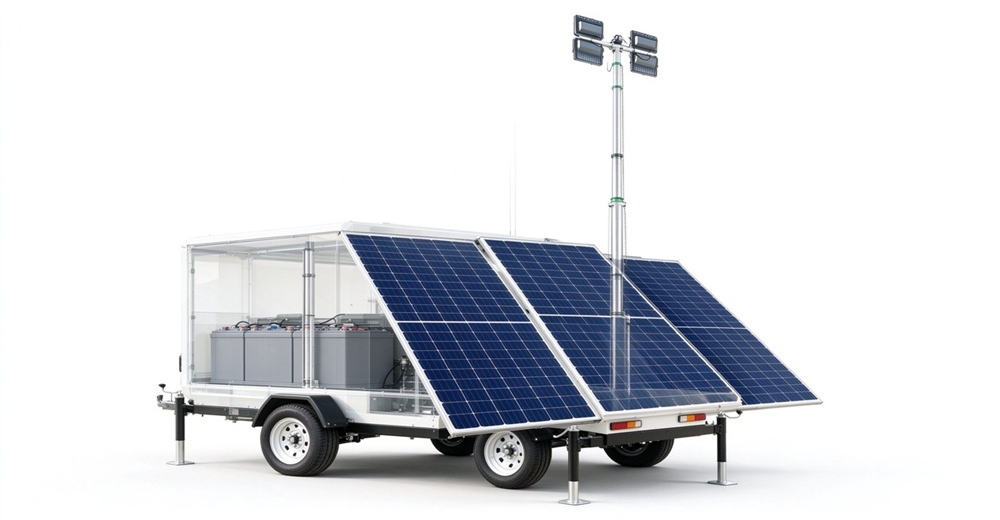
At 80% DOD per night and 60°C ambient, expect 5-6 years before 80% SOH. Cooling the pack by 10°C roughly doubles calendar life. BMS logs should show cell spread under 30 mV after month one.
Spec sheets use STC (25°C cell, 1000 W/m²). Real desert panels run at 55-65°C, losing 0.4% per °C above 25. Add 8-25% monthly soiling. The field yield is typically 75-85% of STC.
Beaufort 6 (13.8 m/s) is the rated survival. Most Gulf sandstorms peak at 15-20 m/s. Crew should retract the mast at the controller warning threshold and stow the flood heads.
A typical UNHCR camp in northern Burkina Faso runs 400 tents for 2000 displaced people. A single solar mobile light tower covers the main walkway, the clinic entrance and the food-distribution point. This case shows how the numbers stack up in a real off-grid deployment.
Daily irradiance is 5.8 kWh/m². Dust soiling runs 15% per month. Night temperatures sit at 22°C, well inside the LiFePO4 comfort band. A 600 W PV array harvests 3.2 kWh per day. The 5.12 kWh LiFePO4 pack (25.6V 200Ah) runs the 300 W LED flood for 6 hours every night with a 20% margin.
A diesel light tower on the same site would burn 8 liters per night, 240 liters per month. Fuel resupply is a 400 km round trip from Ouagadougou. Theft risk on fuel drums is high. The solar mobile light tower pays back the fuel cost in 14 months and eliminates the logistics chain entirely.
Panels are washed every 3 weeks in dust season. BMS cell voltage is logged monthly. The pack is expected to hit 80% SOH after 5 years. Outriggers are checked weekly for ground settlement during the rainy season.
For a long-term off-grid camp the solar option wins on lifecycle cost. For a 2-week night construction job in cloudy Germany, the diesel tower is still the practical choice.
Parameter
Solar mobile light tower
Diesel light tower
Night runtime
6-8 h (battery dependent)
30-60 h (fuel tank dependent)
Fuel logistics
None
8 L/night, 240 L/month
Noise at site
<35 dB (silent)
75-85 dB at 7 m
CO2 per year
0 kg
2.5-4 t/year
Maintenance interval
Panel wash, BMS log
Oil 250 h, filter 500 h
Best climate
5.5+ kWh/m²/day
High-latitude winter, monsoon

Each answer gives a direct result, a data range and a model suggestion.
What exactly is a solar powered emergency lighting unit?
It is an off-grid lighting unit that integrates tilted solar panels, a Gel battery cabinet, LED flood heads and a telescopic mast on a towable trailer. Panels charge the battery by day in roughly 6 to 8 hours of strong sun, and the battery lights the heads for about 12 hours at full output, or 15 to 20 hours on the large model.
The HMF971 manual model suits most general sites and is the easiest starting point for anyone searching for a solar mobile light tower.
How does it light a construction site after it arrives?
It is towed to position, stabilizer legs are lowered, the mast is raised, and the area is lit within minutes.
A typical setup takes roughly 15 to 30 minutes, it covers thousands of square meters, and it runs with zero emissions to meet environmental requirements, all subject to contract.
This solar mobile light tower for construction site use is a common configuration sold. Teams that relocate often prefer the HMF972 electric mast model for speed.
Can it be used for a quiet outdoor event without disturbing people?
Yes.Because it has no running engine, it stays silent all night and does not disturb audiences, performers or nearby residents.
The manual model sets up in about 15 minutes, and the trailer tows to the exact spot, all subject to contract.
For temporary event lighting on a budget, the HMF971 manual model is the popular choice.
How bright is the total light output for an area?
Output depends on the LED head configuration you choose.
Heads range from 4 x 100W to 6 x 200W, giving total luminous flux from roughly 36,000 up to 108,000 lumens, with exact values confirmed in your contract.
If you need a very bright wide-area light, choose the HMF975 six-head version.
How many hours can it light through one night on full power?
In full-head mode the medium models run about 12 hours, the large model runs 15 to 20 hours, and a half-bright energy mode extends lighting beyond 20 hours, all subject to contract.
If long endurance is your priority, choose the HMF975 with its large battery capacity.
Is the mast stable when raised in windy outdoor weather?
The mast telescopes to 7 to 9 meters and is built for outdoor use, with a structural wind resistance around grade 8, which is an industry reference value pending factory confirmation.
The electrical compartment carries IP65 protection.In windy regions, the electric-hydraulic mast model is recommended for steadier deployment.
How long do the solar panels take to fully recharge the battery?
In strong sunlight the array fully recharges in about 6 to 8 hours, depending on panel wattage and weather conditions.
Total panel power ranges from 300W to 500W, and during continuous rainy days the system relies on battery reserve, all subject to contract.
If your region sees limited sun, choose the larger battery version
Is solar cheaper than diesel over the life of the site?
Over a long deployment, solar costs less because it has zero fuel, while a diesel unit consumes a continuous amount of fuel per running hour.
Solar has a higher upfront purchase price but a low running cost; diesel has a lower entry price but adds cost every hour.
For long-term sunny sites choose solar, for short urgent jobs diesel may be more practical.
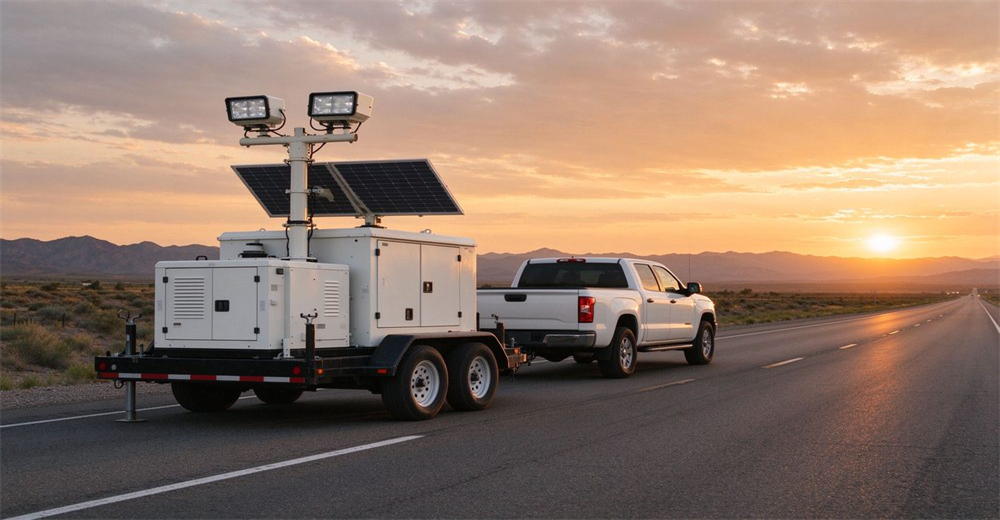
Can I combine solar and diesel for the same project?
Yes.A mixed arrangement gives clean, silent solar light on most nights with a diesel backup for long stretches of bad weather, which protects reliability without running an engine constantly.
Large projects often adopt solar as the main source with diesel as backup.We can discuss a mixed configuration for your site.
Do you support small trial orders and OEM customization?
Yes.We support small MOQ trial orders and OEM customization, with exact MOQ and lead time stated in the contract.
Your logo can be printed on the panels, light heads or canopy, and body colors can be customized such as green or service blue, subject to contract.
A custom quote and a sample plan can be prepared on request.
How long does a solar mobile light tower last in daily off-grid service?
A well-kept solar mobile light tower runs 8-10 years, with the LiFePO4 battery the first consumable at about 2,000 cycles.
This long life is why a solar mobile light tower pays back within three years, and the solar mobile light tower needs only annual panel and battery checks.
Can a solar mobile light tower replace a diesel unit for a whole project?
A solar mobile light tower replaces diesel for silent, off-grid sites where sun is reliable, matching output and runtime night after night.
The solar mobile light tower wins on fuel-free running, while a diesel unit still suits cloudy northern winters where a solar mobile light tower under-charges.
What makes a solar mobile light tower worth buying over mains lighting?
A solar mobile light tower needs no cable trench and no grid connection, which cuts install cost on remote sites.
The panels and battery are integrated, so a solar mobile light tower runs the same nightly schedule as a wired tower at zero energy cost.
How long does a solar mobile light tower run overnight on battery alone?
A solar mobile light tower runs 12 hours at full output and 15-20 hours on the large LiFePO4 battery after a full day of sun.
If sunlight is short, size panels 20 percent larger for winter camps, which keeps a solar mobile light tower lighting reliably through the night.
What IP rating and temperature range can a solar mobile light tower handle outdoors?
A solar mobile light tower reaches IP65 on the LED heads and IP54 on the control cabinet, running from -20 C to +50 C.
The LiFePO4 battery includes low-temperature charge cutoff, and the solar panels meet IEC 61730 safety. For dusty or coastal sites, specify the IP66 upgraded head option on your solar mobile light tower.
How does L70 LED life affect the running cost of a solar mobile light tower?
LED heads on a solar mobile light tower are rated L70 at 50,000 hours, so output stays above 70% after five years of nightly use.
Because the panels charge by day, daily energy is free and only panel cleaning is needed, which is why a solar mobile light tower beats diesel on five-year running cost.
Ordering: Mobile Solar Lighting Tower Wholesale and Supplier
If you are looking for a reliable emergency lighting supplier for a solar mobile light tower, this section explains how a typical order moves from your first inquiry to delivery.
We support small MOQ trial orders for testing, as well as mobile solar lighting tower wholesale for tenders, rental fleets and relief stockpiles.
Exact MOQ, pricing and delivery time are all stated in your contract, not on this page.
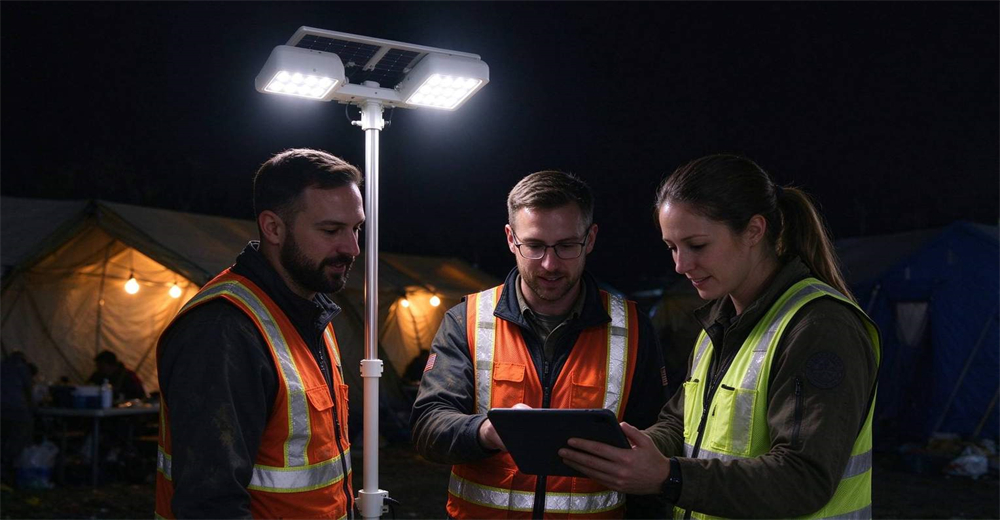
How a purchase order proceeds
The process is straightforward. First, you share your site size, required light output, mast height and whether you prefer manual or electric lift.
Second, we propose a model list and configuration, confirm whether the figures above meet your tender needs, and prepare a quotation.
Third, after order confirmation we arrange production, custom branding if needed, and inspection before shipment.
Typical timelines are planned around your order quantity, and every date is fixed in the contract rather than promised here.
The table above summarizes the four-step process.What you provide is mostly information about the site, and what we deliver is the equipment, configuration support and shipping documentation.
We do not promise specific lead-time days here because they move with order load and custom work; the binding schedule is written into the contract you sign.
For more options beyond this product, browse the full range of all emergency lighting equipment.
Step
Buyer Provides
We Deliver
Timeline
1. Inquiry
site size, hours, sunshine
model recommendation
within a few working days
2. Quotation
target quantity, config
formal quote, spec ranges
confirmed in contract
3. Production
logo, color, head config
custom build, inspection
per contract schedule
4. Shipment
destination details
loading and shipping docs
per contract schedule
The binding numbers are confirmed when we talk through your site. We look forward to matching the right model to your project.
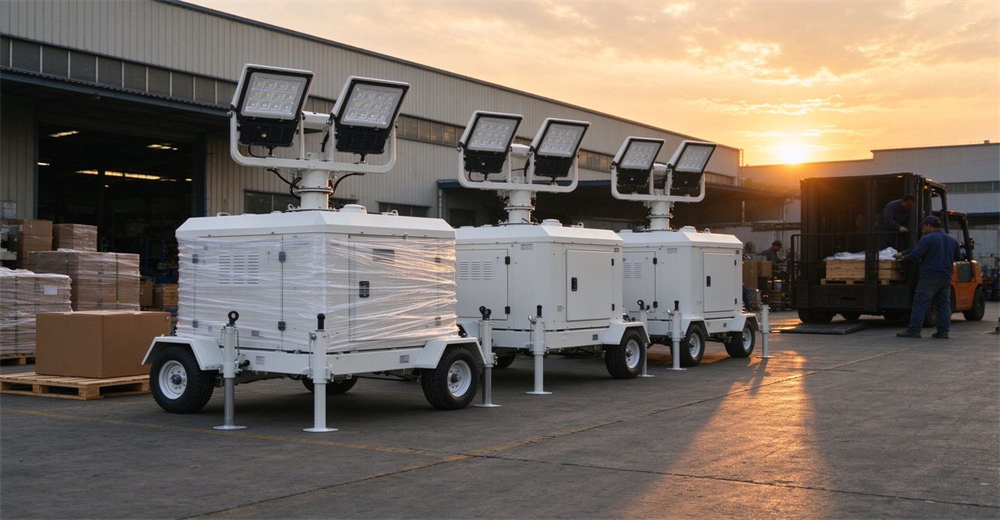
Global voltage: 110V / 220V / 240V configurations. Built to IEC standards; CE marking and UL/ETL-ready options on request. Exported to USA, Europe, Middle East and Southeast Asia. Manufactured in China.
All parameters, capacities and lead times stated on this page are planning ranges and are subject to contract.
 Diesel Light Tower for Night Construction Mining Emergency Repair Sites
This trailer-mounted diesel mobile light tower integrates diesel generator, telescopic mast and multi LED flood heads. It delivers stable high-power lighting without solar reliance, ideal for construction, road repair, disaster recovery and all-night emergency works. Note: Price for reference only. Exact price based on quantity, size, weight and custom details.
 Portable Telescopic Flood Light for Rescue and Road Work
This TL-200 portable flood light adopts telescopic aluminum mast and dual LED heads, powered by lithium battery. It delivers stable bright illumination for fire rescue, roadside emergency, construction and disaster relief, easy to carry and fast setup. Note: Price for reference only. Exact price based on quantity, size, weight and custom details.
 Remote Control Searchlight for Ports and Perimeter Security Water Rescue
Remote pan tilt rescue light with wireless remote, magnetic base and long throw narrow beam. It supports horizontal and vertical rotation, salt spray resistant housing, suitable for water rescue, port, border patrol and industrial perimeter security. Bulk wholesale, OEM custom color and packaging available. Note: Price for reference only. Exact price based on quantity, size, weight and custom details.
 Disaster Emergency Lighting for Relief Camps and Rescue
Disaster lighting family includes telescopic mast light, remote searchlight and handheld 360 light. Solar charging support, off-grid available, durable for earthquake rubble, flood rescue, camp lighting and emergency road repair. Note: Price for reference only. Exact price based on quantity, size, weight and custom details.
 Emergency Lighting Supplier for Wholesale and Relief Tenders
Full emergency lighting lineup includes solar light towers, diesel towers, telescopic lights and handheld rechargeable lights. IP rated, durable for disaster relief, construction, warehouse and night rescue, supports off-grid power supply for long time outdoor illumination. Note: Price for reference only. Exact price based on quantity, size, weight and custom details.
Copyright © Custom Disaster - Relief Bedding: Tents, Sleeping Bags, Blankets All Rights Reserved
the professional team to service !


