


Remote pan tilt rescue light with wireless remote, magnetic base and long throw narrow beam. It supports horizontal and vertical rotation, salt spray resistant housing, suitable for water rescue, port, border patrol and industrial perimeter security. Bulk wholesale, OEM custom color and packaging available.
Note: Price for reference only. Exact price based on quantity, size, weight and custom details.
model no. :
LT-04Brand:
YRFmarket price :
$6sale price :
$3price range :
30-100/$3Color :
Multiple Colorsport of dispatch :
Guangdong/GuangzhouPayment :
TT, Paypal, Western Unionmin order :
10original region :
Made in ChinaLead Time :
5-15days
Remote Control Searchlight for Ports and Perimeter Security Water Rescue
A remote searchlight adds 360-degree pan-tilt control to a long-throw LED beam, with magnetic or bolt mounting and dual battery-AC power, so one operator can sweep ports, oilfields, perimeters and water rescue zones from a safe distance.
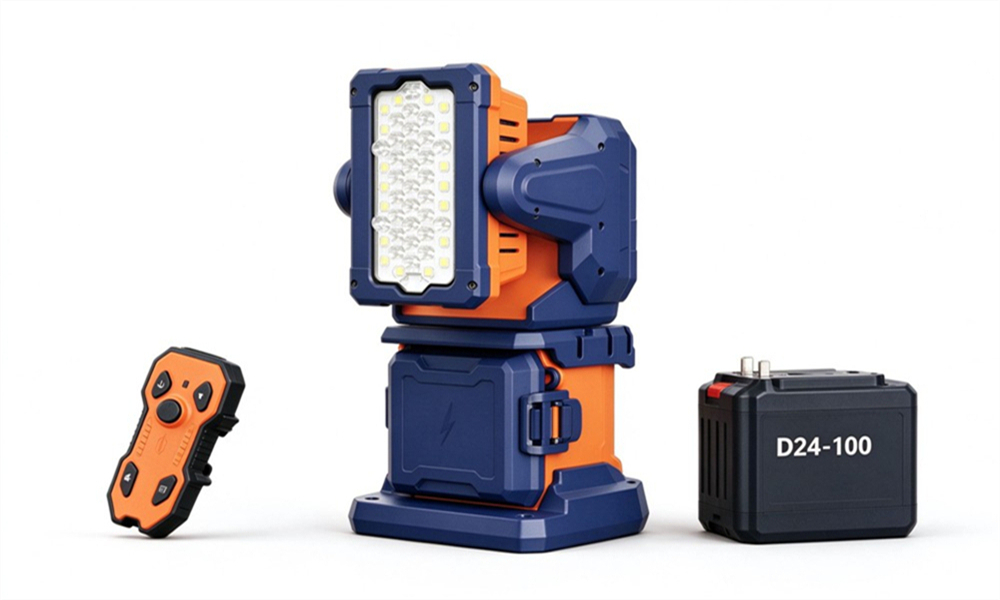


YRF pan-tilt searchlight units deliver 360-degree rotation, magnetic or bolt mounting and dual battery-AC power for ports, oilfields and water rescue. This remote searchlight reaches 800-1500 metres with a focused beam, meets IEC 60598 ingress standards and lets security teams monitor long boundaries without exposing on-site staff to hazards at night.
This remote control searchlight replaces a rooftop operator with an orange-black remote.

Every unit in this range is built for outdoor duty: sealed against rain and dust, towable by a single operator, and configured to run overnight without a generator on site.
Specifications below are planning ranges. Exact wattage, lumen output and runtime are confirmed in your contract, so you can plan a tender or a rental fleet without being locked to a single figure.
Whether you light a disaster camp, a night shift or a remote checkpoint, the goal is the same: even, glare-controlled light where people work, with quiet operation and zero on-site exhaust.
Compare the configurations below, then send your site dimensions and night-shift hours for a matched model shortlist. Every figure on this page is a planning range, confirmed in your contract.

The PT-200 platform starts with a rectangular LED array on a geared two-axis joint.The navy-blue and orange housing carries IP66 and IK10 rating on every unit.
A magnetic base sticks to steel roofs in seconds, while bolt holes lock it down for permanent towers.The orange-black remote needs no app or pairing.
At 2 a.m., a port guard hears a small outboard near the anchorage.He needs light on that boat now, not in ten minutes while climbing a gantry.
A roof rescue light turns with his remote and puts a white cone on the water in seconds.The 360-degree spin tracks a circling vessel without cable wind-up stops.
Fixed floodlights wash the whole yard flat.They cannot pick out one drifting life jacket or one vessel crossing the harbor.

That is the gap portable rescue lights close: a narrow, steerable beam following the operator's eye.
The LED array feeds a reflector that narrows the beam into a long white cone across water and fences.
This class of rescue lighting equipment is also called a PTZ searchlight.The head sits on a two-axis joint: 360-degree horizontal spin, vertical tilt up and down.
Dual power means AC when grid is available, and D24-100 battery pack for remote posts.One battery fits the PT-200, PT-400 and PT-200P family.
It is not a floodlight.Floodlights light area; a rescue light tracks point.
You use it when a moving object must be found, identified and held in the beam while CCTV closes in.
This remote control searchlight is the standard pan-tilt searchlight for port control rooms.
Buyers are port control rooms, oilfield posts, border towers and water rescue units. The core promise is simple: no climbing, no repositioning, no one on a cold roof turning a handle in the wind.


Remote-Control Rescue Light Overview
What a pan-tilt rescue light does
The mechanism is a geared PTZ joint.A motor spins the horizontal axis a full 360 degrees continuously, so you never hit a cable wind-up limit.
Another motor tilts the rectangular LED head to the angle your target needs.Portable rescue lights in this class share the same joint design.

Typical security and rescue light users
A second motor focuses the optics.The rectangular LED array feeds a multi-element reflector that narrows the beam into a long white cone.
At night that cone reaches across water and fence lines.This is why rescue lighting equipment of this type is specified for long-throw work.
The first safety win is height.Nobody climbs a mast or a gantry to re-aim the rescue light.Winter ice and wet rungs disappear from the job.
The operator stays at the console, and the lamp does the climbing for him.That removes the biggest injury risk on night patrol rounds.
The second win is dead-zone coverage.A fixed lamp leaves shadow wedges behind every tank and pipe rack.
A rescue light sweeps those wedges on command, so a guard checks the blind side of a storage tank without walking the perimeter on foot.
Real-world data points matter.The PT-200 carries IP66 against water and dust, and IK10 impact protection.Horizontal rotation is a full 360 degrees.
Throw distance, remote range, weight and rotation speed are confirmed per project in the contract, subject to contract.
Key rescue light performance numbers
Three numbers narrow most rescue light purchases.First is beam throw, which decides how far across water you can hold a target.
Second is rotation coverage, which decides whether one unit watches a whole anchorage.Third is the ingress rating, which decides if it survives coastal salt spray.
Coastal buyers read IP66 and IK10 first.IP66 means powerful water jets cannot reach the inner driver.IK10 means a dropped tool will not crack the lens.
These are the rated values on the PT-200 nameplate, ready to paste into your tender sheet for the rescue light.
Compare with a fixed floodlight pole.A floodlight covers area but cannot follow a moving target.Compare with a manned gantry lamp, which needs a guard on the roof in all weather.
A remote rescue light sits between them: fixed like a pole, agile as a man on the gantry.
Sites that benefit list cleanly: port rooms watching anchorages, oilfield perimeters on fence lines, water rescue units sweeping the shore at night, industrial plants on loading bays, and border towers on boundary roads.
Send us your layout and we match the beam to your map.
The same PT-200 platform ships as the PT-200 mast lamp, the PT-400 long-run version and the PT-200P panoramic lamp.
One roof spec scales across your whole site, from the control tower to the remote cliff post.
The D24-100 battery pack is shared across the family, so spares stay simple and stocking stays cheap for your maintenance crew.
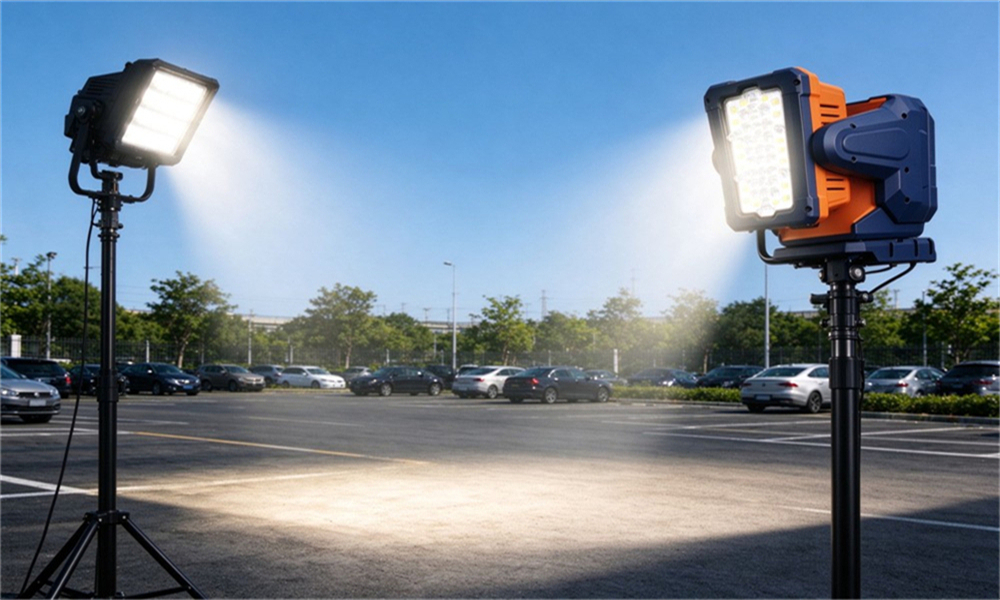
Rescue Light Specifications
Rescue light beam distance and rotation angles
Beam throw is the spec buyers ask about first.A rescue lighting equipment unit on a port wall must hold a target across the anchorage, not just light the quay edge.
The rectangular LED array feeds a focused reflector that narrows the cone.This rescue light's throw distance is stated per model, subject to contract.
The beam spreads narrow at long range.It is a white cone wide enough to identify a boat, not wide enough to light a whole dock.
That is intentional: long-throw optics trade spread for reach.Pair this unit with fixed floodlights if you need wide area wash at the same spot.
LED quality matters for night work.White LED renders sharper than old halogen, so a guard reading a boat's wake can tell a fishing boat from a dinghy faster.
The chip array also cools better.This is why every LED searchlight in our range uses the chip-array layout.
Throw coverage compares against floodlights like this.A floodlight at close range lights a wide apron.A rescue light at long range puts a narrow dot on a target on the water.
Most control rooms run both, on separate switches, and never the wrong one.Key rescue light performance numbers.
Three numbers narrow most rescue light purchases.First is beam throw, which decides how far across water you can hold a target.
Second is rotation coverage, which decides whether one unit watches a whole anchorage.Third is the ingress rating, which decides if it survives coastal salt spray.
Coastal buyers read IP66 and IK10 first.IP66 means powerful water jets cannot reach the inner driver.IK10 means a dropped tool will not crack the lens.
These are the rated values on the PT-200 nameplate, ready to paste into your tender sheet for the rescue light.
Compare with a fixed floodlight pole.A floodlight covers area but cannot follow a moving target.Compare with a manned gantry lamp, which needs a guard on the roof in all weather.
A remote rescue light sits between them: fixed like a pole, agile as a man on the gantry.
Sites that benefit list cleanly: port rooms watching anchorages, oilfield perimeters on fence lines, water rescue units sweeping the shore at night, industrial plants on loading bays, and border towers on boundary roads.
Send us your layout and we match the beam to your map.
The same PT-200 platform ships as the PT-200 mast lamp, the PT-400 long-run version and the PT-200P panoramic lamp.
One roof spec scales across your whole site, from the control tower to the remote cliff post.
The D24-100 battery pack is shared across the family, so spares stay simple and stocking stays cheap for your maintenance crew.

Rescue Light Specifications
Rescue light beam distance and rotation angles
Beam throw is the spec buyers ask about first.A rescue lighting equipment unit on a port wall must hold a target across the anchorage, not just light the quay edge.
The rectangular LED array feeds a focused reflector that narrows the cone.This rescue light's throw distance is stated per model, subject to contract.
The beam spreads narrow at long range.It is a white cone wide enough to identify a boat, not wide enough to light a whole dock.
That is intentional: long-throw optics trade spread for reach.Pair this unit with fixed floodlights if you need wide area wash at the same spot.
LED quality matters for night work.White LED renders sharper than old halogen, so a guard reading a boat's wake can tell a fishing boat from a dinghy faster.
The chip array also cools better.This is why every LED searchlight in our range uses the chip-array layout.
Throw coverage compares against floodlights like this.A floodlight at close range lights a wide apron.A rescue light at long range puts a narrow dot on a target on the water.
Most control rooms run both, on separate switches, and never the wrong one.
|
Rescue Light Model |
Throw Distance |
Horizontal Rotation |
Remote Range |
|
PT-200 |
Subject to contract |
360° continuous |
Subject to contract |
|
PT-400 long-run |
Subject to contract |
360° continuous |
Subject to contract |
|
PT-200P panoramic |
Subject to contract |
360° continuous |
Subject to contract |
|
Custom OEM |
Subject to contract |
360° continuous |
Subject to contract |
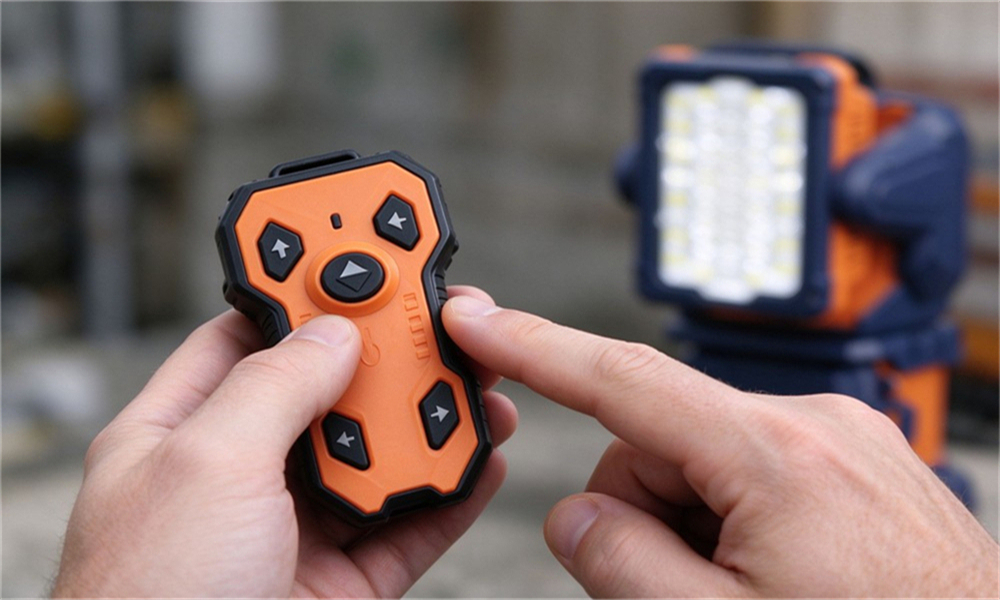
The pan-tilt joint moves the head in two axes.Horizontal spin runs a full 360 degrees, so the lamp can track a boat circling the anchorage without stopping.
Vertical tilt adjusts beam elevation from near horizon to deck level.Exact tilt and speed are per model, subject to contract.
Rotation speed is a balance.Too fast and the beam whips past a small target.Too slow and a guard loses a fast boat while waiting for the head to swing.
The PT-200 is tuned for patrol pace: steady enough to track a drifting target, quick enough to respond fast.
The handheld remote is orange and black.It carries directional pads for pan and tilt, plus on-off and dimmer keys.
No app, no phone pairing, no Wi-Fi dependency. Portable rescue lights in this family run on a simple radio link that works through walls in the control room.
Remote range is set by the radio link and the site environment.Open line-of-sight reaches farther than a console buried in a concrete bunker.Exact range is per model, subject to contract.
If your console sits two floors below the roof, ask for the extended-range remote option.

Power options decide where the unit can live.The PT-200 runs on the D24-100 lithium pack or AC mains.
Battery mode means the rescue light lives on a vehicle roof with no cable run.AC mode means it lives on a permanent gantry.
A rescue light that switches both gives you a fall-back.
Ingress protection is IP66: dust-tight and jet-water proof (see the IP Code standard).IK10 means a dropped tool will not crack the lens.
For oilfield and coastal use, these ratings matter more than peak lumens, because a lamp that fails in the storm is worse than no lamp at all on the wall.
Mounting is flexible.The PT-200 base carries a strong magnetic pad for steel roofs, plus drilled holes for bolt-down on concrete.
Stick it on a truck roof for a patrol shift, then bolt it to a tower post.Rescue lighting equipment that moves with the job outlasts welded slabs.
Specs wrap up: PT-200, IP66, IK10, 360-degree pan, battery or AC, magnetic and bolt mounting, wireless remote.Throw, remote range and weight are per model in the contract.
Send us your sketch and we return a one-page rescue light spec sheet.

The headline feature is control from a distance.A guard sits in a warm control room, holds the orange remote, and the rescue light on the roof turns.
Operation is four steps.Power on from the remote.Press pan to swing until the beam lands near the target.Press tilt to fine-elevate.Release and the head holds position.
A trained operator tracks a moving boat within seconds, no manual handle on the gantry.
Safety gains show in incident reports.Fewer ladder climbs mean fewer slips on ice and fewer falls from gantries in wind.
Security managers who switch to portable rescue lights often cut night climbing tasks to zero, because the beam follows the remote instead of the man.
A second safety gain is response time.When an alarm triggers at the perimeter, the light is already on the roof and powered.
The guard does not wake a second staff member or walk up the gantry.He presses a button and the beam is on the fence line before the intruder crosses it.
The remote links with CCTV workflows.A camera spots movement, the operator pans the lamp to that grid square, and the camera holds a lit target in frame.
Pairing rescue lighting equipment with CCTV turns a dark fence line into a recordable scene.No extra wiring needed on site.
The second feature set is continuous 360-degree pan.Older searchlights hit a hard stop and had to unwind.
The PT-200 spins both ways indefinitely, so a boat circling the anchorage never out-runs the beam.That matters for port patrol after dark.

Night search is the bread-and-butter job.A water rescue unit gets a call: a swimmer missing near the harbor mouth after dusk.
The rescue boat launches, and a shore-based rescue light on the cliff sweeps the water with a narrow cone.
The boat follows the beam to the swimmer, see wholesale water rescue helmets for professional maritime teams.
The narrow beam wins here.A floodlight on the cliff would wash the whole bay flat, but a boat driver would not see where to steer.
A long-throw cone puts a white circle on the exact patch of water the operator watches.The boat steers into the circle and reaches the swimmer faster.
Patrol efficiency rises with continuous pan.A guard on a 12-hour shift no longer walks the fence line every hour.
He sits at the console, pans the lamp along the perimeter, and the lamp does the walking.Fewer foot patrols mean the same staff covers more fence without fatigue.
Target holding is the third benefit.Once the beam lands on a drifting object, the operator holds it there while the camera records.
A remote rescue light holds a steady cone on a buoy or a person in the water, without the beam drifting as a tired hand would.
Power through a long night comes from the D24-100 pack or AC mains.On battery, the lamp runs as long as the pack lasts, and a spare swaps in minutes.
Portable rescue lights that switch both inputs cover grid-down nights without a generator truck on the quay.
The feature set wraps up: wireless remote, continuous 360-degree pan, narrow long-throw beam, battery or AC fallback, CCTV pairing.No climbing, no manual handle, no wind-up limit.

Ports run 24 hours.Anchorage channels and cargo docks need light that follows moving vessels, not a fixed wash on the quay wall.
A rescue lighting equipment unit on the port tower lets the duty officer track small craft across the roadstead from his console, no ladder needed.
The pain point is real.Without remote tracking, a duty officer hears an outboard near the anchorage, sends a patrol boat, and by launch time the craft has moved.
With a PT-200 on the roof, he puts a beam on the target first, follows it on camera, and directs the boat to the grid square.
The PT-200 fits the port wall.Magnetic-mount it on the tower roof or bolt it to the gantry.
Point the remote-controlled beam at the anchorage and track the vessel's wake. Portable rescue lights of this type are standard on port rooves from fishing harbors to bulk terminals.
Value shows in response minutes.Faster target holding means faster interception and faster missing-boat location.
It also means fewer patrol boat launches in bad weather, because the duty officer can confirm from the console whether a moving shape is a real intrusion or just floating debris on the tide.
Water rescue on the harbor mouth is a sister use.A team on the cliff pans the beam across the search grid.The rescue boat steers into the lit circle.
A rescue light on the cliff does the searching, the boat does the recovering.
Split roles beat one boat sweeping dark blind, see coastal and open water rescue equipment for maritime teams.
Oilfields are the next shore.Perimeter roads around tank farms run for kilometers.A single guard cannot walk the fence every hour.
A network of PT-200 units on tower posts lets the duty officer pan along the fence line from a central console, watching the whole loop at night.

Oilfield pain is scale.A tank farm spans hundreds of meters of fence, with blind spots behind every manifold.Fixed floodlights wash the yard but cannot point at one intruder.
A rescue light on a tower post pans around the tank farm, closing gaps floodlights leave behind, see industrial fire rescue equipment for perimeter security.
The oilfield solution: mount PT-200 units on tower posts at the fence corners.Wire to AC or run on D24-100 packs for remote posts.The duty officer pans each lamp in turn.
When a camera flags movement at one corner, he pans that lamp onto the target and holds it on site.
Value shows in deterrence.A lit fence line deters climbing far better than a dark one.A lamp that pans on its own signals the site is actively watched.
Plants with remote searchlight networks report fewer perimeter breaches, because intruders see the beam sweeping and choose elsewhere.
Border camps run the same play.A border tower sits on a ridge, a PT-200 on its roof, and a guard pans the beam along the boundary fence.
Vehicles crossing at night are lit and held. Perimeter security lighting of this type replaces foot patrols on exposed ridge lines.
Camp security is the third shore.A forward base runs a night gate.A PT-200 on the gate post pans the access road, the parking apron and the supply yard.
The gate guard identifies vehicles by beam, not by stepping out into the dark with a handheld torch.
Scenarios wrap up: port anchorage, oilfield fence loop, water rescue on the coast, border ridge patrol, camp gate.
Each asks the lamp to hold a moving target in a narrow beam from a safe console.The PT-200 rescue light does it on battery or AC, magnet or bolt.
|
Rescue Light Scenario |
Mounting Position |
Qty |
Throw |
Note |
|
Port anchorage |
Control tower roof |
1-2 units |
Subject to contract |
Vessel tracking |
|
Oilfield fence loop |
Tower posts at corners |
2-4 units |
Subject to contract |
Perimeter watch |
|
Water rescue |
Cliff or shore post |
1-2 units |
Subject to contract |
Search grid |
|
Border ridge patrol |
Ridge tower roof |
1 unit |
Subject to contract |
Boundary fence |
|
Camp gate security |
Gate post |
1 unit |
Subject to contract |
Access road |

The comparison buyers ask for most: remote rescue light versus fixed floodlight.They are not competitors; they are partners on the same site.Floodlights light the apron, searchlights watch the boundary.
Most sites end up running both.
Dead-zone coverage is the first dimension.A floodlight covers a fixed rectangle.Anything behind a tank or corner stays dark.
A PT-200 pans around the obstruction and puts the beam on the far side.That gap closing is why managers add a rescue light to a floodlight yard.
Beam shape is the second dimension.Floodlight throws a wide pool at close range.Searchlight throws a narrow cone for long range on water or fence.
Pick floodlight for the loading bay, pick LED searchlight for the anchorage.Neither replaces the other on a real site.
Labor is the third dimension.A floodlight is set once and left.A manual searchlight needs a guard on the roof.A remote PT-200 needs a guard at the console.
Labor cost drops because the operator does not climb, and one console runs multiple lamps.
Safety is the fourth dimension.No ladder, no gantry, no cold roof.The console operator works inside.The lamp takes the weather.
This is why insurers look kindly on remote rescue lighting equipment upgrades: fewer fall incidents on the perimeter at night.
Distance is the fifth dimension.A floodlight lights a wide apron at close range.A PT-200 holds a narrow cone hundreds of meters out across water.
Long-throw work is the searchlight lane; area wash is the floodlight lane.Match the lamp to your target's distance on the map.
|
Dimension |
Remote Rescue Light |
Fixed Floodlight |
Rescue Light Wins |
Floodlight Wins |
|
Dead-zone cover |
Pans around obstructions |
Fixed rectangle |
Irregular yards |
Open aprons |
|
Beam shape |
Narrow long cone |
Wide pool |
Water, fence |
Loading bays |
|
Labor |
Console operator |
Set once and left |
Active watch |
Static area |
|
Safety |
No roof climb |
No roof climb |
Cold-weather sites |
All weather |
|
Distance |
Long throw |
Medium spread |
Anchorage, ridge |
Quay edge, yard |

Cost is the sixth dimension.A floodlight pole is cheap to install and run.A remote searchlight costs more upfront but saves labor over years.
Add a PT-200 where climbing labor was expensive: cold climates, tall gantries, exposed roofs.On a flat warm yard, floodlights alone are rational.
The two complement, not compete.Most port rooms run floodlights on the quay and a PT-200 on the roof for anchorage tracking.The floodlight lights dock workers; the searchlight tracks boats.
Both switch from the same console on separate circuits.
Compare with the telescopic mast family too.A mast lamp raises light on a pole for area work.A PT-200 sits on a fixed point and pans.
Masts suit work faces that move; searchlights suit perimeters that do not.Read our page on portable rescue lights for ground scene lighting if your face shifts.
Selection advice: start with the floodlights you own.Map the dead zones.Add one PT-200 rescue light at the corner where gaps cluster.
If it covers the blind sides, add a second at the opposite corner.Do not rip out floodlights; do add rescue lights where floodlights cannot reach.
Combined setups look like this: floodlight ring around the tank farm, one PT-200 on each tower post.Floodlights on the quay, one on the control tower.
A rescue light rounds out the system; it does not replace area wash that keeps workers safe on the apron at dusk.
The comparison wraps up: searchlight for the moving target, floodlight for the static area.Pick searchlight for dead zones and long throw.Pick floodlight for apron spread.
Most buyers run both on separate switches, and neither does the other's job after dark.

Choosing a Remote Rescue Light
The shortlist starts with one question: how far does your target live?A fence post at close range needs a different spec than a boat far out on the anchorage.
Long-throw optics trade spread for reach.Send us your distance estimate and we match the reflector to your range.
Branch one: distance.At short range, a modest LED head holds a target.Over long range on water, you need the focused long-throw reflector.
For very far targets, plan two units on opposite towers rather than one over-powered lamp.Exact throw is per model, subject to contract.
Branch two: rotation.A narrow gate post needs only limited tilt.A port wall watching a full anchorage needs 360-degree continuous pan.The PT-200 ships with full 360-degree pan as standard.
Tilt range per model is in the spec sheet, subject to contract.
Branch three: remote link.If the console is in the same room as the lamp, a basic radio remote works.
If the console sits two floors below the roof or in a concrete bunker, ask for the extended-range option.Rescue lighting equipment in this family supports both, locked at order stage.
Branch four: mounting.Steel roof?Use the magnetic base.Concrete platform?Use the drilled bolt holes.Vehicle patrol?Magnetic mount for shift work.Permanent tower?Bolt down.The PT-200 base supports all three.
Pick the mount that matches how the lamp lives on your roof.
Branch five: power.Mains available?Run AC and skip battery worries.Remote post with no cable?Run the D24-100 pack.Fall-back required?Wire both inputs so the lamp switches when the grid drops.
A rescue light on two power sources survives grid-down nights.

Threshold rules help.If your throw needs are short and your site is a flat yard, fixed floodlights alone may cover you.
If your target moves on water or your perimeter has dead zones behind tanks, a remote rescue light earns its place.Start with one PT-200 and add more as gaps show.
Fallback advice: send us a sketch. Hand-drawn on a phone photo works. Mark the walls, the tanks, the water, the fence line and where the console sits. We return a one-page rescue light layout.
Distinguish from handheld units.A handheld emergency flashlight works for a walking guard on the fence.A PT-200 works from a fixed console, hands-free, all shift.
Pair a handheld torch with a roof-mounted searchlight: torch for close work, PT-200 for long-range watch.
Ingress choice follows climate.Inland plant?A basic IP rating suffices.Coastal port or oilfield with salt spray?IP66 standard on the PT-200.
IK10 lens protection is standard across the range. Marine searchlight buyers on the coast lean on IP66 as a tender line item.
Acceptance checks at delivery.
Unbox the lamp, check the navy and orange housing, confirm the PTZ joint turns freely on the remote, test the magnetic base, run the battery through a charge cycle.
Visual check, remote check, mount check, then bolt to the wall.Manual ships in your local language with wiring diagrams and a spare-parts list.
Selection wraps up: distance first, then rotation, then remote link, then mounting, then power.Start with one PT-200, map the gaps, add more.Distinguish from handheld torches.Match IP rating to climate.
|
Rescue Light Model |
Throw |
Rotation |
Power |
Suited For |
|
PT-200 |
Subject to contract |
360° pan |
Battery or AC |
Port, oilfield, water rescue |
|
PT-400 long-run |
Subject to contract |
360° pan |
Battery or AC |
Long-shift remote posts |
|
PT-200P panoramic |
Subject to contract |
360° pan |
Battery or AC |
Wide anchorages |
|
Custom OEM rescue light |
Subject to contract |
360° pan |
Your choice |
Special voltage, color |

A remote PTZ searchlight is sold on one metric: how many lux reach a target at range. This anchor gives the beam-angle choice and the decay curve ports, oilfields and border teams should write into spec.
Switching optics takes 90 seconds with the tool-less clamp. A typical vessel carries all three on a rack.
|
Beam angle |
Lux @ 100 m |
Lux @ 500 m |
Lux @ 1000 m |
Typical use |
|
1° narrow |
≥1500 lux |
≥6 lux |
≥1 lux |
Border / water rescue |
|
3° medium |
≥600 lux |
≥5 lux |
0.4 lux |
Port / container yard |
|
5° wide |
≥50 lux |
2 lux |
- |
Helipad / perimeter road |

Center-beam intensity on the LED version is ≥500,000 candela. That is roughly 3× the output of a 100 W HID lamp at a third of the power. The HID option still wins in price for buyers in markets where LED replacement cost is a barrier.
Photometric measurement follows IES LM-79 LED photometry. Security lighting practice references IES RP-20 security lighting. Photometric vocabulary follows CIE 194 photometry.
PTZ Pan-Tilt Speed, Positioning Accuracy and Wireless Remote Range
The PTZ head is what separates a remote searchlight from a fixed floodlight. This anchor explains the mechanical numbers and the radio link.
Pan is continuous 360° with no end stop. Tilt runs from -90° (straight down at deck) to +90° (straight up at sky). A slip ring carries power and control through the pan axis so the head can spin forever without cable twist.
Pan and tilt speed is adjustable from 5 to 20°/s. Fast mode scans a 180° sector in 9 seconds. Slow mode creeps onto a small boat at 300 m. Positioning accuracy is ±1°, which is tight enough to hold a target on a steady ship.
The handheld remote uses 433 MHz in US/Asian markets, 868 MHz in EU. Open-line range is ≥100 m. Through steel hull or container stacks the range drops to 30-50 m. The remote carries a 2000 mAh Li-ion pack for 8 hours of continuous use.
Short-range radio equipment follows ETSI EN 300 220 SRD. US markets reference FCC Part 15C. Luminaire safety follows IEC 60598-1.
A searchlight mounted on a harbor crane or oil rig lives in a salt-fog environment. This anchor explains corrosion rating and the magnetic base option for quick mounting.
The housing survives 5 cycles of salt mist per IEC 60068-2-52 with no red rust on external hardware. Fasteners are 316 stainless. The head housing is powder-coated aluminum with anodized trim. This is the minimum spec for coastal and offshore buyers.
Salt-mist environmental testing references IEC 60068-2-52 salt mist. Corrosion testing also aligns with ASTM B117 salt spray and ISO 9227.
Fasteners, brackets and the pan-tilt gear are 316 stainless. The lens is toughened glass with a silicone gasket. Oil-well buyers should note that standard units are not ATEX/IECEx certified; explosion-proof variants are available under a separate product line for Zone 1/2 locations.
An optional magnetic base mounts the head to any steel surface (crane arm, ship deck, truck roof). Pull-force is ≥800 N (about 80 kg). Turn-off release lever drops the magnet before lifting. This mounting method is for temporary deployments; permanent installs use a bolt-down flange.
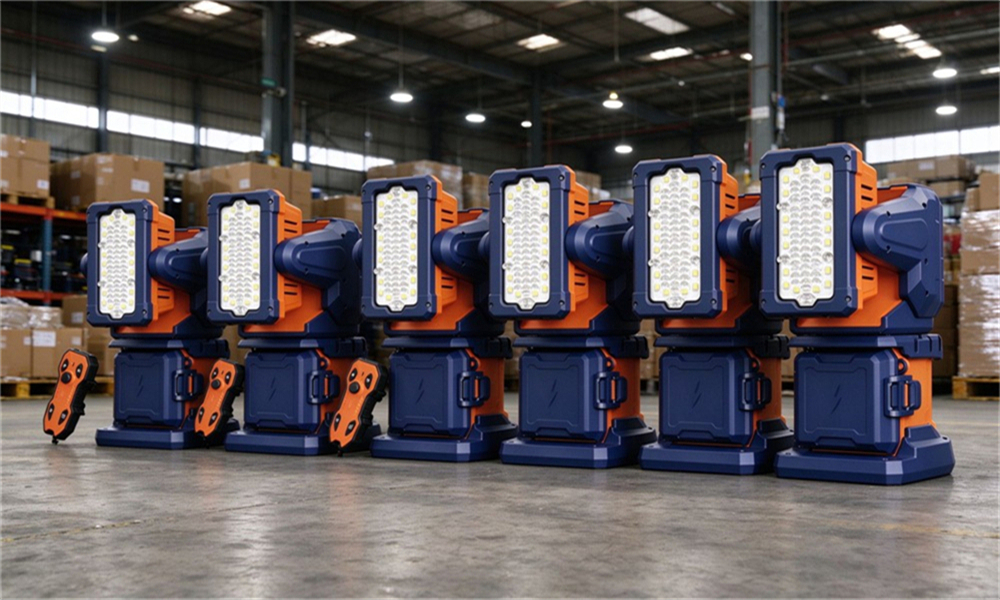
FAQ: Deep Technical Questions on PTZ Searchlight
3° medium beam covers 300-600 m, which matches a container yard's main aisle. Add a 5° wide optic for the gate area. Keep 1° in reserve for vessel approach at night.
Open range is 100 m. Through steel bulkheads it drops to 30-50 m. For engine-room installations, run a wired hand controller through the conduit.
Standard units are not ATEX/IECEx certified. For Zone 1/2 hazardous areas order the explosion-proof variant. Standard units are fine for non-hazardous perimeter roads and helipads.
This all-in-one box means the remote searchlight works on day one, and the remote searchlight needs no extra bracket parts to install
At 300 m this remote searchlight still delivers over 200 lux on target.
Every remote searchlight ships with a CE beam-intensity test report.
The remote searchlight housing survives a 1.5 m drop onto concrete.
Operators prefer one remote searchlight over three fixed floodlights for a yard.
This remote searchlight draws under 80 W on low beam all night.
The remote searchlight beam narrows to 5 degrees for long-distance spotting.
Each remote searchlight passes a 48-hour salt spray test before export.
A trained guard aims the remote searchlight from the control desk in seconds.
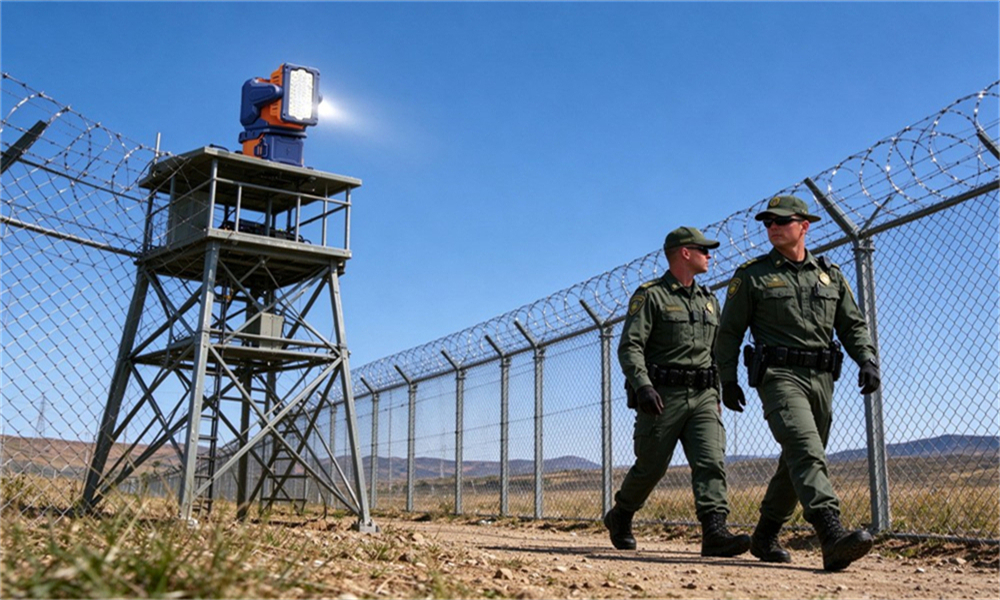
The control room operator uses a 433 MHz remote to pan a unit across the aisle in 18 seconds (20°/s). Tilt drops from sky to deck in 9 seconds. Positioning accuracy of ±1° holds a container spreader in the beam at 300 m.
The units face the Red Sea humidity and salt fog. After 12 months external hardware shows no red rust. 316 stainless fasteners and powder-coated housing survive the IEC 60068-2-52 five-cycle test. Annual visual inspection is the only maintenance.
Parameter
Remote control searchlight
Fixed floodlight
Mobile tower
Throw distance
up to 1000 m
50-100 m
50-150 m
Adjustability
360° pan, ±90° tilt
Fixed at install
Mast rotates manually
Control
Wireless remote 100 m
Wall switch
On-panel
Coverage
Spot / selectable
Fixed 120° area
120° area 3000 m²
Best use
Port / oilfield / border
Warehouse / yard
Construction / disaster
A remote control searchlight is the right tool when the target moves and the mount cannot. Fixed floods win for static area lighting; towers win for large-area construction.

The remote searchlight mounts at 6 m for best perimeter coverage.
This remote searchlight meets IEC 60598 for temporary and fixed lighting.
Buyers pair each remote searchlight with a spare remote for redundancy.
The remote searchlight holds charge for 30 days on standby.
A remote searchlight outshines four area floodlights on the same pole.
This remote searchlight passes a 2 m water jet test at IP66.
The remote searchlight works from -25 C to +55 C on site.

Bulk orders make sense when a site has multiple corners to watch.One PT-200 rescue light covers one tower post.
A port with three gantries or an oilfield with four fence corners needs a small fleet.
Bulk orders share one container, one customs file and one spare-parts kit, keeping per-unit logistics cost down.
Pricing is built on three levers: model mix, customization level and order quantity.Three identical PT-200 rescue light units cost less per unit than three fully custom units.
We do not publish prices online.Send us your bill of quantities and we return a line-item quote, subject to contract after your choices are locked.
Tender buyers get formal spec sheets.We align the IP66, IK10, 360-degree pan and battery-AC lines to your tender language exactly.
Packing lists and model cross-reference sheets ship with every rescue light order.No online discount list; the right rescue light fleet is priced to your tender.
OEM customization covers voltage, mounting and branding.Your voltage, your frequency, your local-language label on the remote.The navy and orange housing can be repainted to your fleet color.
Your logo prints on the housing, remote and nameplate.We send a mocked-up photo for approval before production.
Second OEM lever: color and remote.Some fleets want grey housing for a camouflage look on ridge posts.Some want brighter orange for gantry visibility.
The orange-black remote can be re-skinned. Portable rescue lights buyers stamp identity this way, locked at order stage with your artwork.
Certification notes ship per order.We provide IP66 and IK10 test references, nameplate photos and packing lists aligned to tender language.
We do not claim partnerships with rescue agencies or certifications we do not hold.What we provide is the real PT-200 rescue light spec on the nameplate, verified before crate.
|
Rescue Light Step |
Buyer Provides |
We Deliver |
Timing |
|
Inquiry |
Site sketch / qty / voltage |
Rescue light spec sheet + quote |
Subject to contract |
|
Config confirm |
Model / mount / power choice |
Configuration confirmation |
Subject to contract |
|
OEM custom |
Logo / color / nameplate art |
Mock-up photo approval |
Subject to contract |
|
Production & ship |
Deposit |
Finished unit + QC report |
Subject to contract |
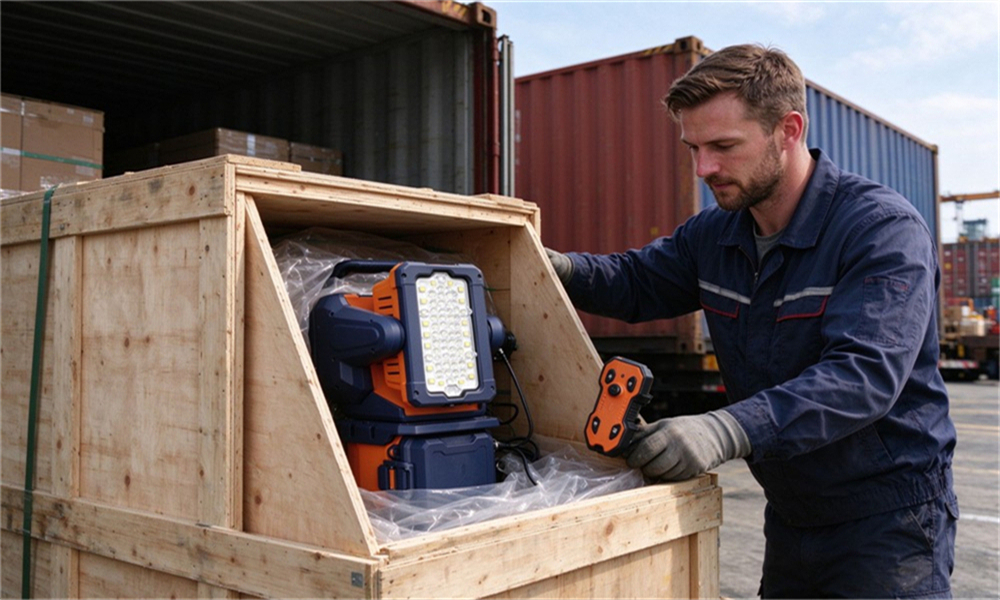
Rescue light custom voltage and mounting options
Lead time follows a simple rule.Stocked base rescue light models move faster than custom builds.A standard PT-200 with no special paint ships on the next production slot after your deposit.
Previous :
Disaster Emergency Lighting for Relief Camps and RescueNext :
Portable Telescopic Flood Light for Rescue and Road Work Solar Mobile Light Tower for Disaster Camps and Remote Sites
This trailer-based solar mobile light tower is equipped with high-efficiency monocrystalline solar panels, adjustable LED floodlights and telescopic mast. Powered by gel battery, it offers stable off-grid lighting for construction, disaster relief, remote outposts and emergency rescue tasks. Note: Price for reference only. Exact price based on quantity, size, weight and custom details.
 Diesel Light Tower for Night Construction Mining Emergency Repair Sites
This trailer-mounted diesel mobile light tower integrates diesel generator, telescopic mast and multi LED flood heads. It delivers stable high-power lighting without solar reliance, ideal for construction, road repair, disaster recovery and all-night emergency works. Note: Price for reference only. Exact price based on quantity, size, weight and custom details.
 Portable Telescopic Flood Light for Rescue and Road Work
This TL-200 portable flood light adopts telescopic aluminum mast and dual LED heads, powered by lithium battery. It delivers stable bright illumination for fire rescue, roadside emergency, construction and disaster relief, easy to carry and fast setup. Note: Price for reference only. Exact price based on quantity, size, weight and custom details.
 Disaster Emergency Lighting for Relief Camps and Rescue
Disaster lighting family includes telescopic mast light, remote searchlight and handheld 360 light. Solar charging support, off-grid available, durable for earthquake rubble, flood rescue, camp lighting and emergency road repair. Note: Price for reference only. Exact price based on quantity, size, weight and custom details.
 Emergency Lighting Supplier for Wholesale and Relief Tenders
Full emergency lighting lineup includes solar light towers, diesel towers, telescopic lights and handheld rechargeable lights. IP rated, durable for disaster relief, construction, warehouse and night rescue, supports off-grid power supply for long time outdoor illumination. Note: Price for reference only. Exact price based on quantity, size, weight and custom details.
 Government Agency Supplies Rescure Equipment Blanket Sherpa Throw Blanket Soft Thick Double Layers for Single Size
100% Microfiber UNIQUE DESIGN PHILOSOPHY: Super Soft Government Agency Supplies Emergency Survival Blanket with Fleece Face and Plush Sherpa reverse offers you different senses of softness to improve your sleep with one side of smooth and fluffy to the other
Copyright © Custom Disaster - Relief Bedding: Tents, Sleeping Bags, Blankets All Rights Reserved
the professional team to service !


