


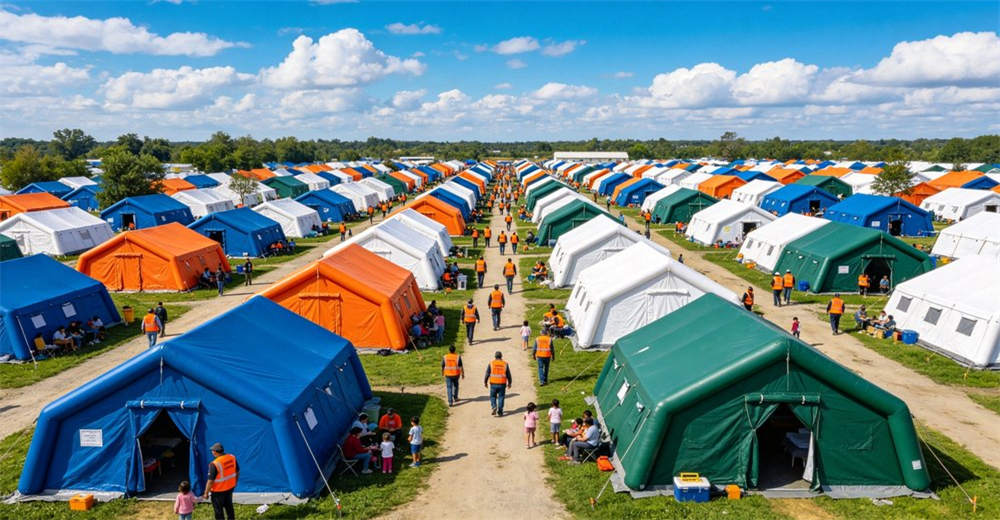
Our inflatable disaster relief tent is engineered for humanitarian aid and emergency response. Quick‑inflation design enables fast field deployment. Heavy‑duty PVC fabric delivers outstanding weather resistance. Modular structure supports multi‑unit connection, ideal for refugee camps, earthquake, flood and large‑scale disaster relief missions.
Note: Price for reference only. Exact price based on quantity, size, weight and custom details.
model no. :
IT-7-BBrand:
YRFmarket price :
$933.8sale price :
$466.9price range :
5-100/$466.9Color :
Multiple Colorsport of dispatch :
Guangdong/GuangzhouPayment :
TT, Paypal, Western Unionmin order :
30original region :
Made in ChinaLead Time :
5-15days
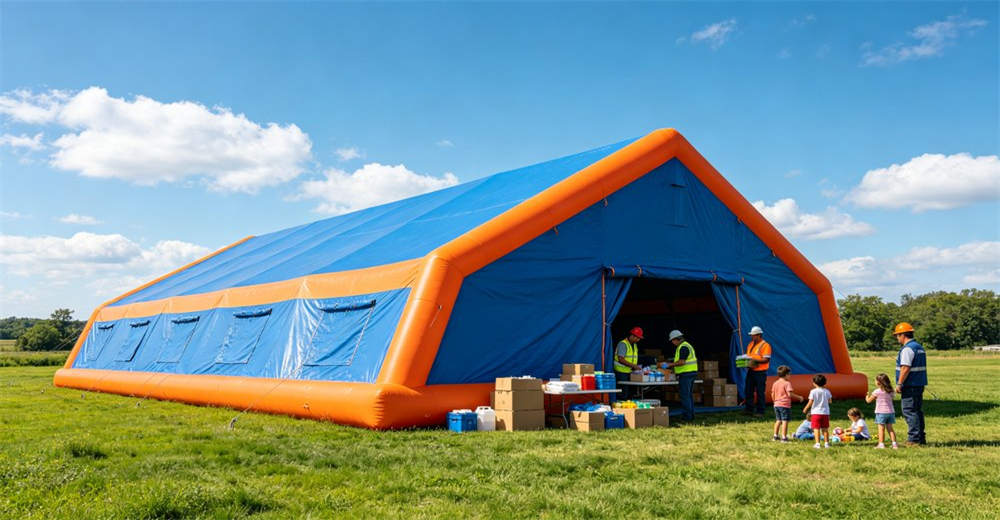
Our disaster relief inflatable tents provide rapid, reliable shelter for emergency response, refugee camps, medical facilities, and humanitarian operations worldwide. Engineered for fast deployment (5-8 minutes per tent), durable construction, and compliance with international aid standards.
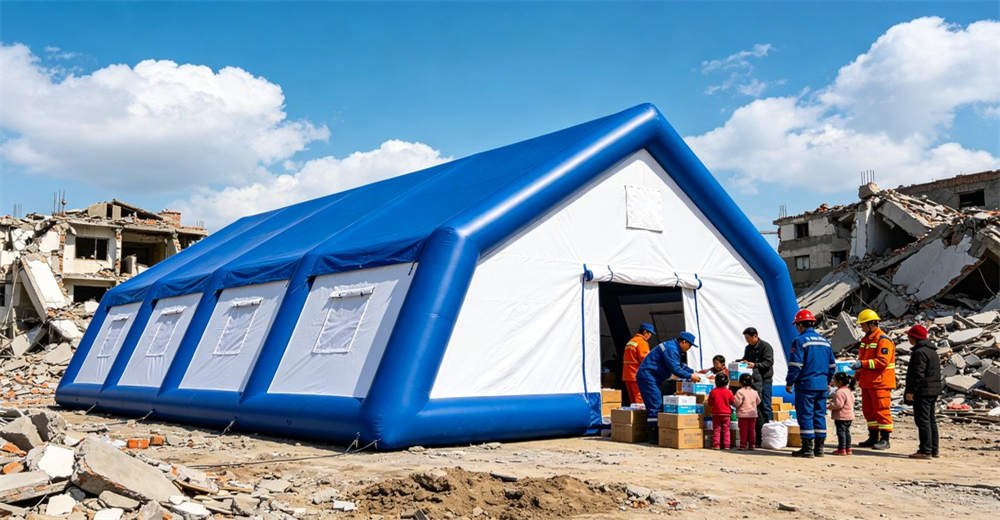


As a leading disaster relief inflatable tent manufacturer, we provide wholesale emergency shelter units and custom emergency shelter tents for humanitarian aid organizations worldwide. Our inflatable medical tent for disaster relief and rapid deployment emergency shelter solutions meet international quality standards.
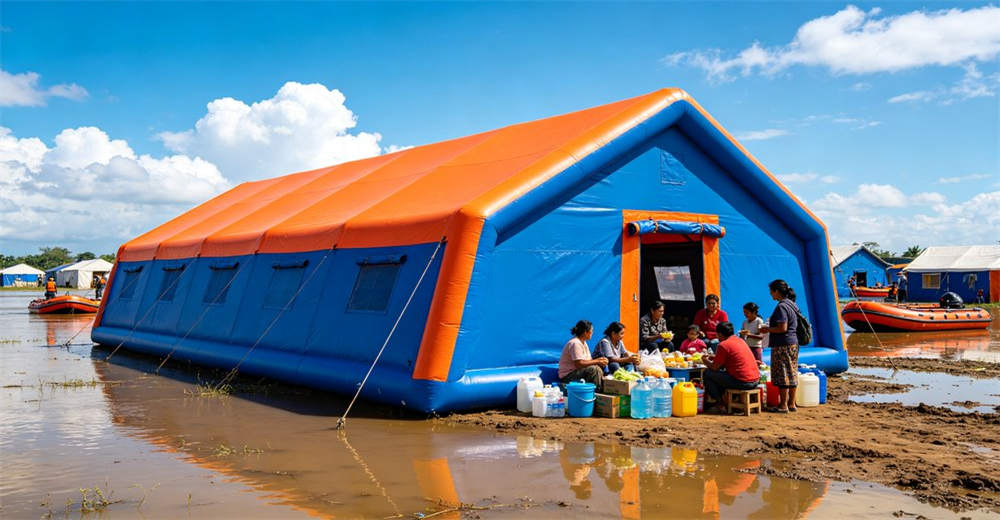
Disaster Relief Tent: Planning Relief Shelter Capacity
Effective disaster response begins with accurate shelter needs assessment. Factors include affected population size, family composition, vulnerability profiles (elderly, disabled, pregnant women, children), climate conditions, and expected displacement duration. Our team provides capacity planning support based on UNHCR and IFRC standards.
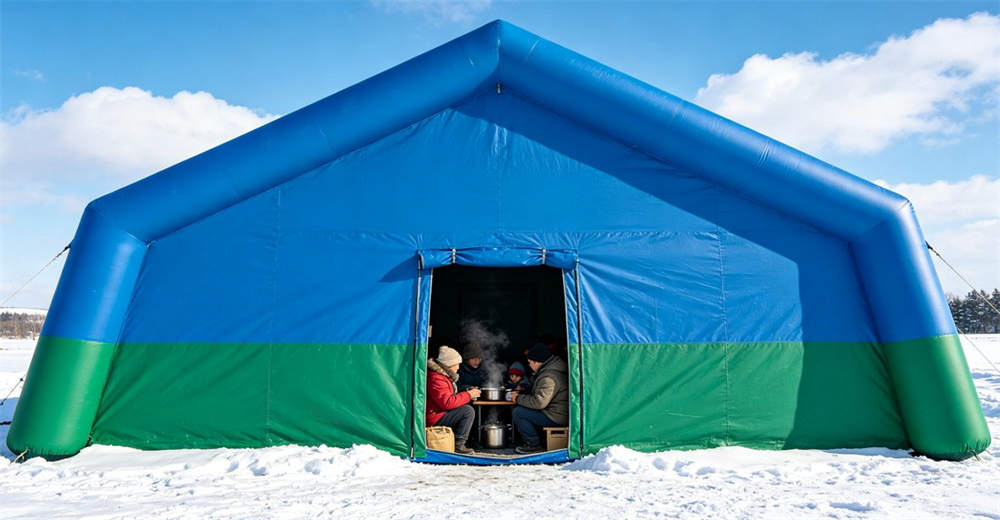
Small Community Shelter (2-3 tents)
Large refugee camps with 50+ tents demand robust infrastructure including multiple medical stations, expanded sanitation blocks, and comprehensive logistics support for sustained operations.
Medium refugee camp sections require a more comprehensive setup with dedicated medical, sanitation, and community facilities to support 50-120 persons effectively.
For small community shelters, the recommended configuration balances family housing with essential support facilities, ensuring basic services are accessible within a compact footprint.
|
Component |
Specification |
Purpose |
|
Family Tent |
40sqm Relief Inflatable Tent |
Family shelter for 5-8 persons, with partition option for privacy |
|
Key Features |
Blue color, mosquito net windows, family partition curtain, integrated floor |
Weather protection, insect control, privacy, hygiene |
|
Setup Time |
5-8 minutes (2-3 persons) |
Rapid family shelter establishment |
|
Best For |
Family displacement, organized camps, long-term settlement |
5-8 persons per family unit |
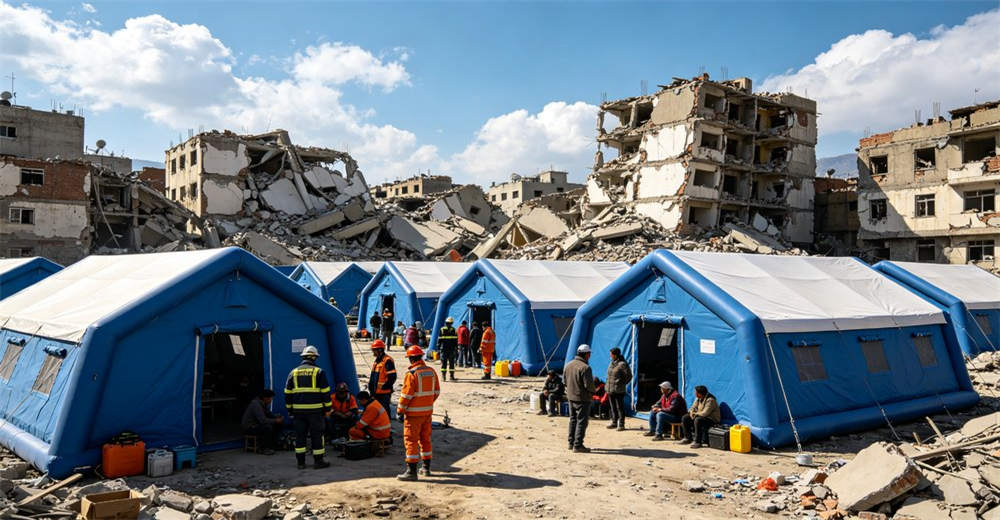
Medium Refugee Camp Section (10-20 tents)
Large-scale operations require comprehensive infrastructure planning with multiple service points, robust logistics chains, and specialized facilities to support hundreds of displaced persons over extended periods.
This medium camp configuration provides balanced coverage for housing, medical, sanitation, and community needs in a scalable layout that can be expanded as the situation evolves.
|
Component |
Specification |
Purpose |
|
Family Tents |
2-3 × 40sqm Relief Tents |
Shelter for 10-24 persons (extended family or small group) |
|
Common Area Tent |
1 × 30sqm Medical or 40sqm Relief |
Community gathering, cooking, children's activities, storage |
|
Sanitation Tent |
1 × 30sqm Tent (modified) |
Shower, latrine access, handwashing stations |
|
Setup Time |
3-10 minutes (4-6 persons) |
Coordinated small community deployment |
|
Best For |
Extended families, small groups, initial response phase |
10-24 persons with shared facilities |
Large Refugee Camp (50+ tents)
The following table provides detailed specifications and comparison data to support procurement decision-making for emergency shelter procurement.
|
Component |
Specification |
Purpose |
|
Family Shelters |
10-15 × 40sqm Relief Tents |
Family housing for 50-120 persons |
|
Community Center |
1 × 60sqm Large Tent or 2 × 40sqm connected |
Community gathering, food distribution, information center, children's space |
|
Medical Clinic |
1 × 30sqm Medical Tent |
Basic healthcare, first aid, maternal health, immunization |
|
Sanitation Block |
2 × 30sqm Tents (modified) |
Showers (gender-separated), latrine access, handwashing, laundry |
|
Storage/Logistics |
1 × 40sqm Relief Tent |
Food storage, non-food item distribution, supply management |
|
Setup Time |
2-4 hours (8-12 persons) |
Phased deployment with family shelters first |
|
Best For |
Organized camp sections, medium displacement, extended operations |
50-120 persons with complete facilities |
Disaster Relief Tent: Disaster Scenarios and Shelter Challenges
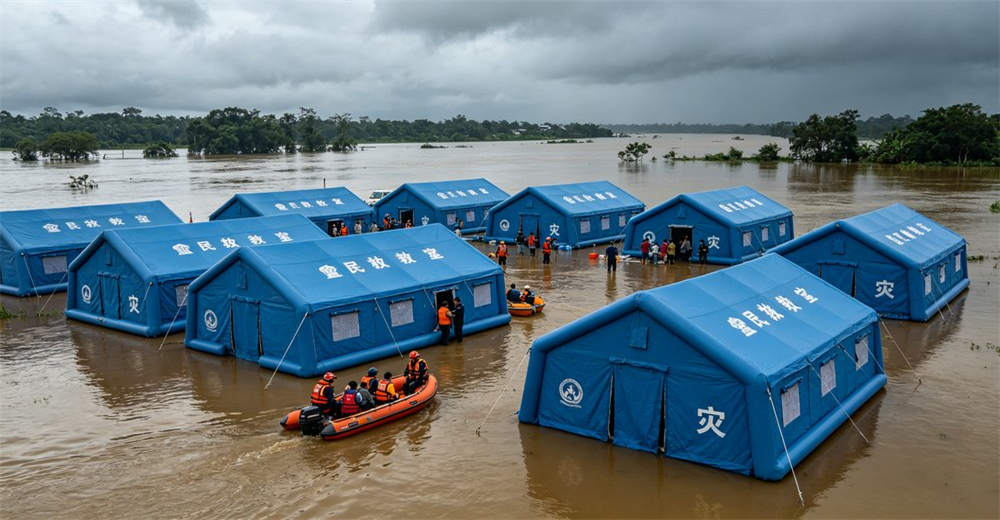
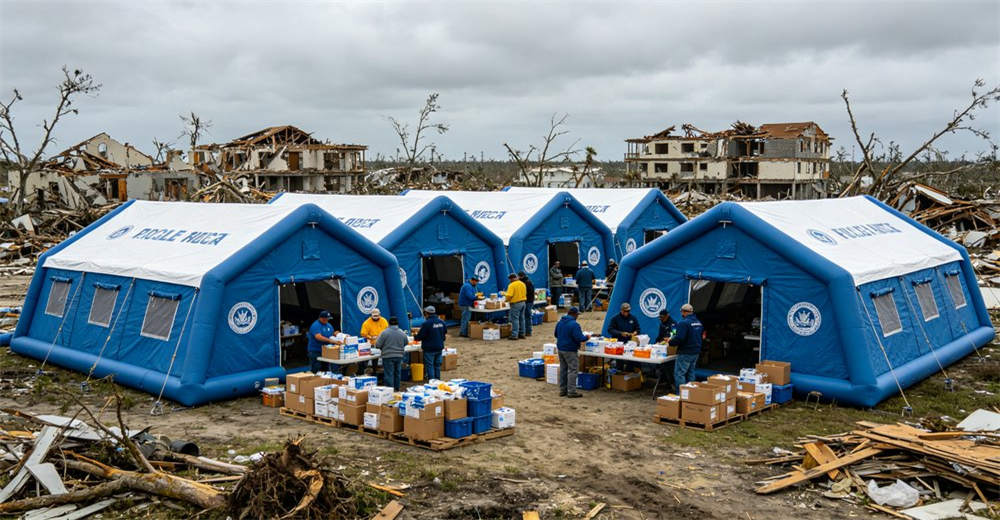
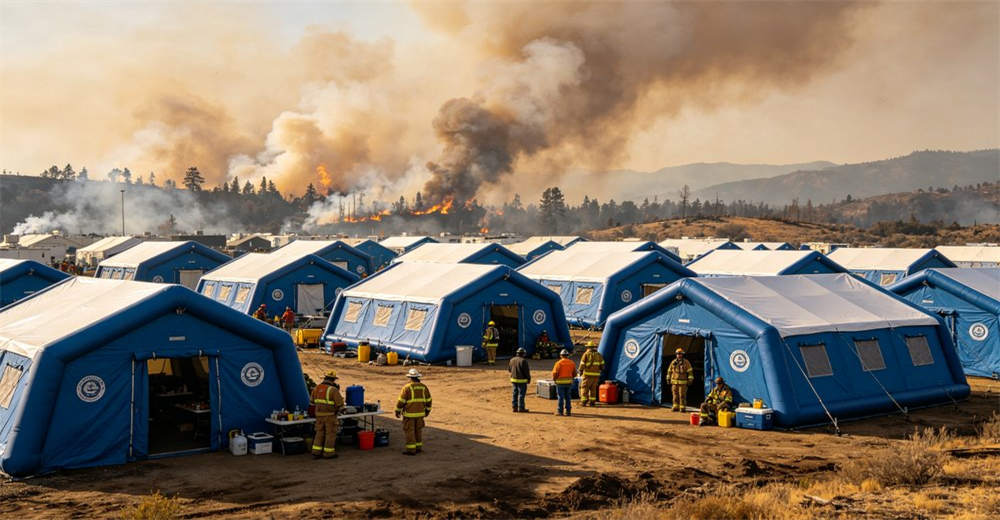
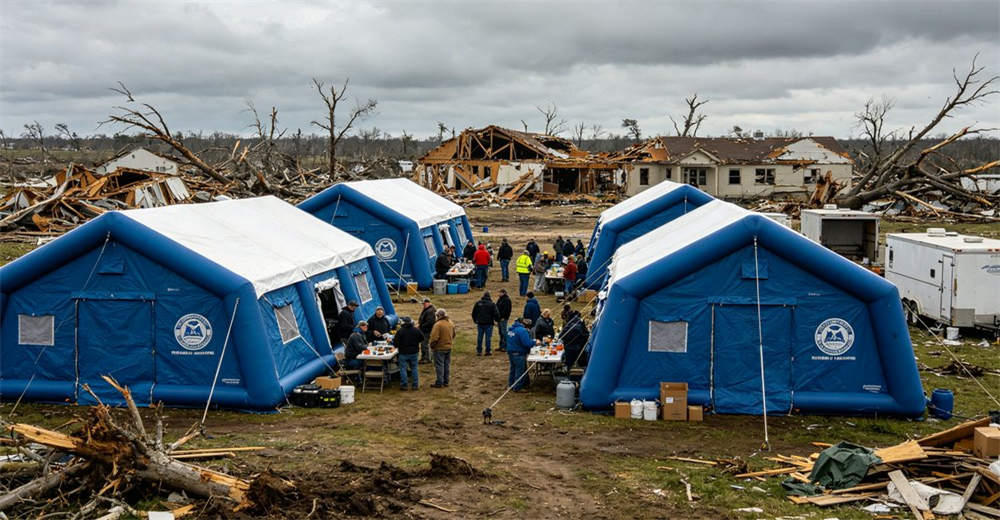
Different disaster scenarios present unique shelter challenges. Earthquakes require rapid deployment with minimal site preparation. Floods demand elevated flooring and water-resistant materials. Hurricanes need enhanced wind resistance and anchoring. Refugee crises require long-term durable solutions with community facilities. Our inflatable tent systems address all these scenarios with configurable designs.
Our humanitarian aid tent solutions are trusted by international relief organizations for their durability and rapid deployment capability.
Earthquake Response
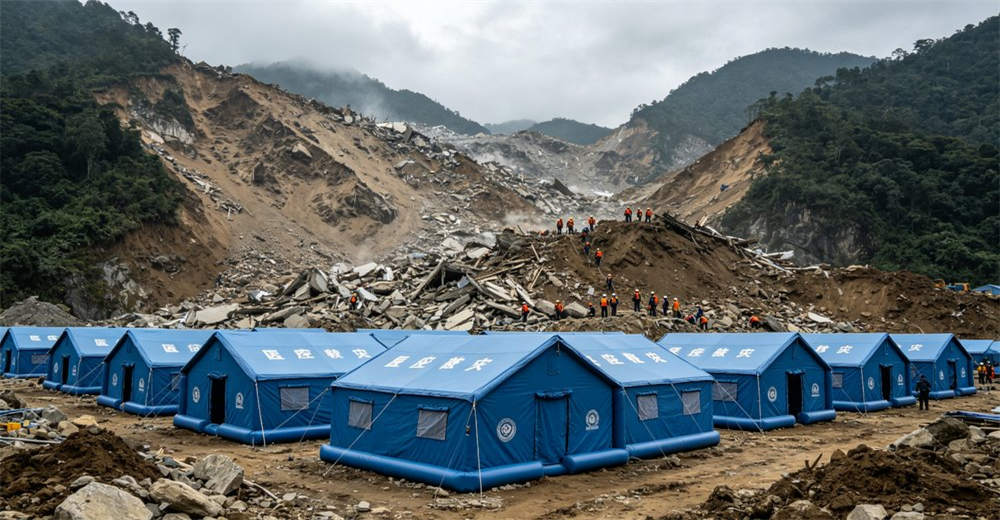
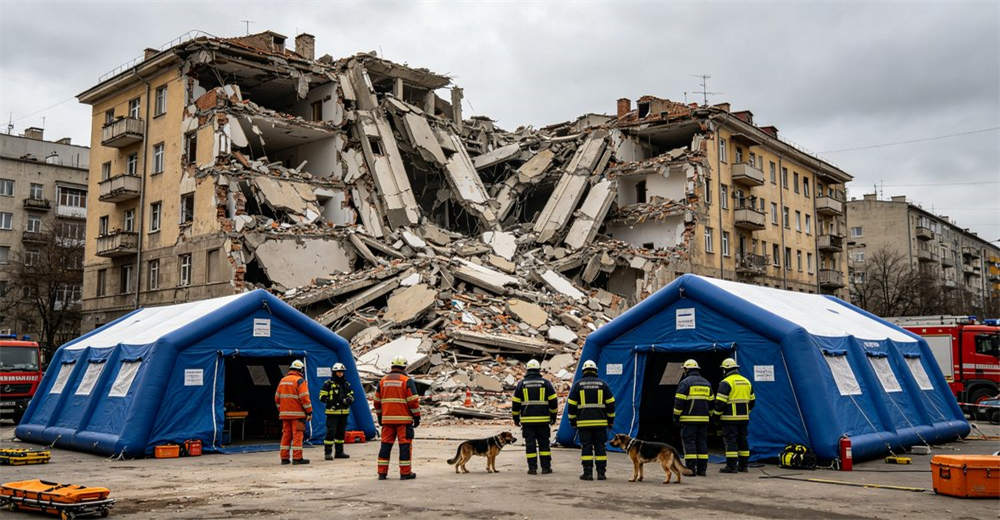
Earthquake disasters require rapid deployment with minimal site preparation. Our inflatable emergency shelter tents can be deployed on uneven terrain and provide immediate protection for displaced families while permanent recovery planning gets underway.
Flood and Hurricane Response
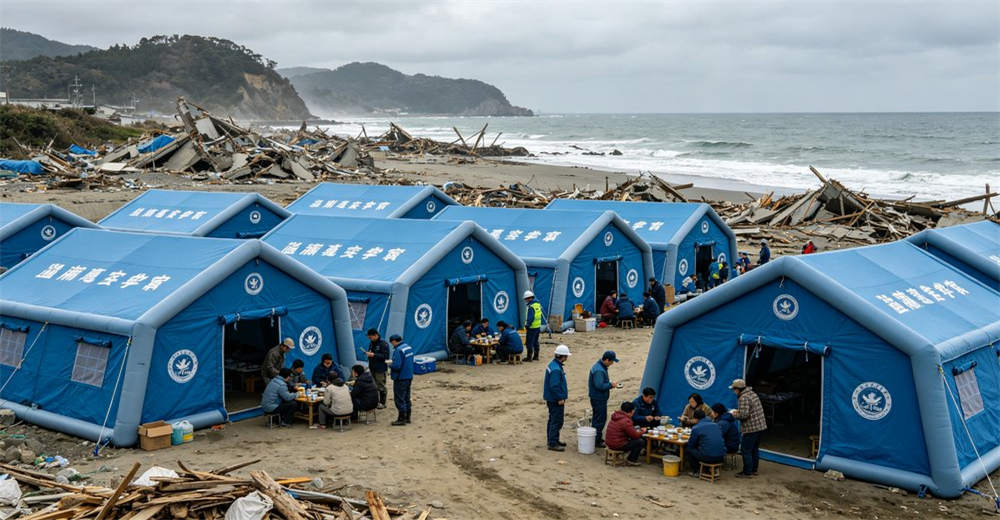
Flood and hurricane scenarios demand elevated flooring, water-resistant materials, and enhanced wind resistance. Our waterproof inflatable relief tents feature reinforced anchoring systems and elevated flooring options to withstand challenging weather conditions.
Refugee Crisis and Long-Term Displacement
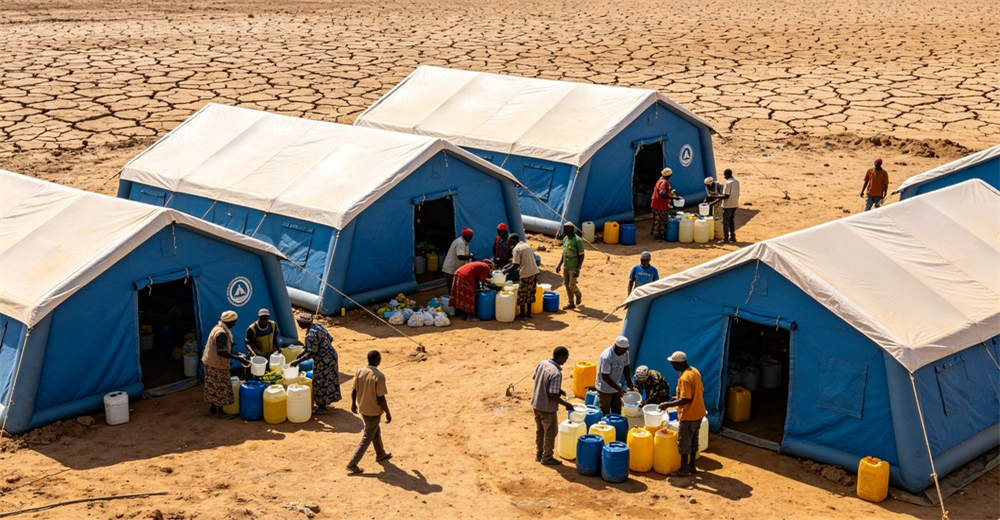
Protracted refugee crises require durable, scalable shelter solutions that support community development. Our refugee camp tent systems can be expanded incrementally, with connected tent configurations for schools, clinics, and community centers.
Disaster Relief Tent: Recommended Relief Tent Configurations
Based on extensive field experience and humanitarian agency requirements, we recommend the following standard configurations for disaster relief operations. Each configuration can be customized based on specific operational needs and climate conditions.
|
Component |
Specification |
Purpose |
|
Family Shelters |
50-200+ × 40sqm Relief Tents |
Family housing for 250-1600+ persons |
|
Community Centers |
4-8 × 60sqm or 40sqm connected tents |
Multiple community spaces distributed across camp sections |
|
Medical Facilities |
2-4 × Medical Tents (30-60sqm) |
Clinic, pharmacy, maternal health, isolation/quarantine |
|
Sanitation Blocks |
8-16 × Modified Tents |
Gender-separated showers, latrines, handwashing, laundry (1 per 50 persons) |
|
Food Distribution |
2-4 × Large Tents |
Food storage, preparation, distribution centers |
|
Education/Child Protection |
2-4 × Tents |
Temporary schools, early childhood development, child-friendly spaces |
|
Administration/Security |
2-4 × Tents |
Camp management office, registration, security post, meeting space |
|
Setup Time |
1-3 days (20-50 persons, phased) |
|
|
Setup Time |
1-3 days (20-50 persons, phased) |
Priority: family shelters first, then support facilities |
Additional camp zones complete the comprehensive layout plan, ensuring all essential services and support areas are properly positioned for efficient camp operations and resident wellbeing.
Disaster Relief Tent: Deployment Timeline and Process
Deploying disaster relief shelters follows a structured timeline, with priority given to protecting people from the elements as quickly as possible. Below is a typical deployment timeline for a medium camp section (10-20
Our disaster response tent units are engineered for rapid deployment in critical situations, ensuring that humanitarian aid tent infrastructure can be established within hours of arrival at affected areas.
Each disaster response tent unit comes with all necessary accessories for immediate setup without requiring specialized tools or equipment.
tents, 50-120 persons). Our quick setup emergency tent and emergency response tent supplier capabilities ensure rapid delivery to crisis zones. The inflatable isolation tent for disasters provides critical infection control capacity for medical operations.
Phase 1: Site Assessment and Preparation (0-2 hours)
Team arrives at designated camp site and conducts comprehensive site assessment: ground conditions (level, well-drained, firm), accessibility for supply trucks and ambulances, proximity to hazards (flood zones, landslide risk, unstable structures), availability of water sources, space for camp expansion, and security considerations.
Site is marked with tent positions, walkways, and facility locations. Team leader assigns roles: site preparation, tent deployment, logistics, community liaison, security. Ground is cleared of debris, rocks, and vegetation. Tent positions are leveled if necessary. Ground tarps or groundsheets are laid at each tent position.
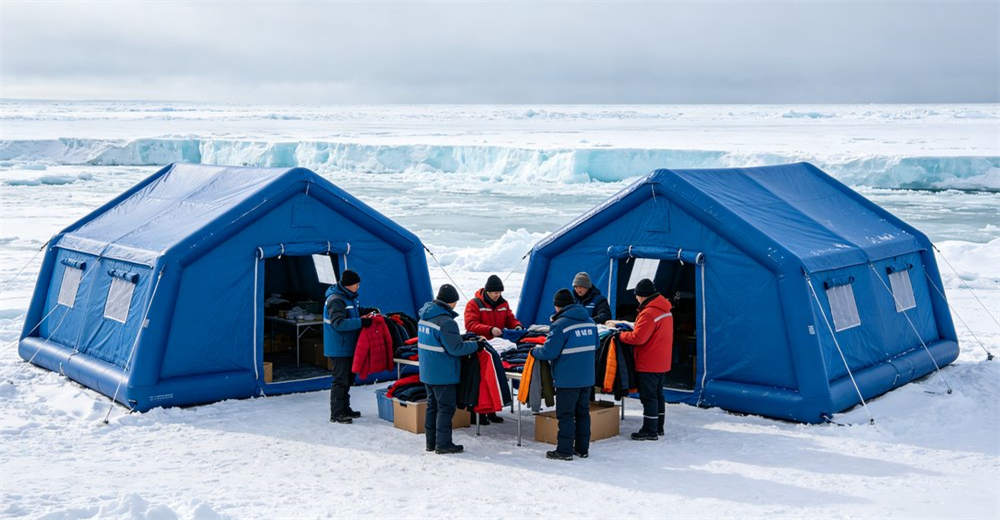
Phase 2: Priority Family Shelter Deployment (2-6 hours)
Priority: deploy family shelters as quickly as possible. Teams of 2-3 persons deploy each 40sqm relief tent in 5-8 minutes. Tents are deployed in parallel by multiple teams to maximize speed. Each tent is secured with ground stakes and guy lines immediately after inflation.
Tent doors are oriented away from prevailing winds and rain. Families are assigned to tents based on registration and vulnerability prioritization (elderly, disabled, pregnant women, families with young children first). Initial shelter capacity established within 3-4 hours of site preparation.
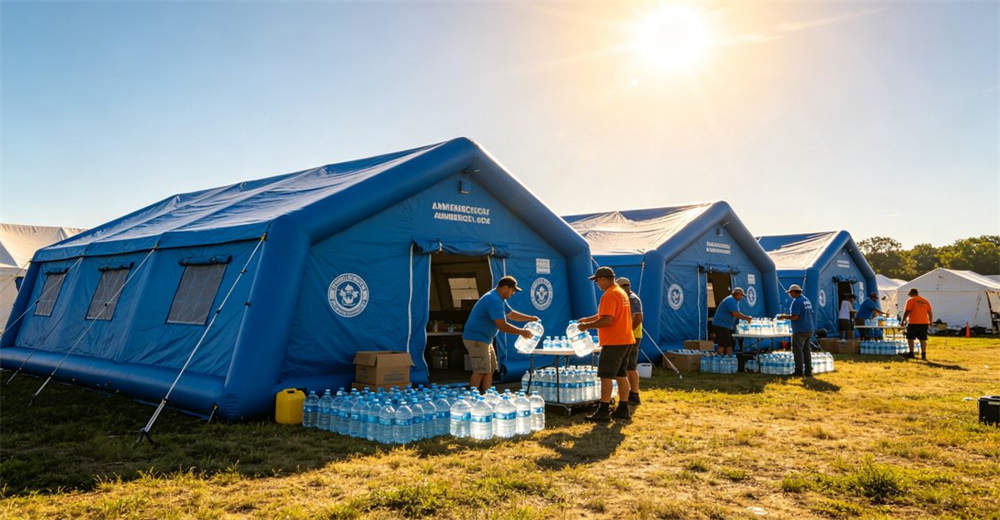
Phase 3: Critical Support Facilities (6-24 hours)
Once initial family shelters are established, deploy critical support facilities: medical clinic tent, sanitation blocks (showers, latrines, handwashing stations), and food distribution/storage tent. These facilities are positioned according to camp layout plan, with medical clinic centrally accessible, sanitation facilities gender-separated, and food distribution near camp entrance.
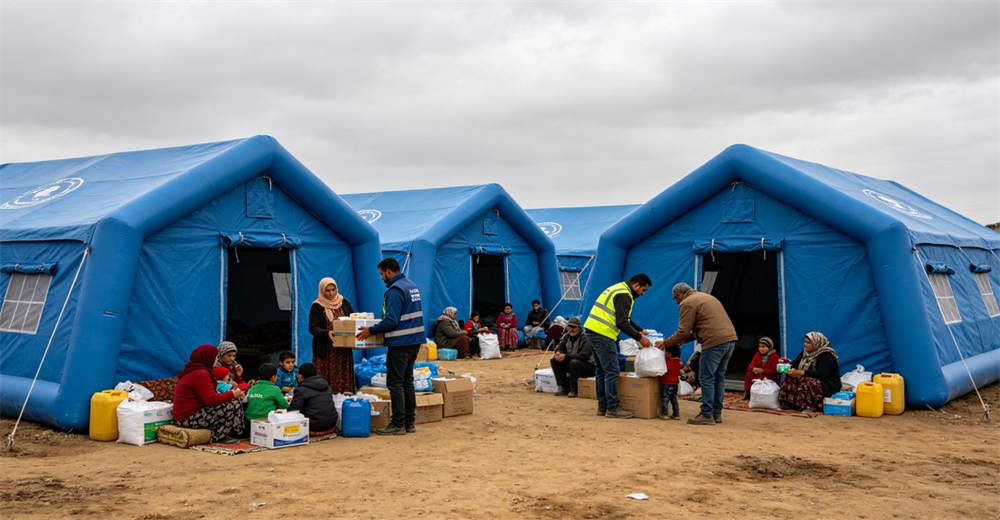
Phase 4: Full Camp Establishment (24-72 hours)
All family shelters deployed and occupied. All support facilities operational: medical clinic providing basic care, sanitation facilities functional, food distribution system established, community center available, camp management office operational, security patrols established. Camp infrastructure verified: walkways clear and lit, drainage functional, tent anchoring secure, fire safety measures in place.
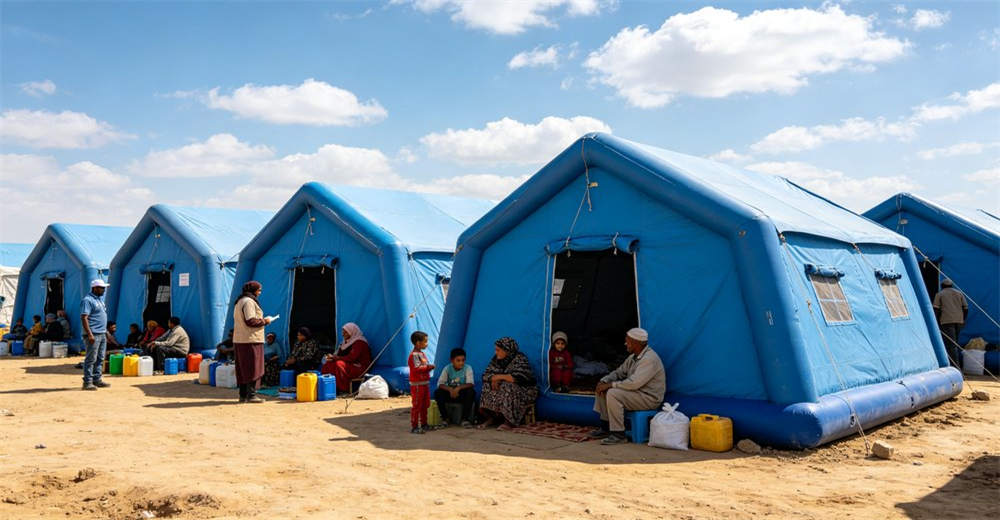
Disaster Relief Tent: Refugee Camp Layout Planning
Proper camp layout is essential for public health, safety, community wellbeing, and efficient service delivery in displacement camps. A well-planned layout minimizes disease transmission, reduces security risks, improves access to services, and supports community cohesion.
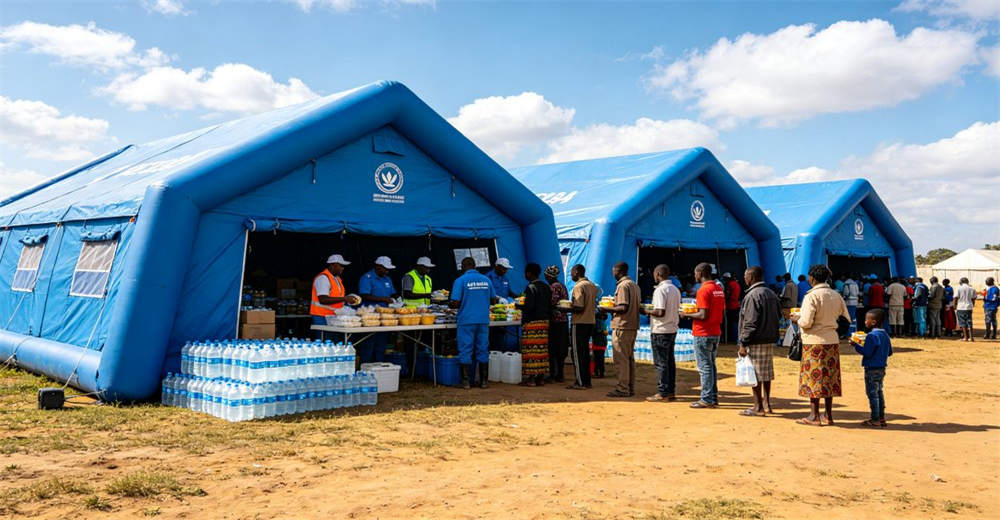
Each refugee camp tent configuration is designed to support long-term habitation, with ventilation systems and durable materials that withstand extended outdoor use in challenging environments.
Proper refugee camp tent placement ensures adequate spacing between units for fire safety, ventilation, and emergency access routes. Our inflatable refugee camp shelter systems can be configured in connected layouts for schools, clinics, and community centers.
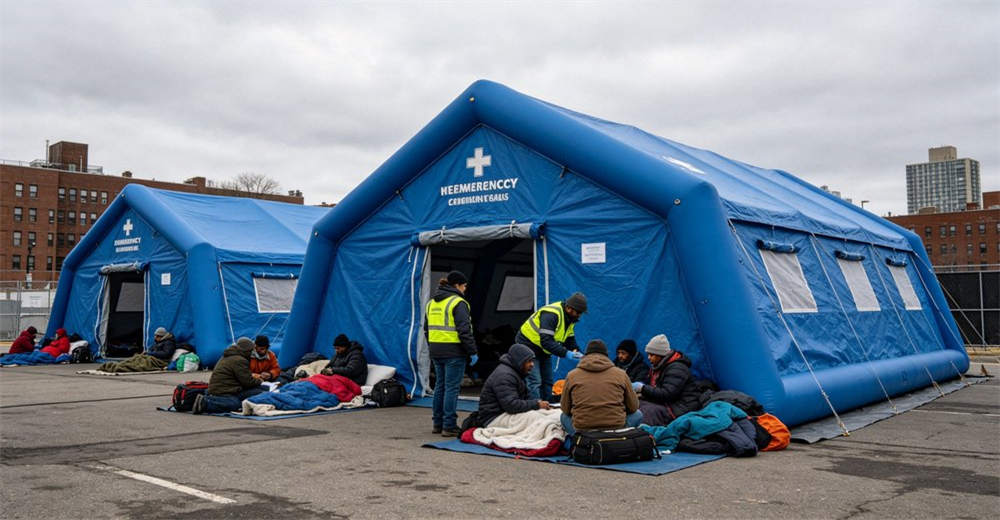
Core Layout Principles
Grid or cluster pattern: Arrange family tents in an organized grid or cluster pattern with clear walkways (minimum 2m wide for pedestrian access, 4m for vehicle access).
Family spacing: Maintain minimum 2-3 meters between family tents for ventilation, fire safety, and privacy.
Section organization: Divide camp into sections of 50-100 families, each with its own community space, sanitation facilities, and section leader.
Central facilities: Place medical clinic, food distribution, community center, and camp management office in central, easily accessible locations.
Sanitation placement: Position latrines and showers at least 30m from water sources, downslope and downwind from living areas.
Water access: Place water collection points centrally, with adequate capacity (minimum 15-20 liters per person per day).
Cooking areas: Designate shared cooking areas away from tent living quarters (fire risk), with proper ventilation and fire safety equipment.
Waste management: Place waste collection bins throughout camp (1 per 50 persons), with regular collection and disposal.
Security and lighting: Ensure adequate lighting throughout camp for nighttime safety. Establish controlled camp entrances with security posts.
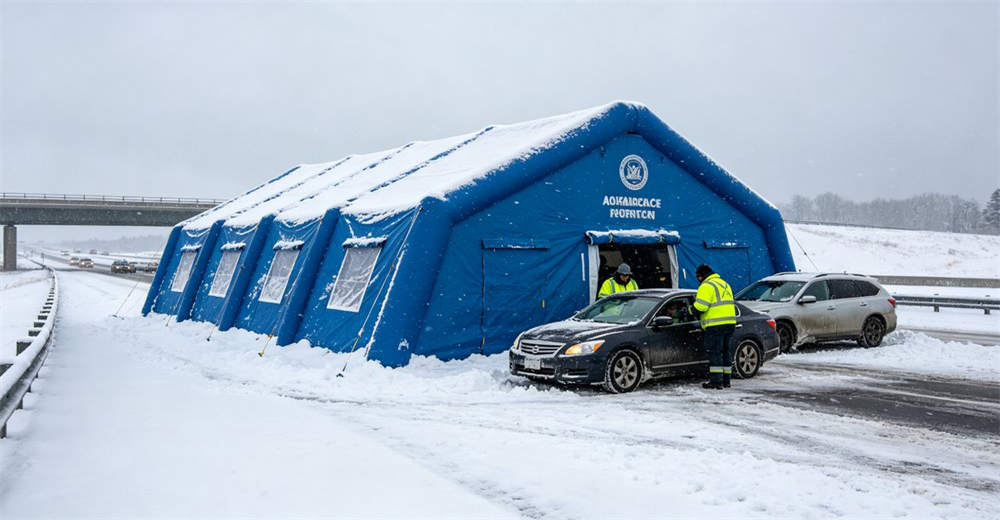
The following table provides detailed specifications and comparison data to support procurement decision-making for emergency shelter procurement.
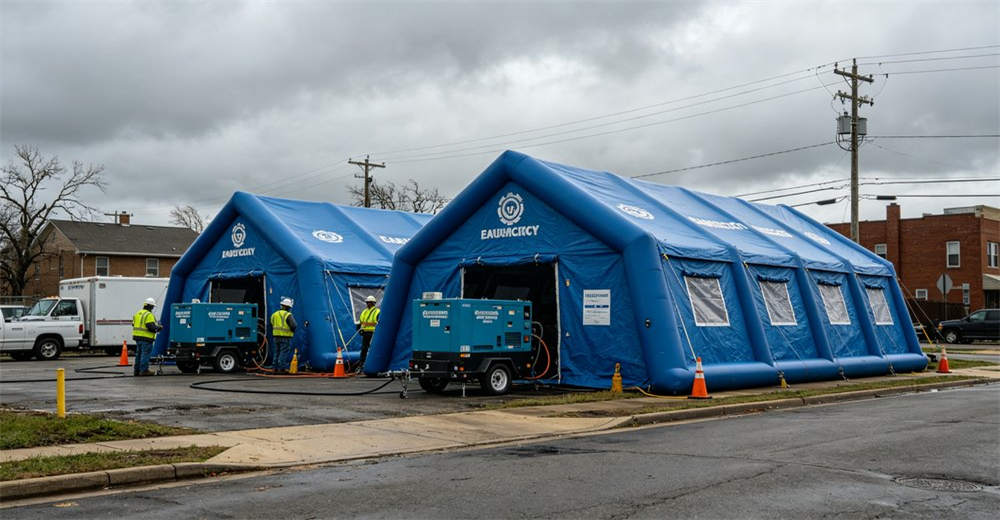
Recommended Camp Layout: Medium Section (50-120 persons)
The following table provides detailed specifications and comparison data to support procurement decision-making for emergency shelter procurement.
|
Zone |
Location |
Facilities |
Notes |
|
Entrance/Exit |
Front of camp |
Security post, registration desk, information board |
Controlled access, visitor management |
|
Family Shelter Area |
Main camp area (grid pattern) |
10-15 × 40sqm family tents, 2-3m spacing, 2m walkways |
Organized by section, vulnerability prioritization |
|
Community Center |
Central location |
1 × 60sqm or 2 × 40sqm connected tents |
Gatherings, food distribution, children's activities, info sessions |
|
Medical Clinic |
Central, near entrance |
1 × 30sqm medical tent, pharmacy, consultation area |
Easy access for ambulances and patients |
|
Sanitation (Women/Girls) |
Separate, well-lit area |
1 × modified tent: showers, latrines, handwashing, laundry |
Privacy, security, adequate lighting |
|
Sanitation (Men/Boys) |
Separate from women's area |
1 × modified tent: showers, latrines, handwashing |
Gender separation per humanitarian standards |
The following additional zones complete the camp layout plan, ensuring all essential services and support areas are properly positioned for efficient camp operations.
|
Zone |
Location |
Facilities |
Notes |
|
Water Point |
Central, accessible |
Water storage tanks, distribution taps, drainage |
15-20L/person/day minimum |
|
Cooking Area |
Perimeter, away from tents |
Shared cooking shelters, fire safety equipment, fuel storage |
Fire risk mitigation, ventilation |
|
Waste Management |
Perimeter, downwind |
Waste bins, collection point, compost area (organic) |
Regular collection, proper disposal |
|
Storage/Logistics |
Near entrance |
1 × 40sqm tent: food, NFI, supply management |
Easy supply delivery, inventory control |
|
Administration |
Near entrance |
Office space, meeting area, records storage |
Camp management, staff coordination |
|
Expansion Area |
Camp perimeter |
Reserved space for 5-10 additional tents |
Flexible growth capacity |
Disaster Relief Tent: Equipment and Supply Checklist
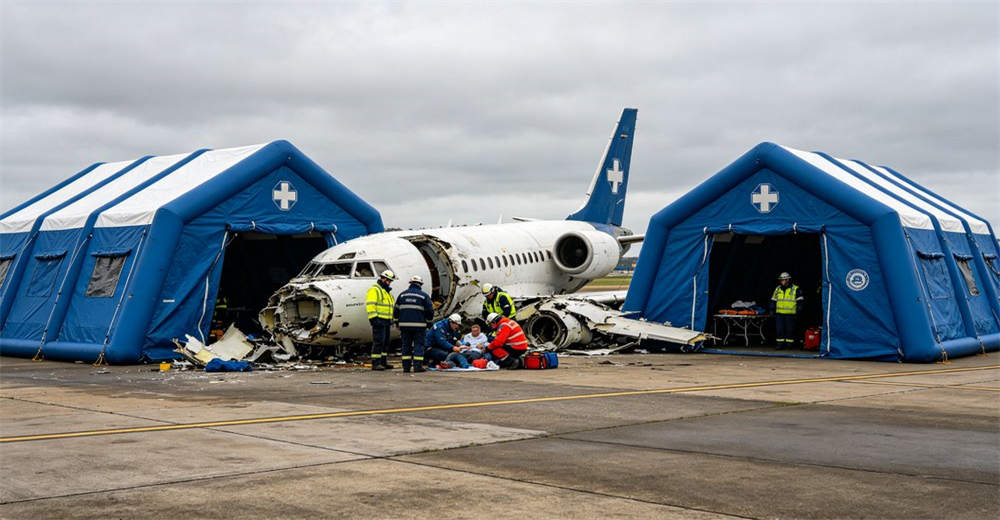
Comprehensive equipment and supply planning ensures smooth camp operations. Below is a standard checklist for a medium disaster relief camp section, covering shelter, medical, sanitation, logistics, and community support equipment.
Proper equipment planning ensures that all necessary support items are available when emergency shelter units are deployed. Each tent configuration should be paired with appropriate ground anchoring systems, ventilation accessories, interior lighting, power distribution units, and sanitation equipment. Comprehensive supply checklists help camp managers verify that all components are present before deployment, reducing setup delays and ensuring functional living environments for displaced populations. We provide detailed equipment lists tailored to each tent model and deployment scenario.
Disaster Relief Tent: Staffing and Camp Management
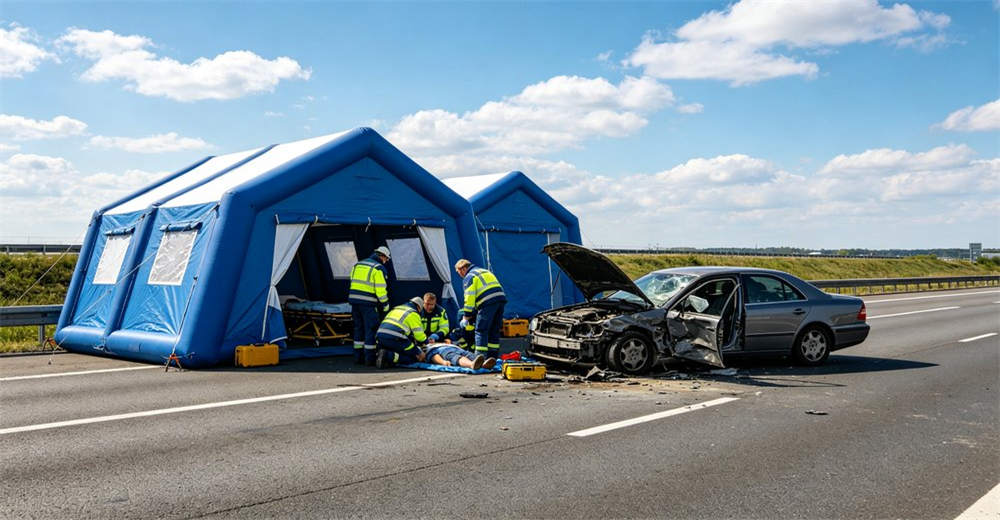
Effective camp management requires clear role definitions, regular coordination meetings, and established protocols for security, health monitoring, and community participation. Our team provides deployment training and operational support to ensure smooth camp operations from day one.
Effective camp management requires clear role definitions, regular coordination meetings, and established communication protocols. Training local community members in shelter maintenance and basic first aid creates sustainable capacity within the displaced population and reduces reliance on external support teams.
|
Role |
Number |
Responsibilities |
|
Camp Manager |
1 |
Overall camp management, coordination with agencies, resource allocation, reporting, stakeholder liaison |
|
Site/Infrastructure Officer |
1 |
Tent deployment and maintenance, site layout, power/water/sanitation infrastructure, logistics |
|
Health/Nutrition Officer |
1-2 |
Medical clinic management, public health surveillance, nutrition programs, health education, referral coordination |
|
WASH Officer |
1 |
Water, sanitation, hygiene management, facility maintenance, hygiene promotion, water quality monitoring |
|
Protection Officer |
1 |
Child protection, gender-based violence prevention, vulnerable population support, community mobilization |
|
Logistics/Procurement Officer |
1 |
Supply chain management, inventory control, procurement, transport coordination, warehouse management |
|
Community Mobilizers |
2-4 |
Community engagement, information dissemination, needs assessment, conflict resolution, volunteer coordination |
|
Medical Staff |
2-4 |
Nurses, midwives, community health workers — clinical care, maternal health, immunization, health education |
|
Security Personnel |
2-4 |
Camp perimeter security, access control, incident response, crowd management, coordination with local law enforcement |
Disaster Relief Inflatable Tent: Technical Specifications and Product Parameters
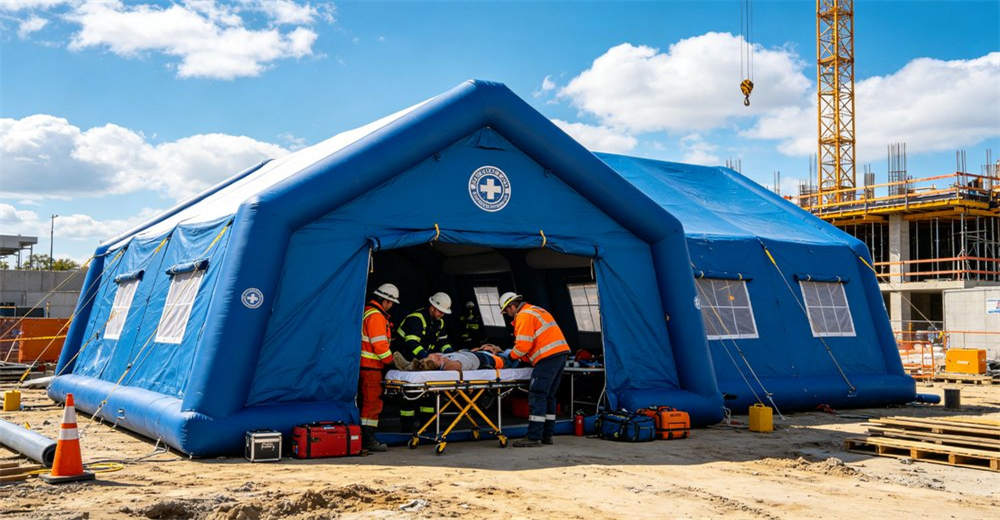
Our inflatable emergency shelters are engineered to meet international humanitarian aid standards, with rigorous testing for wind resistance, waterproof performance, and structural stability under extreme weather conditions.
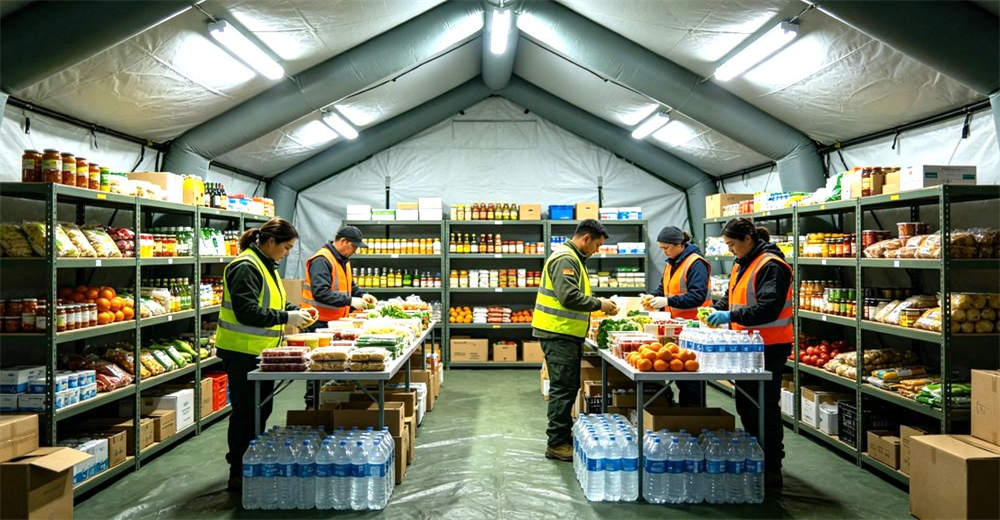
Our technical specifications are verified through rigorous testing protocols including wind tunnel testing, waterproof certification, UV resistance evaluation, and flame retardant compliance. Each product undergoes quality inspection at multiple production stages, with final testing before shipment. We provide detailed technical datasheets, material certificates, and test reports to support procurement decisions and compliance verification. Custom specifications can be developed for specialized operational requirements such as extreme cold weather, high altitude, or chemical decontamination applications.
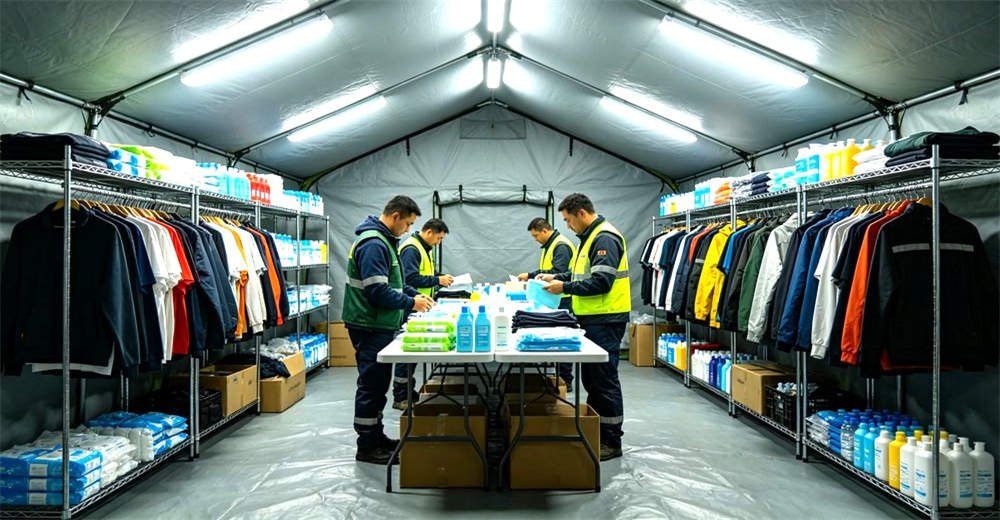
These medical relief tent configurations meet international healthcare standards for field medical operations.
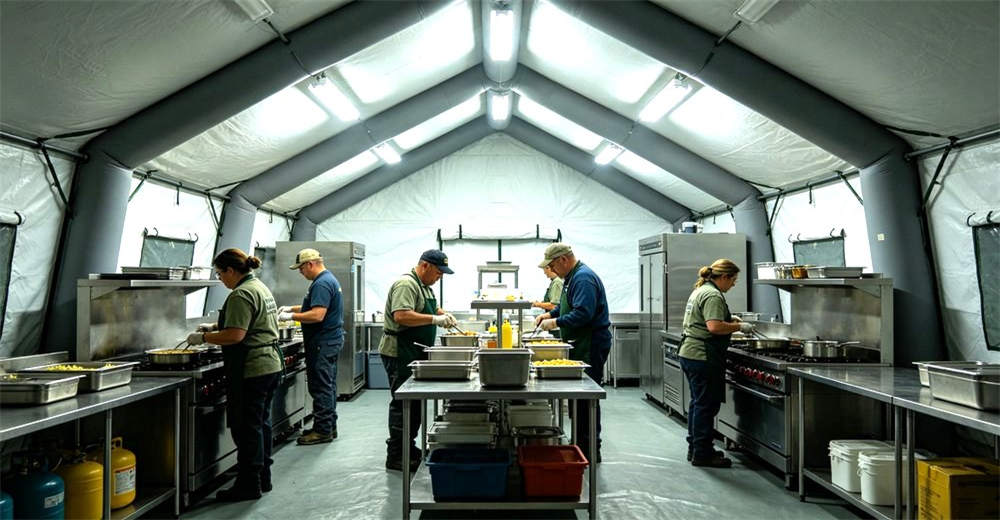
Material Specifications
Our inflatable emergency shelter units use high-strength PVC coated polyester fabric with 600-900 gsm weight, providing excellent tear resistance, UV protection, and waterproof performance (5000mm water column). The inflatable tubes are constructed with reinforced airtight chambers for reliable structural support.
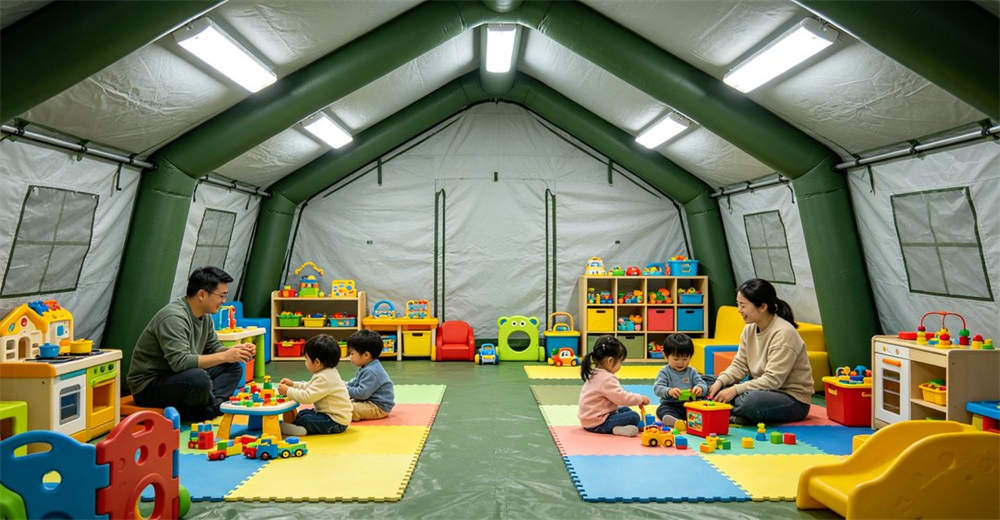
Structural Performance
Each tent model undergoes rigorous testing for wind resistance (62-75 km/h), waterproof performance, and structural stability under extreme weather conditions. The inflatable frame design distributes stress evenly, ensuring reliable protection for disaster victims and aid workers in challenging environments.
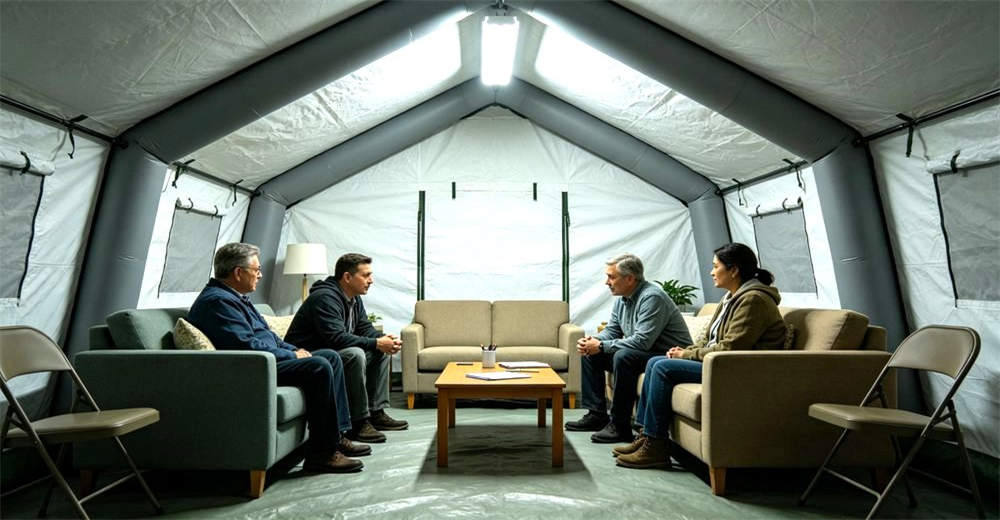
Customization Options
We offer comprehensive customization including size variations (20-100+ sqm), color options, branding/logos, window configurations, ventilation systems, flooring integration, and insulation for extreme climates. Custom emergency shelter tents can be tailored to specific operational requirements and climate conditions.
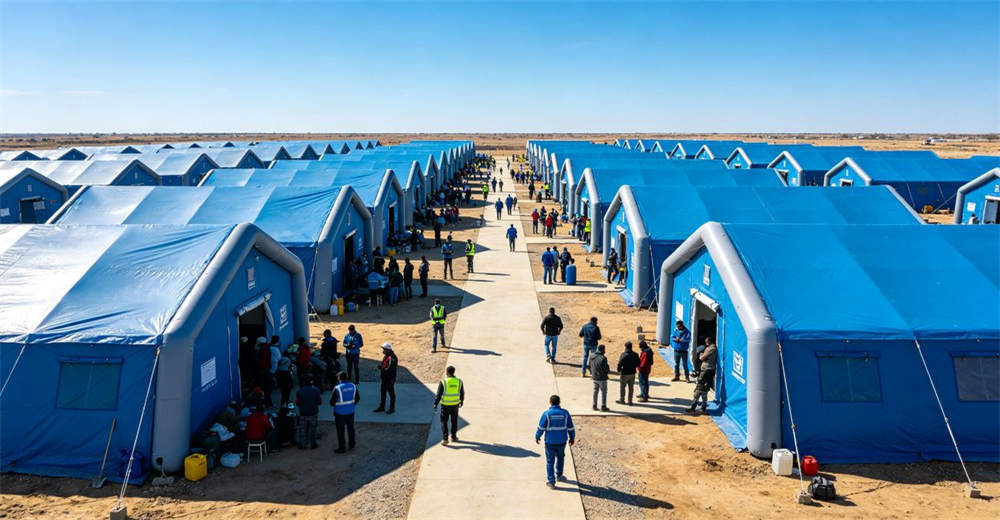
Inflatable Disaster Relief Tent: Maintenance, Care and Storage Guide
Proper maintenance and storage extend the lifespan of your inflatable emergency shelter solutions, ensuring reliable performance for years of emergency response service.
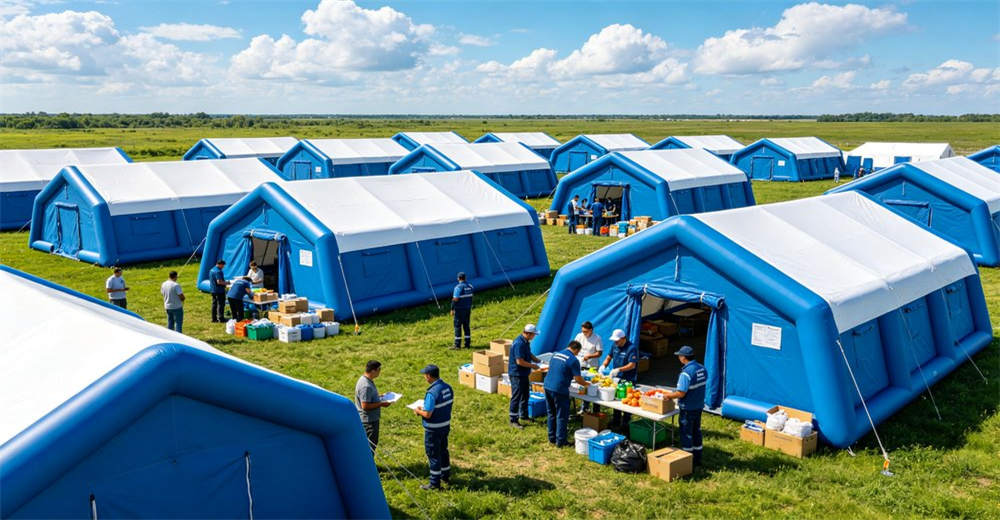
Daily and Weekly Maintenance
Regular maintenance includes visual inspection for air leaks, cleaning of fabric surfaces with mild soap and water, checking ground stake tension, and ensuring proper ventilation to prevent moisture buildup. Our relief shelter tents are designed for easy field maintenance with readily available repair kits.
Long-Term Storage Guidelines
Proper storage extends tent lifespan: ensure tents are completely dry before packing, store in cool dry environments away from direct sunlight, use original carry bags, avoid stacking heavy items on packed tents, and perform annual inspection and re-inflation testing for long-term stored units.
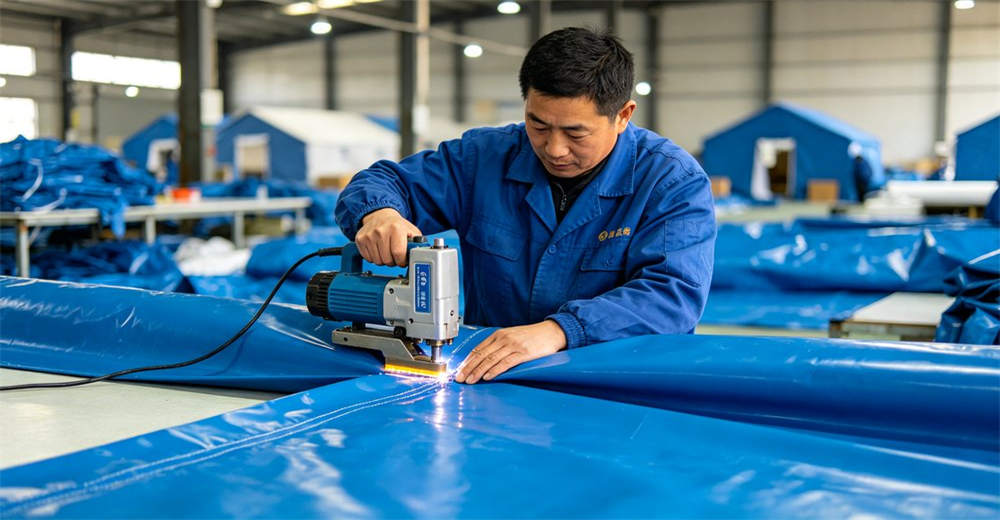
Repair and Replacement Parts
We provide comprehensive repair kits including PVC patches, adhesive, replacement valves, ground stakes, guy lines, and spare air pumps. Our emergency shelter solution manufacturer support includes technical guidance for field repairs and replacement part supply for ongoing maintenance programs.
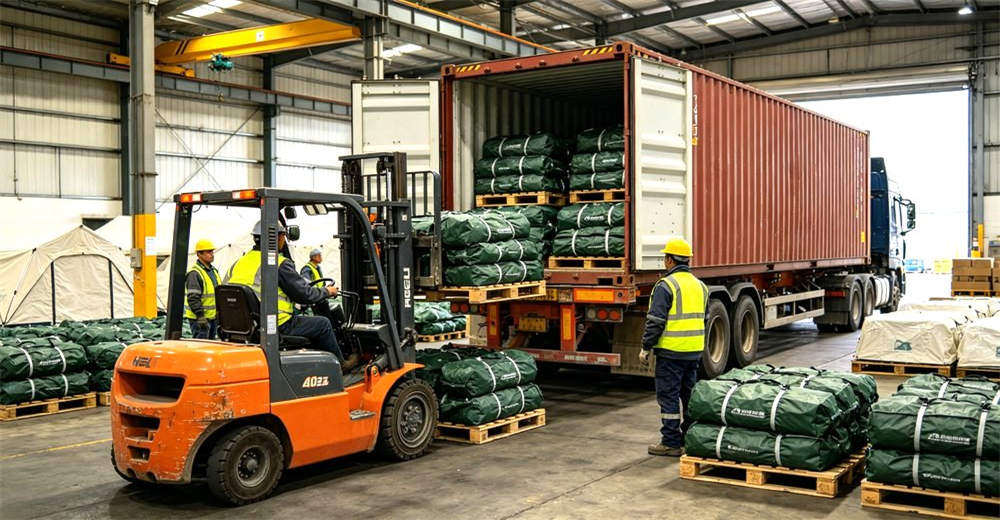
Regular inspection and maintenance schedules should be established for all deployed shelter units. Camp managers should conduct weekly visual checks for air pressure, fabric integrity, and anchoring security. Prompt repair of minor damage prevents larger issues and extends the operational lifespan of each shelter unit in challenging field conditions.
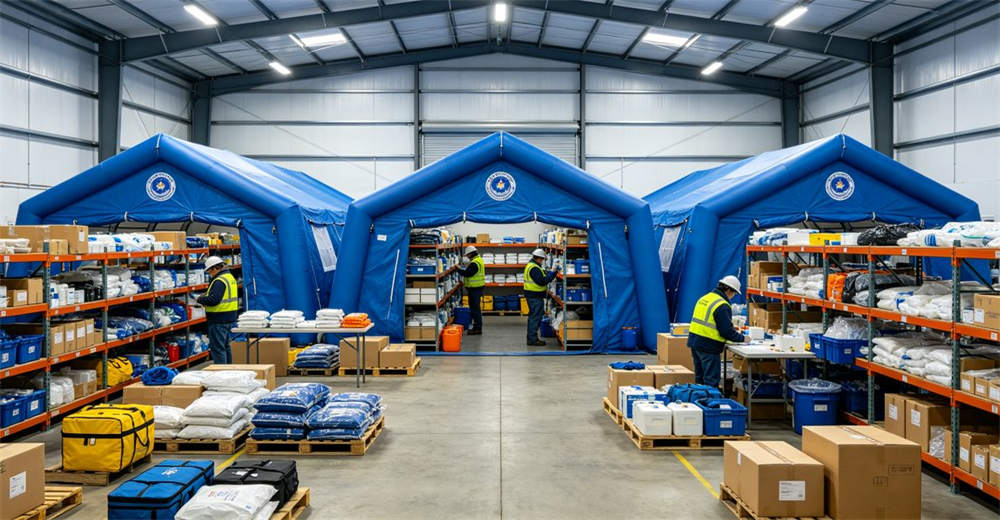
Emergency Disaster Relief Tent: Packaging, Transportation and Logistics
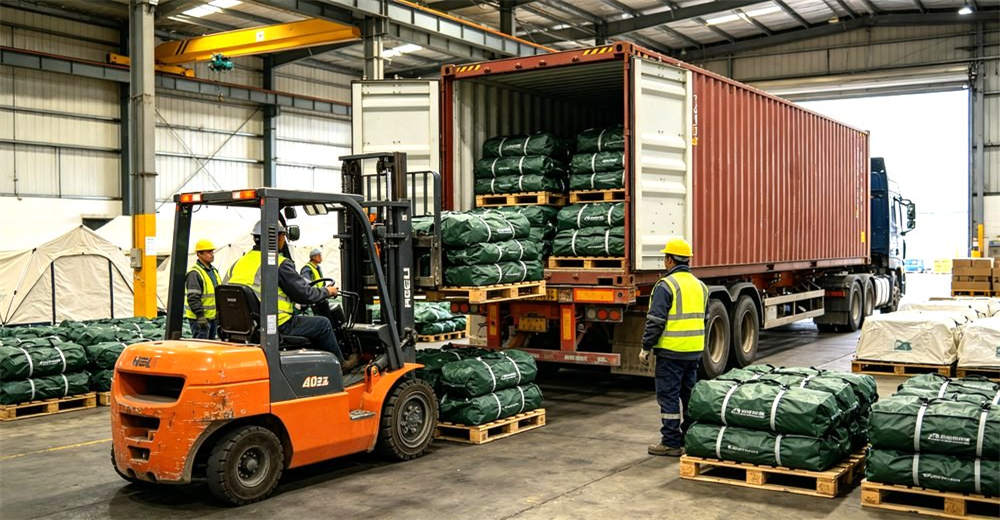
Our emergency shelter solutions are packed in durable carry bags for easy transport, with compact packaging dimensions optimized for air, sea, and land logistics.
Efficient packaging and logistics are critical for rapid disaster response. Our inflatable emergency shelters are compactly packed to maximize container utilization, significantly reducing shipping costs per unit compared to traditional frame tents. We offer multiple shipping options including sea freight for cost-effective bulk orders, air freight for urgent emergency response, and land transportation for regional deliveries. Each package includes clear setup instructions, maintenance guidelines, and all necessary accessories for immediate deployment. Our logistics team coordinates with freight forwarders to ensure timely delivery to crisis zones worldwide.
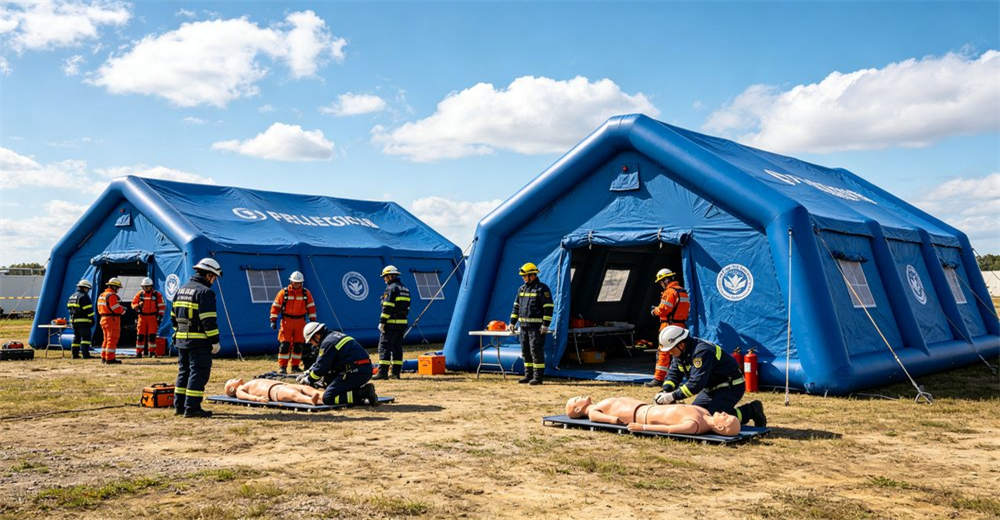
Disaster Relief Tent: Best Practices and Lessons Learned
Based on extensive field experience with international relief organizations, we have compiled key best practices and lessons learned for disaster relief shelter operations. Key lessons include selecting appropriate disaster relief tent with flooring for different ground
Comprehensive humanitarian shelter solutions require coordinated planning across housing, medical, sanitation, and community facilities.
conditions, ensuring wind resistant emergency shelter anchoring for extreme weather, and maintaining heavy duty relief shelter systems inventory for rapid response. Our emergency inflatable tent and relief shelter tent products support comprehensive disaster response tent programs.
Successful disaster relief operations depend on proper site selection, adequate drainage, secure anchoring, and regular maintenance inspections. Camp managers should establish clear zoning for housing, medical, sanitation, and logistics areas to prevent overcrowding and ensure efficient service delivery. Training local staff in tent maintenance and repair extends the lifespan of shelter infrastructure and builds community resilience.
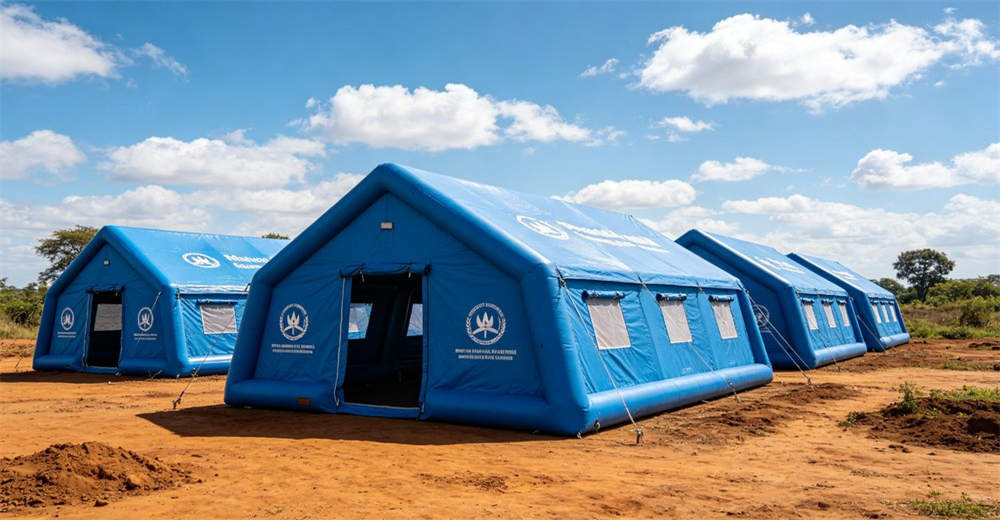
Disaster Relief Inflatable Tent: Warranty, After-Sales Service and Quality Assurance
Our relief shelter systems come with a comprehensive 2-year warranty, backed by our ISO-certified factory and 20+ years of experience in inflatable shelter manufacturing.
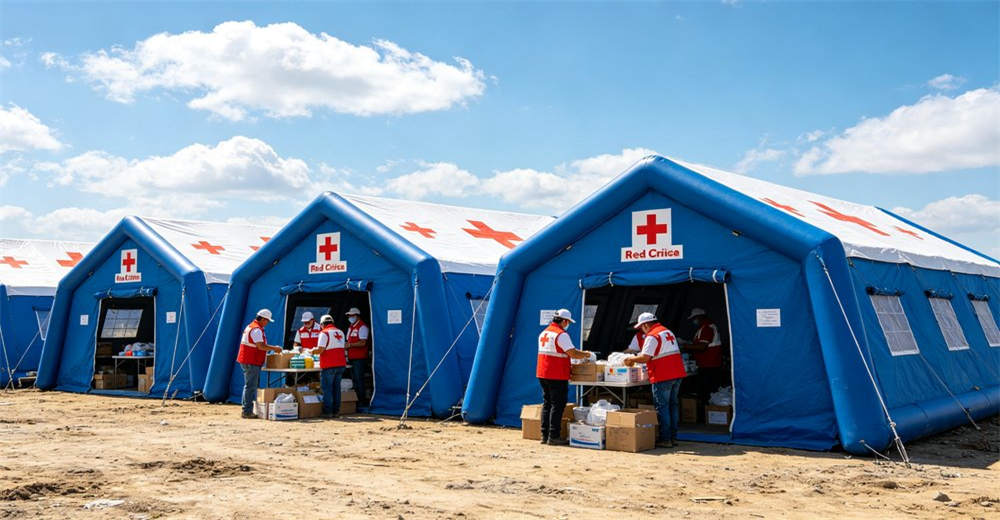
We stand behind every emergency shelter we manufacture with comprehensive warranty coverage and responsive after-sales support. Our quality assurance team inspects each unit before shipment, and we provide detailed maintenance guidelines to maximize product lifespan in field conditions. Warranty coverage includes manufacturing defects, material failures, and workmanship issues. Our after-sales team provides technical support, replacement parts supply, repair guidance, and training for maintenance personnel. We believe that reliable after-sales service is essential for humanitarian organizations that depend on our equipment in critical situations.
We stand behind every emergency shelter we manufacture with comprehensive warranty coverage and responsive after-sales support. Our quality assurance team inspects each unit before shipment, and we provide detailed maintenance guidelines to maximize product lifespan in field conditions.
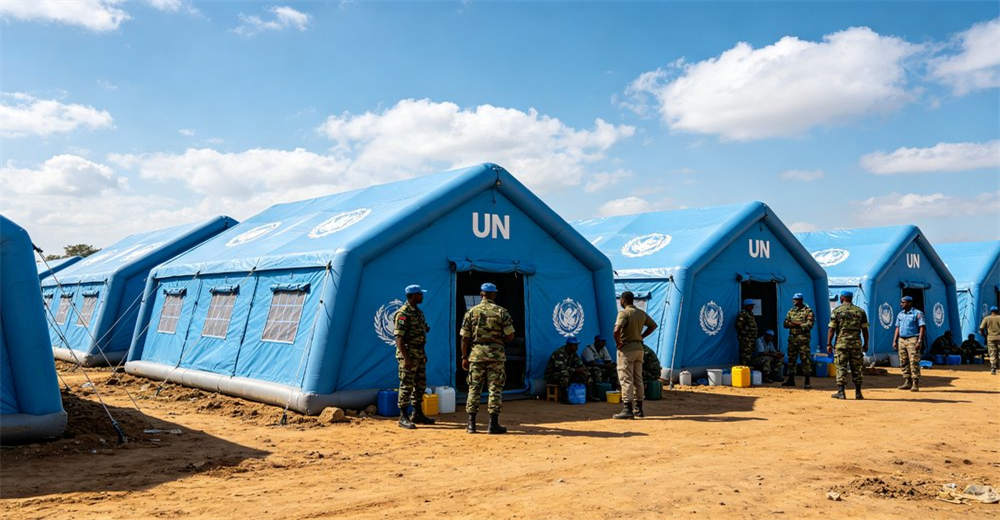
Our comprehensive relief shelter solutions cover the full spectrum of emergency response needs, from temporary shelter for disasters and emergency housing solutions to specialized field hospital tent and mobile clinic tent configurations. As an established disaster relief tent factory China, we supply humanitarian relief equipment, disaster relief supplies, and humanitarian aid supplies to organizations worldwide. Our inflatable command center tent and emergency camp setup capabilities support coordinated disaster response operations, while our refugee shelter solutions and emergency accommodation tent designs provide dignified living spaces for displaced populations. We understand that effective disaster relief logistics and rapid response shelter deployment are critical to saving lives in crisis situations.
Choosing the right emergency shelter solution is critical for effective disaster response. Factors to consider include deployment speed, weather resistance, capacity requirements, transportation logistics, and long-term durability. Our inflatable shelter systems address all these concerns with proven field performance and reliable construction quality.
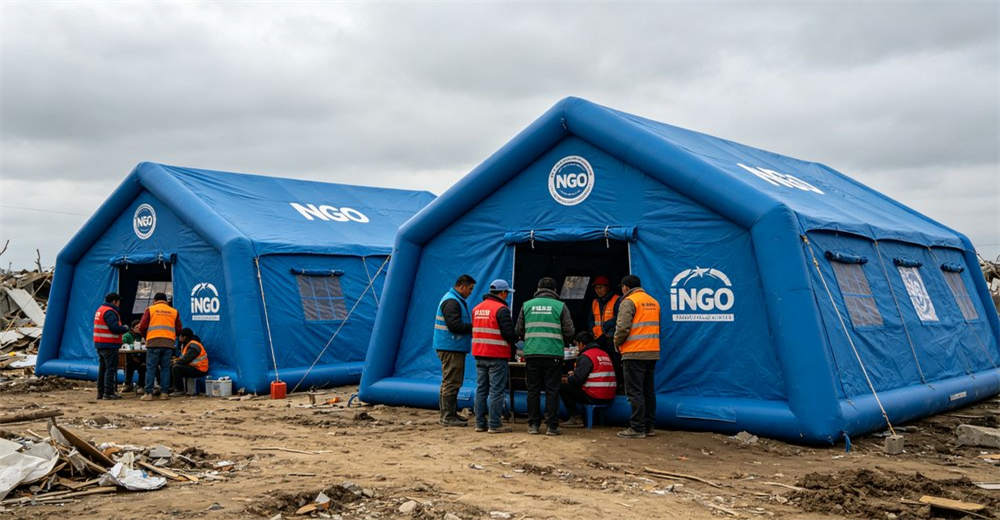
Inflatable Disaster Relief Tent vs Traditional Frame Tent: Comparison
Understanding the differences between inflatable emergency shelters and traditional frame tents helps procurement teams make informed decisions for disaster response operations. The comparison below highlights key operational and logistical advantages of inflatable tent technology.
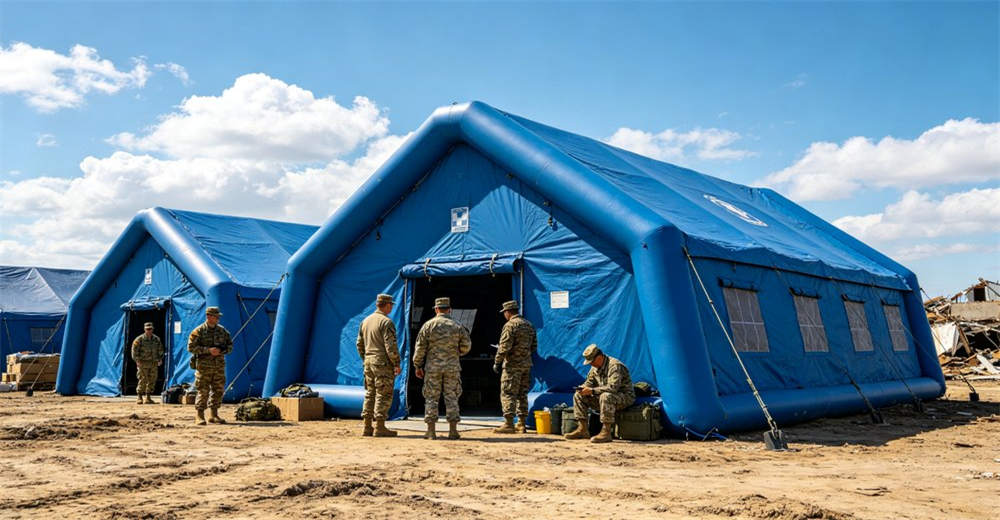
Deployment Speed and Labor Requirements
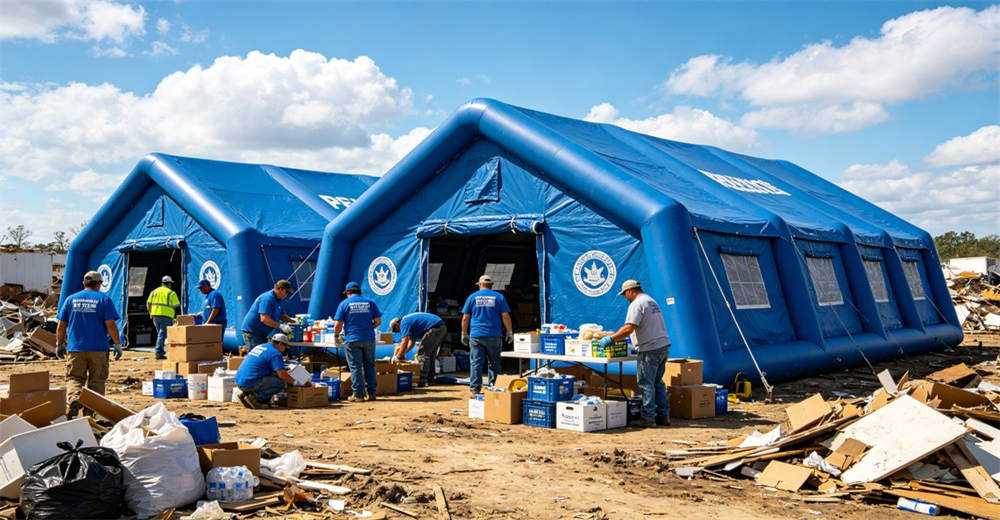
Inflatable relief shelter systems can be fully deployed in 10-15 minutes by 2-3 trained personnel, compared to 1-2 hours required for traditional frame tents with 4+ person teams. This rapid deployment capability is critical in emergency situations where shelter must be established quickly to protect vulnerable populations. The reduced labor requirement also frees aid workers for other critical tasks during the initial response phase.
Packaging Volume and Logistics Efficiency
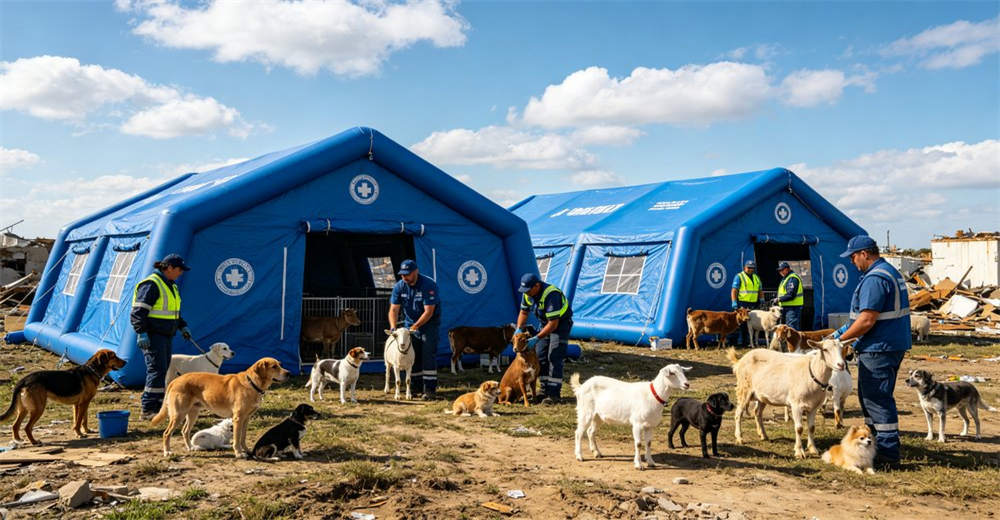
When packed for shipping, inflatable tents occupy approximately 40% of the volume of comparable traditional frame tents, as there are no rigid poles or frame components. This significant volume reduction translates to lower shipping costs per shelter unit, more units per container, and reduced warehouse storage requirements. For large-scale disaster response operations involving hundreds or thousands of shelter units, these logistics savings can be substantial.
Wind Resistance and Structural Performance
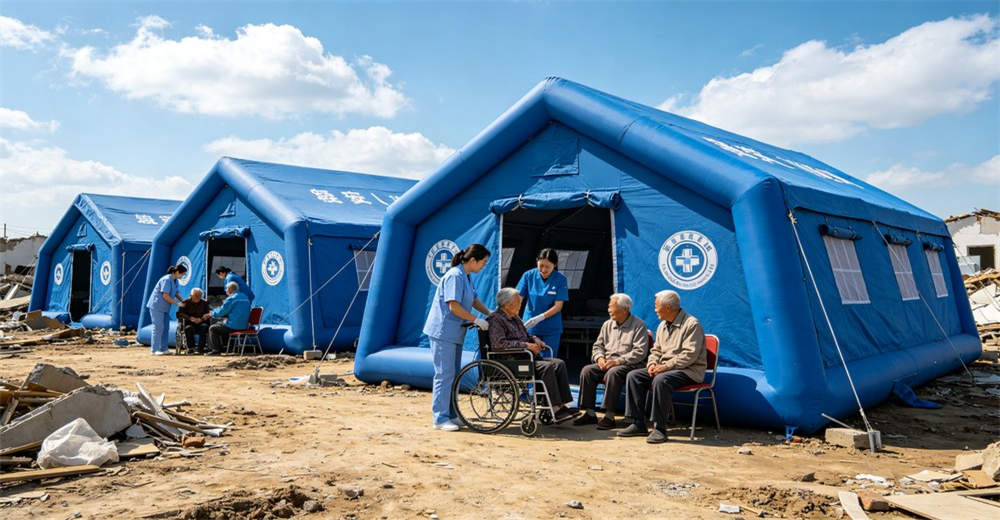
The flexible inflatable frame design provides superior wind resistance compared to rigid frame structures. Rather than resisting wind force through rigidity, inflatable frames flex and absorb wind energy, reducing the risk of structural failure in high wind conditions. Traditional frame tents with rigid poles are more susceptible to pole breakage and structural collapse when wind loads exceed design limits. Independent wind tunnel testing has validated the performance advantages of our inflatable tent designs.
Durability and Maintenance
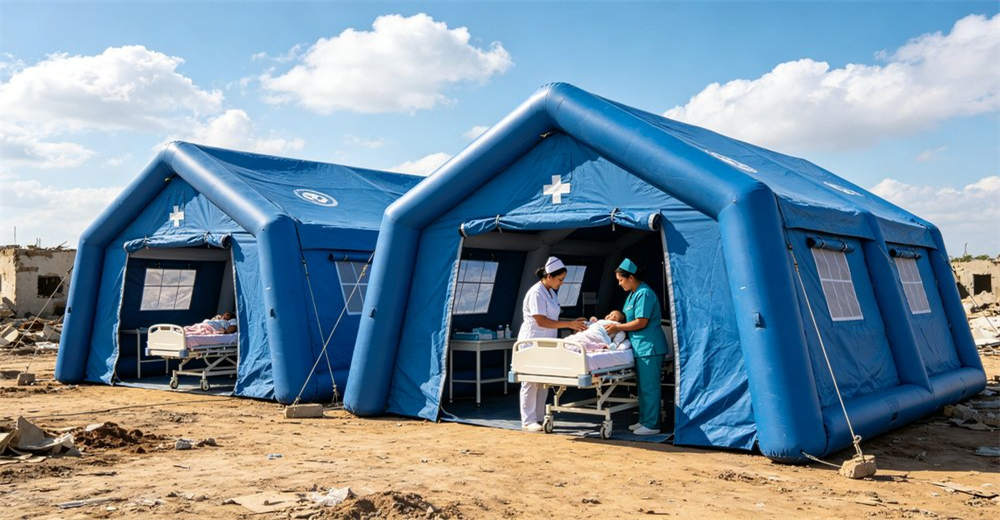
Inflatable tents have fewer moving parts and components that can fail or be lost compared to traditional frame tents with multiple pole sections, connectors, and fasteners. The integrated air chamber system is designed for long-term field use with minimal maintenance. Repair kits are simple to use and can address most field damage issues quickly. Traditional frame tents often require replacement of bent or broken poles, which can be difficult to source in remote disaster zones.
Total Cost of Ownership Analysis
While the initial unit cost of inflatable disaster relief tents may be higher than basic traditional frame tents, the total cost of ownership is often lower when considering the full lifecycle. Savings come from reduced labor costs for deployment and teardown, lower shipping and logistics expenses, reduced replacement parts costs, and longer service life through durable construction. For organizations conducting repeated disaster response operations, these savings accumulate significantly over time.
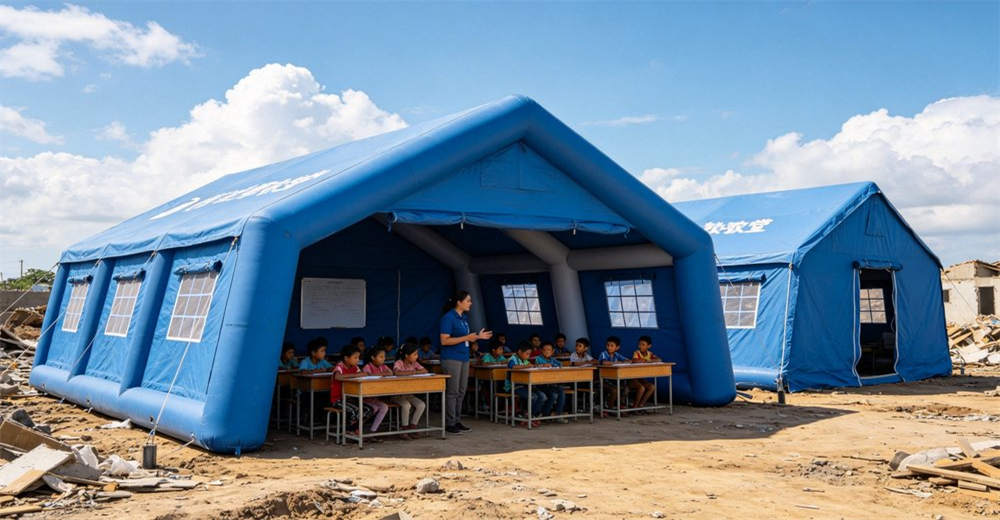
Disaster Relief Tent: Case Studies and Field Deployments
Our inflatable disaster relief tents have been deployed in numerous emergency response operations worldwide, demonstrating reliable performance across diverse climate conditions and operational scenarios. These field deployments validate our product design and provide valuable insights for continuous improvement.
Earthquake Response - Rapid Deployment in Urban Areas
Following a major seismic event, our emergency shelter tents were deployed within 48 hours to provide immediate protection for displaced families. The rapid inflation system allowed setup in under 15 minutes per unit, enabling aid organizations to establish temporary shelter communities quickly. The elevated flooring and waterproof construction protected occupants from aftershock debris and seasonal rains during the recovery period.
Flood Relief - Elevated Shelter in Waterlogged Areas
In flood-affected regions, our waterproof inflatable relief tents with elevated flooring options provided dry, secure shelter for families displaced by rising waters. The reinforced anchoring systems withstood challenging ground conditions, while the wind-resistant frame design maintained structural integrity during stormy weather. Camp managers reported that the compact packaging allowed more units to be transported per truck, increasing shelter capacity in logistics-constrained environments.
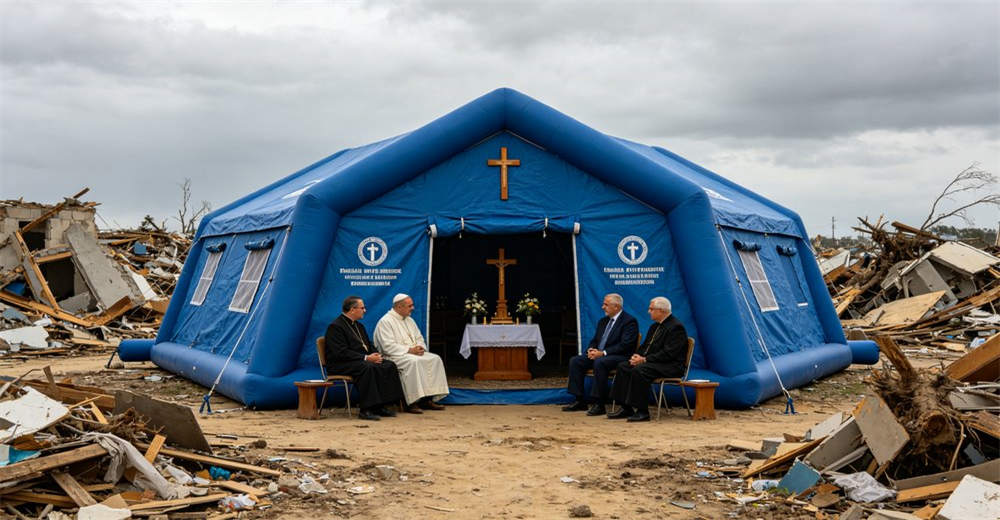
Refugee Camp - Long-Term Durability in Extended Operations
In protracted refugee crisis situations, our refugee camp tent systems have demonstrated exceptional durability over extended deployment periods. The UV-resistant PVC material maintained structural integrity through multiple seasons of intense sun exposure, while the reinforced air chambers retained pressure with minimal maintenance. Connected tent configurations were successfully implemented for schools, clinics, and community centers, supporting the development of functional camp infrastructure beyond basic housing.
Medical Emergency - Field Hospital and Isolation Facilities
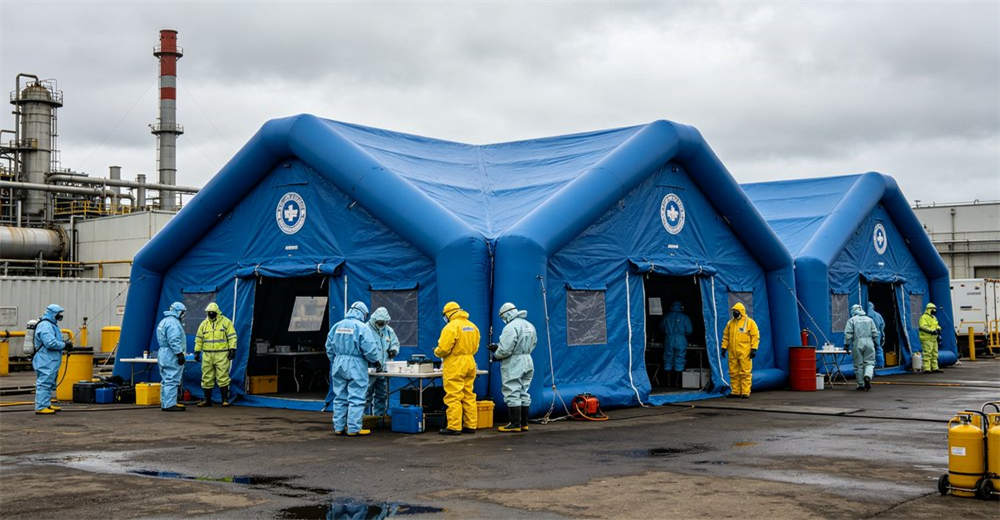
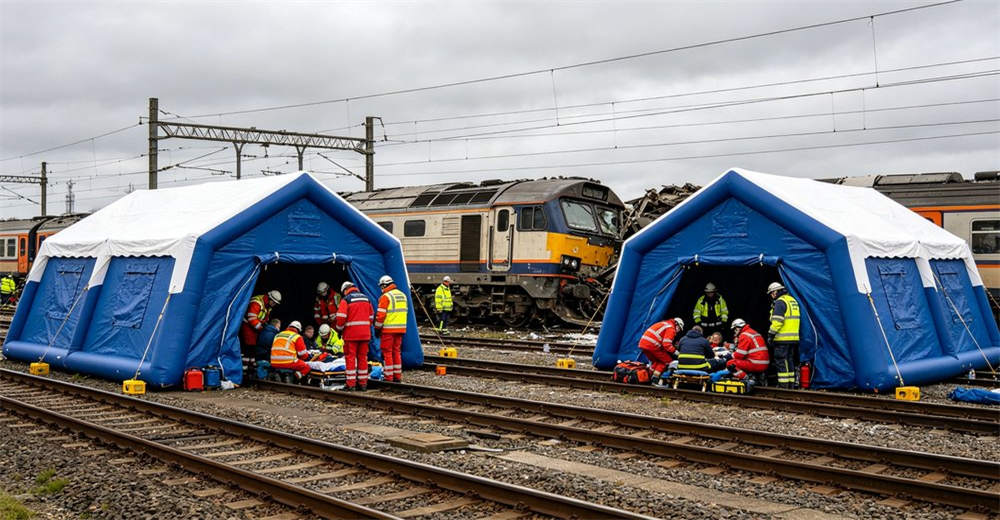
Our inflatable medical tent for disaster relief configurations have been deployed for field hospitals, triage centers, and isolation facilities during public health emergencies. The airtight chamber design supports positive pressure ventilation for infection control, while the rapid deployment capability enables medical teams to establish treatment facilities within hours of arrival. Customized interior layouts accommodate medical equipment, patient beds, and staff work areas to support effective medical operations in challenging environments.
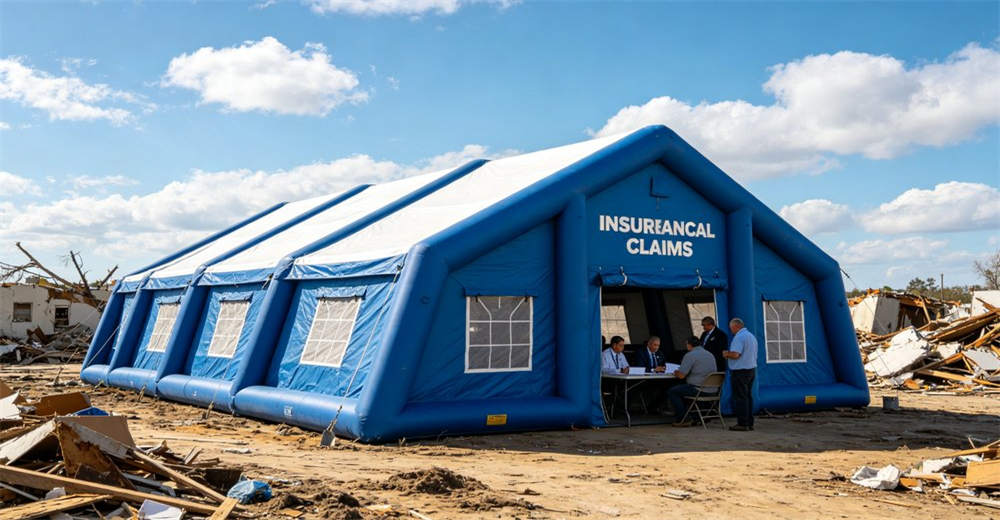
Disaster Relief Inflatable Tent: Frequently Asked Questions (FAQ)
Q: How long does it take to deploy one inflatable disaster relief tent?
A: A 40sqm relief tent can be deployed by 2-3 persons in 5-8 minutes, including inflation and securing with ground stakes.
Q: What is the expected lifespan of your disaster relief tents?
A: With proper maintenance and storage, our inflatable disaster relief tents have a service life of 3-5 years for regular use, and up to 10 years for occasional emergency deployment.
Q: Can the tents be customized for specific climate conditions?
A: Yes, we offer customization options including enhanced insulation for cold climates, additional ventilation for hot climates, UV-resistant coatings for high sun exposure, and snow load reinforcement for winter conditions.
Q: What certifications do your disaster relief tents have?
A: Our tents meet ISO 9001 quality standards, CE certification, and comply with UNHCR and IFRC shelter guidelines. We can provide test reports for wind resistance, waterproof performance, and flame retardancy.
Q: What is the minimum order quantity for custom orders?
A: We accept orders starting from 10 units for standard models, and 50 units for fully customized designs. Emergency rush orders can be accommodated with expedited production.
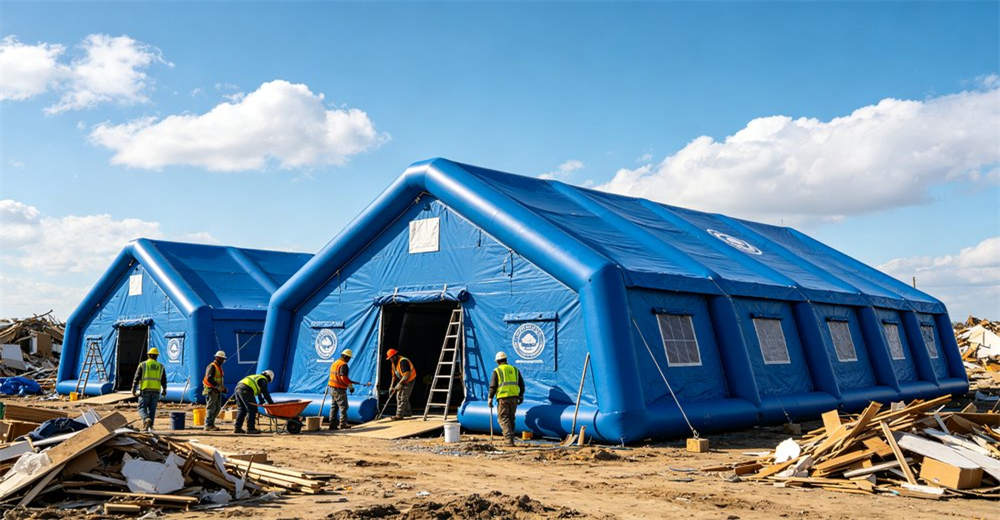
Q: How are the tents packaged for international shipping?
A: Each inflatable disaster relief tent is carefully folded and packed in durable PVC carry bags with reinforced handles. Standard packaging includes the tent body, inflatable frame, air pump, ground stakes, guy lines, repair kit, and setup instructions. Multiple units can be palletized for container shipping to optimize logistics costs.
Q: Can you provide samples before placing a bulk order?
A: Yes, we offer sample units for quality evaluation and field testing. Sample pricing and lead time vary by configuration. Sample costs can be credited toward subsequent bulk orders. We recommend testing samples in actual deployment conditions to verify performance before committing to large-scale procurement.
Q: What is the typical lead time for bulk orders?
A: Standard production lead time is confirmed per order based on configuration, quantity, and custom marking requirements. Urgent orders for active disaster response can be prioritized with expedited production and air freight options. We maintain buffer inventory of popular configurations for rapid deployment to crisis zones.
Q: Do you offer OEM/ODM custom branding and configuration?
A: Yes, we provide comprehensive OEM/ODM services including custom logo printing, color customization, size modifications, window and door configuration changes, flooring integration, insulation upgrades, and private label packaging. Custom designs are developed in close collaboration with your technical team to meet specific operational requirements.
Q: How do your inflatable tents compare to traditional frame tents for disaster relief?
A: Inflatable disaster relief tents offer significant advantages: deployment in 10-15 minutes by 2-3 people vs. 1-2 hours with 4+ people for frame tents; compact packaging reduces shipping volume by 60%; no loose poles or parts to lose or break; superior wind resistance through flexible frame design; and easier repacking and reuse. The initial investment is offset by reduced labor, logistics, and replacement costs over the product lifecycle.
Previous :
Military Inflatable Tents For Field Command And Tactical OperationsNext :
Medical Emergency Inflatable Tent Solutions | Field Hospital & Triage Deployment GuideCopyright © Custom Disaster - Relief Bedding: Tents, Sleeping Bags, Blankets All Rights Reserved
the professional team to service !


