


Heavy Duty Molten Metal Furnace Front Suit With Four Layer Composite Aluminized Fabric Resists Molten Metal Splash And Radiant Heat. Complete With Hood, Gloves And Boots. Designed For Foundry, Smelting And Molten Steel Pouring, Available For Wholesale Bulk Procurement.
Note: Price for reference only. Exact price based on quantity, size, weight and custom details.
model no. :
XFF-16Brand:
YRFmarket price :
$119.8sale price :
$59.9price range :
30-100/$59.9Color :
Multiple Colorsport of dispatch :
Guangdong/GuangzhouPayment :
TT, Paypal, Western Unionmin order :
30original region :
Made in ChinaLead Time :
5-15daysMolten Metal Furnace Suit | 1200°C Splash Protection
Split Design
We supply molten metal furnace front suits in bulk from China for steel plant and foundry workers facing molten metal splash and extreme radiant heat. This silver split furnace suit with fire-resistant outer layer, aluminized apron, and separate jacket plus bib trousers design provides 1200°C molten metal splash protection for furnace front operations. Full specs, sizing, and wholesale pricing below.

 |

|
1. Molten Metal Splashes & Furnace Front Hazards
2. Four-Layer Furnace Front Suit Construction
3. Specifications & Test Data
4. Split Suit Design: Jacket & Bib Trousers
5. Accessories: Gloves, Boots & Hood
6. Quality Control & Batch Test Reports
7. Wholesale & Customization from China
8. Molten Metal Furnace Front Suit FAQ
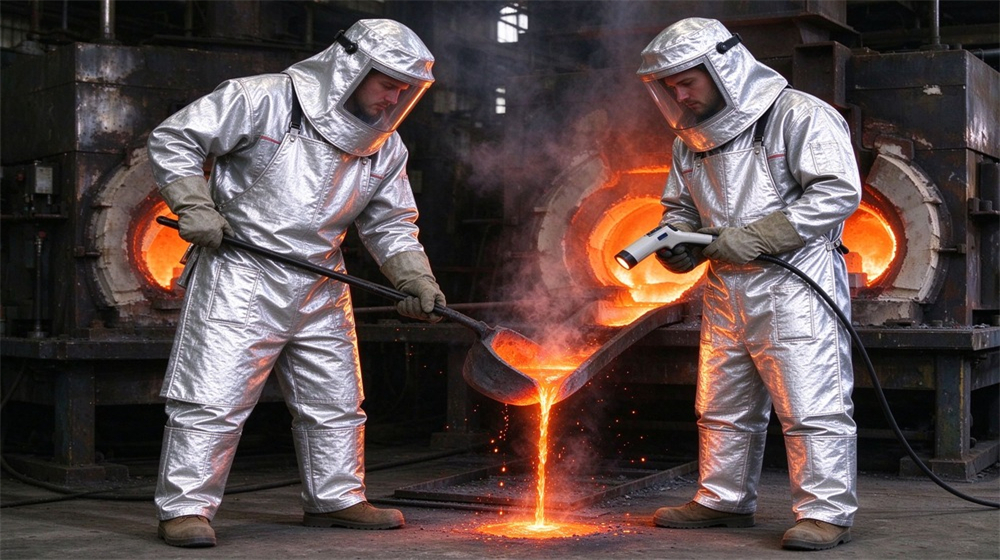
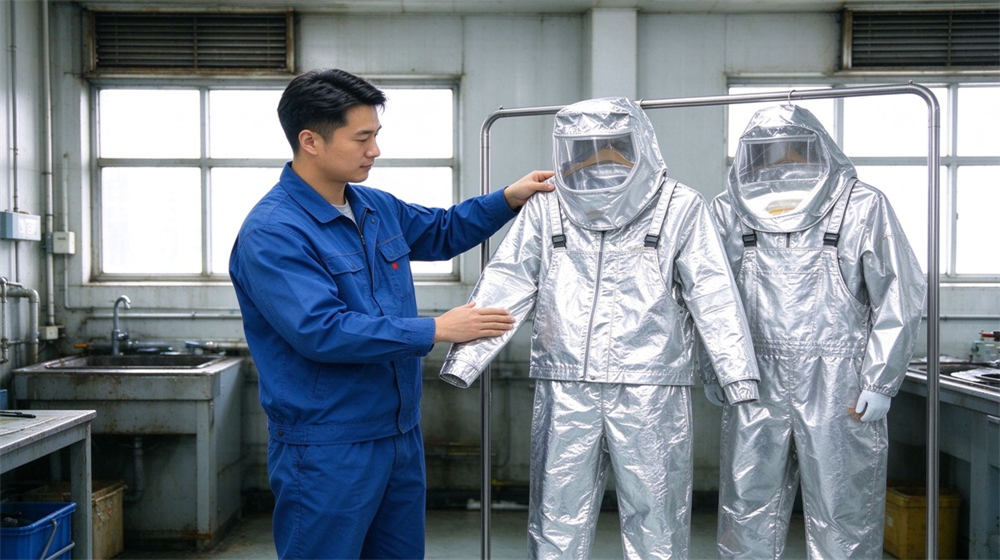
Molten metal furnace front suit with hood, gloves and boots in a full set, ready for foundry bulk supply. Wholesale buyers get the complete kit from one factory, so fabric, stitching and sizing stay consistent on every order. The split jacket and bib trouser set also simplifies size matching for crews, and the batch test report ships with the goods for customs and end-user checks. Ordering in bulk from China shortens lead time because the full set is produced and inspected on one production line before packing.
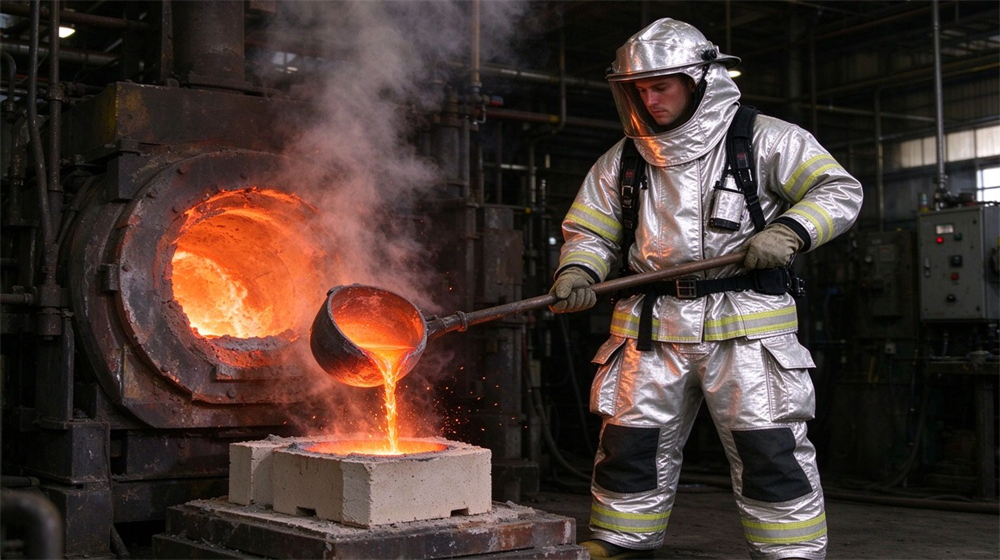
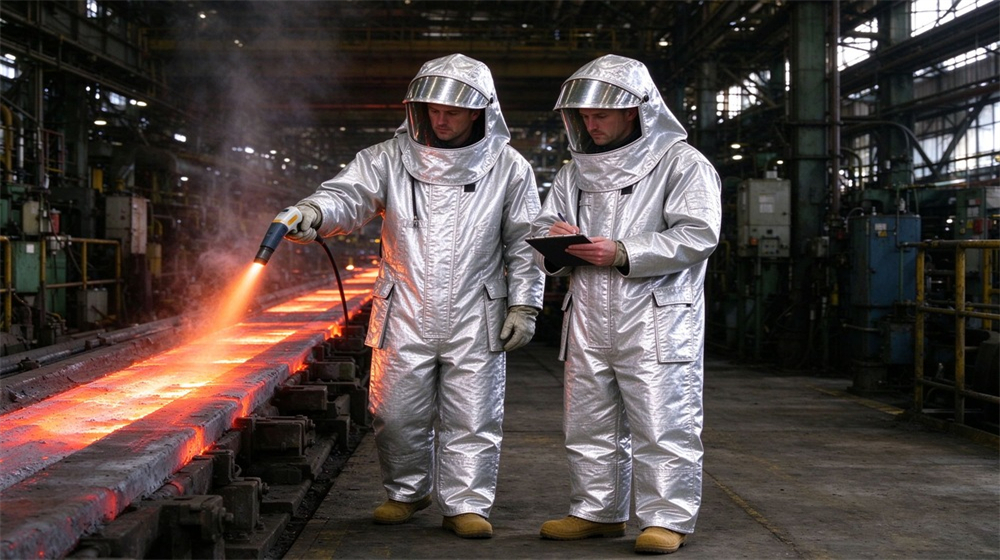
Foundry crews pour molten metal in silver molten metal splash suit protection during tapping and casting. The split design lets workers move the ladle without restriction, while the fire-resistant outer shell stops splash adherence and radiant burn-through. Four-layer construction adds a comfort lining that keeps heat away from the body during long pour cycles, and workers report easier movement at the wrist and shoulder when lifting hot skimming tools above the furnace lip.
One operator, one ladle: the furnace front suit in action on the casting line keeps the worker covered from chest to boot top. The sealed seams and four-layer build block both direct flame contact and the heat radiating off the pour stream. The hood window stays clear so the operator can read the slag and metal level while guiding the ladle, and each layer is selected for a specific job: fire resistance, splash blocking, insulation and comfort.
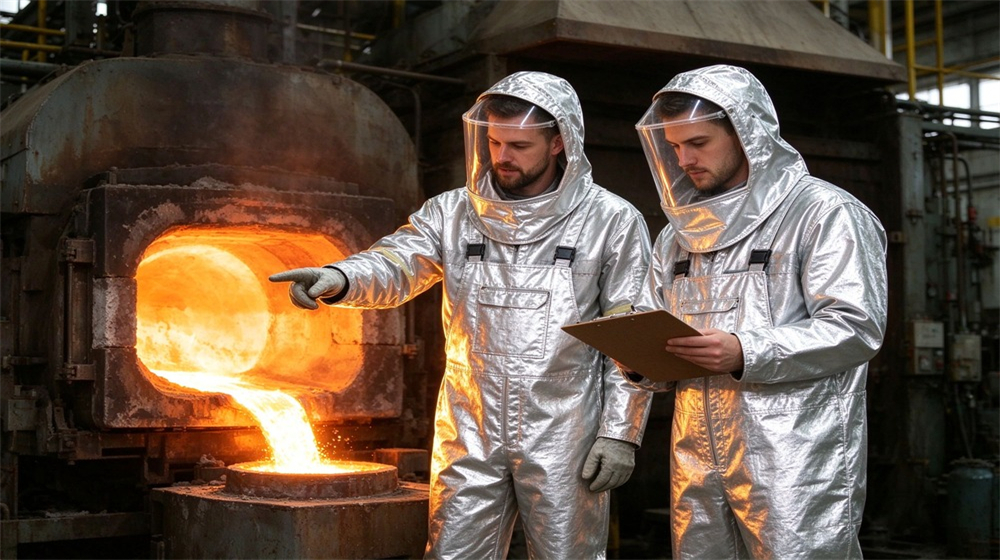
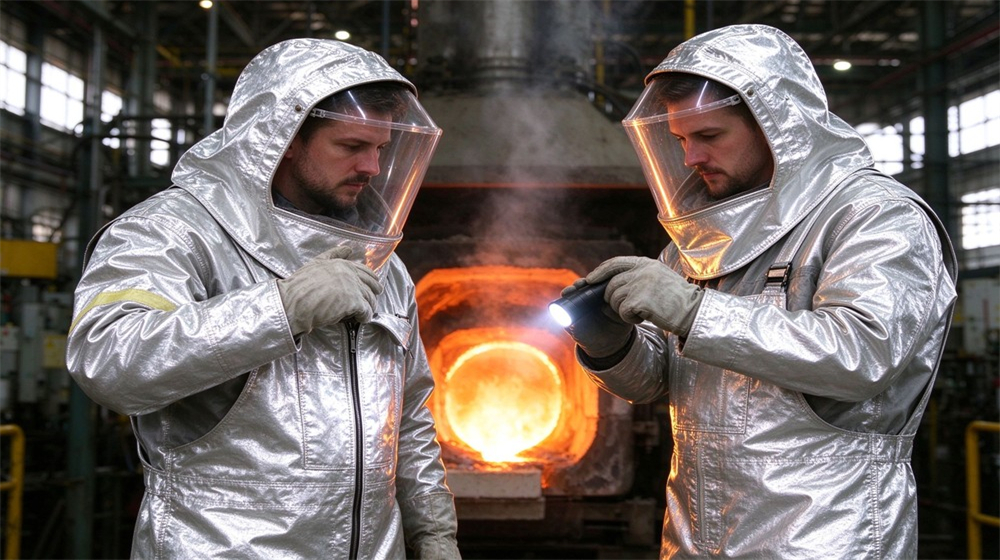
Furnace front inspection teams rely on the furnace worker protective suit near the tap hole, where radiant heat is highest. Adjustable hood, gloves and boots complete the enclosure, and the reflective surface reduces heat buildup during long inspection rounds. The bib trouser strap system keeps the suit in place while workers kneel or lean toward the furnace door, and wholesale buyers can order extra hoods and gloves because these parts wear fastest in daily furnace front work.
See how the silver heat resistant furnace suit compares with standard coveralls in fabric, coverage and heat ratings. The four-layer construction and batch test report make the difference visible for buyers comparing suppliers before placing a wholesale order. For foundries, smelters and casting plants, the split furnace front suit delivers protection where splash risk is highest while keeping crews mobile on the production floor.
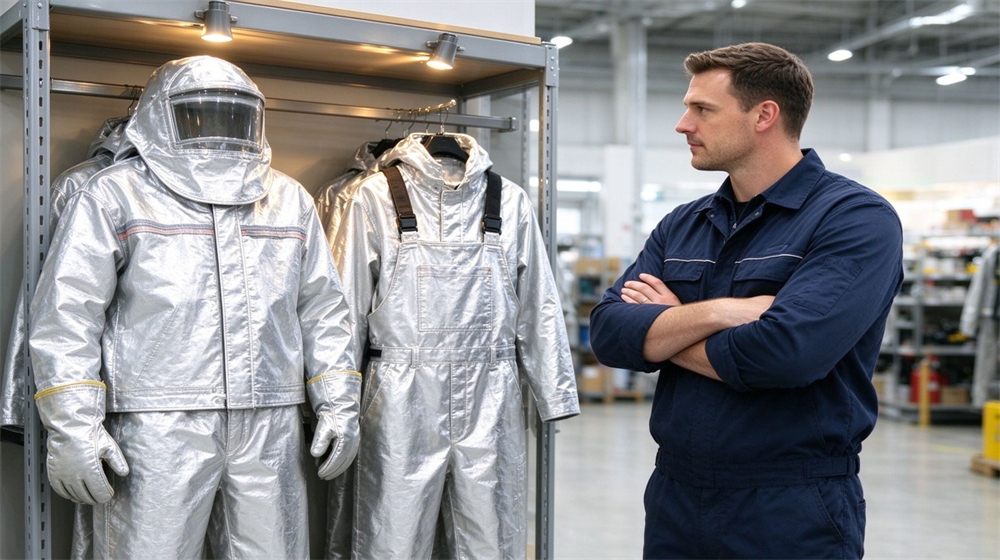
Table of Contents
Summary: this four-layer molten metal furnace front suit resists 1000C flame momentarily, keeps afterflame at 2 seconds or less and ships with a batch test report. Split jacket and bib trousers suit foundry, aluminum smelting and casting teams, with heat-resistant gloves, boots and hood available as a full kit. Layer construction, tested figures and the sealed closure system are the three points to verify before placing a molten metal furnace front suit order.
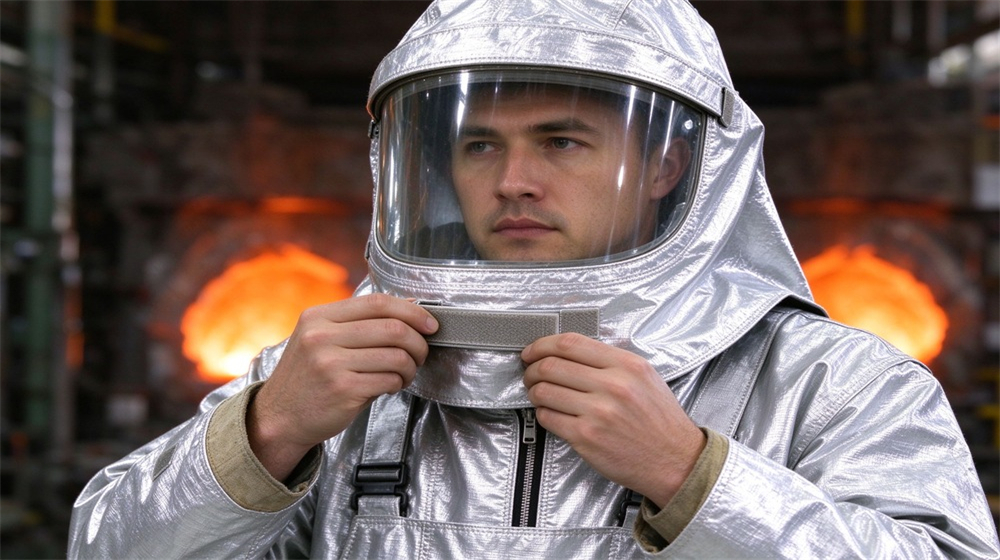
Working at a furnace front means standing within reach of molten metal splashes, radiant heat and flying sparks every shift. Our furnace front suit gives foundry, aluminum smelting and casting workers a fire-resistant outer layer that reflects radiant heat, while sealed seams keep splashes from reaching the skin. For procurement teams, the key point is simple: this is furnace operation clothing built around molten metal exposure, with a specification sheet and batch test report behind every claim.
Molten aluminum, steel and copper leave the furnace at temperatures above 700C, and a single splash can burn through ordinary workwear in seconds. Splashes behave differently by metal: molten aluminum sticks to fabric and keeps burning, while molten steel beads and rolls. When you compare furnace suit suppliers, check that the outer fabric is specified for molten metal exposure, not only for flame spread.

Even without direct contact, radiant heat from the tap hole and ladle adds to worker fatigue and slows reaction time. In aluminum smelting pot rooms and steel plants, this reduction in radiant load directly supports shift endurance and vigilance near moving metal.
Typical posts include induction furnace operation, aluminum smelting pot rooms, steel plant tapping, casting lines and furnace repair. Matching the molten metal furnace front suit to the job means choosing the right accessory set, not a different suit for every station.
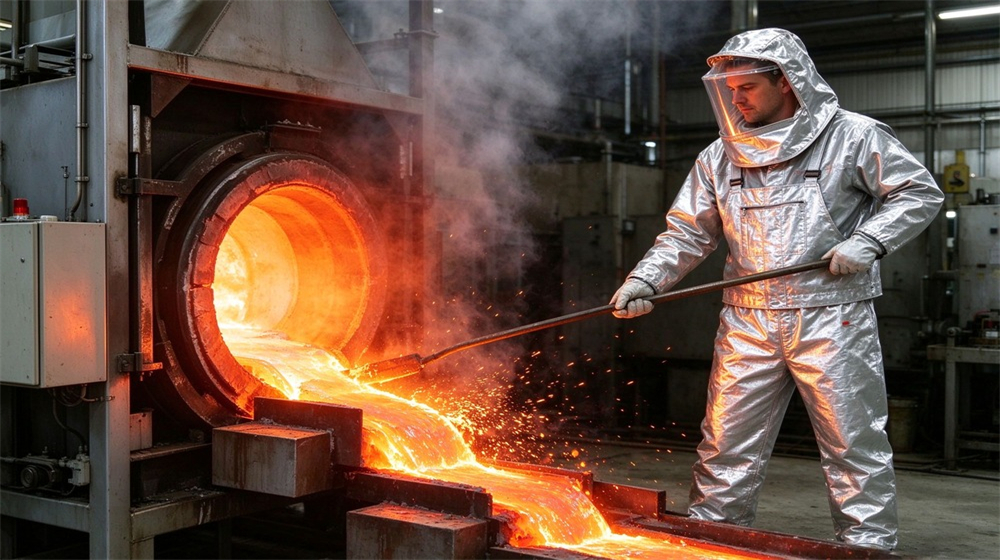
The molten metal furnace front suit is built from four functional layers: a fire-resistant outer layer, an insulation layer, an anti-steam insulation fireproof layer and a comfort layer. The result is a furnace operation suit that works in casting shops, smelting plants and steel mills without the compromises of a single-layer garment. For buyers, asking for the layer list in writing is the fastest way to compare molten metal splash suit offers from different furnace suit suppliers.
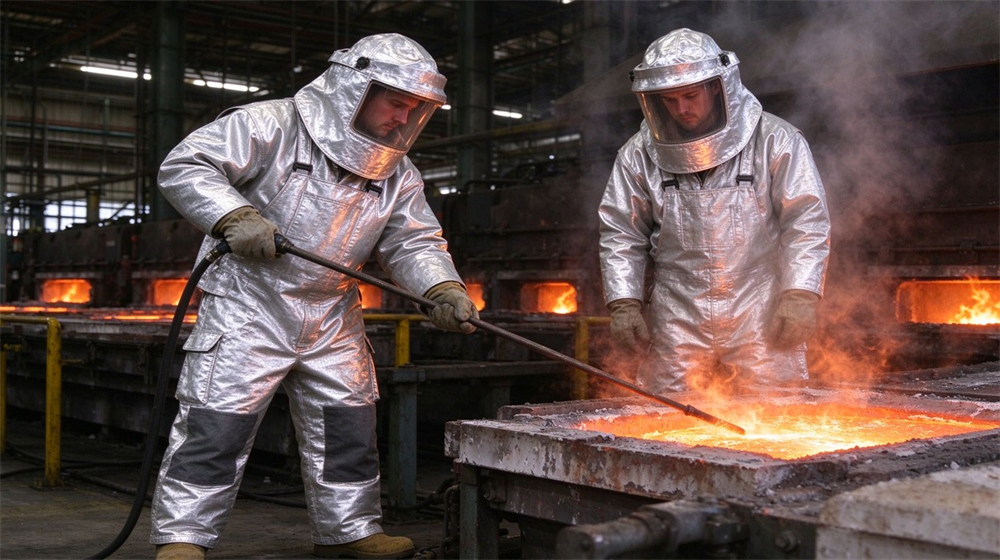
The outer surface is a reflective silver fire-resistant fabric that reflects radiant heat and resists ignition. When molten metal strikes the surface, the reflective coating sheds the metal and the fire-resistant base fabric resists continued burning.
The insulation layer slows heat transfer to the body, so a worker gains time to step back when a flare-up starts. The anti-steam layer closes that gap without adding bulk that would limit movement at the ladle.
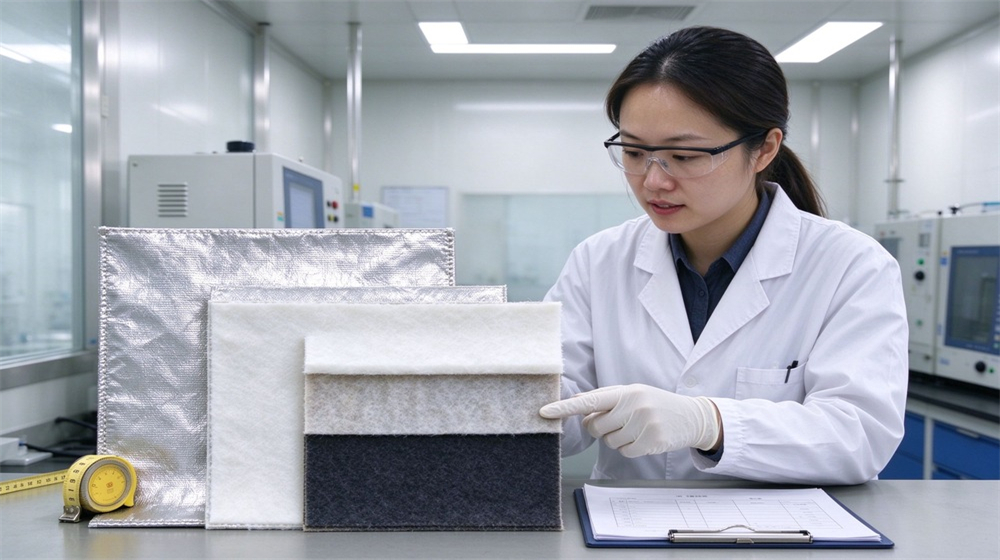
The inner comfort layer wicks moisture and reduces heat buildup, keeping furnace operation clothing wearable for full shifts in hot smelting environments. Comfort is a safety feature rather than a convenience: a worker who sheds the suit because it is too hot loses all protection, which is why the silver reflective furnace suit balances barrier weight with shift wearability. The comfort layer also prevents the insulation from sitting directly against the skin, which reduces irritation during repeated bending at the tap hole.
Seams are sewn with fire-resistant thread and closed with lapped construction. The front opening uses a sealed flap closure without exposed zipper, so splashes have no easy path through the molten metal splash suit. Cuffs and ankle openings are adjustable, and the hood collar overlaps the jacket collar to seal the neck line. Buyers should check seam direction on a sample: lap seams facing outward are preferred because they shed molten metal instead of trapping it.
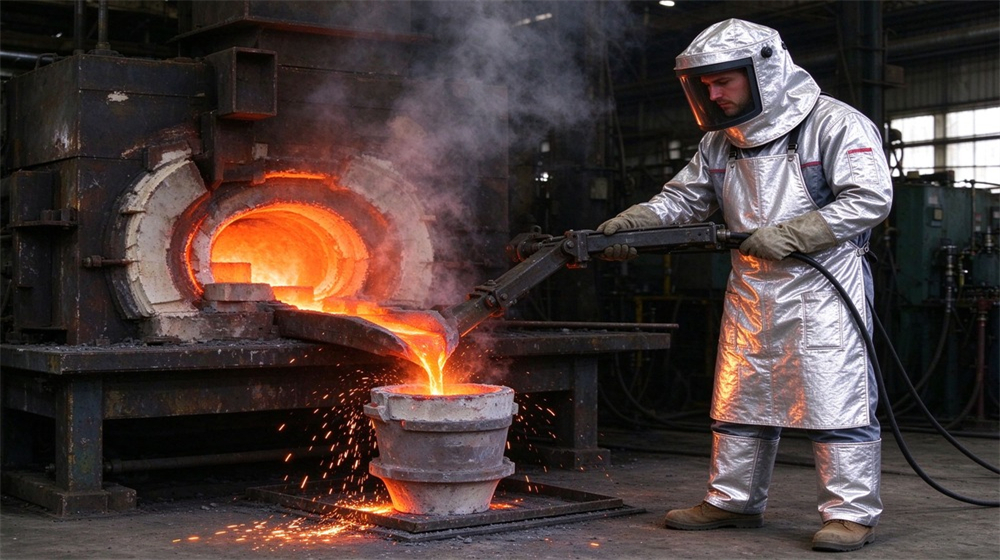
The table below summarizes the tested performance of the molten metal furnace front suit. Figures come from batch testing and are typical of the four-layer construction we ship for foundry wholesale orders.
The table groups the core performance figures every furnace suit buyer should request: heat resistance, burn behavior, mechanical strength, thermal stability and thermal protective performance. Use it as the reference list when comparing quotes from different furnace suit suppliers.
|
Test Item |
Molten Metal Furnace Front Suit (FBH-LQA) |
|
Structure |
Fire-resistant outer layer, insulation layer, anti-steam insulation fireproof layer, comfort layer |
|
Heat resistance |
Withstands 1000C flame temperature momentarily |
|
Afterflame time |
Less than or equal to 2 seconds |
|
Char length |
Less than or equal to 100 mm |
|
Breaking strength |
Greater than or equal to 650 N |
|
Tearing strength |
Greater than or equal to 60 N |
|
Thermal stability |
Dimensional change rate less than or equal to 10% |
|
TPP |
Greater than or equal to 28 cal/cm2 |
|
Design |
Split suit: jacket with bib trousers, matching hood, gloves and boots available |
Reading the table: afterflame time and char length describe how the fabric behaves in flame, breaking and tearing strength describe durability on the foundry floor, and TPP describes how much heat reaches the body. Together they define what the furnace front suit protects against.

The fire-resistant outer layer can withstand 1000C flame temperature momentarily, giving crews a critical window to step back from a flare-up. This is the headline specification buyers look for in a high temperature furnace suit, and it is confirmed in the batch test report before shipment. The rating does not mean a worker can stand in a 1000C flame indefinitely; it means the outer layer survives brief direct contact long enough for the insulation to protect the body. The same principle applies to proximity work where flame contact is occasional rather than continuous.

Afterflame time stays at or below 2 seconds and char length at or below 100 mm, meaning the fabric stops burning quickly and limits damage when exposed to flame. These two figures matter for molten metal splash protection because they control how far the burn spreads after initial contact. A short afterflame time also limits secondary ignition of the comfort layer. Batch test reports include these values per lot, so buyers can track consistency across shipments.
Standard FR coveralls slow ignition but do not stop molten metal from burning through. The furnace worker protective suit uses an aluminum-coated reflective outer shell and an insulating layer, giving a higher barrier against molten metal exposure than everyday FR clothing. The difference matters most at the moment of a splash: FR cotton continues to conduct heat after contact, while the reflective outer layer sheds the metal and the insulation layer buys escape time. That is why smelting and foundry buyers treat the furnace front suit as a separate category from general flame-resistant workwear in their safety budget. Selecting the right category at the start avoids the common mismatch of fitting furnace posts with FR coveralls that cannot handle direct splash contact.

Breaking strength is at least 650 N and tearing strength at least 60 N, so the furnace worker protective suit survives the knocks and snags of a foundry floor. Lifting ladles, climbing furnace platforms and working against pipe racks all stress the fabric. If mechanical strength drops, the protective layers separate and the suit fails before heat even reaches the wearer.
Thermal stability shows a dimensional change rate no greater than 10%, and the TPP rating is at least 28 cal/cm2. These figures confirm the molten metal protection suit keeps insulation performance after repeated heat exposure. Thermal stability matters because a suit that shrinks or distorts after one hot shift stops fitting correctly, opening gaps at the neck and cuffs. The TPP figure is the single number that summarizes how much heat the whole assembly blocks.
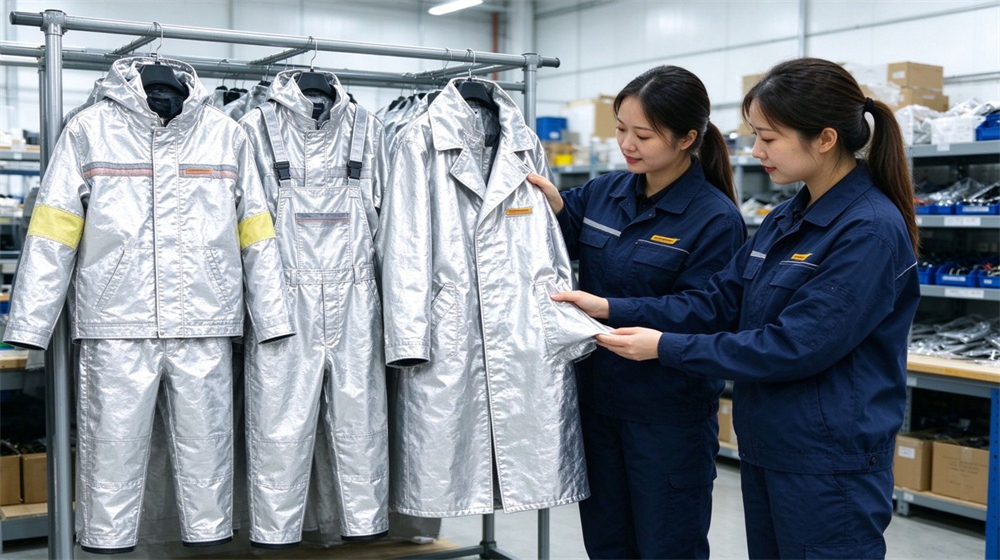
The furnace front suit uses a split design: a jacket with bib trousers. This gives better freedom of movement at the ladle and tap hole than a one-piece coverall, and makes repairs and replacements simpler for foundry stores. A split furnace operation suit also lets crews replace a worn jacket without discarding good trousers, which cuts replacement cost on large fleets. When sizing teams, measure both pieces against the range we provide, because the jacket and bib trousers are matched but ordered as separate items within the set.
The jacket has a sealed front closure and adjustable cuffs. The high collar mates with the insulation hood to seal the neck line, a key detail for molten metal splash protection. Pockets on the jacket are positioned away from the front seam so they do not create splash traps, and the sleeve cuffs accept the heat-resistant gloves over or under depending on job preference.

Bib trousers cover the lower body and support the jacket overlap. Adjustable shoulder straps and a comfortable waistband keep the furnace operation suit in place during bending and lifting. The bib panel extends upward behind the waist to close the gap between jacket and trousers, which is the area where most splash injuries occur in casting lines.
Try the trouser rise and strap length against your crew height chart before ordering, because a bib that rides up under the jacket defeats the sealed front closure and leaves the lower back exposed to splash.
We supply standard sizes from M to XXXL and can cut to custom measurements for wholesale orders. A roomy fit over base layers is standard for furnace suit suppliers serving foundry teams. Fitting guidance is included with each order so safety managers can match the split suit to their crew without guesswork.
The standard set covers jacket and bib trousers. Buyers can add the insulation hood, heat-resistant gloves and heat-resistant boots as a full kit, matching the furnace front suit to the exact hazard level of the job. The complete kit is the configuration most foundries order, because molten metal exposure rarely stops at the torso.

Molten metal splashes hit hands, feet and the head too, so an aluminum smelting suit program is only complete when the accessory set is matched to the base suit. The molten metal furnace front suit accepts matching accessories that close those gaps and raise overall protection for furnace crews. Ordering the kit in one go also simplifies logistics: one set, one carton, one batch test report. The table below lists the standard accessory match for the furnace front suit.
This accessory table is the standard configuration we quote with the furnace front suit. Each item uses the same layered fire-resistant principle as the suit, so the protection is consistent from head to toe.
Buyers can order the base suit first and add accessories later, since all items are matched by size and closure type. Most casting plants, however, take the full kit to avoid gaps at the wrist, ankle and neck.
Accessory
Model
Function
Heat-resistant gloves
FBH-TQA-56
Fire-resistant, insulating, wear-resistant, withstands 1000C briefly
Heat-resistant boots
FBH-XQA-1
Aluminum-foil layered upper, puncture-proof and impact-proof, 1000C
Insulation hood
FBH-KQA
Full coverage hood matched with the furnace front suit
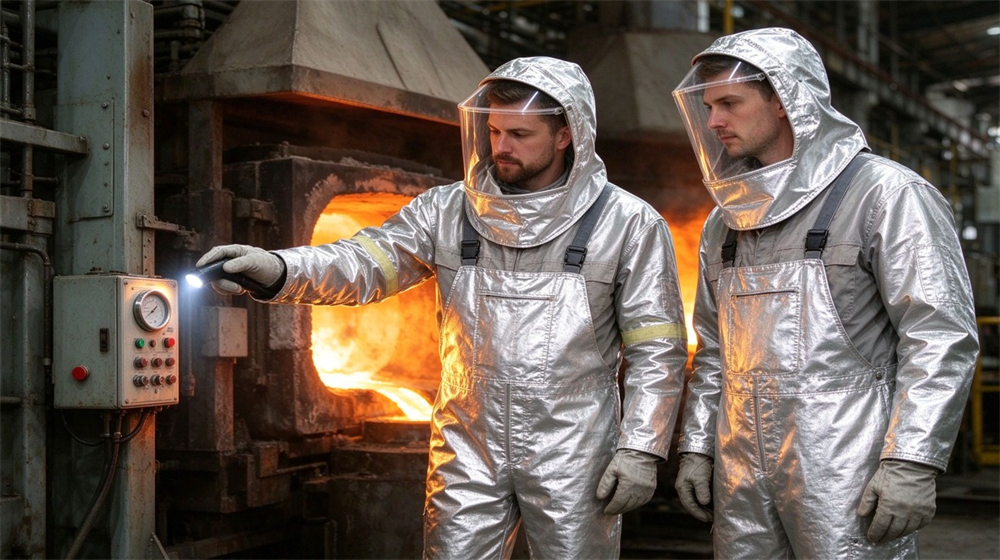
The heat-resistant gloves use the same layered fire-resistant construction as the suit and withstand 1000C briefly. They protect hands during ladle handling, furnace repair and splash-prone tasks. Gauntlet cuffs extend past the wrist so the glove overlaps the jacket sleeve, closing the seam that is hardest to protect on a furnace front.

The heat-resistant boots have an aluminum-foil layered upper with puncture-proof and impact-proof protection rated to 1000C. They are the standard match for the furnace front suit on foundry floors. The sole resists hot metal contact when workers step on spill residue, and the boot shaft height matches the bib trouser leg opening.
Ask for the boot shaft height in millimeters when quoting, so the shaft meets the bib trouser leg opening instead of leaving an exposed strip above the ankle where splashes can pool.
The insulation hood covers the head and mates with the jacket collar. A transparent high-temperature face shield keeps vision clear while blocking radiant heat and splashes. The shield is fixed to the hood so it cannot be lost between shifts, and the hood opening seals around the face without restricting peripheral vision.
Accessories are matched by size and closure type to the jacket and bib trousers. For wholesale orders we pack suits and accessories as one kit, with options confirmed at quotation. If a crew already owns heat-resistant gloves, we can quote the suit, boots and hood separately and leave the glove specification to the buyer.
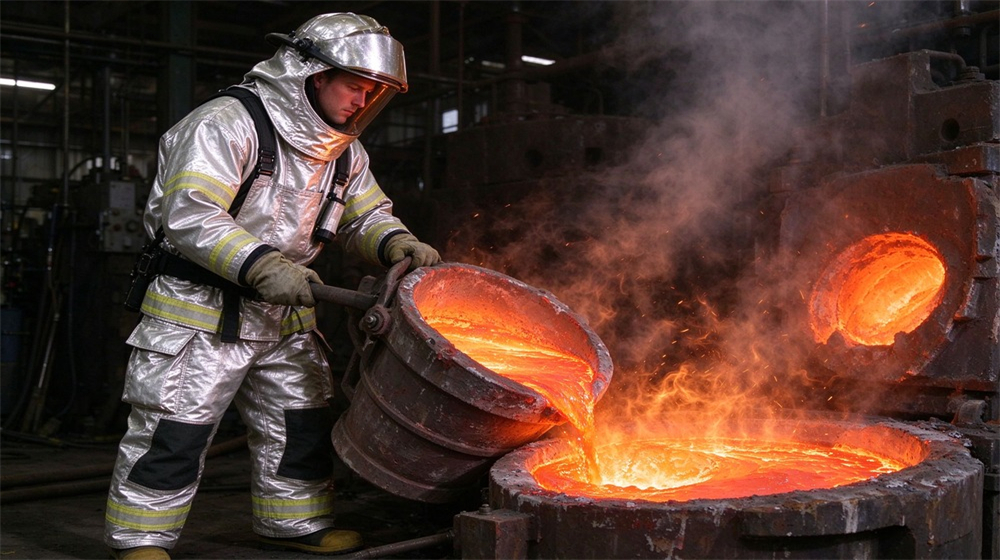
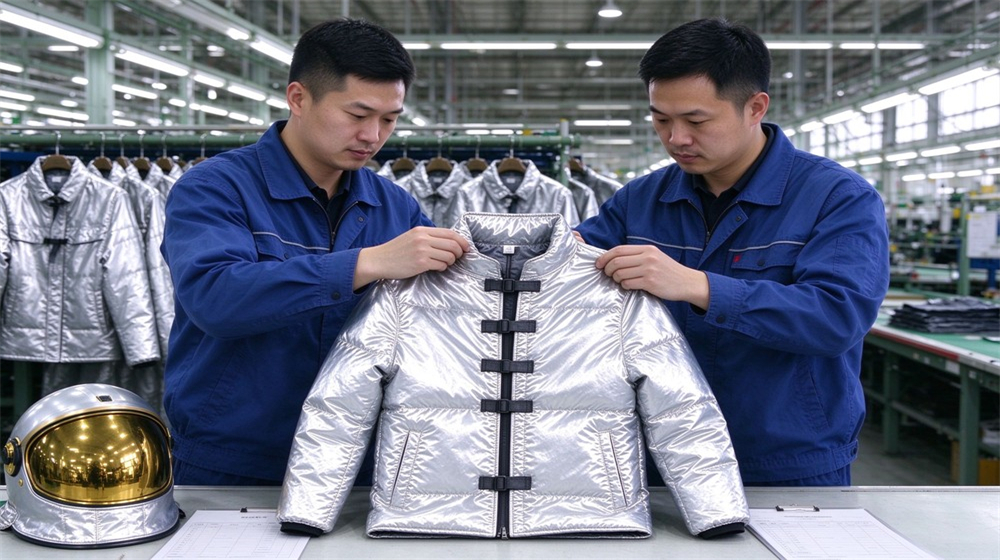
Every shipment of molten metal furnace front suits is produced under in-house quality control. Fabric, seams and closures are inspected before packing, and each batch is sampled for afterflame, char length, strength and thermal stability. Incoming fabric is checked against the declared layer construction, and in-process sewing inspections catch seam issues before garments reach the finishing line.

A batch test report is included with every shipment, covering the performance figures in the specification table. Buyers receive the report as part of the shipping documents for their own records. The report states the tested values per batch, so a buyer can compare one shipment against the next and confirm the furnace front suit stays consistent.
Fabric samples are tested in our laboratory for the key parameters of the furnace front suit, including heat resistance and mechanical strength, before the batch is released for export. Testing covers the outer layer, the insulation layer and the assembled seam construction, because a strong fabric with a weak seam still fails at the first splash.

The flow runs from incoming fabric checks to in-process sewing inspection, final garment checks and document review. This is the same flow we apply to every furnace operation suit order, large or small. Documentation is prepared in English and follows export standards, so the batch test report and packing list can be forwarded directly to the end user.
On receipt, check the batch test report, the size labels and the condition of the sealed front closure. If you need additional sampling photos or a pre-shipment inspection, we arrange them before dispatch. Pre-shipment inspection is recommended for first orders and can be scheduled with the factory when the order is confirmed. Photos of finished garments and packing are shared before loading on request.
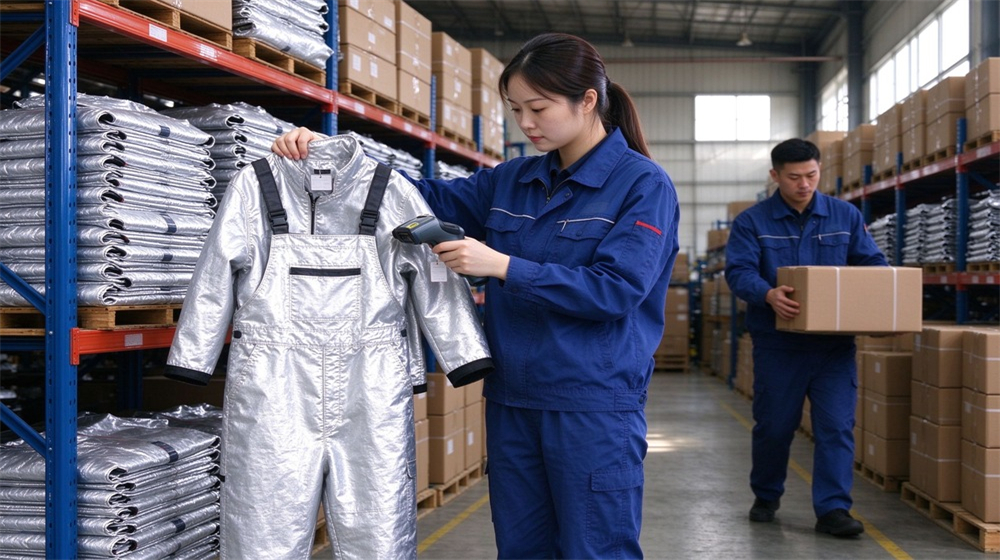
We are a China-based furnace front suit supplier focused on foundry, aluminum smelting and casting customers, and the wholesale furnace front suit program covers trial, repeat and stock orders. MOQ varies by kit type and configuration and is confirmed at quotation, so both first orders and repeat programs are practical. Volume buyers receive factory pricing with clear per-item breakdowns, and mixed configurations are quoted on request. We also keep stock programs for common sizes so repeat orders can move faster than full production cycles.
We cut the furnace worker protective suit to customer size ranges and can add optional features such as extended cuffs, reinforced knees or reflective trim. Samples are produced before mass production when required. For large fleets we keep size ratio data from past orders and suggest proportions that reduce post-delivery exchange.
We offer logo embroidery and label customization on the molten metal splash suit for wholesalers and end-user programs. Artwork and placement are confirmed before production starts. Placement options include chest, back and sleeve positions, and we advise on which positions survive laundering and heat exposure best.
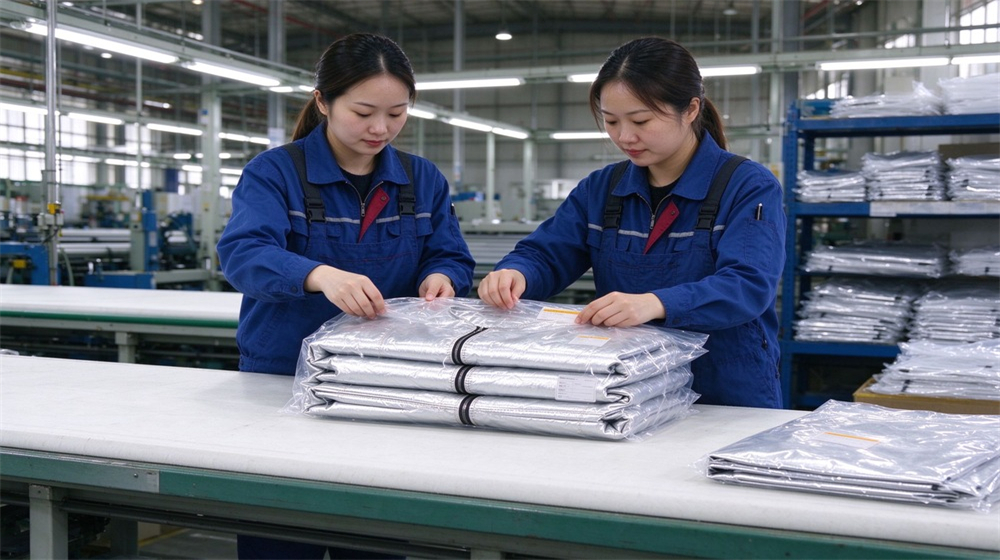
Suits are folded, boxed and loaded under export packaging standards. We ship by sea or air based on the order, with carton marking confirmed at quotation. Each carton is marked with the model, size mix and quantity, and the packing list matches the batch test report for customs and buyer review.
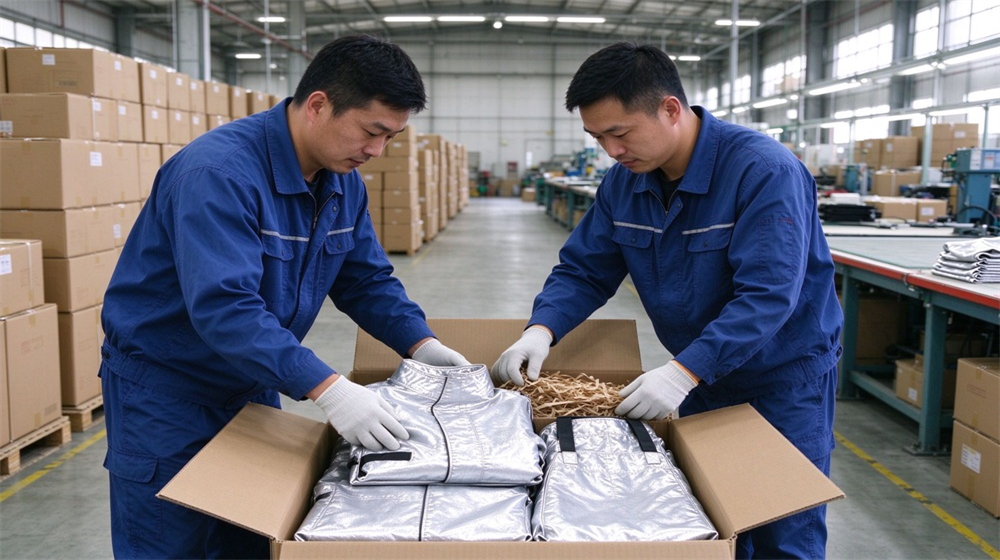
Buying from China combines tested four-layer construction with flexible customization and competitive wholesale pricing. The molten metal furnace front suit is built in our partner factories with export quality control from first sample to final carton. For importers, the practical advantage is a single supplier that handles sizing, branding, testing documents and export packing under one order.

The flame-resistant outer layer withstands 1000C flame temperature momentarily. This provides a protection window for brief direct exposure, while the insulation layer manages radiant heat during normal furnace front work. The rating supports escape time rather than continuous operation in flame. Confirm the maximum metal temperature and splash frequency at your furnace front before ordering, so we can match the layer build and accessory set to your actual exposure profile.
Split design with jacket and bib trousers. The split style improves mobility around ladles and tapholes and is simpler to repair than a one-piece coverall, since the jacket and trousers can be maintained or replaced as separate items. It also simplifies sizing for mixed-shape crews, because the jacket and trousers can be ordered in different sizes when needed.
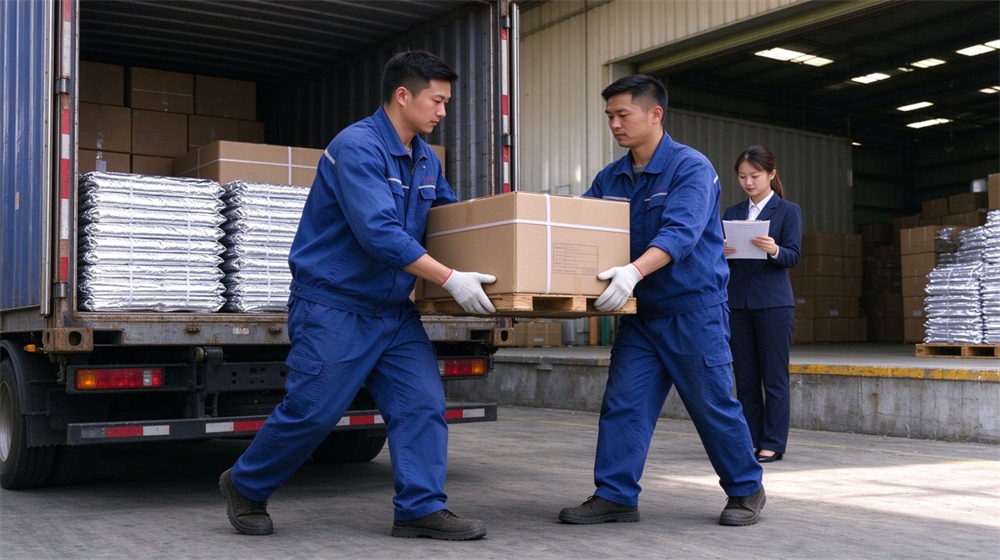
After-flame time is no more than 2 seconds. The fabric stops burning quickly after flame exposure, lowering injury risk and limiting secondary ignition of the inner layers. The value is listed on the batch test report for each shipment. Keep the report on file: safety auditors reviewing furnace front clothing programs usually ask for after-flame and char length values.
The molten metal suit includes a flame-resistant outer layer, an insulation layer, a vapor-and-heat barrier layer and a comfortable inner lining. Each layer has a specific role, from reflecting radiant heat to moisture management on long shifts. When comparing quotes, ask for the layer list in writing, because single-layer coated coveralls are often marketed at the same product name with a lower price.
Yes. Heat-resistant gloves FBH-TQA-56, heat-resistant boots FBH-XQA-1 and an insulating hood FBH-KQA complete the molten metal furnace front suit. They match the suit by size and closure type. We recommend full sets for ladle and taphole crews and base suits only for helper positions away from the metal stream, to avoid over-specifying every station.
Yes. Each batch ships with a batch test report covering the performance values on the specification sheet. It records measured values by batch, so buyers can track consistency across orders. The report is prepared in English and matches the packing list, so it can be forwarded directly to end customers or safety departments without retranslation.
MOQ varies by suit type and configuration, confirmed at quotation. We arrange trial orders as well as larger wholesale programs, and volume pricing is quoted by configuration. Trial orders are welcome for first evaluation, and we keep sample sets in common sizes for quick dispatch.
We accept T/T payment; we do not offer L/C terms. Payment details are confirmed in the quotation before production starts, and the schedule follows the written agreement.
Production timeline is confirmed per order based on configuration and agreed in writing before production starts. We share the production schedule with the order confirmation so you can plan arrival.
Yes. Embroidered logos and label customization are available for wholesale orders. Artwork and placement are confirmed before production, including position and size.
A steam suit is designed around a waterproof breathable membrane for live steam exposure. The furnace front suit focuses on molten metal splash and radiant heat, using a reflective flame-resistant outer layer while keeping a vapor-and-heat barrier layer for combined furnace front environments.
Store the suit dry and away from direct sunlight. Clean according to the care label, dry on a hanger, and check the sealed closure before each use.
TPP rating is no less than 28 cal/cm2, confirming the suit blocks heat transfer effectively under radiant and convective heat. It is one of the core values in the batch test report.
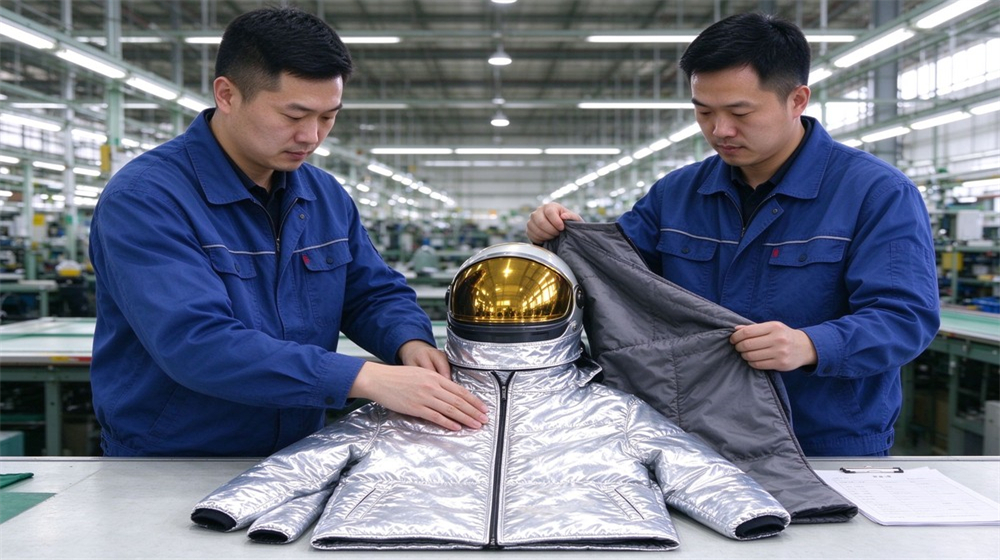
Yes. The reflective outer layer and insulation layers suit aluminum smelting potrooms well, where radiant heat and splash risk are high.
Yes. We can cut furnace front suits to a custom size range and make samples before mass production when needed.
Export documents include packing list, commercial invoice and batch test report.

Afterflame time is less than or equal to 2 seconds. The fabric stops burning quickly after flame exposure, reducing injury risk and limiting secondary ignition of inner layers. The value is listed on the batch test report for each shipment. Keep the report on file: safety auditors commonly ask for afterflame and char length values when reviewing furnace operation clothing programs.
The molten metal protection suit includes a fire-resistant outer layer, an insulation layer, an anti-steam insulation fireproof layer and a comfort layer. Each layer has a specific protection job, from reflecting radiant heat to wicking moisture during long shifts. Ask for the layer list in writing when comparing quotes, because single-layer coated coveralls are often marketed under the same product name at lower prices.
Yes. Heat-resistant gloves FBH-TQA-56, heat-resistant boots FBH-XQA-1 and the insulation hood FBH-KQA are available to complete the molten metal furnace front suit kit. They are matched by size and closure type to the suit. We recommend the full kit for ladle and tap-hole crews and the base suit alone for support roles further from the metal stream, so you do not over-specify every station.
Yes. A batch test report covering the performance figures in the specification table is included with every shipment. It states the tested values per batch so buyers can track consistency across orders. The report is prepared in English and matches the packing list, so it can be forwarded to the end customer or safety department without retranslation.
MOQ varies by kit type and configuration and is confirmed at quotation. We arrange both trial orders and larger wholesale programs, and volume pricing is quoted per configuration. Trial orders are welcome for first evaluation, and we keep sample kits in common sizes ready for quick dispatch.
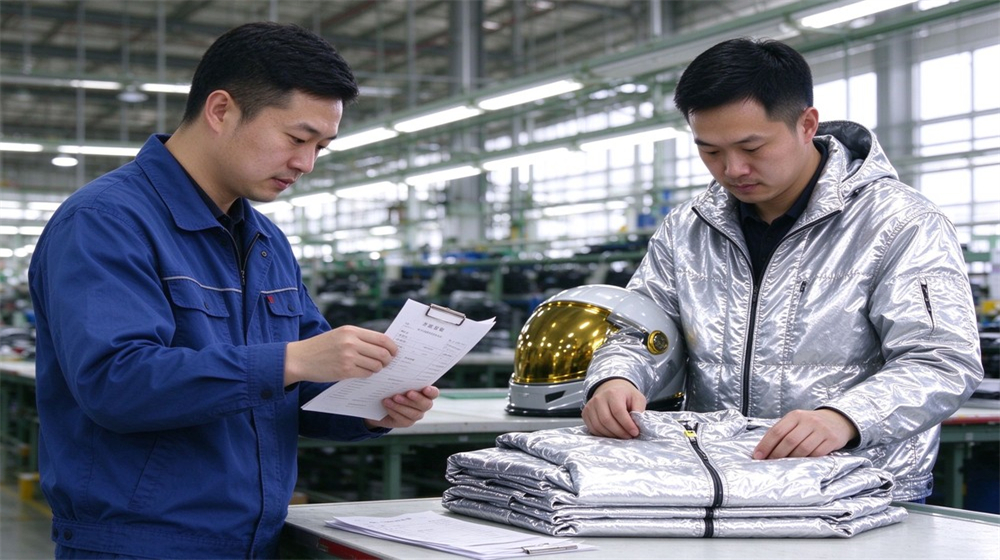
We accept T/T payment; we do not offer L/C terms. Payment details are confirmed in the quotation before production, with the schedule agreed in writing. For repeat programs we issue the payment schedule in the quotation so both sides confirm milestones before the production timeline is locked.
Production timeline is confirmed per order based on configuration and agreed in writing before production. We share a production schedule with the order confirmation so buyers can plan delivery. If you have a fixed loading date, tell us at quotation stage so the production schedule is planned around it rather than adjusted later.
Yes. Logo embroidery and label customization are available for wholesale orders. Artwork and placement are confirmed before production starts, including position and size. Embroidery thread color and position are confirmed against a digital mockup before production, so there is no surprise at the final garment.
A steam suit is built around a waterproof breathable membrane for live steam exposure. The furnace front suit focuses on molten metal splash and radiant heat with a reflective fire-resistant outer layer, though it keeps an anti-steam insulation fireproof layer for combined furnace environments. If a furnace area combines molten metal splashes with steam release points, the furnace front suit is the closer match because of the reflective outer layer and the built-in anti-steam insulation fireproof layer.
Store the furnace operation suit dry and away from direct sunlight. Clean according to the care label, air dry on a hanger and inspect the sealed front closure before each use. Damaged reflective areas should be reported before the next shift. After washing, check the reflective surface for peeling and the sealed closure for thread damage; both are the first areas to fail in molten metal splash protection.
The TPP rating is at least 28 cal/cm2, confirming the molten metal splash suit blocks heat transfer effectively under radiant and convective heat. It is one of the core figures on the batch test report. TPP combines radiant and convective heat in one number, so it is the fastest way to compare the assembled suit rather than judging the outer fabric alone.
Yes. The reflective outer layer and insulation are well suited to aluminum smelting pot rooms, where radiant heat and splash risk are high. The anti-steam layer also helps near electrolysis cells and cooling systems. For pot rooms we also suggest the insulation hood and gauntlet gloves, because head and wrist exposure is highest near the electrolysis cells.
Yes. We cut the furnace worker protective suit to custom size ranges and can produce samples before mass production when required. Size data from past orders helps us suggest ratio plans for large fleets. Send your size ratio from existing orders and we will confirm the proportion plan in the quotation, reducing post-delivery exchanges on large fleets.
Export documents include the packing list, commercial invoice and the batch test report. Additional certificates requested at quotation are arranged where available. Documents are prepared in English for customs and buyer review. Tell us at quotation if your customs require additional declarations, so the document set is prepared from the start instead of amended at dispatch.
When selecting a furnace front suit, verify four points on the sample: the reflective outer layer, the sealed front closure, the seam direction and the batch test report. These four checks cover the failure modes that matter most in molten metal splash protection, from the first splash to long-term laundering.
Business terms: We accept T/T payment; we do not offer L/C terms. MOQ varies by kit type and configuration, confirmed at quotation. Production timeline is confirmed per order based on configuration and agreed in writing before production. A batch test report is included with every shipment.
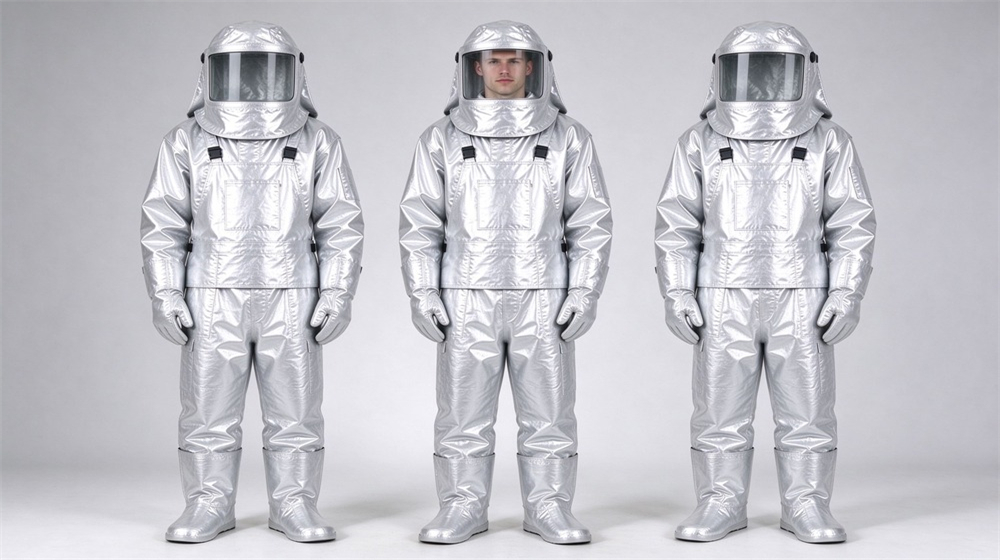
For guidance on protective clothing selection and use, refer to the OSHA personal protective equipment pages, the NIOSH heat stress topics and the ISO 11612 standard page.
Explore molten metal furnace suits and related heat protection options at our high temperature protection collection: high-temperature-protection.
Previous :
High Temperature Insulated Coverall with Multi-Layer Heat RetentionNext :
Steam Protective Suit | High Temp Steam and Hot Water Insulation Deep Blue Firefighting Suit Set, Forest Fire Fighting Specialized, Full-body Protection
This Deep Blue firefighting suit set is specially designed for forest fire fighting, using special flame-retardant fabric that can withstand 700°C open flames in the wild, with a thermal protection value (TPP) of 25CAL/AM2. The vivid Deep Blue color combined with enhanced reflective strips enables identification from 500 meters away in forest smoke. The lightweight design of only 4.5KG does not affect mountain action speed, with a waterproof rating >40KPA, adapting to camping fire fighting and long-term field operations. The anti-plant puncture design increases wear resistance by 50%, making it professional equipment for forest firefighting, mountain rescue, and outdoor fire fighting actions, providing all-around body protection for forest firefighters.
 High-temperature Resistant Firefighting Suit Set, Emergency Rescue, Quick-wear
This high-temperature resistant firefighting suit set is made of professional-grade flame-retardant materials, capable of withstanding extreme temperatures up to 750°C, with a thermal protection value (TPP) of 26CAL/AM2, providing reliable protection for emergency rescue. The innovative quick-wear design allows complete dressing in 40 seconds during emergencies, with hydrostatic pressure resistance >45KPA and excellent breathability. Designed according to ergonomic principles, weighing only 4.8KG, it effectively reduces the burden on rescue personnel and is suitable for high-risk scenarios such as building fires, tunnel rescues, and industrial firefighting, making it an ideal equipment choice for professional firefighting teams.
 Professional Firefighting Suit Set, Flame-retardant Protection, Rescue Essential, 14-3C Certified
This professional firefighting suit set is made of high-grade flame-retardant cotton fabric, 14-3C certified, capable of withstanding extreme temperatures up to 800°C, with a thermal protection TPP value of not less than 28CAL/AM2. The three-layer composite protection structure, with waterproof static pressure resistance >50KPA and breathability >5000G/M²·24H, ensures comprehensive safety for rescue personnel in complex environments such as building fires, forest fires, and special chemical plant fires. Available in three models: 97/02/14, meeting different rescue scenario requirements.
 02 Firefighting Suit Multi-layer Composite Material Rescue Protection
This Type 02 firefighting suit is made of professional flame-retardant materials with excellent heat resistance, fire protection grade meeting international rescue standards, and waterproof puncture resistance rate of 98%. The deep blue body is equipped with eye-catching yellow reflective strips, increasing night visibility by 85%. The complete six-piece configuration provides comprehensive protection for firefighting, forest firefighting, earthquake rescue, and other scenarios, providing reliable protection for 300+ professional rescue teams.
 Forest Fire Rescue Service with Heat-Resistant Design
This professional forest fire rescue service uses flame-retardant heat-resistant material, achieving GB8624-A2 fire rating standard with heat resistance up to 800°C, and features high-visibility reflective strips visible from 300 meters away. It's suitable for emergency rescue scenarios such as forest fires, mountain rescues, and industrial disasters, providing comprehensive personal safety protection. Each set has undergone 10,000 abrasion tests and proven its reliability and safety in over 1,500 rescue operations nationwide.
 Fire Rescue Cap, Aramid Flame-Resistant Material, Forest Fire Emergency
This professional-grade forest firefighting vest and hat set is made of polyester/cotton blended flame-retardant fabric, with reflective visibility up to 300 meters, capable of resisting short-term flame contact, improving protection efficiency by 85%. The bright orange design with double-layer reflective strips complies with international rescue standards, ensuring 360° visibility in smoke and low light environments. Suitable for forest fire fighting, wilderness emergency rescue, post-earthquake sites, and other emergency disaster relief scenarios, providing comprehensive protection for rescue personnel.
Copyright © Custom Disaster - Relief Bedding: Tents, Sleeping Bags, Blankets All Rights Reserved
the professional team to service !


