


This Emergency Kit Shelf Life & Consumable Replacement Guide covers hard case, soft backpack and wall-mounted cabinet formats. It adopts water resistant inner pouches and divided compartments, suited for institutional and commercial buyers for office and public facility deployment.
Note: Price for reference only. Exact price based on quantity, size, weight and custom details.
model no. :
BB-P3Brand:
YRFmarket price :
$39.8sale price :
$19.9price range :
30-500/$19.9Color :
Multiple Colorsport of dispatch :
Guangdong/GuangzhouPayment :
TT, Paypal, Western Unionmin order :
30original region :
Made in ChinaLead Time :
5-15daysAn emergency kit only works if its supplies are still good. A box that sits on a shelf for five years holds bandages that expired two years ago. This guide explains how long each item lasts, how to read the expiry date, and how to build a rotation schedule that keeps every kit current.
As a verified emergency kit expiry and consumable shelf life guide, we supply emergency kit shelf life guide wholesale to distributors, integrators and institutional buyers worldwide, with full traceability on every emergency kit shelf life we ship.

 |

|

Not every item ages the same. A metal scissors lasts decades. A bandage lasts three years. A battery-powered radio dies in five. Mixing them in one box without a plan is how programs fail. Plan emergency kit expiration around the shortest-rated item.
This guide gives you the rating table, the date-reading rule and a one-page rotation plan. Apply it to every kit you buy, stock or restock.
The core rule is simple. Consumables such as bandages and dressings carry a three-year rating. Durable tools and hard cases last five years. Mechanical parts run ten. Metal items last almost permanently. The table below turns these rules into a rotation plan.

emergency kit expiry applies even to a kit that has never been opened. The supplies inside may have expired on the shelf. When a disaster strikes, the first thing a responder reaches for is a bandage, and an expired bandage is worse than no bandage.
In this emergency kit shelf life guide wholesale guide, we cover consumable shelf life guide specifications, first aid kit expiry sizing, MOQ tiers and export documentation, so procurement teams can shortlist in one afternoon.
emergency kit expiry tracking is not a cosmetic detail. It is the difference between a preparedness program that protects people and a box that gives false confidence. A coordinator who ignores expiry dates is running a program on hope, not on evidence.
The cost of emergency kit expiry is quiet. A mask expired two months ago looks the same as a new mask. A dressing past its date feels identical to a fresh one. Only the printed date tells the truth. That is why a rotation schedule matters. Track first aid supply expiry on a master list per site.
For bulk buyers, emergency kit expiry compounds. One thousand kits all manufactured in one batch all expire in the same year. A rotation plan spreads the replacement cost across years instead of hitting one budget cycle.
Managing emergency kit expiry is not about buying better supplies. The fix is to manage the ones you have. A cheap bandage rotated on time beats a premium bandage left to expire. The housing matters less than the discipline inside it.
Think of shelf life as a budget line, not a one-time purchase. Every kit consumes its supplies over years. Plan that consumption and the program stays alive. Ignore it and the program dies quietly, one expired item at a time.
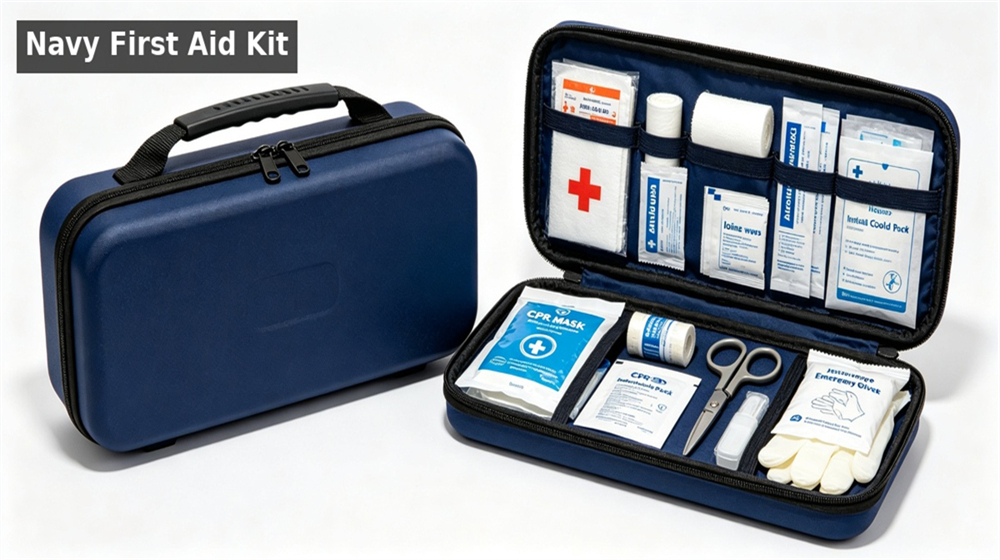
Every pouch is stamped with production date (YYYY-MM) and expiry date. Use this table to build your rotation calendar.
Replace 3-year items at month 33, not month 36. Replace 5-year items at month 54. Durable tools need only an annual visual check. Build a rotation calendar around these windows.
Group
Items
Qty in Standard Kit
Shelf Life
Replacement Window
3-Year Expiry
Adhesive bandages, antiseptic wipes, dust masks, nitrile gloves, crank light battery, LED headlamp batteries
20 + 10 + 10 + 4 pairs + 1 + 1
3 years from production
Replace at month 33, before month 36
5-Year Expiry
Gauze pads, conforming bandages, triangle bandages, medical tape, eye pads, trauma pads, CPR shields, thermal blankets, N95 respirators, emergency ponchos, wire saws, space blanket cards
5 + 2 + 2 + 1 + 2 + 1 + 1 + 2 + 5 + 2 + 1 + 1
5 years from production
Replace at month 54, before month 60
Permanent
Tweezers, scissors, trauma shears, whistle, multi-tool pliers, safety pins, cable ties, sewing kit, notebook+pencil, guide book, sealable bags, contact card, bag body
1 + 1 + 1 + 1 + 1 + 6 + 10 + 1 + 1 + 1 + 2 + 1 + 1
Indefinite under covered storage
Inspect annually; replace if damaged
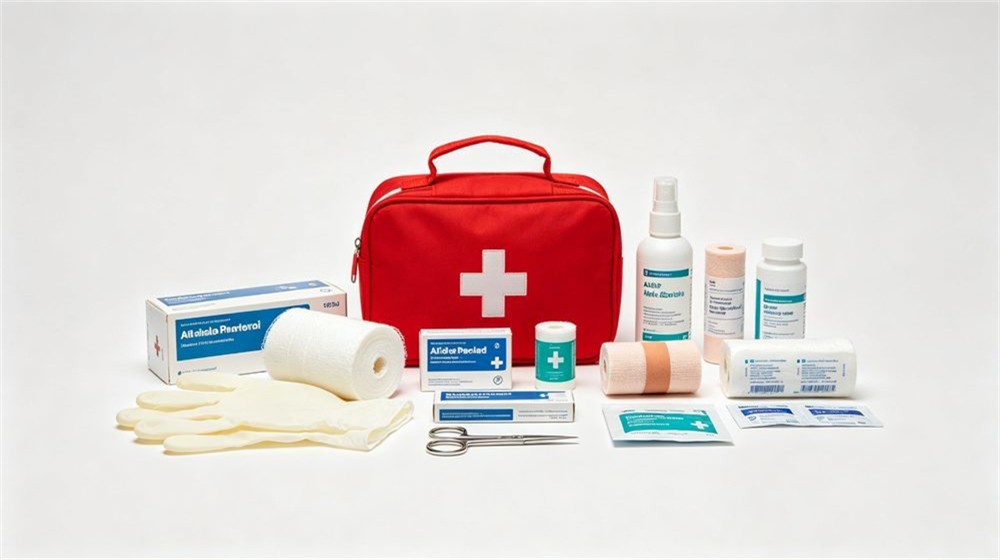
Every unit ships to the same spec sheet. Buyers audit against this table at goods-in.
Buyers usually audit dimensions, weight and temperature at goods-in. Confirm the bag fabric is UV-treated if your warehouse exceeds 40 C. Shelf life stamps are printed inside every pouch.
Parameter
Value
Open dimensions (L x W x H)
28 x 18 x 12 cm (soft pack) / 30 x 20 x 12 cm (ABS wall box)
Folded / closed dimensions
28 x 18 x 6 cm (packed)
Weight (empty / loaded)
0.35 kg empty / 1.8 kg loaded (standard 30-item kit)
Outer fabric
600D Oxford weave with 210D PU backing, PVC-coated bottom
Zipper
YKK #5 nylon coil, pulls tested to 5,000 open-close cycles
Stitching density
8-10 stitches per inch at load-bearing seams
Color options
Safety Orange / Navy Blue / Rescue Red (Pantone 1655 C / 2945 C / 186 C)
Operating temperature range
-20 C to +50 C (components rated)
Water resistance
IPX4 — splash-proof; inner contents in sealed PE pouches
Battery (in crank light)
No disposable battery; built-in 3.7V Li-ion, charge via hand crank
Shelf life (consumables)
3 years from production date for bandages/wipes/batteries; 5 years for dressings/blankets/respirators
Bag body service life
10+ years under covered storage; UV-rated for vehicle use
Max load-bearing
15 kg on padded shoulder strap
Reflective trim
3M Scotchlite 5510, 12 mm width, sewn on front and sides
Certifications
CE (93/42/EEC medical device), ISO 9001:2015, BSCI audit, REACH, FDA-listed components
Carton info
48 x 38 x 32 cm, 12 pcs/carton, 14 kg gross, 0.058 CBM
MOQ (custom-branded)
500 pcs for woven label / rubber patch; 1,000 pcs for printed outer bag
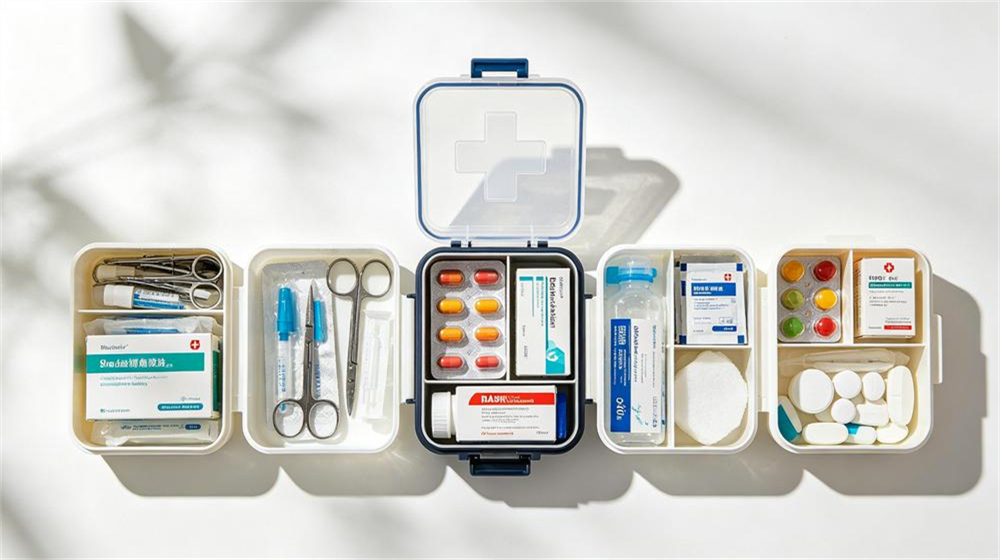
Emergency kit items fall into four shelf-life ratings. The table below maps each rating to examples and the check you should run.
Category
Rating
Examples
Check
Consumables
3 years
Band-aids, dressings, masks, wipes, bandages
Replace on expiry
Durable
5 years
ABS boxes, soft bags, sealed gloves, plastic tools
Visual inspection yearly
Mechanical
10 years
Crank radios, hinges, latches, pumps
Function test yearly
Metal
Permanent
Scissors, tweezers, metal whistles, rope hardware
Clean and oil yearly
Consumables expire on a stamp. Durable items last years but crack from heat. Mechanical parts work until they jam. A quarterly checklist covers all four.
Emergency kit items fall into four rating categories. Learn them once and you can read any contents list. The first category is consumables, rated three years. These are items that touch skin or are single-use: bandages, dressings, masks, wipes and plasters.
The second category is durable items, rated five years. These are hard cases, soft bags, gloves in sealed packs and most plastic tools. They do not expire quickly, but they degrade with sun, heat and repeated opening.
The third category is mechanical items, rated ten years. These are pumps, cranks, hinges and latches. They work for a decade with light use, then wear. A hand-crank radio's generator is a mechanical part.
The fourth category is metal items, rated almost permanently. Scissors, tweezers, metal whistles and rescue rope hardware last for decades. They may rust or dull, but they do not expire on a printed date.
A good kit mixes all four. The consumables drive the rotation cycle. The durable items set the housing budget. The mechanical items need a function test each year. The metal items just need cleaning.
When you read a supplier's contents list, map every item to a category. If a supplier cannot tell you the category of a bandage, that supplier does not run a real quality system.
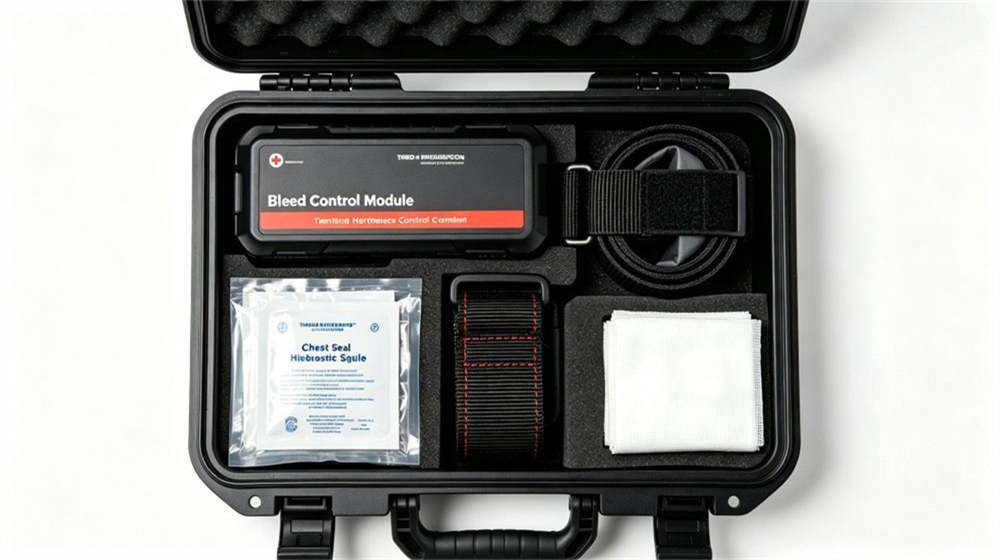
This consumable shelf life guide treats consumables as the heart of the rotation schedule. Model 3-Year Refill Pack is a band-aid pack available in 5, 10 and 20-piece configurations. Model 5-Year Refill Pack is a medical elastic bandage in 6 by 400 cm and 8 by 400 cm sizes. Both carry a three-year rating. Know the band aid shelf life before you order in bulk.
The consumable shelf life guide explains why band-aids and elastic bandages expire. The adhesive on a band-aid dries out. The elastic weave on a bandage loses tension. The sterile seal on a dressing weakens. After three years, the item is no longer reliable. The elastic bandage shelf life matches the band-aid rating.
As this consumable shelf life guide shows, the fix is printed on the pack. Every consumable ships with a manufacture date and an expiry date. Read the date, not the box. A box that looks new can hold a band-aid manufactured two years ago. Read the consumable expiry date, not the outer carton.
This consumable shelf life guide recommends requiring a minimum remaining shelf life of two-thirds at delivery. If a band-aid has a three-year life, it should arrive with at least two years left. Put this clause in the purchase order.
This consumable shelf life guide follows first-in, first-out as the rule. When a new shipment arrives, rotate the older stock to earlier service. The freshest items go to the back of the shelf. This simple discipline prevents a drawer of expired supplies.
Keep a small spares shelf. Band-aids, bandages, gloves and masks live on one shelf. When a kit is opened during the year, the restock comes from that shelf. That buffer solves most mid-cycle needs without a fresh order. Schedule emergency kit replacement on a rotating annual cycle.
Train one person to own the rotation. A named coordinator checks kits, replaces spares and reports needs. A single owner keeps the plan alive. Without an owner, even the best kit slowly falls out of date.

Replace consumables on expiry, not before. Inspect durable items yearly. Function-test mechanical parts every 12 months. A named coordinator owns this loop.
Item Type
Rating
Your Action
Band-aids, dressings, masks, bandages
3 years
Replace on expiry; require two-thirds remaining at delivery
ABS boxes, soft bags, sealed gloves
5 years
Visual inspection yearly; replace on cracks or latch failure
Crank radios, hinges, latches, pumps
10 years
Function test yearly; replace if test fails
Scissors, tweezers, metal whistles
Permanent
Clean and oil yearly; replace on rust or corrosion
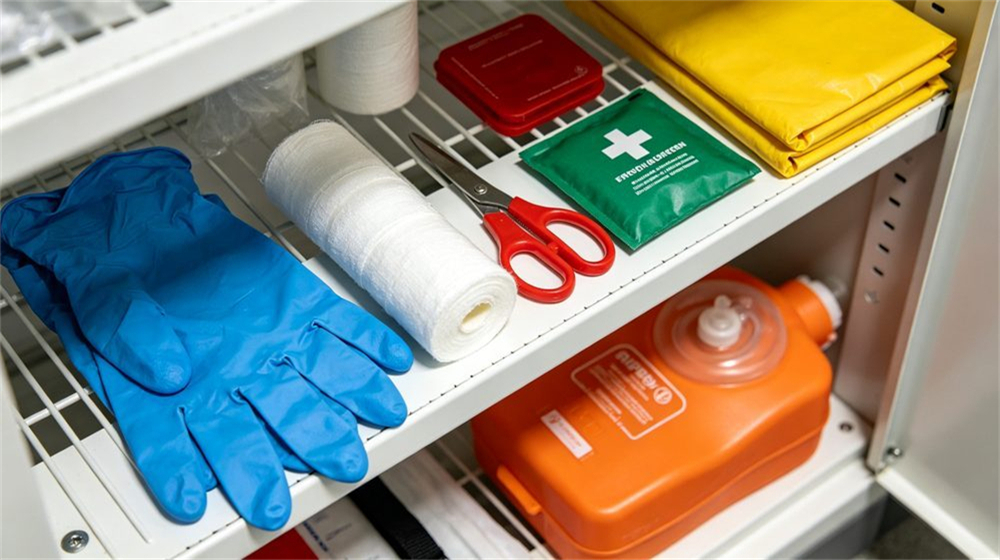
Durable items carry a five-year rating. The ABS wall box, the PP hard case and the soft backpack all sit in this category. They do not expire on a printed date, but they degrade with heat, sun and repeated opening.
A wall box mounted in direct sunlight fades and weakens. A soft bag stored in a damp garage grows mold on the stitching. A hard case left on a vehicle floor cracks on a bump. The housing protects the contents only if the housing itself is sound. Heat and moisture shorten emergency kit storage life.
The fix is annual inspection. Once a year, walk every kit. Check the hinges, the latches, the zipper and the carry strap. Open the box and smell for mildew. A ten-minute check catches a failing housing before it fails in use.
Gloves in sealed packs sit in the durable category. Unused gloves in an unopened pack last five years. Once the pack is opened, use the gloves within a year. Write the open date on the pack. That habit prevents a drawer of brittle gloves.
Plastic tools such as tweezers and safety pins also degrade. They become brittle in cold, yellow in sun. Replace them at the five-year mark, not when they break. A planned replacement costs less than an emergency purchase.
The housing itself should last. ABS boxes are built for years of wall service. Soft bags hold up to regular opening and closing. Spending on a durable housing saves money over the long run. A cheap box replaced every three years costs more than a good box kept ten.
For custom programs, branding on the housing also ages. A printed logo fades in sun. Choose embroidery or woven labels for outdoor kits. The mark outlasts the print.

Mechanical items carry a ten-year rating. A hand-crank radio's generator, a pump, a hinge and a latch all wear with use. They do not expire on a printed date, but they fail when they are needed.
The fix is a function test, not a date check. Once a year, crank every radio for two minutes. Pull every latch. Open every hinge. A mechanical part that works once a year keeps working. A mechanical part that sits for five years seizes.
Metal items carry an almost permanent rating. Scissors, tweezers, metal whistles and rescue rope hardware last for decades. They may rust in damp air, dull on hard use, or corrode near the sea. The fix is cleaning and oiling, not replacement.
For coastal or humid sites, ask for stainless steel or coated metal. A metal whistle that rusts in a drawer is a whistle that fails in a flood. Spend a little more on corrosion resistance and the item lasts the decade.
Aluminum foil blankets sit in a special category. They do not expire quickly, but they degrade with folding and heat. A quality blanket uses at least twelve micron aluminum foil, double-sided. A thinner blanket tears on the first use and reflects poorly.
When you buy a bulk kit, check the blanket spec. Twelve micron double-sided is the minimum. A thinner blanket is a corner cut you will notice in a real event. Ask the supplier for the micron rating before the order.
Mechanical and metal items are the slow-changing part of a kit. They do not drive the rotation cycle, but they need a yearly function test. That ten-minute check is the difference between a kit that works and a kit that looks good on a shelf.
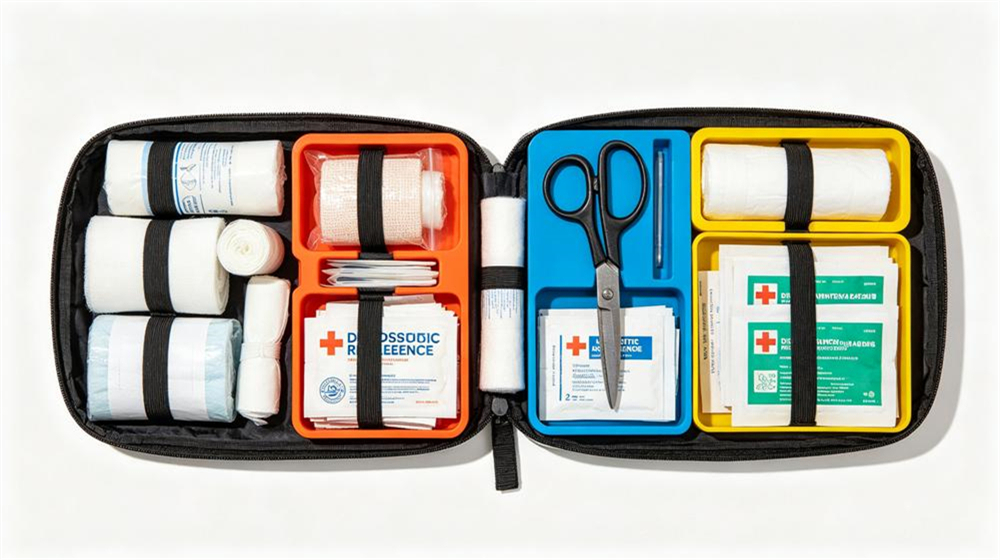
Reading the emergency kit expiry date is a skill. Most consumables print two dates: a manufacture date (MFG) and an expiry date (EXP). The expiry date is the last day the item is rated. After that date, replace it.
Reading emergency kit expiry requires checking the use-by date on some packs. Treat that as the expiry date. Some print a shelf life from manufacture, such as "3 years from date of manufacture". Do the math and write the expiry date on the box in marker. That single act makes the rotation schedule honest.
A common emergency kit expiry mistake is trusting the box date. A supplier may print the date on the outer carton, not on each individual pack. When the carton is opened and the packs are shelved, the date is lost. Require per-pack dating for bulk orders.
Another emergency kit expiry mistake is ignoring short-dated stock. A shipment that arrives with one year left on a three-year bandage is a bargain that expires next year. Reject it or negotiate a discount. Put a two-thirds remaining shelf life clause in the PO.
When you open a kit for the first time, write the open date on the housing. Then write the next check date on the housing too. A kit with dates on the outside is a kit that gets checked. A kit with no dates on the outside is a kit that gets forgotten.
For multi-site programs, keep a master list. Each row names a site, a kit type, a manufacture batch and a next check date. A coordinator walks the list each quarter. That spreadsheet is the program.

Storage condition drives how often you inspect. A home closet kit needs a yearly check. A car trunk kit needs a twice-yearly check because heat accelerates expiry.
Car trunk kits need inspection every 6 months, not 12. Heat at 60 C cuts shelf life by one third. Office wall boxes on a 12-month cycle are sufficient. Always write the next check date on the pouch.
Use Scenario
Storage Condition
Inspection Frequency
What to Check
Rotation Action
Home closet
Indoor, 15-25 C, low humidity
Every 12 months
Expiry dates on all pouches; crank light test
Replace 3-year items at month 33
Car trunk
Summer heat up to 60 C, winter cold
Every 6 months
Battery removal if not crank; pouch integrity
Replace 3-year items at month 30 (heat accelerates aging)
Office wall box
Indoor, climate-controlled
Every 12 months
Stock count against packing list; label legibility
Standard rotation per expiry stamp
Warehouse
Summer 40-45 C, humid coastal
Every 6 months
Silica gel desiccant; pouch sealing; weight check
Replace 3-year items at month 30; add desiccant every 12 months
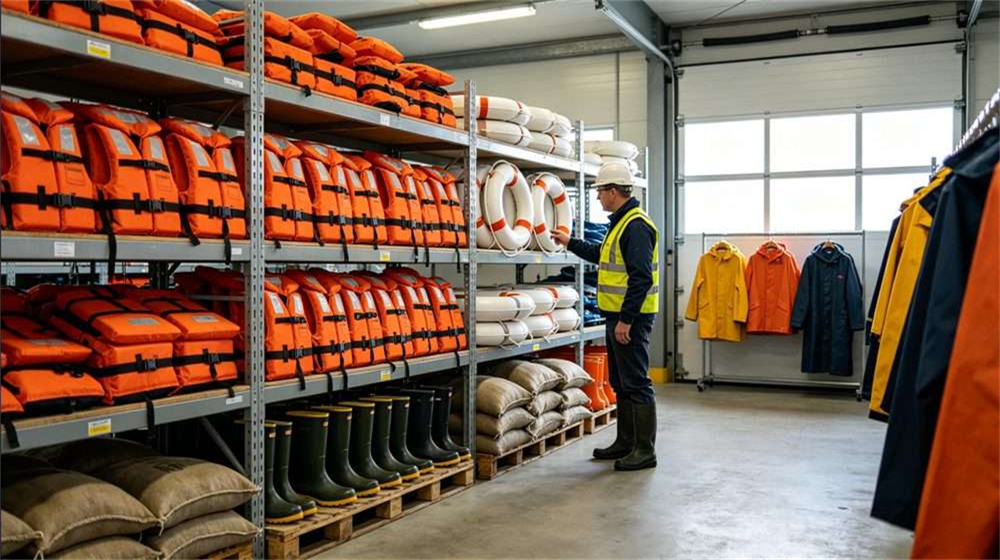
Map the whole year into four quarters. Q1 replaces consumables, Q2 checks housing, Q3 tests mechanical parts, Q4 cleans metal tools.
Stick to this quarterly loop and your kits never go stale. If a quarter is missed, double up the next one. A named coordinator walks the list each quarter.
Every item in one table. Use this quick reference when you rotate stock or write your inspection checklist.
Month
Action
Items
Q1
Consumable check
Replace expired band-aids, dressings, masks
Q2
Housing inspection
Check hinges, latches, zippers, carry straps
Q3
Mechanical test
Crank radios, pull latches, open hinges
Q4
Metal cleaning
Wipe scissors, oil hinges, inspect whistles
Keep this table printed next to your stock room. Band-aids and masks run 3 years. Elastic bandages run 5 years. Durable tools run 10 years. When in doubt, check the expiry stamp on the pouch.
A rotation schedule turns shelf life into a calendar. Start with the three-year consumables. They set the cycle. Every kit in the program gets a check date every twelve months. At each check, replace expired and used items.
The five-year durable items get a visual inspection at the same visit. No need to open the box. Just check the housing, the latches and the zipper. Mark the inspection on the housing with a date stamp.
The ten-year mechanical items get a function test at the same visit. Crank the radio, pull the latch, open the hinge. A one-minute test per kit catches a failing part before it fails.
The permanent metal items get a cleaning check. Wipe the scissors, oil the hinge, inspect the whistle. A two-minute pass keeps metal items serviceable for the decade.
Spread the budget across years. If you have three hundred kits, replace one third of the consumables each year. That smooths the cost and avoids a single large purchase. A rotation plan is also a budget plan.
Keep a spares shelf of common items. Band-aids, bandages, gloves and masks live on one shelf. When a kit is opened during the year, the restock comes from that shelf. That buffer solves most mid-cycle needs without a fresh order. Plan first aid kit restock before the annual check.
Train one person to own the rotation. A named coordinator walks the list, replaces spares and signs the log. A single owner keeps the plan alive. Without an owner, even the best kit slowly falls out of date.
|
Item |
Rating |
Replace When |
|
Band-aid (3-Year Refill Pack) |
3 years |
Expiry date on pack |
|
Elastic bandage (5-Year Refill Pack) |
3 years |
Expiry date on pack |
|
Disposable mask |
3 years |
Expiry date on pack |
|
Sterile dressing |
3 years |
Expiry date on pack |
|
ABS wall box |
5 years |
Cracks, fading, latch failure |
|
Soft backpack |
5 years |
Zipper, stitching, strap wear |
|
Hand-crank radio |
10 years |
Generator fails function test |
|
Aluminum blanket (12 micron double-sided) |
5 years |
Tears, reflective layer lost |
|
Metal scissors |
Permanent |
Rust, dull, corrosion |

Aluminum foil blankets are a special case. They do not expire quickly, but quality varies wildly. A cheap blanket uses eight micron foil that tears on the first use. A quality blanket uses at least twelve micron foil, double-sided. Pricing for emergency kit shelf life guide wholesale is tiered by container volume; as a consumable shelf life guide, we quote landed costs that include consumable shelf life consumables, custom packaging and pre-shipment QC.
The double-sided detail matters. One side reflects heat back to the body. The other side reflects heat away in a hot environment. A single-sided blanket only works in one direction. A double-sided blanket works in winter and summer.
Twelve micron is the minimum. Thirteen or fifteen micron is better. The extra micron adds tear resistance and reflects more heat. Ask the supplier for the micron rating before the order. A supplier who does not know the rating is cutting corners.
When a bulk kit includes a blanket, check the spec. If the supplier lists "emergency blanket" without a micron rating, ask. If the answer is "eight micron", push back. Twelve micron double-sided is the minimum for a serious program.
Store blankets folded, not rolled. Rolling cracks the foil. Folding keeps the foil intact. A blanket that has been folded and refolded still works. A blanket that has been rolled tight tears on the first open.
Replace blankets that have been used. A used blanket loses its reflective layer. Do not fold it back into the kit. A used blanket goes to training. A fresh blanket goes to the wall box.
The aluminum blanket is the cheapest high-impact item in a kit. Spend a little more on the micron rating and the blanket works when needed. Save a little on the price and the blanket tears when needed.
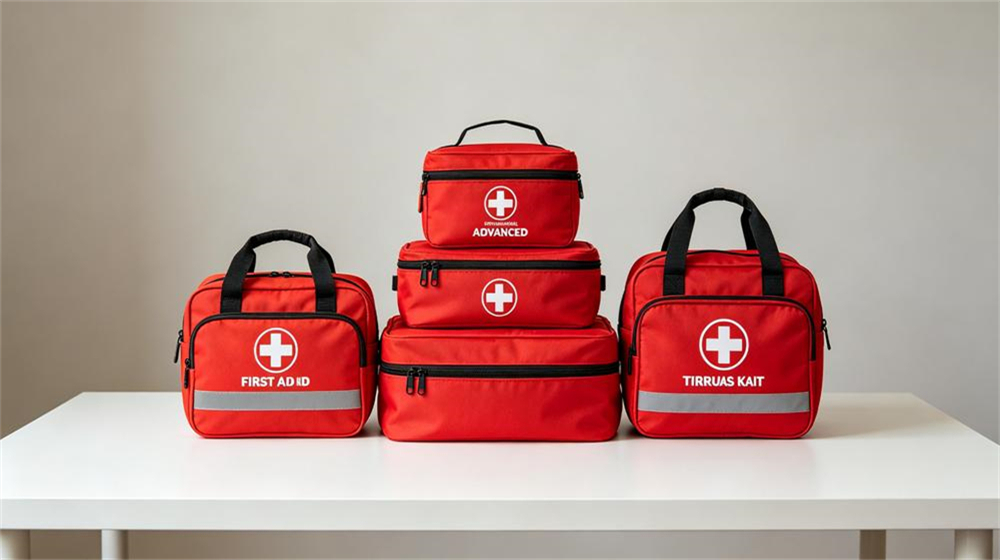
Bulk procurement and shelf life are linked. A single batch of one thousand kits all expires in the same year. A rotation plan spreads the replacement cost across years. Without a plan, the budget hits one cycle.
Order in batches, not all at once. If you need one thousand kits, order three hundred a year for three years. That spreads the manufacture dates and the expiry dates. Each batch arrives fresh, and each batch expires in a different year.
Ask the supplier for manufacture dates at order time. A good supplier tells you the production run before shipping. A vague supplier ships whatever is on the shelf. Require a recent manufacture date, within six months of shipment.
For framework agreements, hold a standing spec. Repeat orders ship to the same bill of materials, the same packing and the same document set. A standing framework lets you reorder without rewriting the spec each cycle.
Our manufacturing partner runs each order through a set check before packing: contents count, compartment layout, marking and outer-box condition. Consumables carry clear expiry dates printed at packing. That written trail is what a coordinator values most.
Materials are chosen for real use. ABS boxes must be rigid and cleanable. Soft bags must be durable and easy to open. We avoid exotic items that are hard to restock or unsafe to ship. Ask us for a contents list matched to your rotation plan.
The housing itself should last. ABS boxes are built for years of wall service. Soft bags hold up to regular opening and closing. A well-built outer unit protects the consumables inside. Spending on a durable housing saves money over the long run.

Custom kits follow the same rotation rules. A branded wall box with your organization name still holds band-aids that expire in three years. The print on the outside does not change the date on the inside.
For repeat orders, our emergency kit expiry account team reorders the same consumable shelf life configuration, keeping emergency kit shelf life guide wholesale pricing stable across quarters.
When you custom-configure a kit, map every item to a shelf life category. A custom kit that mixes a three-year bandage with a ten-year hinge needs both a consumable rotation and a mechanical test. Plan both before you order.
Custom branding on the housing also ages. A printed logo fades in sun. Choose embroidery or woven labels for outdoor kits. The mark outlasts the print. A branded box that looks new after five years is a box worth keeping.
For multi-site programs, keep a master list. Each row names a site, a kit type, a manufacture batch and a next check date. A coordinator walks the list each quarter. That spreadsheet is the program.
Spread the budget across years. If you have three hundred kits, replace one third of the consumables each year. That smooths the cost and avoids a single large purchase. A rotation plan is also a budget plan.
The payoff is a program where emergency kit expiry is tracked on schedule. No expired bandages, no seized hinges, no faded branding. That quiet reliability is what a preparedness program is really for.

Every unit passes a 25-point QC checklist: fabric thread count verified by gauge, zipper pull tested to 5,000 open-close cycles, stitching density measured at 8-10 stitches per inch, label legibility checked at 30 cm, expiry date stamp verified against production log, weight checked within +/-5% of spec, and carton drop tested per IEC 60068-2-32.
Our production line delivers 100,000 kits per month, exported to 40+ countries over 8+ years. Certifications: CE (93/42/EEC), ISO 9001:2015, BSCI audit, REACH, FDA-listed components. Lifetime technical support for your procurement team.
Quality control on every emergency kit starts at the production line. Our manufacturing partner runs each order through a set check before packing: contents count, compartment layout, marking and outer-box condition. Consumables carry clear expiry dates printed at packing.
Every kit is built to a fixed bill of materials. When a repeat order arrives, it follows the same list as the first. There is no drift between batches. This consistency means a rotation script written for order one still works for order fifty.
Materials are chosen for real use. ABS boxes must be rigid and cleanable. Soft bags must be durable and easy to open. We avoid exotic items that are hard to restock or unsafe to ship.
Consumables carry clear expiry dates. Masks, wipes, dressings and bandages are dated for rotation. A coordinator scans dates during the annual check. That habit keeps every kit current and prevents an expired item reaching a real event.
We support sample approval before a full run. A buyer who sees the actual kit, the compartments and the marking can approve with confidence. A trial unit locks the spec before mass production. That prevents a batch that misses the mark.
For repeat programs, we keep the bill of materials on file. A reorder takes a short message rather than a fresh spec. The same partner, the same layout and the same documents ship every time. That continuity is the value of a trusted supply line.
Factory information stays protected in our work. We present the product and the paperwork, never the factory's identity. This protects both the partner and the buyer's direct channel. One trusted face carries the whole program.
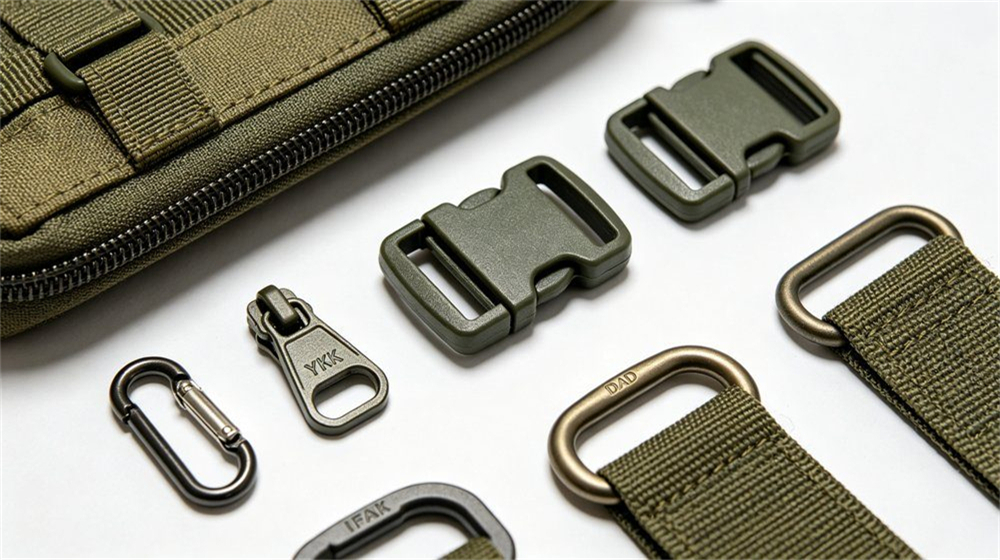
A supplier who understands shelf life is a supplier worth working with. Ask seven questions on the first call. First: "Can you print per-pack expiry dates on every consumable?" A real factory says yes.
Second: "Can you guarantee a minimum remaining shelf life at delivery?" A real factory has a contract clause. Third: "Can you tell me the micron rating of the aluminum blanket?" A real factory reads it off the spec.
Fourth: "Can you batch production to spread manufacture dates across years?" A real factory plans runs. Fifth: "Can you provide a document pack with every order?" A real factory has a data sheet.
Sixth: "Can you supply a spare shelf of common consumables for mid-cycle restock?" A real factory packages spares. Seventh: "Who owns the after-sales rotation support?" A real factory names a person.
These questions take ten minutes. They save months. A supplier who answers all seven is a supplier worth ordering from. A supplier who cannot, is a supplier to walk away from.
Trust is earned on the first call, not after the first container. Run the questions, check the answers, and only then place the PO.
For buyers who want a program that stays current, our consumables range is the starting point. It pairs a three-year-rated band-aid and elastic bandage with a rotation schedule template.
Bulk buyers get uniform sites, simple restock and a program guided by a consumable shelf life guide that does not expire in one year. Sourcing from one supplier keeps every batch fresh. A single order covers offices, clinics and homes with dated, rotatable supplies.
Need a full rotation program or custom branding? We batch production across years, with per-pack expiry dates printed at packing. Send us your site count, your kit types and your destination. We will quote a complete, rotation-ready package.

FAQ — Emergency Kit Shelf Life
How do I read the expiry date on your pouches?
Every pouch is stamped with two dates: MFG (production) and EXP (expiry), in YYYY-MM format. Example: MFG 2026-03 / EXP 2029-03 means manufactured March 2026, expires March 2029. The stamp is ink-jet printed, not a sticker — it cannot be peeled off and relabeled.
When should I replace the 3-year consumables?
At month 33 — three months before expiry. Do not wait until the expiry date. Adhesive bandage adhesive starts weakening at month 30; antiseptic wipe saturation drops after month 32. A 3-month buffer ensures the kit is always at 95%+ effectiveness.
What happens if I use a kit that's 6 months past expiry?
Adhesive bandages: adhesive may fail, bandage may slip off. Antiseptic wipes: alcohol has evaporated, wipe is dry, disinfection is zero. Dust masks: elastic earloops may snap. Nitrile gloves: may crack. N95 respirators: foam seal degrades. We recommend against using any consumable past expiry.
How do I build a rotation calendar for 1,000 kits?
Tag every kit with a lot number. Example: LOT-2026-03-A = March 2026 production, batch A. All kits in this lot share the same expiry. Schedule replacement for LOT-2026-03-A in December 2028 (month 33). We provide a lot-tracking spreadsheet on delivery.
Can I store kits in a hot warehouse (45 C in summer)?
Components are rated to +50 C. But sustained heat above 40 C accelerates aging by roughly 30%. If your warehouse exceeds 40 C for more than 2 months per year, shorten the replacement window: 3-year items at month 30, 5-year items at month 50. Remove alkaline batteries and store separately.
How do I store kits in a humid coastal warehouse?
Add 5 g silica gel desiccant per carton. Seal cartons with tape, not just strap. Check desiccant color indicator every 6 months — orange to green means saturated. Replace desiccant annually. We supply desiccant as a free add-on with orders over 1,000 pcs.
What's the shelf life of the bag body itself?
10+ years under covered storage. 600D Oxford fabric is UV-rated for vehicle use, but in direct sunlight the fabric yellows and weakens after 4-5 years. Store in a covered area. Inspect stitching and zippers annually; replace the bag if you see fraying at stress points.
Do you offer a replacement reminder service?
Yes. We register your lot numbers in our system and send an email reminder at month 30 (3-year items) and month 50 (5-year items). Reminder includes: lot number, items to replace, unit price, and a 15% loyalty discount on the refill order.
Can I buy refill packs separately?
Yes. Refill pack (3-year consumables): USD 1.20/pc FOB, MOQ 200 pcs. Refill pack (5-year consumables): USD 2.40/pc FOB, MOQ 200 pcs. Each refill pack is built to drop into the same pouch layout, so your recipients do not need a new training.
How do I verify that refill packs are newer than the original?
Every refill pack carries a production date within 30 days of shipment. We include a QC certificate in every carton: production date, expiry date, batch number, and QC inspector stamp. Compare against your lot-tracking spreadsheet before deployment.

Previous :
Traffic & Vehicle Emergency Kits for Roadside Safety RecoveryNext :
High-Rise Work at Height Emergency Kits & Fall Protection Gear Factory Customized Red Cross Disaster relief Med Kit Bag With Multi-purpose compass
GREAT DESIGN - Comfortable design is perfect for all uses and for carrying a wide variety of tools and equipment. You'll find that, whatever you're looking to carry, the YRF Custom Oxford Material Multi Functional Camouflage Tactical Waist Bags is the perfect choice.
 Medical Care Stockpile Metal wire saw Card tool Survival Aid Kit with 16 Pcs Safety Kit
GREAT DESIGN - Comfortable design is perfect for all uses and for carrying a wide variety of tools and equipment. You'll find that, whatever you're looking to carry, the YRF Molle Tactical First Aid Kits Medical Bag Tablets is the perfect choice.
 Outdoor Medical Care Disaster relief First Aid Kit Empty Pouch And Ice Pack Emergency Tool
GREAT DESIGN - Comfortable design is perfect for all uses and for carrying a wide variety of tools and equipment. You'll find that, whatever you're looking to carry, the YRF Mini First Aid Kit Bags And Pouches is the perfect choice.
 High Quality Camping Emergency Face Mask Survival First Aid Kit for Institutional Donation
GREAT DESIGN - Comfortable design is perfect for all uses and for carrying a wide variety of tools and equipment. You'll find that, whatever you're looking to carry, the YRF Outdoor Camping Emergency Kits Tactical First Aid is the perfect choice.
 ICRC Supplies Fluorescent stick first aid medical bags 600d Nylon Emergency Safety Tools Kit
GREAT DESIGN - Comfortable design is perfect for all uses and for carrying a wide variety of tools and equipment. You'll find that, whatever you're looking to carry, the YRF Hunting Survival First Aid Kit Bag Molle Tactical is the perfect choice.
 Hot Selling Governmental Institutions List Descender Firefighting Tools Empty Pull Rod First Aid Kit
GREAT DESIGN - Comfortable design is perfect for all uses and for carrying a wide variety of tools and equipment. You'll find that, whatever you're looking to carry, the YRF Tactical Complete First Aid Kit is the perfect choice.
Copyright © Custom Disaster - Relief Bedding: Tents, Sleeping Bags, Blankets All Rights Reserved
the professional team to service !


