


Our 72 Hour Emergency Kit holds water, non-perishable food, thermal blanket, lighting, whistle and first aid supplies. Suitable for home, office, school and vehicle. Custom contents and markings available for different emergency arrangements.
Note: Price for reference only. Exact price based on quantity, size, weight and custom details.
model no. :
EK-02Brand:
YRFmarket price :
$39.8sale price :
$19.9price range :
30-500/$19.9Color :
Multiple Colorsport of dispatch :
Guangdong/GuangzhouPayment :
TT, Paypal, Western Unionmin order :
30original region :
Made in ChinaLead Time :
5-15days
Quick Answer: Bulk 72 Hour Emergency Kits are supplied in Basic, Standard and Premium tiers for organizations, each holding water, first aid, warmth, light and radio supplies for the first 72 hours. Tiers range from a 9-piece Basic pack to a 15-piece Premium pack in 20 L to 30 L sizes, covering small teams up to large groups. Contents can be customized and bulk quantities supplied for workplaces, schools and relief missions.
A 72-hour emergency kit is a pre-packed, grab-and-go backpack that holds water, food, first aid, warmth, light, communication and sanitation supplies to cover the first three days after a disaster.
A 72 hour emergency kit covers the first three days after a disaster, when people rely on their own supplies before help reaches the site. This guide explains what a complete preparedness kit contains, how Economy, Standard and Premium tiers compare, and how buyers choose the right bulk kit for an office, school or workplace, aligned with FEMA and American Red Cross guidance.

 |

|
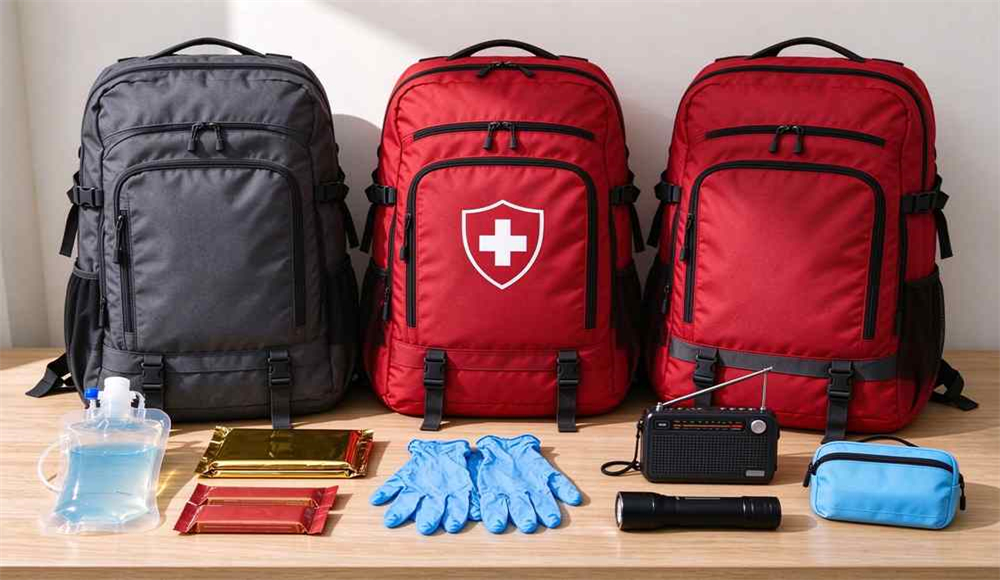
A 72 hour emergency kit covers the first three days after a disaster as a ready disaster kit, when people may have to rely on their own supplies before organized help reaches the site.
This guide explains what a complete organizational emergency preparedness kit should contain, how the Economy, Standard and Premium tiers compare, and how buyers choose the right bulk 72 hour survival kit for an office, school, community center or workplace evacuation plan.
First responders may take anywhere from 24 to 72 hours to reach everyone affected. During that window, people must rely on their own supplies to stay safe, hydrated, and healthy.
The 72-hour window is not arbitrary.
It reflects decades of emergency response data collected by Ready.gov, FEMA, the American Red Cross, and global emergency management agencies. Most major disasters trigger an initial wave of search-and-rescue operations within the first 24 to 48 hours.
After that, organized distribution of food, water, and medical supplies begins. By the 72-hour mark, most affected populations have started receiving structured aid. That is exactly the gap a 72 hour emergency kit is designed to fill.
For organizations, this means that in the first three days after a disaster, your employees, students, or members must be able to survive on their own. They cannot assume hospitals, grocery stores, or emergency services will be available.
That is why having a properly stocked emergency preparedness kit is not just a good idea. It is a critical component of any credible emergency action plan.
The 72-hour standard also applies to evacuation scenarios.
If your building needs to be evacuated, you may shelter in place nearby or wait for transportation to arrive. Having supplies on hand means you can care for your people during those first critical days.
Organizations have a wider duty than individual households.
A workplace, school, or public site must account for people who arrive unprepared, visitors with no supplies of their own, and staff with limited mobility. A standardized disaster preparedness kit program closes that gap so no group is left relying on improvised supplies.
Regulators and auditors increasingly expect organizations to show concrete evidence of readiness, not just a written plan.
Kit locations, inventory lists, inspection dates, and restocking records are all part of that evidence. Building this record starts with choosing a consistent emergency preparedness kit configuration that every site can follow.
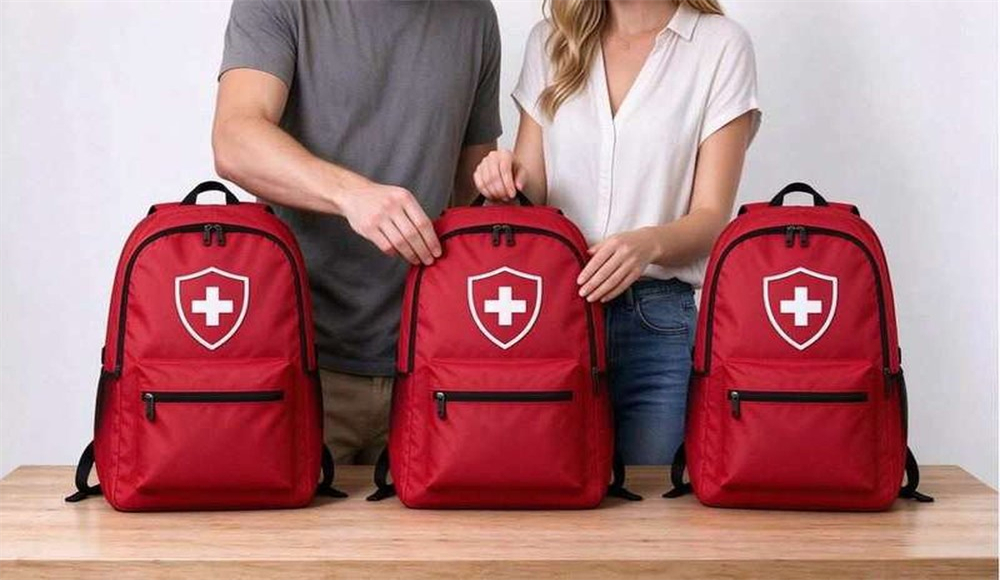
Emergencies come in many forms. Earthquakes can strike without warning, leveling buildings and cutting power. Fires can spread rapidly through offices and homes. Floods can inundate neighborhoods and force rapid evacuation. Hurricanes can knock out power for days.
In every scenario, the first 72 hours are the most critical. That is when people need water, light, warmth, and medical supplies the most.
Earthquakes are sudden, violent, and unpredictable. After a major quake, buildings may be unsafe, power lines may fall, and roads may be blocked by debris. People may need to shelter in place for two to three days before help arrives.
Fires spread fast and cause severe damage. An office fire can escalate quickly and force immediate evacuation. People may not be able to re-enter their buildings, and they must survive outside with only what they can carry.
Floods are slower but devastating. Floodwaters can rise over hours or days, cutting off communities and contaminating water supplies. People may need to evacuate to higher ground and survive on their own supplies.
Hurricanes are predictable but powerful. Even with advance warning, hurricanes can knock out power and water for days. After the storm passes, people need emergency supplies to get through the initial recovery days.
Other common emergencies include tornadoes, wildfires, winter storms, and public health events.
In each case, the pattern is the same: the first 72 hours are the hardest. A well-prepared 72 hour emergency kit can make the difference between staying safe and falling into crisis.
When emergency services are delayed, people are on their own. Without clean water, dehydration can set in within hours. Without light, safe navigation becomes impossible. Without first aid, minor injuries can turn serious. Without communication, people feel isolated and anxious.
A 72 hour emergency kit addresses these problems by giving you everything needed to survive until help arrives.
Consider a realistic scenario. A major earthquake hits your city at 2 a.m. Most people are asleep. Power fails. Water pipes burst. Roads are choked with debris. Fire and police services are overwhelmed.
Your people are safe at home, but they have no water, no light, and no communication.
How long can they last? With a 72 hour emergency kit, they have three days of clean water supplies, a radio for updates, lighting for navigation, and first-aid materials.
Without it, people are searching for bottled water in the kitchen, a flashlight in a drawer, and spare batteries in a closet. The difference between being prepared and being unprepared is not just comfort. It is safety.
Dehydration can turn a manageable situation into a life-threatening one within hours.
Untreated minor wounds can become infected. Without communication, people make poor decisions because they do not know what is happening. A disaster preparedness kit prevents these problems before they start.
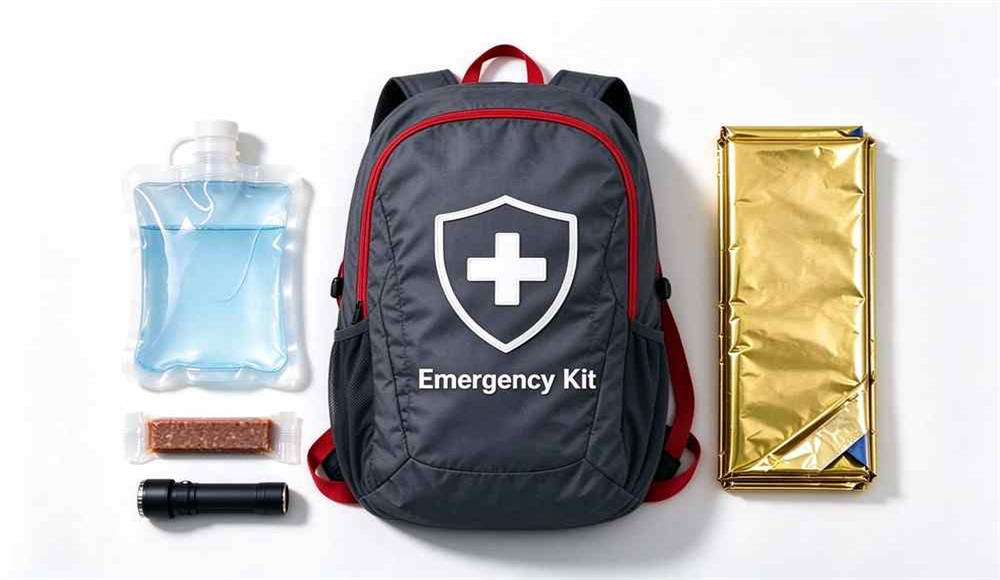
We offer three tiers of 72 hour emergency kits, designed for different needs and budgets.
Whether you are a small office equipping a single closet or a large organization ordering thousands of units for relief missions, we have a tier that fits.
Each tier is built for a specific user group, so you can choose the one that matches your situation. The range covers basic preparedness, mainstream organizational use, and professional-grade deployment.
Many buyers start with one Standard tier for their core sites, then add Economy kits for secondary spaces and Premium kits for high-risk or remote locations.
This mixed-tier approach lets you balance coverage against budget without forcing a single configuration on every site.
Every kit in the range uses the same backpack layout and a clear component list, so staff trained on one tier can quickly adapt to another.
Replacement and restocking also follow the same structure, which simplifies long-term maintenance across a multi-site organization.
The Economy tier is our entry-level emergency go bag, designed for organizations with limited budgets that need basic preparedness.
It includes nine essential items: a collapsible water pouch, hand-crank radio, headlamp, emergency blanket, whistle, multi-tool, first-aid kit, rain poncho, and durable backpack.
This tier is ideal for small offices, community centers, or anyone starting to build a preparedness plan. It is lightweight and compact, fitting easily into a closet or under a desk.
The Economy kit suits organizations that want a basic kit on hand without investing in premium-grade supplies. For organizations just beginning their preparedness journey, this is an excellent starting point. You can always upgrade to Standard or Premium later.
What is inside the Economy kit? It lists out as follows:
(1) a 2L collapsible water pouch for carrying drinking water.
(2) A hand-crank radio that works without batteries, so you always have a way to receive news.
(3) An LED headlamp for hands-free lighting.
(4) An aluminum emergency blanket that reflects 90% of body heat.
(5) A whistle for signaling distress.
(6) A compact multi-tool with blade, pliers, and screwdriver.
(7) A first-aid kit.
(8) A lightweight rain poncho for wet weather.
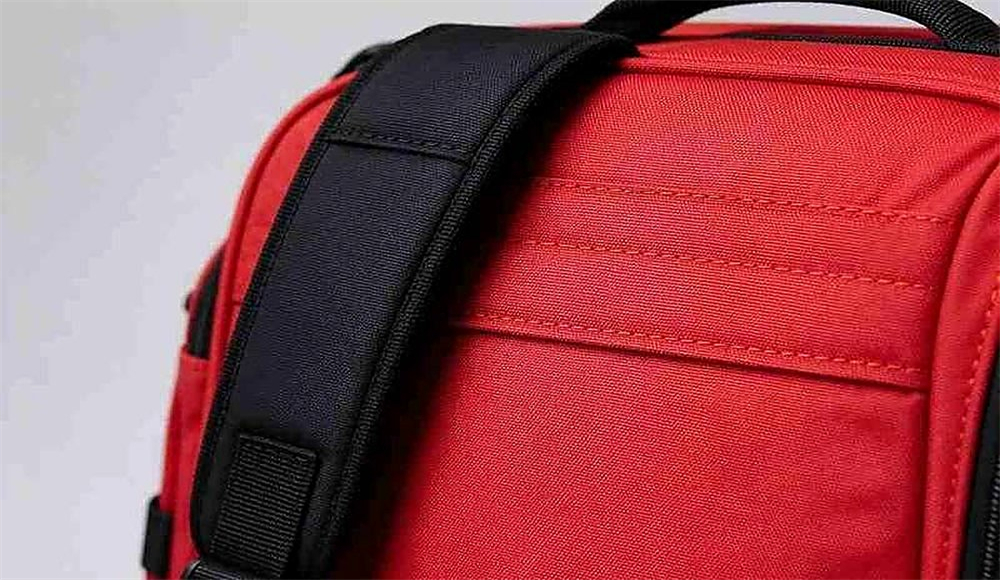
(9) A durable 20L backpack to carry everything. The backpack uses water-resistant, abrasion-resistant fabric with multiple pockets and adjustable shoulder straps for comfortable carry.
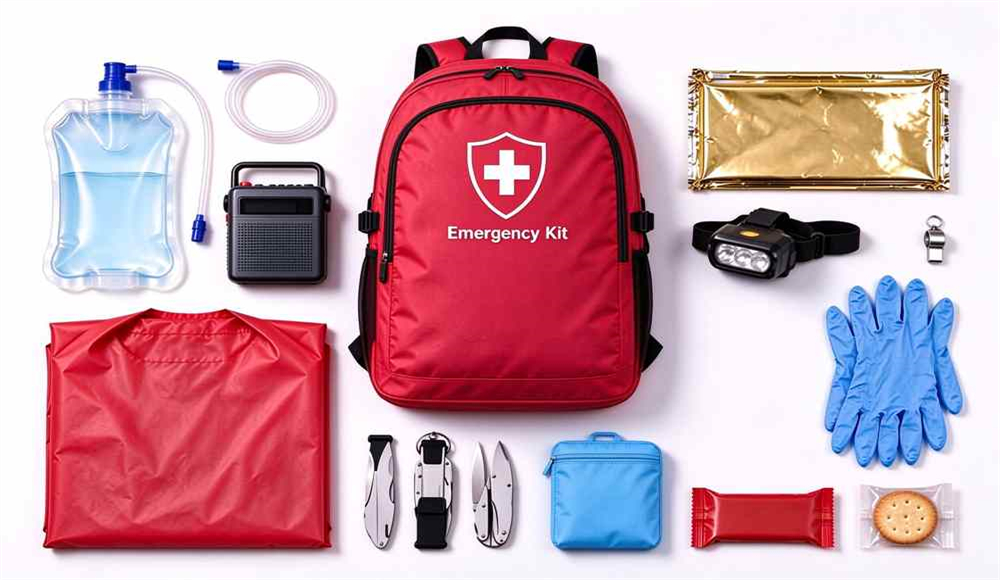
The Standard tier is our most popular bulk emergency kit, suitable for most organizations. It includes 12 items — everything in the Economy tier, plus a water-filter straw, a more comprehensive first-aid kit, and a solar-powered radio.
This tier meets typical OSHA workplace emergency kit expectations and is the top choice for schools, mid-sized offices, and community groups.
The Standard tier strikes the right balance between quality and price. It includes everything most people need for 72-hour preparedness, without the premium accessories that only specialized users require.
Our Standard tier is the best-seller because it sits at the sweet spot for most organizations. You do not pay for features you may never use, and you do not sacrifice important functions to save money.
What extra does the Standard tier include? It adds:
(1) a water-filter straw that can purify water from natural sources.
(2) A first-aid kit with more bandages, gauze, and antiseptic supplies.
(3) A solar-powered radio that can be charged by both hand-crank and sunlight. These three additions make a significant difference in an emergency.
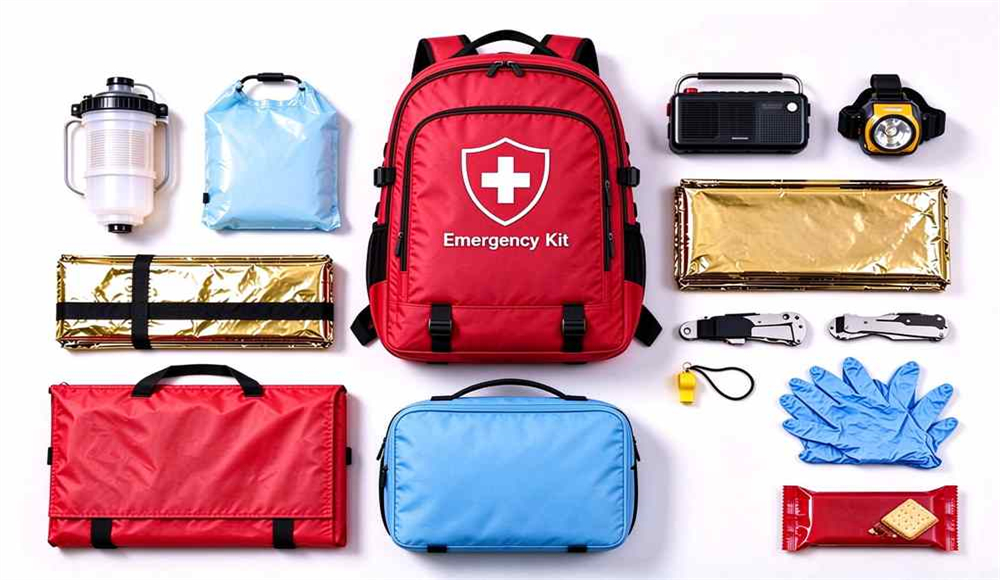
The Premium tier is our top-of-the-line professional emergency kit, designed for professional use and disaster relief missions.
It includes 15 items — everything in the Standard tier, plus a higher-quality water filter, a larger first-aid kit, a sleeping-bag-style emergency blanket, and a power bank.
This tier is ideal for government agencies, NGOs, and organizations that need the most comprehensive preparedness package.
The Premium tier includes all essentials plus professional-grade accessories, such as a higher-capacity water filter and a power bank for charging phones in an emergency. It is built for organizations with the highest standards for quality and performance.
If you need to operate in the most challenging environments, the Premium tier is your best choice.
What extra does it include? It adds: (1) a water filter that removes even more contaminants, including other contaminants. (2) A first-aid kit with advanced supplies such as trauma dressings and splints.(3) A sleeping-bag-style emergency blanket that covers your entire body, not just your shoulders. (4) A 10,000 mAh power bank for charging phones and other devices. These extras make the Premium tier truly comprehensive.
The table below compares the Economy, Standard, and Premium tiers side by side. It covers backpack capacity, water filtration, first-aid content, radio type, and warmth supplies, so you can match a tier to your operation before you request pricing.
After reviewing the table, you can match your scenario and budget to a recommended tier. If you are unsure which one fits your operation, the decision guide in the next section walks through people, environment, and budget.
Feature
Economy
Standard
Premium
Number of items
9
12
15
Backpack capacity
20L
25L
30L
Water filter
—
Filter straw
Filter straw
First-aid kit
Basic
Standard
Premium
Radio
Hand-crank
Hand-crank + solar
Hand-crank + solar + power bank
Emergency blanket
Aluminum foil
Aluminum foil (thickened)
Sleeping-bag style
Best for
Small offices
Most organizations
Professional use
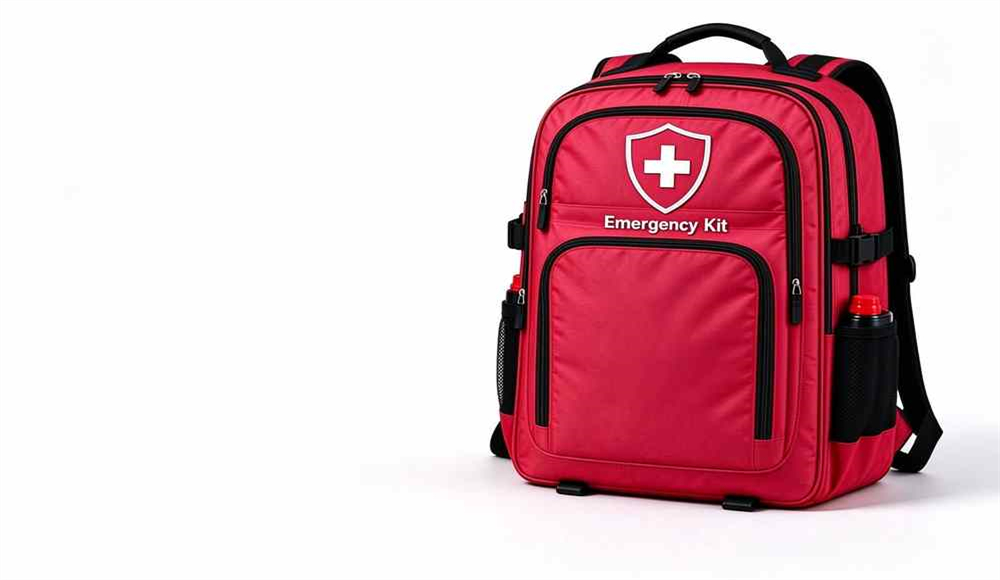
The first question is: how many people need to be covered? If you are equipping an office of 10 employees, one Standard kit may be enough.
If you are equipping a school of 500 students, you need multiple kits — one per classroom, plus spare kits for the office.
A good rule of thumb is one kit per 10 people. So for a 50-person office, you need five kits. For a 500-person school, you need 50 kits.
This ensures everyone has access to emergency supplies, even in chaotic conditions. Why one kit per 10 people? In an emergency, you cannot gather everyone around a single backpack. Supplies need to be distributed throughout the building.
Place one per classroom, one per office floor, and one in the break room. That way, no matter where people are when the emergency hits, they have supplies nearby.
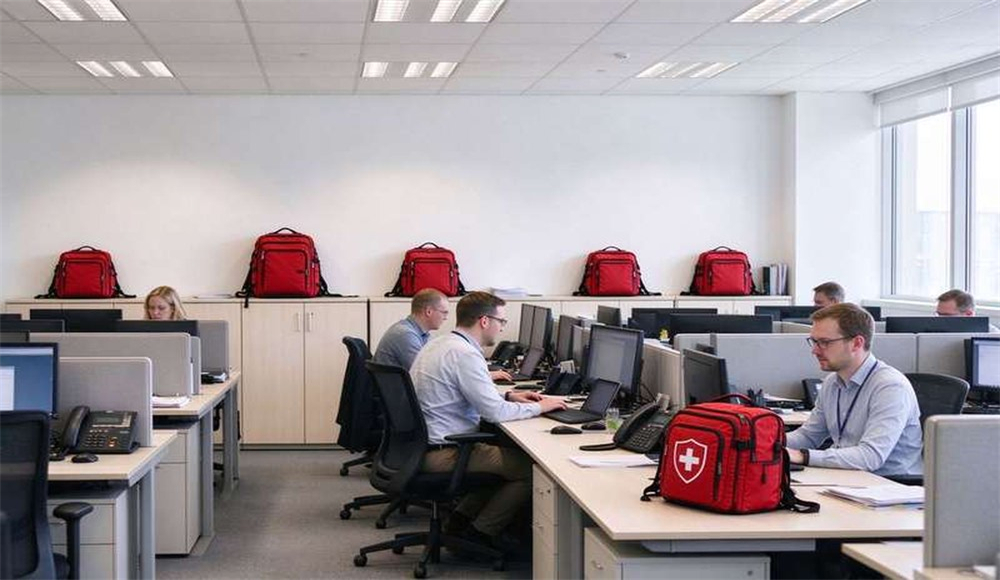
The second question is: in what environment will the kit be used? If it is in an office, the Standard tier is usually sufficient.
If it is for a disaster relief mission, the Premium tier is a better choice. If it is for a vehicle, you may need a dedicated car emergency kit.
Here is the typical mapping by environment. Office: Standard tier. School: Standard tier, one per classroom. Home: Standard tier, one per household. Disaster relief: Premium tier. Vehicle: dedicated car kit, different from a 72-hour kit. Outdoor: Premium tier.
Each environment has different needs, and choosing the right tier ensures you are properly prepared. For community organizations buying for multiple sites, a mix of tiers often works best.
The third question is: what is your budget? Our Economy tier is the most affordable, while the Premium tier offers the most comprehensive supplies. For most organizations, the Standard tier provides the best balance of quality and price.
If your budget is tight, start with the Economy tier and upgrade later. If budget is not a concern, choose the Premium tier. Volume pricing across tiers is detailed in the bulk ordering section below.
The three-step decision works as a quick decision tree.
A single-person or low-coverage space usually maps to Economy. A typical office, school, or household maps to Standard. A remote site, relief mission, or high-risk location maps to Premium. When in doubt, choose the Standard tier and add upgrades such as a finer filter or larger first-aid kit where needed.
It helps to list constraints before comparing tiers: the number of people, the local climate, the likely hazards, and whether evacuation or sheltering in place is more probable. A site in a flood zone prioritizes water purification and warmth.
A site in a wildfire zone prioritizes masks and breathing protection. Matching supplies to local risks avoids paying for features that do not apply to your most likely emergency scenarios.
Many organizations revisit this choice each preparedness cycle.
Headcount changes, new hazards appear, and regulations update, so the tier that fit last year may need adjustment this cycle. Keeping a written selection rationale makes the annual review faster and easier to justify internally.

Water is the most important supply in any emergency kit. Our Standard tier includes a 2L collapsible water pouch and a water-filter straw. The straw can purify water, removing bacteria, parasites, and other contaminants.
This means you can drink water from rivers, lakes, or tap sources without worrying about waterborne diseases.
The collapsible water pouch is lightweight and compact, taking up minimal space in the backpack. When you need it, simply fill it with water and you have two liters of drinking water — enough for one person for one day.
The filter straw is an added benefit, letting you access clean water from any natural source, not just the water you carry. This is why a well-packed 72 hour survival kit always treats water as a priority category.
Water guidance typically recommends at least one gallon per person per day for drinking, cooking, and basic hygiene.
Carrying that much bottled water for three days adds weight and bulk, which is why filtration and purification are built into the Standard and Premium tiers instead of relying on stored bottles alone.
When evaluating a filter straw, buyers should check the rated pore size, the total liters the filter can treat, and whether it targets bacteria and parasites.
The Premium tier steps up to a finer filter grade for environments where water sources are heavily contaminated or heavily contaminated water.
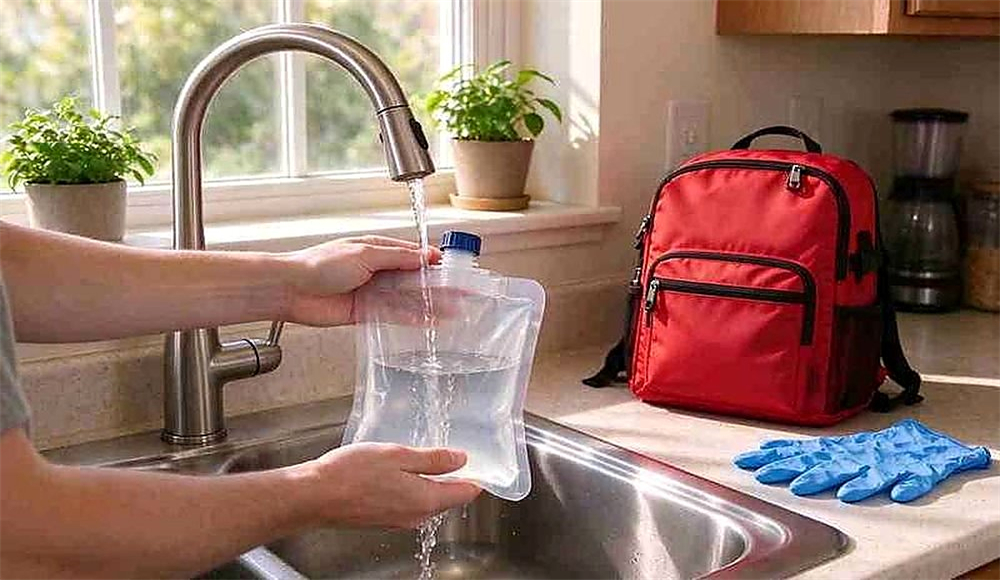
When the power goes out, you need lighting and a way to communicate. Our Standard tier includes a hand-crank radio and a headlamp. The radio can be powered by hand-crank or solar, so you never need batteries.
Radio frequency standards vary by country, so you need to choose the right radio based on your target market.
U.S. market: Radios for the U.S. market receive AM (530–1710 kHz), FM (88–108 MHz), and NOAA Weather Radio (162.400–162.550 MHz). NOAA Weather Radio provides real-time weather updates and emergency alerts.
EU market: Radios for the EU market receive AM (531–1602 kHz), FM (87.5–108 MHz), and European weather broadcasts. These provide real-time updates and emergency alerts across the region.
Other markets: Radios for other markets are selected based on local frequency standards. For example, the Japanese market requires AM (522–1629 kHz), FM (76–108 MHz), and local weather broadcast reception.
Radio features: Our radios include hand-crank charging with no batteries needed, solar charging for outdoor use, and USB charging for indoor use.
They also include an integrated LED flashlight and a power bank function for charging phones and other devices.
LED headlamp: Our headlamp uses a high-brightness LED bulb.
It has three modes: high, low, and flashing. It runs on three AAA batteries and lasts up to 100 hours on low mode.
The headlamp weighs about 80 grams and has an elastic headband that fits different head sizes. Its IPX4 water-resistance rating means it can be used in the rain. Both items are essential for staying informed and visible during an emergency.
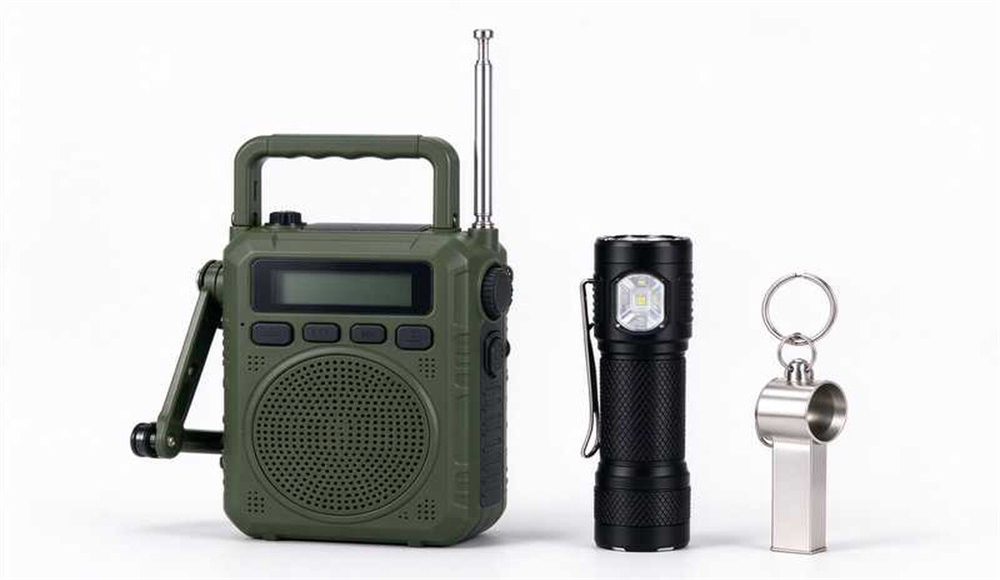
Staying warm and dry is critical during an emergency. Our Standard tier includes an aluminum emergency blanket and a rain poncho. The emergency blanket reflects 90% of body heat, keeping you warm in cold conditions.
The rain poncho keeps you dry in wet weather, protecting you from hypothermia. Hypothermia is a real risk during emergencies — even in mild temperatures, if you are wet and exposed, your body loses heat rapidly.
The emergency blanket and rain poncho are your first line of defense against hypothermia. They are compact enough to carry to an assembly point yet effective enough to preserve body heat through a cold night.
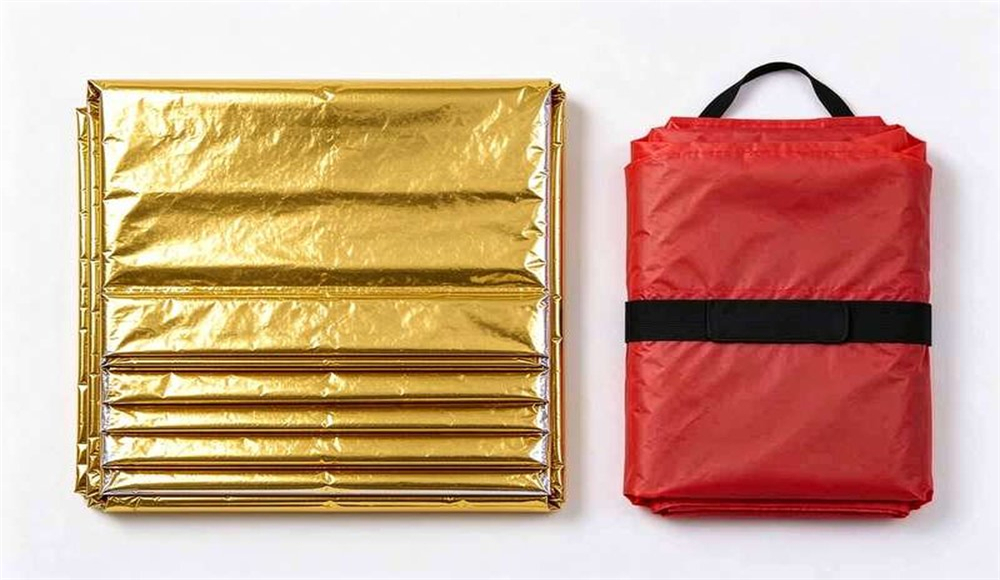
Our Standard tier includes a multi-tool, a whistle, and a first-aid kit. The multi-tool has a blade, pliers, screwdriver, and can opener, so you can handle a variety of tasks.
The whistle can be heard from a distance, helping rescuers locate you. The first-aid kit includes bandages, gauze, antiseptic wipes, and other essentials for treating minor injuries before professional help arrives.
Together, these tools cover the practical tasks and injury care that most organizations need during the first 72 hours. They round out a balanced emergency preparedness kit for office, school, or community use.
The multi-tool handles small repairs that are hard to anticipate: tightening loose parts, opening sealed packaging, cutting rope or tape, and opening cans without a dedicated opener.
Keeping it in a fixed pocket of the backpack means it is always paired with the rest of the kit rather than scattered across separate storage.
The whistle supports signaling when shouting is not enough, especially after an earthquake, in smoke, or over distance.
Pairing it with a headlamp and radio gives your people three independent ways to signal, navigate, and receive updates during a prolonged wait for rescue.
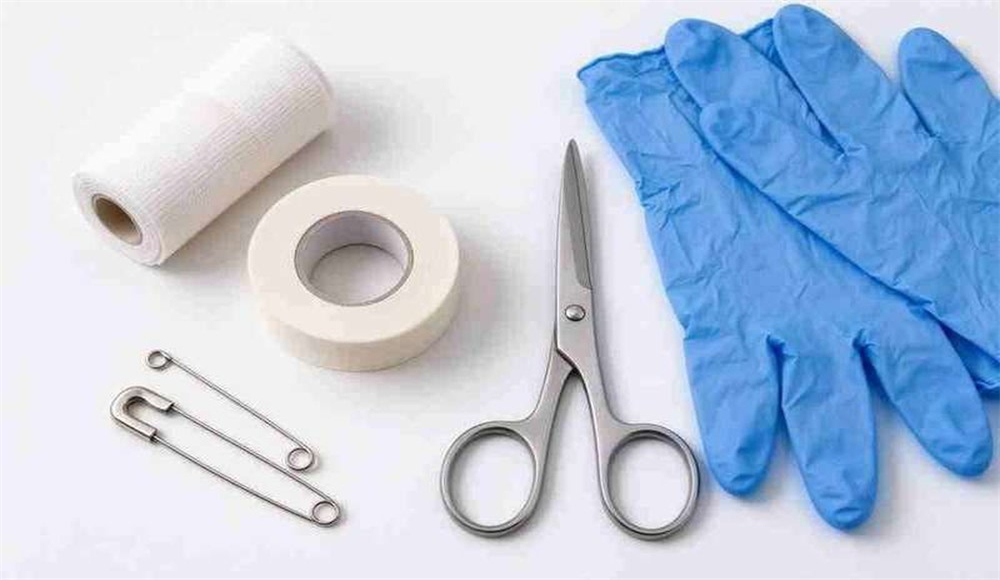
OSHA requires all workplaces to have emergency supplies. Our Standard 72 hour emergency kit meets typical OSHA workplace expectations, including first-aid supplies and emergency equipment outlined in OSHA Standard 1910.38.
Applicable product specifications and packing documentation are available on request for each order. Documentation includes product specifications and component lists.
For public procurement and regulated facilities, keep these documents on file alongside your emergency action plan. Auditors typically check that first-aid supplies are present, accessible, and within their stated shelf life.
OSHA standards focus on workplace readiness: accessible first aid, clear evacuation routes, and an emergency action plan that staff know.
Our kits complement those requirements by adding water, light, communication, and warmth supplies that a standard first-aid cabinet alone does not cover. We recommend confirming final obligations with your local safety authority for your specific site and industry.
Documentation provided with an order typically includes the component list, tier specification, and applicable product documentation. For tenders and public bids, buyers can request a product specification sheet to attach directly to the procurement file.
Documentation is organized by component category rather than claimed as one blanket compliance claim for every kit. Documentation is organized by component category rather than claimed as one blanket compliance claim for every kit. The first-aid module, electronic components such as the hand-crank radio, batteries, protective items, backpack fabric and food-contact pieces are each selected against the applicable safety, quality, transport and labelling requirements for the destination market.
Where required, component-level product specifications, packing list and transport documentation can be shared on request. The exact standards and documents depend on the destination country, intended use and the actual supply batch, and are confirmed during the inquiry.
OSHA, ANSI/ISEA Z308.1, FEMA and the SPHERE Project are external benchmarks or voluntary consensus standards for buyers to align against; they are not presented as our own compliance claims.
Specific product documents and reports are shared per destination market and intended use.
FEMA recommends that every household and organization prepare a 72-hour emergency kit. Our kits are designed to align with the Ready.gov emergency supply checklist, covering water, first-aid supplies, lighting, and communication equipment.
We also provide a checklist aligned with FEMA guidance, included with every order, so you can verify your kit meets the standard. This checklist maps each component to a recommended supply category, making internal review faster.
Buyers in government, education, and healthcare often use this checklist to align kit contents with their own internal preparedness standards. It also supports repeat orders and restocking after supplies are used in a drill or real event.
The table below summarizes the main standards organizations compare against when sourcing kits, the regions they apply to, and the documentation supplied with an order. Use it as a starting point for internal review, and confirm site-specific obligations with your local safety authority.
After reviewing this table, match your destination market and industry to the relevant row. Public procurement files usually keep the component list, tier specification, and applicable product documentation together, so ask for the spec sheet when you request a quote.
Standard
Region
What it covers
Documentation status
OSHA
United States
Workplace first-aid and emergency action supplies
Standard and Premium tiers align with typical expectations; documents provided where applicable
FEMA
United States
72-hour household and organizational supply checklist
Contents mapped to FEMA recommended supply categories
Component-level requirements
Destination markets
First-aid, electronics, batteries, protective items, fabric and food-contact pieces selected per applicable requirements
Product documentation, product reports and conformity documentation available on request, subject to supply batch
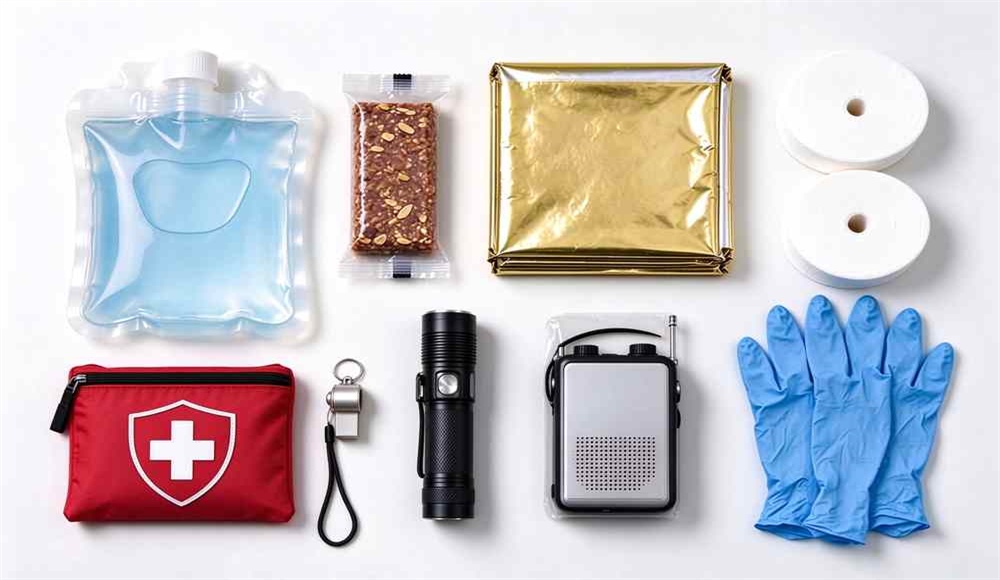
We offer custom logo printing on backpacks and kit contents. This is ideal for organizations that want to brand their emergency kits with their own logo or colors. We can print your logo on backpacks, first-aid kits, and even radios, turning a standard OEM emergency kit into a branded asset for your organization.
Sample and program arrangements can be discussed; the exact minimum depends on tier, customization, and quantity and is confirmed in the quotation. Branded kits help staff identify emergency supplies quickly and make it easy to track kits assigned to each department or classroom.
For NGOs and public agencies, branded kits also reinforce recognition during coordinated relief operations. This makes our OEM emergency kit option suitable for partners who plan to distribute under their own name.
We also offer a configurable interior — you can add or remove items from the kit to match your specific needs. For example, if you need more first-aid supplies, we can add them.
If you do not need a particular item, we can remove it and adjust the price. This flexibility means you get exactly the kit you need, without paying for things you do not want.
Common configuration changes include extra blankets for cold climates, additional water purification for flood-prone regions, and upgraded first-aid supplies for healthcare settings. Share your scenario with us and we will outline a matching configuration.
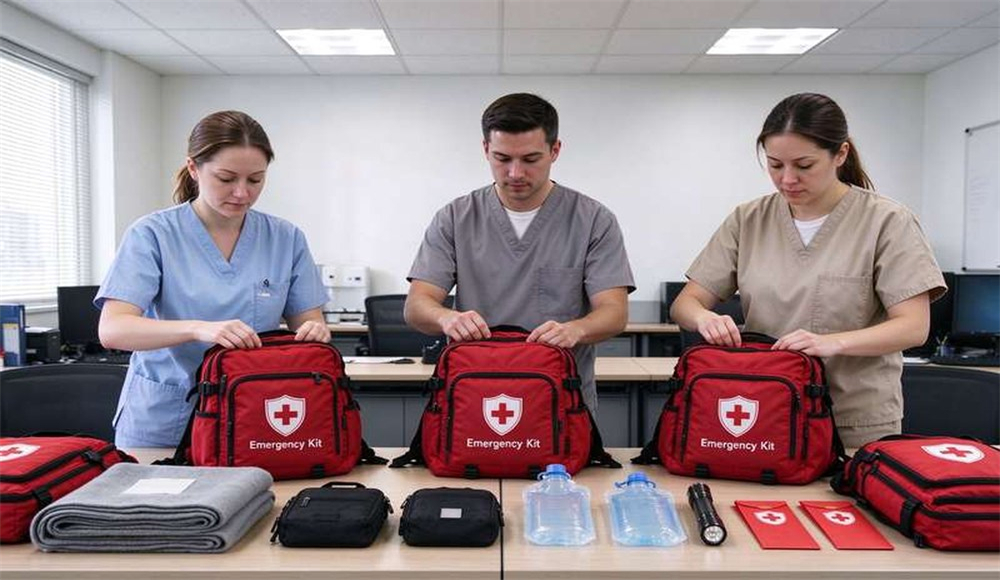
Every component in our emergency kits is checked before it ships. We inspect each item — water filter, radio, headlamp, first-aid kit — to make sure it works properly.
We also check backpack durability to ensure it can withstand rough handling. Quality terms and replacement support vary by item type, and applicable terms are confirmed in the quotation or agreement.
Each component is matched to its tier specification, so the Standard, Premium, and first-aid kits contain the items listed for their respective tier.
Water filters are checked for flow and seal, and radios are tested across charge modes before packing.
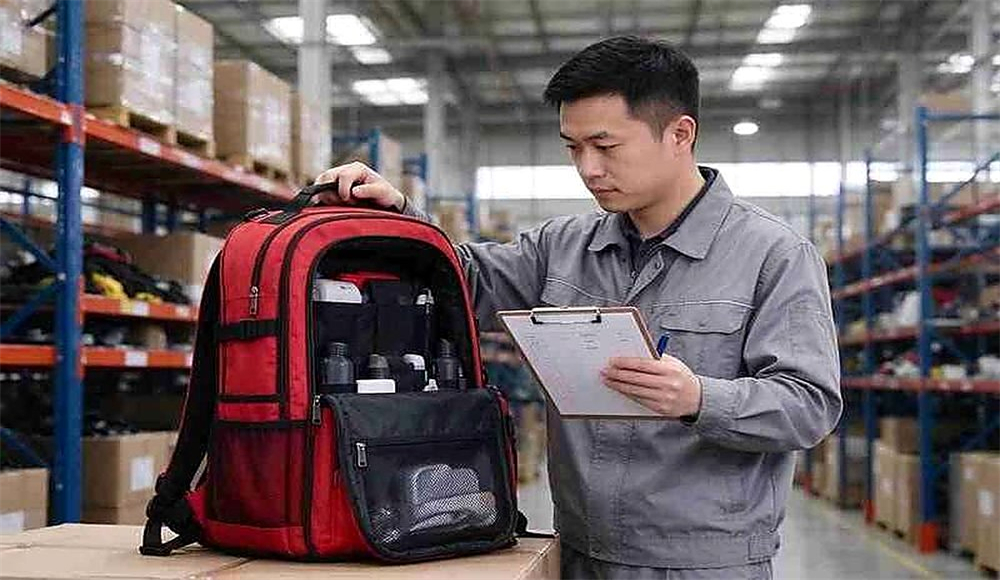
Buyers receiving a bulk delivery can expect consistent contents across every unit in the order. If an item arrives damaged or non-functional, contact us with your order details and we will arrange a replacement.
Consistency matters most for large organizations that deploy kits across many sites.
A Standard kit in one classroom should match the Standard kit in the next, so training and inspection follow one common standard. Component lists are fixed per tier, and configurable additions are documented per order so substitutions do not drift between batches.
Durability checks focus on the items that take the most handling: backpack straps, zippers, radio cranks, and headlamp switches.
These are the parts that wear first if a kit is moved between storage, drill, and deployment. Buyers can also request an inspection sample to verify build quality before a full order.
Volume pricing follows a tiered structure: the larger the order size, the lower the per-unit rate. Packing, labeling, and shipping can also be consolidated across more units, which reduces handling per kit. The final per-unit price is quoted by configuration, volume, and shipping terms.
We also offer volume discounts for repeat customers. As your emergency kit supplier, we can create a custom pricing plan that fits your budget if you are a government agency, NGO, or distributor.
Buying a bulk emergency kit program also simplifies procurement. One order covers multiple sites, one packing list tracks every tier, and one delivery schedule aligns with your rollout plan. As an emergency kit supplier supporting multi-site buyers, we coordinate a single contents list across every unit, which is usually more efficient than sourcing components separately.
Bulk orders also make standardization easier. Every floor, classroom, or region receives the same tier with the same component list, so training, inspection, and restocking follow one consistent procedure across the organization.
For multi-year preparedness programs, you can split delivery across phases. An initial order equips high-priority sites, and later orders cover remaining locations as budget or staffing allows.
When planning a bulk order, start by counting sites and people rather than ordering a fixed number of kits.
List each building, floor, classroom, or vehicle that needs coverage, then apply the one-kit-per-10-people guideline to reach a realistic quantity. This approach avoids both overbuying and leaving some spaces under-covered.
Buyers often consolidate kits, first aid, and warmth supplies into a single procurement rather than sourcing each item separately. A standardized bulk program reduces duplicated effort across departments and makes inspection and restocking easier to coordinate from one central list.
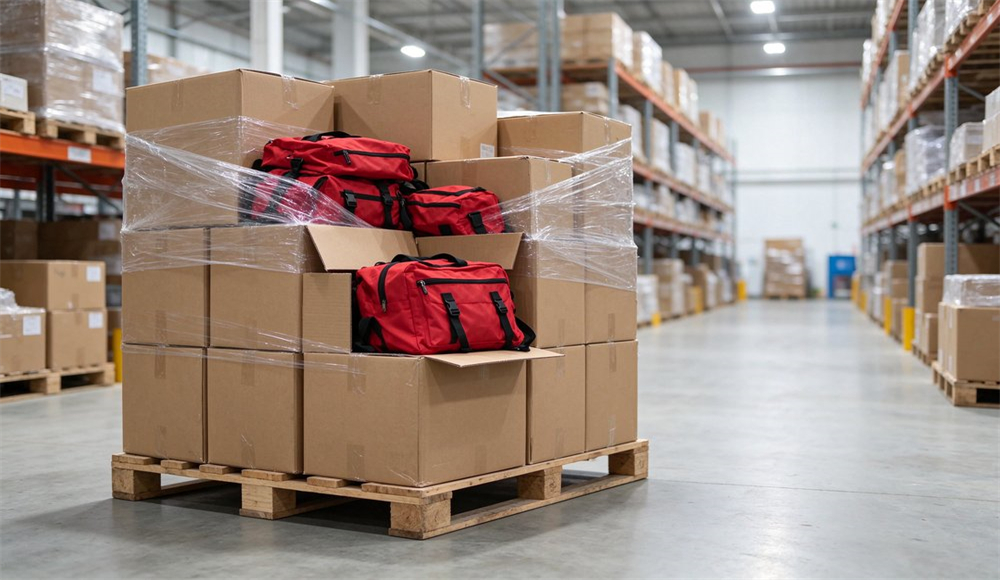
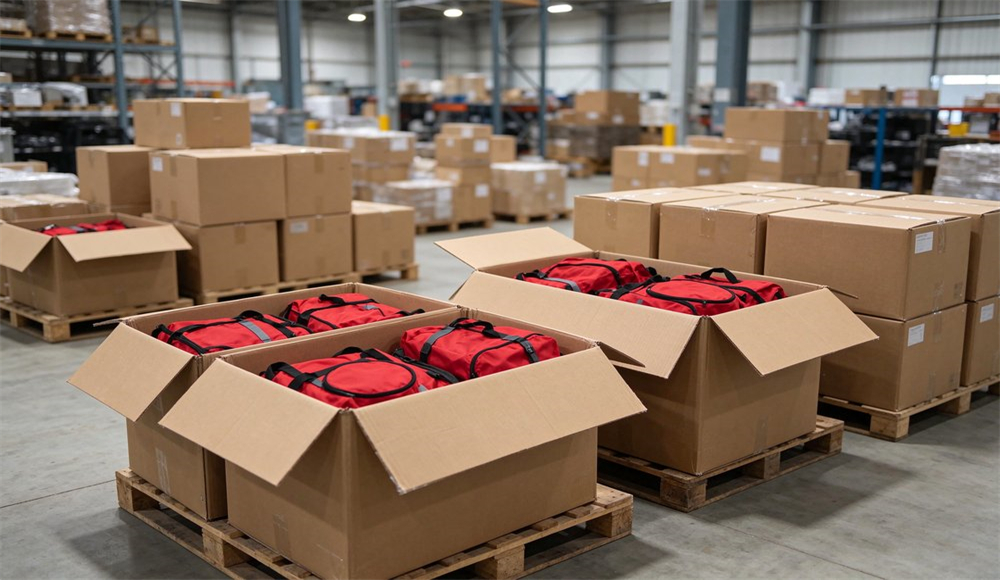
Our emergency kits are packed in sturdy cartons, ready to ship. We deliver worldwide by sea, air, or express courier. Standard configurations ship on a typical timing, which depends on configuration, quantity, and production schedule.
Customization such as logo printing or a fully configurable interior adds a short preparation period; the exact timing depends on customization scope and production schedule and is confirmed in writing after the quote.
Sea freight is the most cost-effective for large orders but takes longer. Air freight is faster but more expensive. Express courier is used for urgent orders but has the highest per-unit cost.
For emergency procurement, such as ahead of hurricane season or before a predicted storm, plan ahead to leave buffer time for shipping, customs, and internal distribution.
Urgent needs can be discussed, and expedited handling may be arranged at an additional charge.
Cartons are labeled by tier and quantity, so receiving staff can route kits to the right storage locations without opening every box. Packing lists are included with each shipment for inventory and sign-off.
Ordering is simple. Just send us an email with your requirements:
We will send you a quote promptly. Once you confirm the order, we begin fulfillment and delivery.
As an experienced emergency kit supplier, we guide buyers through tier selection, quantity planning, and documentation. If you are comparing multiple suppliers, share your checklist and your target quantity, and we will map each item to the closest matching tier.
For sample evaluation before a large order, you can request individual units first. Inspect the backpack, open the first-aid kit, test the radio, and confirm the build quality before committing to hundreds of units.
Our 72 hour emergency kits are purchased by a wide range of organizations, including government agencies, schools, businesses, healthcare facilities, humanitarian groups, and community organizations.
Government agencies: Federal, state, and local agencies purchase kits for public safety, emergency management, and public health departments. These agencies require high-quality products that meet strict standards and full product documentation.
Schools and universities: K-12 schools, colleges, and universities purchase school emergency kits to ensure student and staff safety during emergencies. Kits are typically assigned per classroom with a central backup kit for the nurse's office.
Businesses and offices: Companies of all sizes, from small offices to large corporate campuses, purchase office emergency kits to protect employees. Kits are distributed per floor and per department so supplies are reachable wherever staff are located.
Healthcare facilities: Hospitals, clinics, and nursing homes purchase medical emergency kits to continue providing care during power outages or other emergencies. These sites usually favor the Premium tier for its larger first-aid kit and power bank.
Humanitarian organizations: The Red Cross, UN agencies, and other relief organizations purchase disaster relief kits for global response. Standardized contents and configurable interiors make it easier to plan shipments for field missions.
Community organizations: Neighborhood associations, faith groups, and sports clubs buy kits for community shelters and event safety. Many order a mix of Economy and Standard tiers to cover both public spaces and private households.
Each buyer group weights different features.
Government and healthcare buyers prioritize product documentation and first-aid content. Schools and offices prioritize distribution per room and easy inspection. Relief organizations prioritize portability, warmth, and water treatment for field conditions. Telling us which group you represent lets us recommend the tier and configuration that matches those priorities.
Resellers and brand owners form another buyer group.
They order an OEM emergency kit configured to their own specifications, then resell under their brand to end customers in their region. This route combines standardized core contents with private-label packaging and branding.

Different industries have different priorities when buying a bulk emergency kit program. Here is how we typically advise customers in major sectors, matching each disaster preparedness kit configuration to the hazards and compliance expectations of that industry:
Manufacturing and industrial sites: These workplaces already have OSHA-mandated first-aid stations. Our Standard tier complements them by adding water, light, communication, and warmth supplies that first-aid cabinets do not cover. Premium tier is recommended for remote sites.
Office buildings: Multi-story office buildings need kits distributed on each floor. We recommend the Standard tier, one kit per floor, plus a spare kit in the main reception area for visitors.
Schools and universities: Schools need kits per classroom, plus a larger central kit for the nurse's office. The Standard tier is the most common choice for classroom kits. Premium tier is often added for athletic departments and science labs.
Healthcare facilities: Hospitals and clinics need to maintain continuity of care. Our Premium tier, with its larger first-aid kit and power bank, is the preferred option. Many facilities also order additional water purification supplies.
Retail and hospitality: Stores and hotels need kits in employee break rooms and back-of-house areas. The Economy tier is often sufficient for frontline staff, while the Standard tier is used in management offices.
Government and public safety: Federal, state, and local agencies typically require the Premium tier, with full product documentation, customizable contents, and volume pricing that fits public procurement rules.
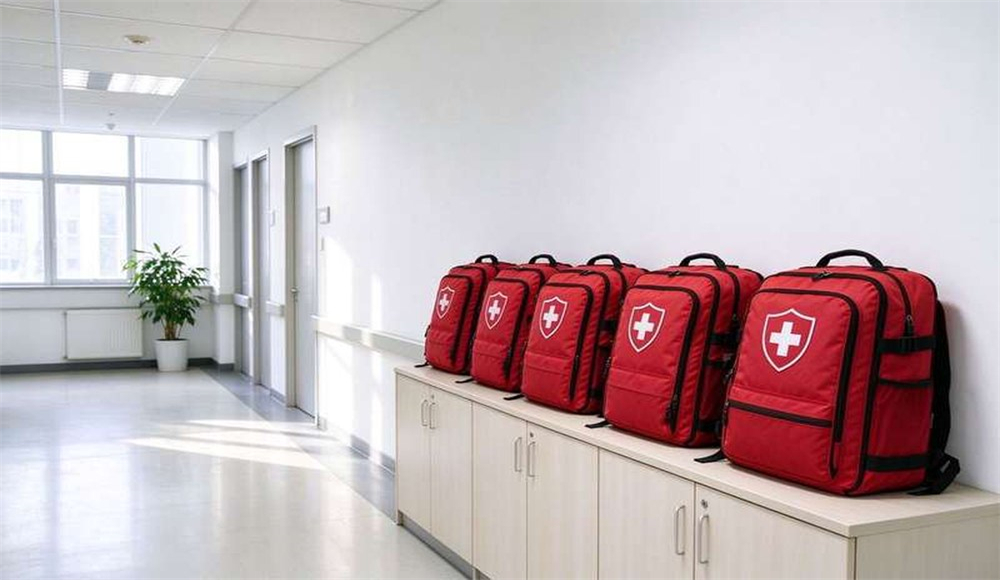
We work with distributors and resellers who want to offer 72 hour emergency kits to their own customers. As an established emergency kit supplier serving resale partners, our distributor program includes several benefits built for resale.
Volume pricing: Distributors sourcing a wholesale emergency kit or placing a 72 hour emergency kit bulk order receive wholesale pricing that allows healthy resale margins. The larger your annual commitment, the better your pricing tier.
Private label: Our OEM emergency kit service lets you sell kits under your own brand. Your logo, your packaging, your product. This is a common route for safety-supply retailers and regional preparedness brands.
Dropshipping: For online retailers, we can ship directly to your end customers under your brand. You handle the marketing and sales; we handle the fulfillment.
Marketing support: We provide product images, descriptions, and spec sheets that you can use on your website or in your sales materials. Tier comparisons and content guidance help you present each kit clearly to buyers.
If you are a distributor or reseller interested in carrying our emergency kits, contact us to discuss your market and volume expectations. As your emergency kit supplier, we can outline tier pricing, timing, and branding options for your territory.
Buying the kits is the first step. Getting the most value from them requires training and education. A 72 hour emergency kit is one piece of a broader preparedness program, not the whole program.
Related activities include written emergency action plans, evacuation routes, designated assembly points, regular drills, and communication tree lists. The kit itself is the tangible backup that keeps people safe when the plan is executed under pressure.
Orientation: When kits are first deployed, hold a brief session showing staff or students where the kits are located and what is inside. People should know what they can reach for during an emergency.
Drills: Conduct at least one emergency drill per year, and use the drill as a chance to check kit condition. If a kit was opened during a drill, restock it immediately.
Role assignment: Designate a responsible person in each department or classroom to own the kit. That person is responsible for the six-month inspection cycle and for reporting missing or expired items.
Documentation: Keep a simple inventory list inside or attached to each kit. When items are used or replaced, update the list. This makes the six-month inspection much faster and gives auditors a clear record.
Many customers start by ordering the kits, then layer in training, drills, and plan updates over time. The kits are the anchor that makes the rest of the program feel real to employees, students, or members.
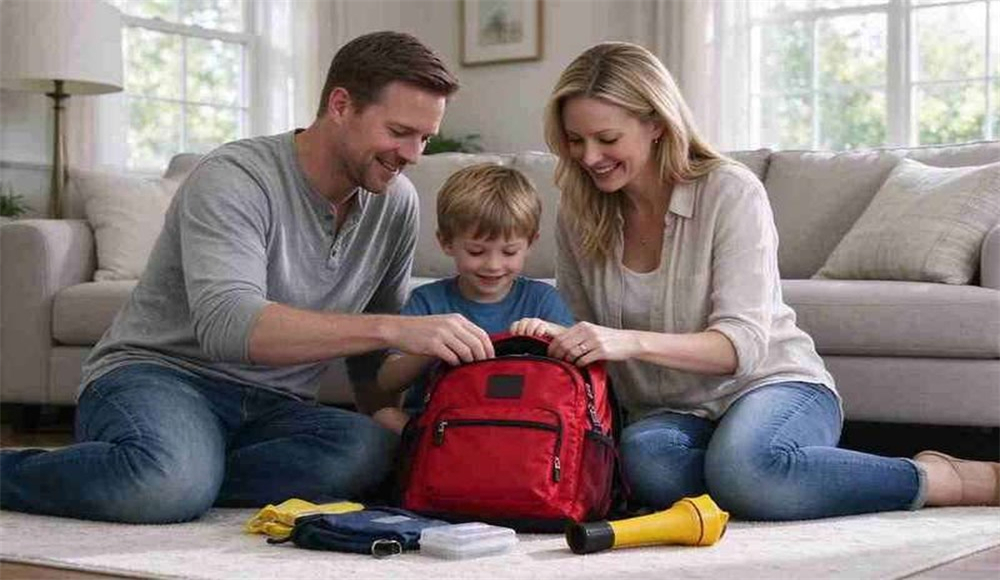
Organizations often make the same mistakes when buying emergency kits. Here are the most common ones, and how to avoid them.
Buying the cheapest option without checking contents. Not all emergency kits are equal. Some budget kits use low-quality components that fail when needed. Always compare the contents list and component quality, not just the price.
Buying too few kits. A single kit per floor sounds reasonable, but if people are scattered across multiple rooms, one kit may not reach everyone. Follow the one-kit-per-10-people rule of thumb.
Storing kits where no one can find them. A kit locked in a storage closet is useless during an emergency. Kits need to be visible, accessible, and known to everyone.
Forgetting to rotate supplies. Food, water, and dressing supplies expire. Batteries lose charge. If the kit sits on a shelf for five years without inspection, it will not be reliable when needed. Set a six-month inspection reminder.
Buying a kit that does not match your environment. A car emergency kit is different from an office kit, which is different from a school kit.
Choose the tier and configuration that matches how and where it will actually be used.
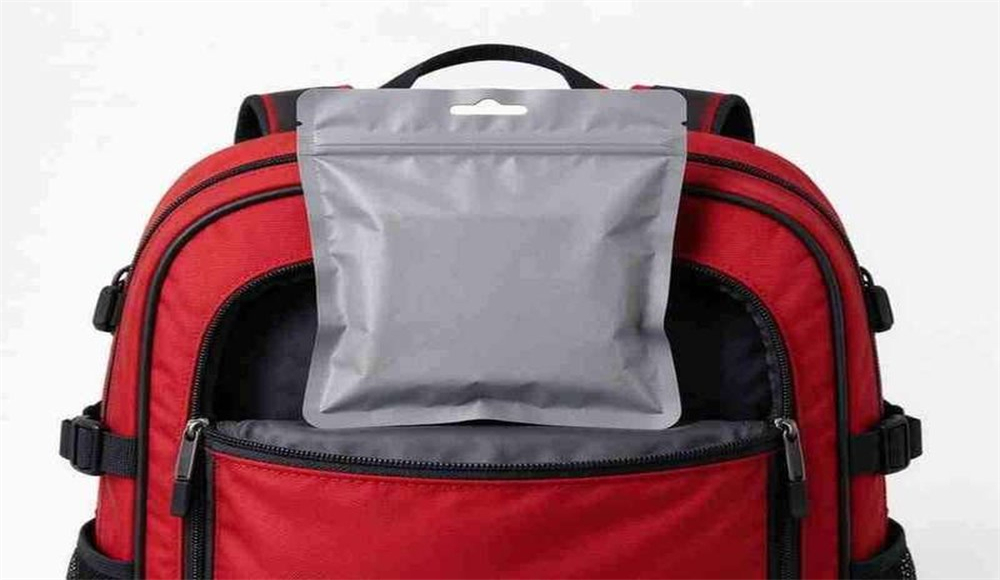
Emergency preparedness and sustainability are not opposites. We are increasingly mindful of the environmental footprint of the kits we supply.
Several components already support this: the hand-crank and solar radios eliminate disposable batteries. The aluminum emergency blankets are recyclable. The water-filter straws reduce the need for single-use bottled water.
Our cartons are recyclable, and we are exploring reduced-plastic packaging options. For customers with specific sustainability goals, we can discuss customization options for packing and materials.
For organizations that report on sustainability initiatives, our kits can be part of the conversation. A well-designed emergency preparedness kit reduces reliance on disposable supplies during emergencies and supports long-term community resilience.
A standard 72 hour emergency kit includes 12 items: a collapsible water pouch, water-filter straw, hand-crank radio, headlamp, emergency blanket, rain poncho, multi-tool, whistle, first-aid kit, and a durable 25L backpack.
This configuration works as a balanced 72 hour survival kit for office, school, or community use, covering water, light, communication, warmth, tools, and first aid.
The contents of one standard kit are configured for one person over 72 hours.
For a family of four, you need four kits, or one large Premium kit sized for the group. For organizational orders, follow the one-kit-per-10-people guideline and place kits per floor, classroom, or department so supplies are reachable wherever people are located.
Single or sample units can be arranged so you can inspect build quality, contents, and backpack feel before a larger order.
Organizational and program orders move to volume tiers; the exact minimum depends on the tier, customization, quantity, and shipping terms, and is confirmed in the quotation, so you can place a larger bulk emergency kit order with clear terms.
Yes, we offer a configurable interior.
You can add or remove items to match your specific needs, such as extra first-aid supplies, additional blankets, or upgraded water purification. Configurable interiors suit sites with special climate risks, medical needs, or regulatory requirements that a standard tier does not fully cover.
Yes, our Standard and Premium tiers meet typical OSHA workplace expectations.
We provide complete product documentation to support workplace audits and public procurement review. For final compliance, confirm site-specific obligations with your local safety authority, since requirements can vary by industry and region.
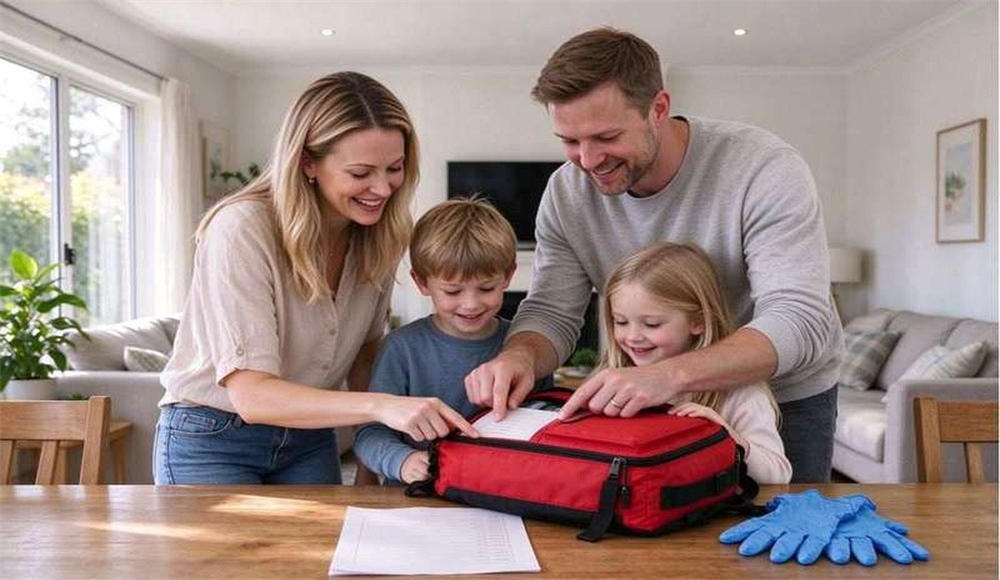
First-aid kits have a 3-year shelf life.
Water filters have a 5-year shelf life. Emergency blankets and other non-perishable items have an indefinite shelf life. Inspect every six months, check expiration dates, and replace expired or damaged items promptly. Keep a short inventory list inside each kit to speed up inspection.
Applicable product specifications and packing documentation are available on request.
Components are selected against the applicable safety, quality and transport requirements for their category; product specifications and packing documentation are available on request, subject to the destination market and the actual supply batch.
Share your destination country and intended use so we can confirm the right documentation for your shipment.
The Economy tier has nine basic items, the Standard tier has 12 items (our most popular), and the Premium tier has 15 items for professional use.
The tiers differ in water filtration, first-aid size, radio features, and warmth supplies. Economy suits entry-level coverage, Standard suits most organizations, and Premium suits remote sites and relief missions.
Bulk pricing depends on the tier and configuration.
The Economy tier covers entry-level essentials, the Standard tier balances contents for most organizations, and the Premium tier suits remote sites and relief missions.
Larger order size lowers the per-unit rate, and packing, labeling, and shipping can be consolidated across more units; custom pricing is available for agencies, NGOs, and distributors. The final per-unit price is quoted by configuration, volume, and shipping terms.
Yes, we offer custom logo printing on backpacks and supplies.
Sample and program arrangements can be discussed, with the exact minimum depending on tier, customization, and quantity and confirmed in the quotation. This OEM emergency kit option lets you brand kits with your own logo, colors, or organizational identity, and it is commonly used by agencies, schools, and resellers preparing kits for resale or internal distribution.
Emergency preparedness is not a one-time purchase. It is an ongoing practice. A 72 hour emergency kit that sits on a shelf for years without inspection is not preparedness — it is a wish.
The organizations that benefit most from their kits treat them seriously.
They inspect them, restock them, drill with them, and update them as their needs change. They do not see the kit as a checkbox. They see it as a lifeline.
Whether you are equipping an office, a school, a healthcare site, or a relief mission, the same logic applies: match the tier to your people, your environment, and your budget.
Our team can help you map each site to the right configuration.
If you have not yet ordered emergency kits for your organization, now is the time.
You cannot predict the next disaster, but you can decide how ready you will be when it arrives. A well-stocked 72 hour emergency kit keeps water, light, communication, warmth and first aid within reach until help arrives. Our team, as your emergency kit supplier, can help you select tiers, quantities, and configurations that fit your sites and budget.

Key Takeaways
Previous :
72 Hour Emergency Kit for Family Complete Home PreparednessNext :
72 Hour Emergency Kit Collection Family, Office, School, Car Factory Customized Red Cross Disaster relief Med Kit Bag With Multi-purpose compass
GREAT DESIGN - Comfortable design is perfect for all uses and for carrying a wide variety of tools and equipment. You'll find that, whatever you're looking to carry, the YRF Custom Oxford Material Multi Functional Camouflage Tactical Waist Bags is the perfect choice.
 Medical Care Stockpile Metal wire saw Card tool Survival Aid Kit with 16 Pcs Safety Kit
GREAT DESIGN - Comfortable design is perfect for all uses and for carrying a wide variety of tools and equipment. You'll find that, whatever you're looking to carry, the YRF Molle Tactical First Aid Kits Medical Bag Tablets is the perfect choice.
 Outdoor Medical Care Disaster relief First Aid Kit Empty Pouch And Ice Pack Emergency Tool
GREAT DESIGN - Comfortable design is perfect for all uses and for carrying a wide variety of tools and equipment. You'll find that, whatever you're looking to carry, the YRF Mini First Aid Kit Bags And Pouches is the perfect choice.
 High Quality Camping Emergency Face Mask Survival First Aid Kit for Institutional Donation
GREAT DESIGN - Comfortable design is perfect for all uses and for carrying a wide variety of tools and equipment. You'll find that, whatever you're looking to carry, the YRF Outdoor Camping Emergency Kits Tactical First Aid is the perfect choice.
 ICRC Supplies Fluorescent stick first aid medical bags 600d Nylon Emergency Safety Tools Kit
GREAT DESIGN - Comfortable design is perfect for all uses and for carrying a wide variety of tools and equipment. You'll find that, whatever you're looking to carry, the YRF Hunting Survival First Aid Kit Bag Molle Tactical is the perfect choice.
 Hot Selling Governmental Institutions List Descender Firefighting Tools Empty Pull Rod First Aid Kit
GREAT DESIGN - Comfortable design is perfect for all uses and for carrying a wide variety of tools and equipment. You'll find that, whatever you're looking to carry, the YRF Tactical Complete First Aid Kit is the perfect choice.
Copyright © Custom Disaster - Relief Bedding: Tents, Sleeping Bags, Blankets All Rights Reserved
the professional team to service !


