


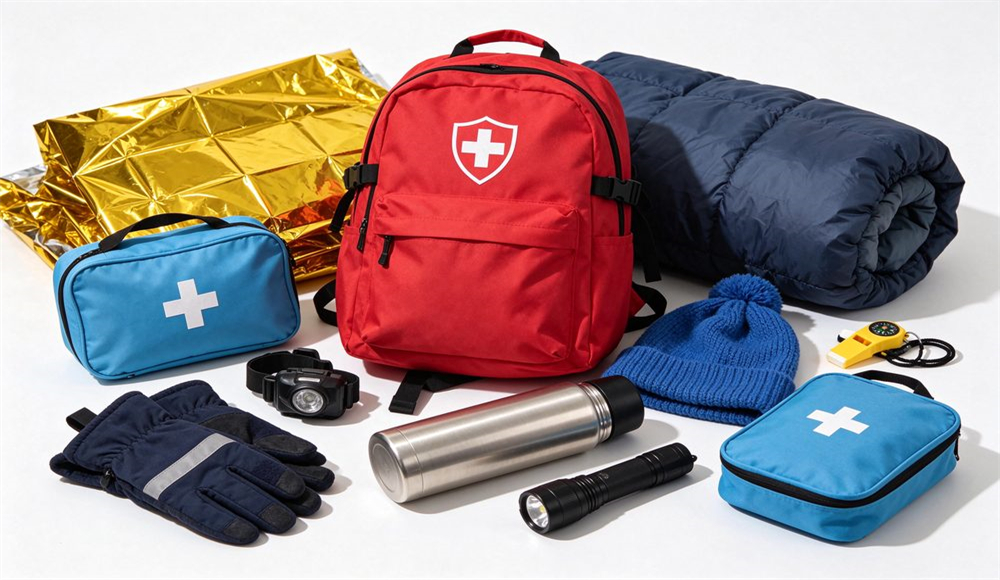
This winter storm emergency kit is a grab-and-go backpack equipped with thermal blankets, sleeping bag, insulated gloves, headlamp, thermos and first aid supplies. Designed for cold weather and blizzard conditions, it supports household and vehicle preparedness for snow emergencies. Custom configuration and bulk supply are available.
Note: Price for reference only. Exact price based on quantity, size, weight and custom details.
model no. :
H-03Brand:
YRFmarket price :
$39.8sale price :
$19.9price range :
30-500/$19.9Color :
Multiple Colorsport of dispatch :
Guangdong/GuangzhouPayment :
TT, Paypal, Western Unionmin order :
30original region :
Made in ChinaLead Time :
5-15days
A winter storm emergency kit is a pre-packed, grab-and-go backpack that holds warmth, hand protection, light, communication and first-aid supplies for households and vehicles in snowy, freezing regions. Blizzards, ice storms and deep freezes can leave households and vehicles stranded without heat or power; the kit keeps you warm, dry, visible, informed and able to signal for help during home blackouts and vehicle stranding until services are restored.
 |

|
Table of Contents
1. Winter Storm Emergency Kit: Why It Matters
2. Winter Storm Emergency Kit: What's Inside
3. Winter Storm Emergency Kit: Three Tiers for Different Needs
4. How to Choose the Right Kit
5. Storage and Maintenance
6. Bulk Supply and Customization
7. Frequently Asked Questions
8. Final Thoughts
Why choose our emergency kit?
✓ Three sizes matched to household and community group size
✓ Durable supplies matched to the cold-weather scenario
✓ Configurable interior: add or remove items to your plan
✓ Bulk and branded supply for households, communities and organizations
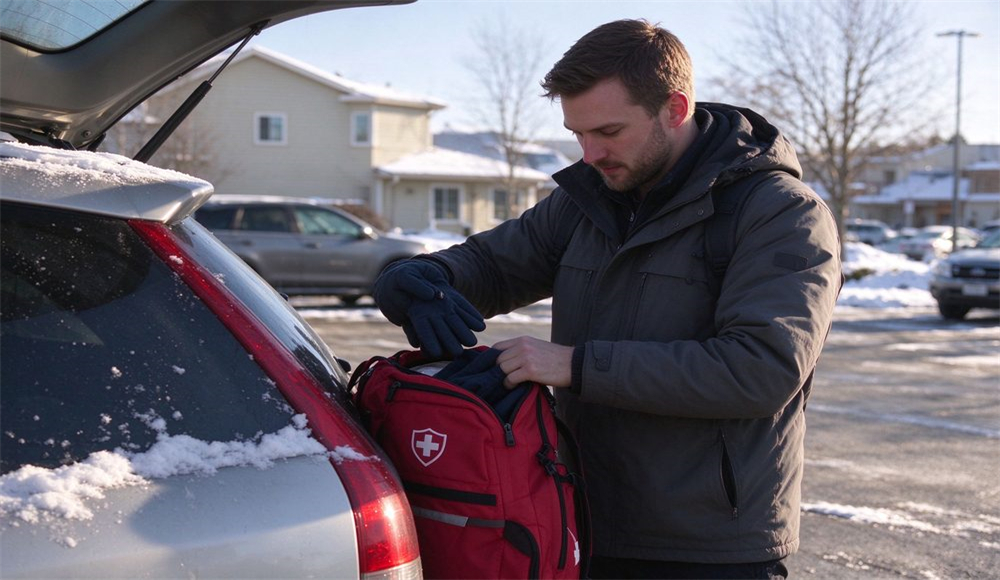
Heavy snow, ice and freezing rain can close roads, block doors, cut power and leave heating systems and communications unreliable. Stranded vehicles and cold homes are the two most common winter scenarios where warm layers and signaling supplies matter most.
In cold conditions, staying dry and warm comes before other comforts. The kit centers on body-heat retention, hand protection, lighting and communication so people can wait safely through the cold spell rather than trying to travel in dangerous weather.
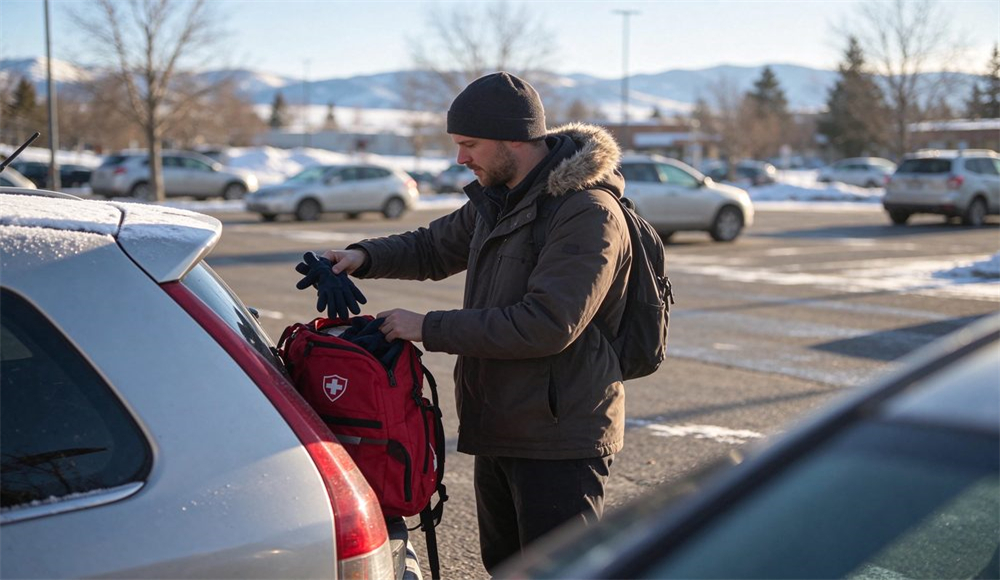
The pack works both at home during a prolonged blackout and kept in the vehicle for winter travel. Households in snowy regions often keep one pack near the exit and a second cold-weather bag in the car.
Before a freeze, check the home pack and car spare as the first snow warning arrives, so warmth and light are already in place. If trapped at home or in a vehicle, keep warm, dry and visible, and use the radio and whistle to stay informed and signal for help rather than walking out in dangerous weather. After the worst passes, the pack supports short movement to a safer spot or waiting until roads are cleared.
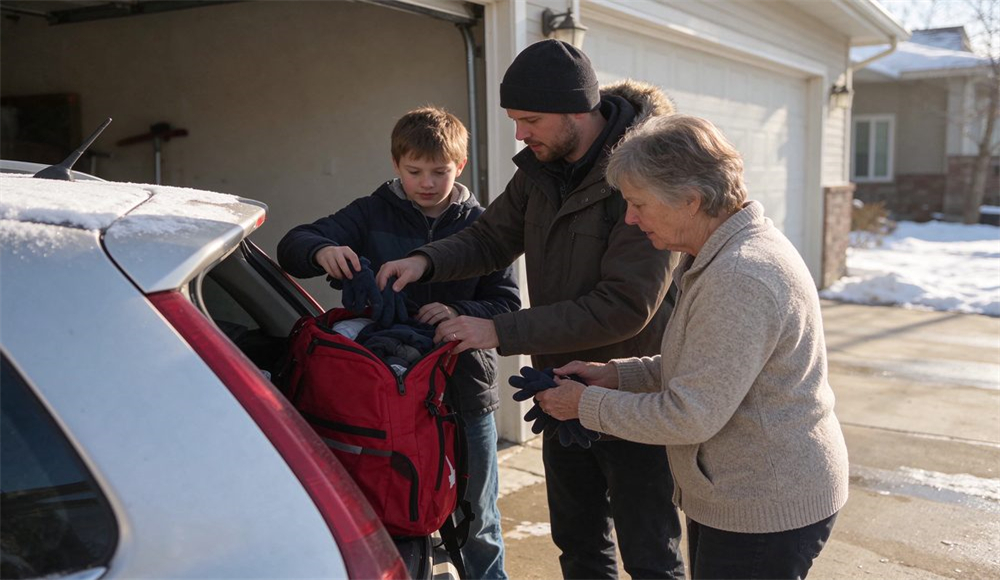
Once each winter, practice the cold-weather exit and meeting point with household members, and keep a written contact for relatives outside the region. Everyone should know the pack's location and its core supplies.
Household readiness guidance from Ready.gov recommends keeping water, food, first aid, light and communication supplies on hand before cold weather sets in. The pack groups these essentials in one grab-and-go bag rather than leaving them to be gathered in a hurry.
The tiers are built around the same cold-weather essentials—warmth, hand protection, light, communication and first aid—with quantity and grade rising from Basic to Premium.
Place light, whistle and first-aid items in the outer pocket for quick access, and keep tools, warmth layers and spare water inside. Keep this arrangement unchanged so any household member can reach gear without fumbling in the cold.
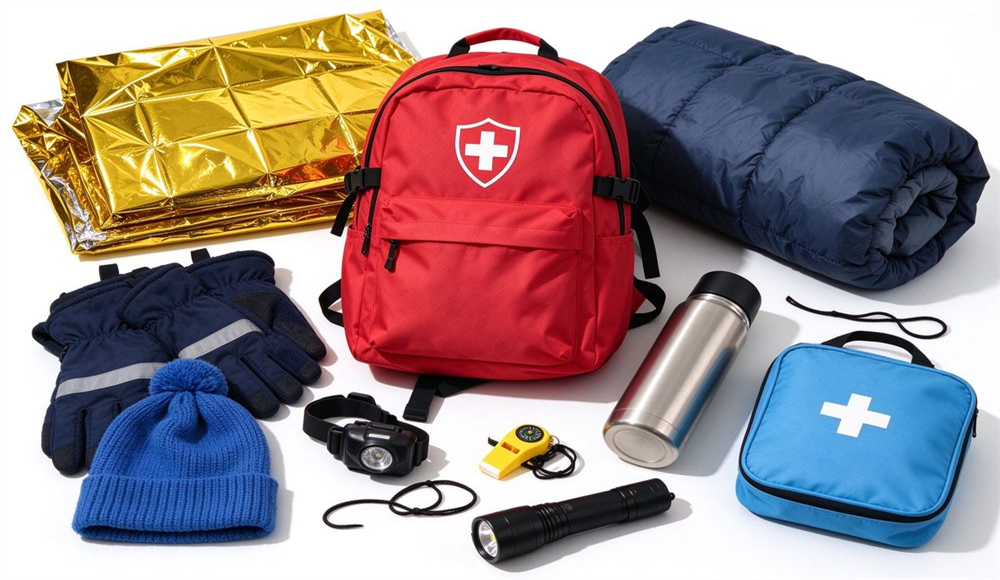

The winter pack comes in three levels for group size, budget and cold exposure. The table below lists who each level suits and its supplies, letting you compare a fit before you ask for details.
Quick tier choice: pick Basic for 2–3 people, Standard for 4–5 people, and Premium for 6+ people or larger groups that need the full warmth, protection and tool set. If you are between sizes, match the tier to your group size first and trim optional extras later.
Winter Storm Kit Contents
Basic
Standard
Premium
Suitable for
2–3 people
4–5 people
6+ people
Backpack
20 L, 600D, about 1.5 kg
25 L, 600D, about 2.5 kg
30 L, 1000D + PVC, about 3.5 kg
First-aid pouch
✓
✓
✓
LED flashlight
✓
✓
✓
Headlamp
—
✓
✓
Hand-crank/solar radio
✓ LED light
✓ FM/AM
✓ FM/AM + NOAA
Emergency blanket
1 pc
2 pcs
2 pcs + sleeping-bag-style blanket
3-in-1 whistle
✓
✓
✓
Insulated gloves
✓
✓
✓
Sleeping bag
—
Lightweight, ~700 g
Lightweight, ~700 g
Knit winter hat
—
✓
✓
Multi-tool card
—
✓
✓
Non-slip gloves
—
✓
✓
Protective mask
—
—
✓


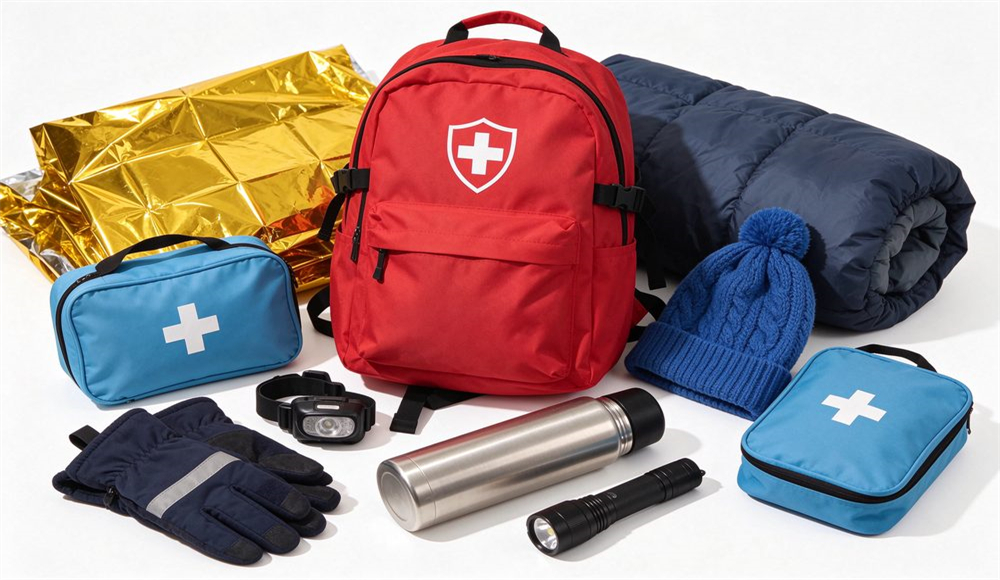

Count everyone who needs coverage, and note whether the pack is mainly for home use or kept in the vehicle. Cold climates and stranded-vehicle scenarios usually favor the Standard or Premium tier.
Northern households and regular winter drivers often keep a home pack near the exit and a compact cold-weather bag in the car, so warmth and signaling supplies are available wherever the freeze catches them.
Match the tier to local winter severity and group size first; the lightweight sleeping bag is rated for about 5–10°C comfort, and glove grade may be matched to the climate order.
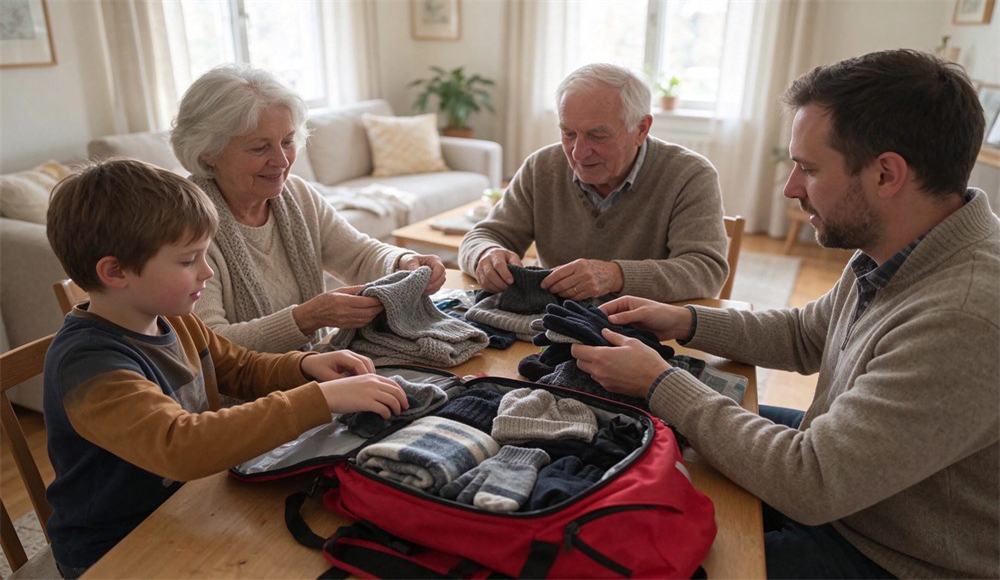
Households with an elderly relative, an infant, or a person taking regular medication should plan extra warmth and keep medication and spare glasses in a marked outer pouch; those needs are not covered by a generic cold-weather pack on their own.
As a cold-weather preparedness backpack, it doubles as a vehicle emergency pack and blizzard survival kit for home blackouts and roadside stranding.
Cross-check your planned supplies against the household and community readiness checklist published by FEMA as you finalize your cold-weather plan.
Avoid these errors: storing the winter pack somewhere hard to reach, carrying warmth but no light or communication, and skipping checks for months. Keep it accessible, balance the cold-weather categories, and review every six months.
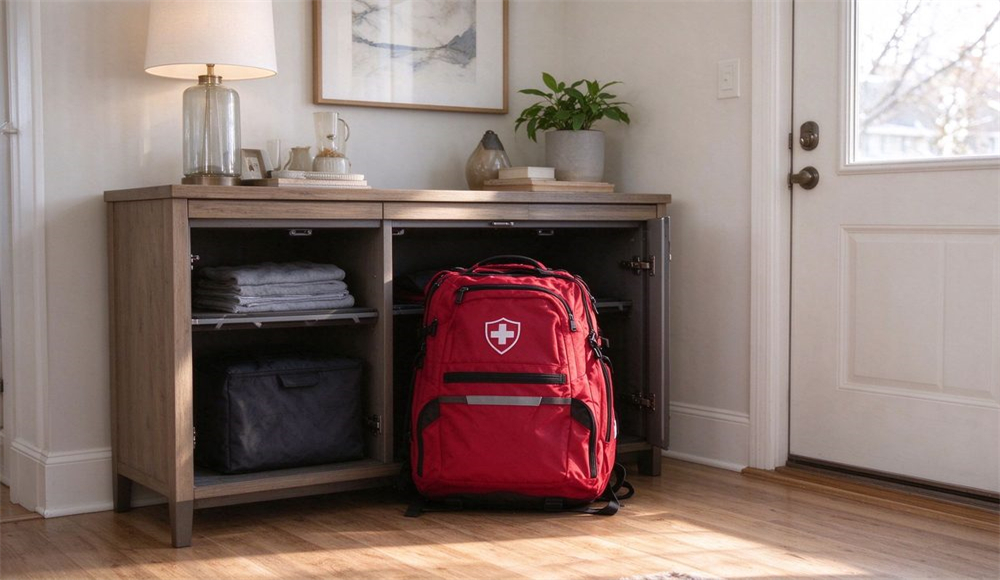
Keep the winter pack by the main door or stairwell, accessible beside the entrance rather than in a locked closet, basement or attic that is hard to reach in cold weather. Everyone should know the spot, pocket order and what each item does, so it opens fast under pressure.
Inspect every six months and again before winter. Check expiry on food, filter and dressings, test light, whistle and radio, and look for damp or damaged warmth gear. Restock anything used in a drill, update the pack when group size or health needs change, and keep a short note as the next baseline.
Shelf-life tiers: consumables such as masks and wipes about 3 years, durable goods such as radio, flashlight and tools about 5 years, mechanical parts about 10 years, and metal parts lasting long term; rotate expired items by batch.
We supply single household kits as well as bulk sets for communities, schools, relief programs and organizations. Packs are sized by the people they cover rather than floor area: one pack per household or small group, with a spare held on site for rotation. The configurable interior lets you add or remove items for children, elderly members, pets or specific medical needs; share your group size, local hazards and special needs and we will outline a matching configuration.
Backpack color, logo printing and labeling can be customized to your brand, and a packing list can name each destination so unloading and distribution are quick. Final piece counts, capacities and weights follow the confirmed supply BOM.
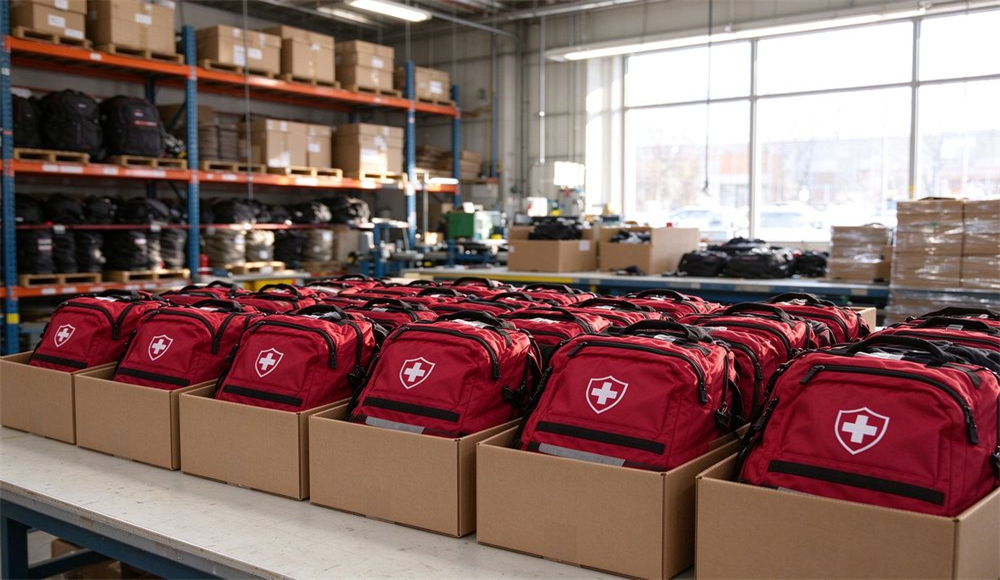
It is a grab-and-go backpack focused on warmth, visibility, communication and basic rescue tools for blizzard, freeze and ice-storm scenarios, kept ready for home or vehicle use in snowy regions.
Winter kits do not rely on carried liquid water; melt snow safely for drinking when needed, and any water-treatment accessory follows the confirmed supply BOM.
The sleeping bag is a lightweight thermal bag, about 700 g with a comfort rating around 5–10°C for shelter warmth; exact fabric may be matched to the climate order.
Many snowy-region households keep one home pack near the exit plus a vehicle bag. Community and fleet orders supply one pack per household or vehicle group.
Yes. The configurable interior lets you add or remove warmth, light and first-aid items to match local winter conditions and group needs.
Inspect every six months and again before winter. Check the sleeping bag and gloves for dryness, test the radio and flashlight, and restock anything used.
Basic suits 2–3 people, Standard 4–5 people and Premium 6+ people. Standard and Premium add the headlamp, gloves, multi-tool and scenario-specific items; exact piece counts follow the confirmed supply BOM.
The three tiers weigh about 1.5 kg, 2.5 kg and 3.5 kg as reference values; final weight follows the supplied configuration. The main pack is carried by an adult; younger children can carry a small personal bag with their own whistle and comfort item.
A regular first aid kit treats injuries, while an emergency kit covers water, warmth, light, communication, signaling and tools for survival and evacuation after a disaster. A first-aid pouch sits inside the emergency kit as one part of the broader pack.
Keep it at a fixed spot near the main exit or stairwell, next to the door rather than in a locked closet, basement or attic. Every household member should know the location and the pocket layout so the pack can be grabbed quickly.
Yes. We supply single household kits as well as bulk sets for communities, schools, relief programs and organizations. Backpack color, logo printing and labeling can be customized to your brand; final piece counts, capacities and weights follow the confirmed supply BOM. Share your group size, local hazards and special needs for a matching configuration.
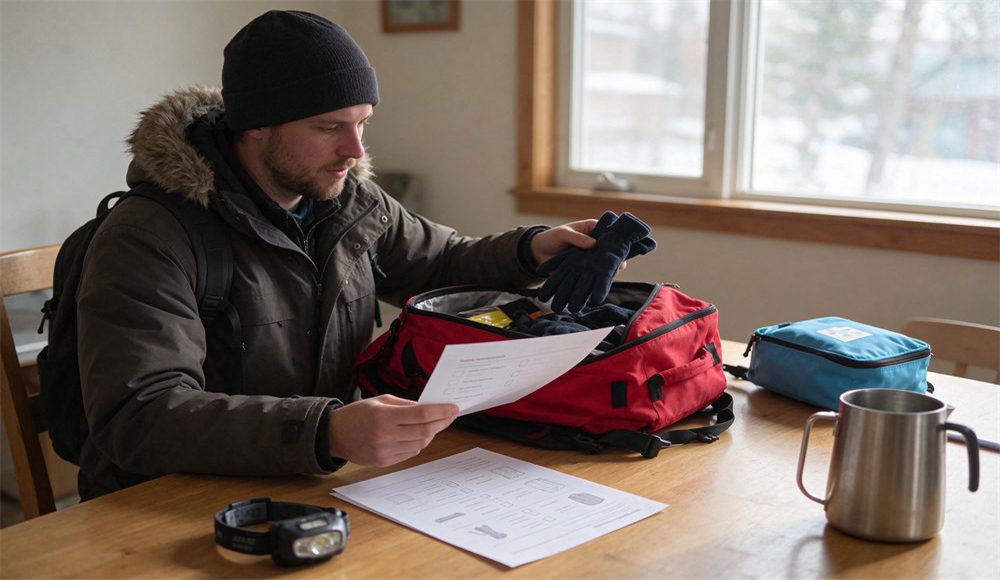
A winter storm emergency kit keeps people warmer and safer when snow and ice close in. You cannot stop the freeze, but you can keep warmth, light and signaling supplies ready at home or in the vehicle.
Choose the tier matched to your climate, group size and travel pattern. Our team can help with bulk and branded supply for northern households, fleets and cold-region relief programs.
First-aid basics and cold-season readiness reminders from the American Red Cross are a helpful companion to your plan.

Hurricane Typhoon Emergency Kit

Institutional Textiles and Emergency Rescue Supplies Sourcing Partner · Foshan, Guangdong, China
Previous :
Fire Escape Kit | Bulk Apartment Evacuation PacksNext :
Hurricane Typhoon Emergency Kit | Bulk Storm Preparedness Factory Customized Red Cross Disaster relief Med Kit Bag With Multi-purpose compass
GREAT DESIGN - Comfortable design is perfect for all uses and for carrying a wide variety of tools and equipment. You'll find that, whatever you're looking to carry, the YRF Custom Oxford Material Multi Functional Camouflage Tactical Waist Bags is the perfect choice.
 Medical Care Stockpile Metal wire saw Card tool Survival Aid Kit with 16 Pcs Safety Kit
GREAT DESIGN - Comfortable design is perfect for all uses and for carrying a wide variety of tools and equipment. You'll find that, whatever you're looking to carry, the YRF Molle Tactical First Aid Kits Medical Bag Tablets is the perfect choice.
 Outdoor Medical Care Disaster relief First Aid Kit Empty Pouch And Ice Pack Emergency Tool
GREAT DESIGN - Comfortable design is perfect for all uses and for carrying a wide variety of tools and equipment. You'll find that, whatever you're looking to carry, the YRF Mini First Aid Kit Bags And Pouches is the perfect choice.
 High Quality Camping Emergency Face Mask Survival First Aid Kit for Institutional Donation
GREAT DESIGN - Comfortable design is perfect for all uses and for carrying a wide variety of tools and equipment. You'll find that, whatever you're looking to carry, the YRF Outdoor Camping Emergency Kits Tactical First Aid is the perfect choice.
 ICRC Supplies Fluorescent stick first aid medical bags 600d Nylon Emergency Safety Tools Kit
GREAT DESIGN - Comfortable design is perfect for all uses and for carrying a wide variety of tools and equipment. You'll find that, whatever you're looking to carry, the YRF Hunting Survival First Aid Kit Bag Molle Tactical is the perfect choice.
 Hot Selling Governmental Institutions List Descender Firefighting Tools Empty Pull Rod First Aid Kit
GREAT DESIGN - Comfortable design is perfect for all uses and for carrying a wide variety of tools and equipment. You'll find that, whatever you're looking to carry, the YRF Tactical Complete First Aid Kit is the perfect choice.
Copyright © Custom Disaster - Relief Bedding: Tents, Sleeping Bags, Blankets All Rights Reserved
the professional team to service !


