


Nursing home bedding must stay soft against elderly residents, survive daily commercial washing and support infection control on every floor. We supply washable care facility linen to aged care homes, assisted living and memory care units, chosen in calm colors, finished for hot laundering and sized to fit standard nursing beds through long, comfortable resident stays.
Note: Price for reference only. Exact price based on quantity, size, weight and custom details.
model no. :
SQ-06market price :
$79.8sale price :
$39.9price range :
30-100/$39.9Color :
Multiple Colorsport of dispatch :
Guangdong/GuangzhouPayment :
TT, Paypal, Western Unionmin order :
30original region :
Made in ChinaLead Time :
5-15daysSize :
180*200CM Or customize |

 |

|
Table of Contents

Outfitting an aged care home means choosing nursing home bedding that is different from supplying a hotel. Nursing home bedding is slept in every night by the same resident, washed almost daily in an industrial machine, and expected to feel soft rather than rough after hundreds of cycles. We build care linen around those three demands, so residents stay comfortable and housekeeping keeps up with the laundry room.

Most nursing home bedding procurement starts with a fabric decision. In nursing home bedding, 100 percent cotton feels softest and washes hot for infection control. Poly-cotton balances comfort against the hard daily wash of a busy care home, and microfiber suits budget rooms and quick turnover. The sections below match each fabric and weight to the kind of care area it serves, from memory care to hospice, so directors do not over-specify luxury or under-buy durability.

Because nursing home bedding buyers care about softness that survives washing, easy laundering for incontinence, and colors that look calm and hygienic, we build each order around these practical realities. Hypoallergenic options in nursing home bedding support residents with sensitive skin, and sizes fit the adjustable beds and hospital cots common in care facilities. The rest of this page walks through sizing, weight, procurement, cost, washing, packaging and samples in plain terms for a facility manager.
Nursing home bedding buyers in residential care, memory care and hospice all share one goal: a bed that residents rest well on, and linen that survives the laundry room without becoming rough. The chapters above have covered how to size fitted sheets for adjustable beds, how to choose between cotton, poly-cotton and microfiber, how to weight the fabric to the area, and how to plan the rotation and the budget. The through-line is that care linen is judged after washing and through incontinence cycles, not on the showroom shelf. Test the sample in your own laundry, match the fabric to each area of the home, and tie every reorder to the archived standard, and you get bedding that stays soft, hygienic and consistent for years. You can also review our wider institutional linen program across care and medical settings.
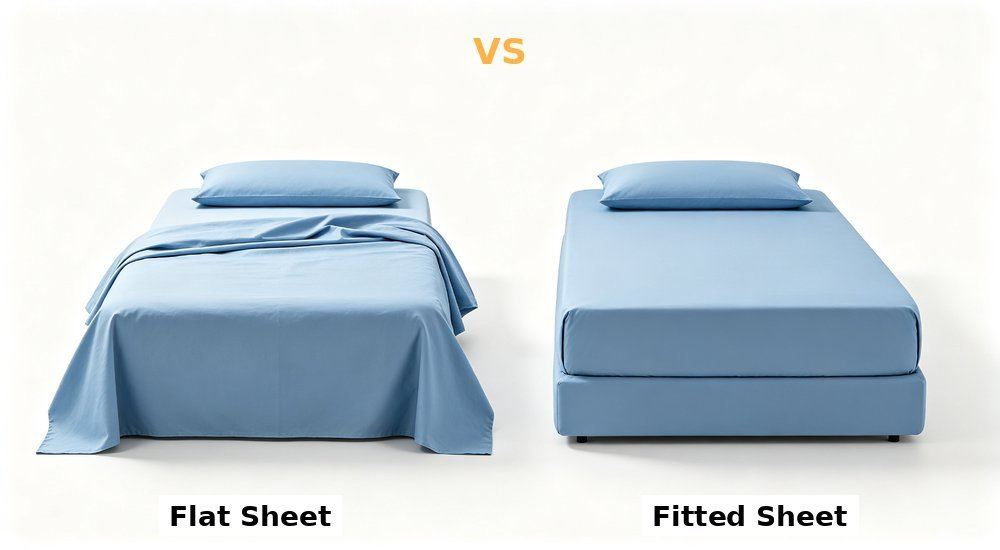
Nursing home bedding has to fit the adjustable beds and care cots used in aged care. Most resident rooms use a long single or semi-double bed, and we cut sheets and duvet covers to those measurements. Fitted sheets with deep pockets fit adjustable mattresses that tilt and raise, which is the detail most often missed when a care home orders from a domestic supplier. Choosing a nursing home bedding supplier starts with measuring every adjustable mattress, because care mattresses run deeper than domestic ones and fitted sheets must stay on through bed tilt.
The table below lists the bed sizes common in nursing home bedding deployments and the linen sizes we cut to. Measure the actual mattress on your adjustable bed, because care mattresses are often deeper than domestic ones, and a fitted sheet that slips when the bed tilts causes issues for both residents and staff.
The table below summarizes core nursing home bedding supplier specifications, so you can match adjustable mattress dimensions before you request a quotation.
Bed Type
Mattress (cm)
Sheet (cm)
Common Use
Long Single
200 x 90
210 x 120
Resident rooms
Semi-Double
200 x 120
210 x 150
Larger rooms
Narrow Single
190 x 85
200 x 105
Memory care
Care Cot
190 x 80
200 x 100
Short stay
Bariatric Bed
200 x 120
210 x 150
Extra width
These are reference sizes for nursing home bedding, because care homes often mix adjustable beds and older frames. We cut to your measured dimensions, and we recommend deep-pocket fitted sheets because the mattress on an adjustable bed moves as it tilts. Confirm the pocket depth covers the full mattress including any topper, so the sheet stays on when staff raise the head or foot of the bed.

In a care home, the bed moves, which shapes every nursing home bedding spec. Staff raise the head for residents eating, tilt the bed for medical care, and lower it for transfers. A fitted sheet that slips off when the bed adjusts is a daily frustration and a safety issue. Deep-pocket fitted sheets with strong all-round elastic stay on through these movements, which is why they are preferred over flat sheets in most care rooms. We can supply fitted sheets in the pocket depth your adjustable beds need, and reinforce the corners for repeated daily adjustments.
Nursing home bedding specs start with the mattress: care mattresses are often deeper and firmer than domestic ones, especially with pressure-care overlays, so measuring matters. Record the length, width and the corner depth including any pressure cushion on top. A fitted sheet cut to a thin domestic mattress pops off a thick care bed within days. Because a home mixes new adjustable beds with older frames, note the range of bed types rather than measuring just one, and we size the linen to fit the most common frame. Send us a sample mattress measurement if possible, and we confirm the sheet pocket before bulk cutting.
Pillows matter in nursing home bedding because residents spend long hours resting. A soft, breathable pillowcase that washes well supports comfort and skin health. Where residents use pressure-relieving cushions or shaped pillows, the case size has to fit the insert rather than a standard domestic pillow. We cut pillowcases to the inserts your home uses, and use a skin-safe, washable fabric that stays gentle. Because pillowcases are changed frequently in care, having spares in the rotation means a fresh case is always ready. Small though they are, pillowcases are one of the details residents feel every night.
A nursing home bedding order needs more than a sheet and pillowcase. Most nursing home bedding orders use a fitted sheet, a duvet cover or top sheet, and a pillowcase, chosen around how the room is made up. Where residents keep their own duvet, the cover is the key piece. Where the home supplies everything, a complete set simplifies housekeeping. We can configure the set to match your room-making routine, and supply spare pillowcases and sheets for the incontinence rotation. Keep the set simple so staff can remake a bed quickly between residents.
Care homes differ in how they dress a bed, and nursing home bedding specs follow that local practice. Some use a duvet cover over a supplied duvet, others prefer a flat top sheet and blanket, and some let residents bring their own quilt. The bedding you order has to match that room-making style. Duvet covers need a durable zip or button closure that survives daily opening. Flat top sheets need a generous drop so staff can tuck them in securely. Because resident comfort is personal, a soft, breathable layer matters whichever style you choose. Tell us how your team makes up a bed, and we configure the set to that method rather than a generic package.
The fabric decides how nursing home bedding feels after hundreds of industrial washes. Cotton, poly-cotton and microfiber each suit a different care priority, and most homes use cotton for resident rooms and poly-cotton for high-turnover areas. Choosing the right fabric is the first decision for any nursing home bedding supplier program, because the blend determines softness after repeated commercial washes.
100 percent cotton is the softest option and takes hot washes for infection control, which suits resident rooms where comfort matters. Poly-cotton survives the daily commercial wash of a busy home and needs less ironing. Microfiber is the budget and quick-turnover choice. The table compares them side by side.

The fabric comparison table below lists nursing home bedding supplier options by GSM and blend, helping you choose the right poly-cotton weight for your resident rooms.
|
Property |
100% Cotton |
Poly-Cotton |
Microfiber |
|
Hand Feel Rating (1-5 resident survey) |
4.6 |
3.8 |
3.2 |
|
Wash Temp |
Up to 90C |
Up to 60C |
Up to 40C |
|
Institutional Wash Cycles |
200-300 |
250-350 |
150-250 |
|
Ironing Required |
After each wash |
Every 3rd wash |
Not required |
|
Hot Wash Infection Control (60C+ kill rate) |
99.9% at 75C |
99.9% at 71C |
Not verified above 60C |
|
Relative Cost (Poly-Cotton = 1.0) |
1.4x |
1.0x |
0.7x |
|
Recommended Use |
Resident rooms |
Busy wards |
Budget rooms |

Cotton earns its higher price where residents sleep in the same bed every night and softness matters. It takes the hot washes that infection control requires, but it wrinkles and benefits from a press. Poly-cotton is the workhorse for busy wards, shrugging off daily washing with little ironing. Microfiber keeps cost down for budget or short-stay rooms, but it cannot take the hot washes that clinical hygiene needs. Most homes balance cotton for resident rooms and poly-cotton for high-turnover areas.
The trap with low-cost care linen is that it starts soft and turns rough after twenty industrial washes. Elderly skin is thinner and drier than young skin, and a stiff, harsh sheet causes irritation and discomfort that residents notice every night. We choose weaves and finishes that keep their hand feel through hundreds of cycles, so a bed made up on a resident's first day feels as gentle on their twelfth month. When you test samples, wash them five times first, because the feel after washing tells you far more than the feel straight out of the bag.
There is a real tension in aged care: residents want soft, comfortable bedding, while infection control demands hot washes that can rough up fabric. The resolution is a cotton or cotton-rich weave that tolerates 60 to 90 degree washing yet stays soft, rather than a thin low-cost fabric that goes stiff after a few hot cycles. Pre-shrunk, well-finished cotton hits both goals, which is why resident rooms lean cotton even though it costs more. The small premium pays back in resident comfort and in linen that survives the clinical wash routine rather than being thrown out.
Care buyers often ask about thread count, but in institutional linen the weave and finish matter more than a high retail thread count. A dense, balanced weave that holds its shape through hundreds of washes outlasts a high-thread-count sheet that feels luxe on day one but pills and shrinks. A percale weave is crisp and cool, a sateen weave is smoother and softer. For elderly skin, a smooth, breathable surface that stays soft after washing is the real target. We explain the weave of each option on the swatch card, so you judge the feel directly rather than relying on a thread count number that means little after industrial laundering.

Use the following quick questions to narrow the right fabric, GSM and set composition for your facility before you request a quotation.
GSM tells you how heavy the care fabric is. In a nursing home the trade-off is between softness and the daily wash cycle, because heavier fabric feels more substantial but also costs more per set. Matching GSM to your laundry cycle is how a nursing home bedding supplier order performs in resident rooms, not just on delivery day.

The 160 GSM standard suits high-turnover areas and budget rooms. The 180 GSM is the resident-room default, soft enough for daily sleeping and tough enough for weekly washing. The 220 GSM premium is for hospice and luxury aged care where comfort is the priority.
Heavier fabric feels more substantial and drapey on the bed, but it also costs more per set and takes longer to dry in the laundry. Lighter fabric dries faster and is cheaper, but it can feel thin after a few washes. The right choice sits in the middle: a weight that feels generous to a resident yet launders efficiently in a busy home. We send swatches of each GSM so you can feel the difference between 160, 180 and 220 before committing, rather than choosing a number on a page.

The table below pairs each facility type with a recommended weight and resident acuity. Use it as a starting point, and remember that a resident who stays for years earns a softer, more durable fabric than a short-stay room.
The GSM guide below maps nursing home bedding supplier weights to daily commercial laundry use, so you can avoid buying too light for repeated wash cycles.
Facility Type
Recommended GSM
Fabric
Resident Acuity Level (1-5)
Residential Care
180
Cotton
2-3
High Acuity Ward
160-180
Poly-Cotton
4-5
Memory Care
180
Cotton Blend
3
Hospice
220
Cotton
5
Assisted Living
180
Poly-Cotton
1-2
Short Stay
160
Poly-Cotton
3
The single best predictor of which GSM to choose is how long a resident occupies the bed. A resident who lives in the room for years deserves the softer, more durable 180 to 220 GSM fabric, because the bedding is part of their home. A short-stay or rehab bed that turns over every few weeks does not need that luxury, and 160 GSM poly-cotton keeps cost down while still washing well. Hospice beds are the exception where comfort is the priority whatever the stay, which is why 220 GSM cotton is specified there. Reading the length of stay per area prevents both over-spending and under-equipping.
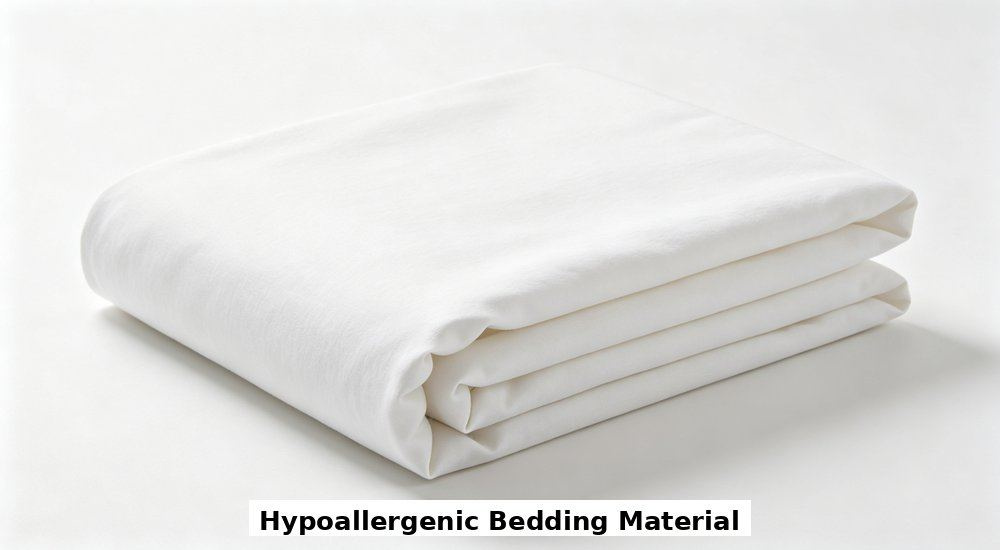
Care home linen works in conditions retail bedding never sees: incontinence, pressure care, shared washing and daily bed making. Our nursing home bedding is built around resident dignity and staff practicality. The features below explain why a nursing home bedding supplier spec built for aged care survives where domestic fabric would not.
The biggest complaint about low-cost care linen is that it feels rough after a few washes. Elderly skin is thinner and more sensitive, so a fabric that goes stiff causes real discomfort. We choose weaves and finishes that stay soft through hundreds of industrial washes, so a resident's bed feels comfortable on day one and month twelve alike.
Residents who live in a care home for years build a daily relationship with their bed. It is the place they rest, read and spend quiet hours, so the feel of the linen is part of their quality of life. A sheet that goes stiff or scratchy after a few washes is not just a comfort issue, it affects wellbeing. We prioritize fabrics whose hand feel is designed to last through laundering, and we ask you to judge the sample after washing rather than before. Softness on delivery is easy; softness after two hundred washes is what matters.
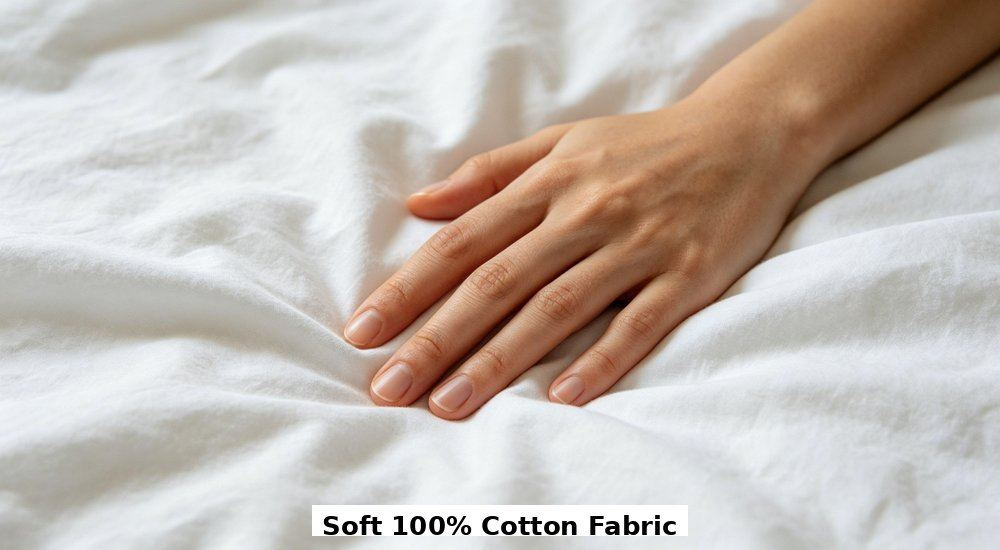
Incontinence is a daily reality in aged care, so linen must withstand hot washing and repeat stain removal. Infection control demands wash temperatures that kill pathogens, and hypoallergenic options support residents with sensitive skin.
Because incontinence linen is washed more often and at higher temperatures, it wears faster than ordinary resident sets. This is why we recommend a durable weave in incontinence and high-acuity areas, even where the rest of the home uses a softer cotton. Hypoallergenic fabric, certified skin-safe, matters for the growing number of residents with allergies and sensitive skin. Together, hot-washable durability and skin-safe finishes cover the two demands that separate care linen from retail bedding: it must handle the realities of care, and it must be gentle on people who can least tolerate irritation.
Incontinence care is where fabric choice really shows. A fabric that cannot take hot washes or stain remover ends up stained and thrown out, while a durable cotton or poly-cotton survives the daily wash routine. Hypoallergenic options matter for residents with delicate skin, and breathable weaves reduce the overheating that some elderly residents experience. Choosing the right fabric is as much a clinical comfort decision as a procurement one.
Elderly residents spend long hours in bed, so the bedding supports both skin health and dignity. Breathable, soft weaves reduce the sweating that contributes to pressure discomfort, and smooth flat seams reduce the ridges that can irritate skin. Calm, home-like colors help a room feel like a personal space rather than a clinical ward, which matters for wellbeing. Because staff remake beds multiple times a day, fabric that returns to shape quickly and resists wrinkling keeps the home looking cared-for between rounds. These details add up to a room residents are proud to call theirs.

Buying for a care home means balancing resident comfort, infection control and the laundry budget. Work through the steps below to narrow fabric, weight and quantity before you request a quotation. A trusted nursing home bedding supplier standardizes on one washable poly-cotton spec across resident rooms, deep-pocket fitted sheets and calm colors that hide minor wear.
Work through these five points before you request a quotation, because the answers shape everything from fabric to quantity. A director who already knows the bed types, the wash routine and the resident mix gets a far more precise quotation than one who just asks for a price per set. Send us your list, and we come back with a recommended fabric, weight and rotation count for each area of the home. This front-end clarity steers clear of the common mismatch of ordering a generic retail product and discovering it does not fit adjustable beds or survive the laundry.
Because care homes wash almost daily, the rotation count is higher than a hotel. Residents keep their own room, but the laundry room runs constantly, so you need enough sets in circulation to cover a full wash cycle. Factor in a spare buffer for incontinence damage, because a stained set cannot go straight back on a bed. Send us your bed types and washing routine, and we recommend the fabric and quantity that matches.
A practical starting point is several complete sets in rotation per occupied bed, plus a reserve for incontinence and replacements. Unlike a hotel that turns a room over between guests, a care home reuses the same resident beds continuously, but at a much higher wash frequency. This means the circulation count is driven by how many loads your laundry does per week, not by how many rooms you have. Work out how many sets are in the wash at any moment, add what is on beds, and then add a damaged-set buffer. We help you size this against your actual laundry cycle so you never run short mid-week.
A care home builds a standing linen rotation rather than buying a one-off stock. Plan the initial outfitting order, then budget for annual refresh as sets wear out. Because linen lasts years in service, the annual refresh is usually a fraction of the first order, which makes budgeting predictable. When you compare suppliers, ask for the expected annual refresh rate based on your wash frequency, so the total cost over three to five years is clear. A slightly higher-quality fabric reduces the annual refresh cost, which is why total-cost thinking beats cheapest-unit pricing in long-term care.

In a care home, the cheapest set is rarely the cheapest over time, because daily industrial washing wears linen hard. A soft cotton set costs more upfront but lasts through many washes if cared for. The table below gives rough lifecycle ranges under weekly and twice-weekly washing. When you compare nursing home bedding supplier bids, price per set matters less than price per year of service across your resident rooms.
The cost and lifespan table below compares nursing home bedding supplier options by price per set and expected years of service, so you can budget the full linen rotation.
Fabric and GSM
Wash Cycles
Lifespan (Weekly)
Lifespan (2x/Week)
Microfiber 160
150-250
2-3 years
1-2 years
Poly-Cotton 180
250-350
3-4 years
2-3 years
Cotton 180
200-300
3-4 years
2-3 years
Cotton 220
300-400
4-5 years
3-4 years
Lifespan figures are estimates based on standard care-home laundry. Actual results vary with wash frequency, incontinence level and care.
To compare fairly, divide the cost of a set by how many years it will last in your wash routine. A heavier cotton set that stays soft longer often works out cheaper per resident year, because it survives more washes and keeps dignity. When you evaluate nursing home bedding supplier bids, ask for the annual cost per occupied bed rather than the sticker price alone.
Three factors decide how long care linen lasts: wash temperature, stain-removal chemicals and mechanical wear. Hot washes for infection control and bleach for incontinence both accelerate aging, so fabric built for those conditions lasts longer than a delicate domestic weave. Sharp edges on laundry carts and rough transfers add mechanical wear. Choosing a durable weave, reinforcing corners on fitted sheets, and training staff to load machines gently all stretch the life of each set. The cheapest set that fails in a year is a false economy when a durable cotton set runs for three or four.
To budget accurately, multiply the number of occupied beds by the rotation count, then by the cost per set, and add the annual refresh. This gives the standing investment in the linen room rather than just the first purchase. Because care homes wash linen constantly, the annual refresh and replacement cost is a recurring line item that should not be ignored. A supplier that helps you model this over three to five years saves you from a surprise shortfall. When you request a quotation, ask for both the per-set price and the expected annual refresh volume, so the full picture is on the table from the start.

Different care settings put different demands on linen. Matching the spec to the area means residents get the right comfort and the laundry team gets a fabric that survives. Different care settings demand different specs, and a nursing home bedding supplier program that matches the room type reduces both resident discomfort and replacement waste.

Each care setting rewards a slightly different spec, and matching the linen to the area means residents get the right comfort while the laundry team gets a fabric that survives. Residential care homes, where residents stay for years, lean on soft 180 GSM cotton that feels like a personal bed. Memory care units need calm, durable colors that launder frequently without losing their gentle look.
Assisted living residents are more independent, so lower-maintenance 180 GSM poly-cotton reduces laundry effort while still feeling good. Hospice rooms call for the premium 220 GSM cotton, because end-of-life comfort is the priority. High-acuity wards wash daily at high temperatures, so a hard-wearing poly-cotton that tolerates bleach is the practical choice. Matching the fabric to each area prevents both over-spending on luxury where it is not needed and under-buying durability in the areas that wash hardest.
Care home linen often pairs with related supply. Facilities also order medical grade bedding for clinical rooms and bulk institutional linen for common areas, so a unified fabric quality simplifies the laundry team's routines.

High-acuity wards wash linen daily at high temperatures to manage infection and incontinence, so the priority is a hard-wearing poly-cotton that shrugs off bleach and 60 to 90 degree cycles. Comfort still matters, but durability and hygiene lead the spec. Where a home runs a small clinical or sub-acute unit, it makes sense to order that area's linen alongside the resident rooms, so the laundry team handles one consistent product rather than mixing domestic and clinical fabric. Color choices in clinical areas are often lighter to read as hygienic, while resident rooms lean to warm residential tones.
Memory care units call for calm, predictable surroundings. The bedding should feel familiar and restful, in gentle colors rather than stark white, and the fabric needs to launder well because these rooms are made up frequently. Durability matters too, as handling can be less gentle. A 180 GSM cotton blend in a soft, reassuring color works well, and a home-like bed helps residents feel settled. Because residents may confuse boundaries, avoiding distracting patterns keeps the room calm. The goal is bedding that supports orientation and comfort rather than standing out.
Aged care procurement needs verifiable documents, and care regulators and funders expect the right certifications. We supply the certificates and test reports that care tenders ask for, with checks at each production stage. Every nursing home bedding supplier provides wash test reports and batch samples so aged care procurement teams can verify durability before bulk delivery.
Aged care regulators and funders expect proof that the linen is skin-safe and consistently made. OEKO-TEX Standard 100 is the most recognized assurance that the fabric contains no harmful residues, which matters when it touches elderly skin every night. ISO 9001 shows production runs under a managed quality system rather than by hand. Alongside these, we provide the test reports procurement files need: how much the fabric shrinks after washing, how well the color holds, and the measured GSM against the specification. We supply these as documents you can attach directly to a care tender, rather than as promises you have to verify yourself.
Production is checked from incoming fabric to loaded container. Fabric is tested for weight, composition and softness before cutting; seams are inspected in line; finished sets are measured against the approved sample; and a pre-shipment sample is taken. Because care homes reorder over years, the archived sample means a new batch feels and matches the original, so a resident's bedding does not change between supply cycles.
A care home is a long relationship, not a one-off purchase. Over years the home reorders to refresh and expand stock, and each new batch should match what residents already sleep in. Without an archived standard, a reorder can come back a slightly different shade or a stiffer weave, which staff notice immediately. We archive your approved sample and tie every reorder to it, so the bedding on a bed five years on matches the first delivery. This consistency is as much about resident and staff trust as it is about color, and it removes the surprise of inconsistent batches.
Quality control in care linen runs as a chain of checks rather than one inspection at the end. Fabric arrives and is checked for weight, composition, shrinkage potential and softness before it is cut. During sewing, seams, hems and elastic are inspected for even stitching and strength. Finished sets are measured against the approved sample to confirm size has not drifted after washing prep. Finally, a pre-shipment sample is drawn from the packed cartons so you receive a piece that matches what is actually in the order. This staged approach catches issues early, when fixing them is low-cost, rather than after a whole batch is sewn and packed.

Care home and healthcare procurement usually runs a formal tender. We prepare the documentation and physical samples evaluators expect, so your submission is complete.
Physical samples are often required in care tenders. We send swatch cards in your colors, finished resident-room samples and a soft-touch demonstration. Share your tender format and we lay the technical data out to match it. Because care procurement is often time-bound, we respond promptly so your bid file is complete rather than relying on verbal promises.
Care tenders ask for precise technical data, not just a price. They want the fabric composition, the measured GSM, the shrinkage after washing, the color fastness rating and the expected wash cycle count. We provide these as documented test figures that map onto your tender's specification table, so evaluators can check compliance line by line. Where the tender sets a minimum standard, we confirm our product meets it and quote the evidence. This turns a vague "soft and durable" claim into verifiable numbers, which is what a procurement panel needs to award the contract with confidence.
Care tenders often have a firm delivery date, so production and shipping lead time matters. Standard colors and sizes move faster, while custom embroidery or matched colors add a small step. We confirm a realistic production and shipping schedule in your quotation rather than promising a date that cannot be met, and we flag any long-lead items early. For a standing supply contract, we can plan rolling deliveries so the home receives replenishments on a schedule rather than in one large batch. Share your required delivery window and we build the timeline backwards from it.

Most care homes want their own identity on the linen, or sizes matched to their adjustable beds. We adjust color, branding, fabric treatment and sizes to fit the facility. Embroidery, color and packaging options let you tailor a nursing home bedding supplier order to your facility identity and floor-by-floor tracking.
Color in aged care is chosen for calm and practicality: soft blues, beiges and greens read as restful, while lighter shades support a hygienic appearance. Embroidery of the home's name adds identity and helps track linen across floors. Sizing is flexible because adjustable beds and bariatric frames vary, and we cut to the beds you actually operate rather than a domestic standard.
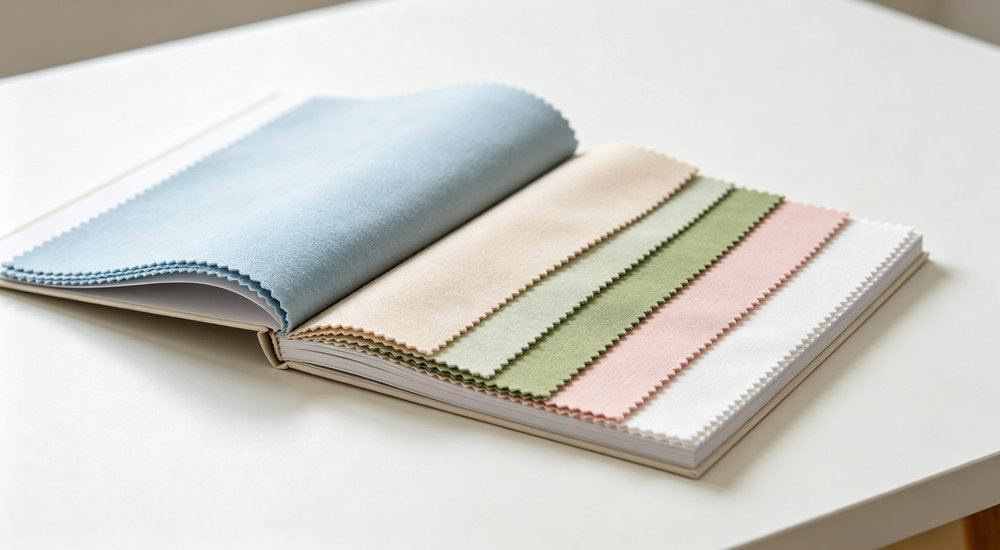
Beyond color and branding, small treatments tailor linen to a home's needs. An easy-iron finish cuts the press time a busy laundry team spends on each set. A hypoallergenic, skin-safe finish supports residents with sensitive skin and is backed by OEKO-TEX certification. Deep-pocket elastic on fitted sheets solves the adjustable-bed fit. Reinforced corner stitching extends the life of sheets on beds that tilt daily. These are modest changes individually, but together they make the linen fit the specific way your home operates, rather than fitting a generic retail product to your routine.
Embroidery on care linen has to survive the same hot washes and bleach as the fabric itself. Low-cost prints wash off quickly, leaving a faded mark, but embroidery holds through hundreds of cycles. A stitched home name on the pillowcase helps identify the building's linen and stops sets drifting between floors. We use thread rated for industrial laundering and place the embroidery where it will not irritate a resident's skin or show through the duvet. The result is a discreet, durable identity mark that stays legible for the life of the set.
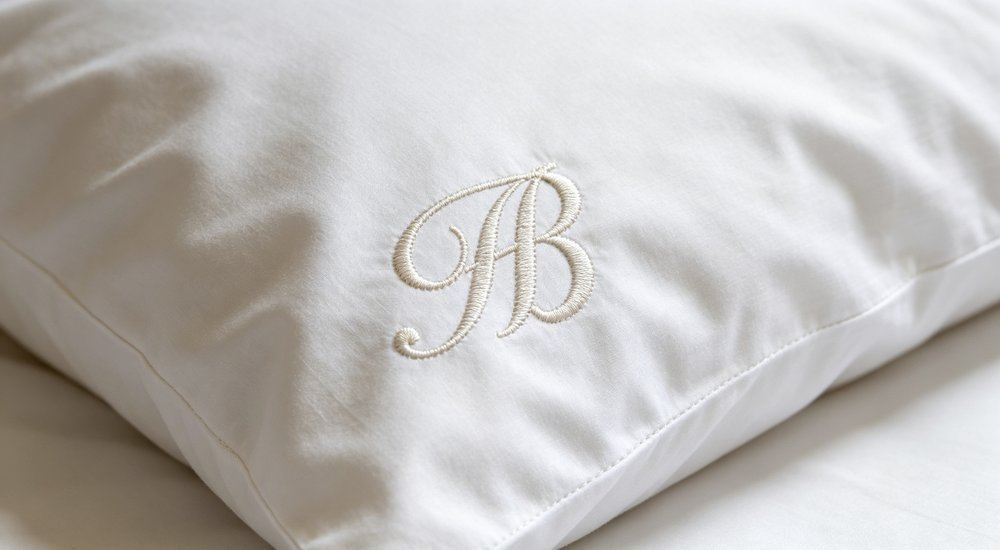
Care home linen is washed more often than almost any other institutional bedding. Right laundering keeps residents safe and extends the life of each set. Facility laundry routines directly determine how long a nursing home bedding supplier program stays infection-safe, so we ship care labels matched to your hot-wash cycles.
The washing guide below lists nursing home bedding supplier care temperatures and infection-control settings, so your facility laundry team keeps fabric safe for residents.
Care Area
Frequency
Wash Temp
Bleach Dose (1:100)
Residential Room
Weekly
60C
50 mL per load
High Acuity
Daily
60-90C
100 mL per load
Memory Care
Weekly
60C
50 mL per load
Hospice
Weekly
60C
25 mL per load
Incontinence
After each use
60-90C
100 mL per load
Cotton takes the hottest washes that infection control requires, which is why it suits high-acuity and incontinence areas. Poly-cotton washes well at 60 degrees and needs less ironing, suiting residential rooms. Hot washing kills pathogens but wears fabric faster, so a durable weave matters in clinical areas. Always follow the care label, and separate stained incontinence linen on a higher-temperature cycle to protect other sets.
Incontinence is the reality that tests care linen the hardest. The practical routine is to treat and rinse soiled sets before the main wash, run them on a hotter cycle, and skip overloading the machine so the fabric can move freely. A durable, colorfast cotton or poly-cotton survives this treatment repeatedly, while a thin weave yellows and frays. Bleach helps but should be used at the concentration recommended, because over-bleaching weakens fibers faster than it cleans. Sorting soiled linen into its own load protects the cleaner resident sets and keeps the whole wash cycle hygienic. The right fabric plus the right routine keeps resident beds fresh and extends linen life.
A care home presents beds to residents and to visiting families, so presentation matters. Cotton benefits from a press to look crisp, while poly-cotton and microfiber need little or no ironing, which saves the laundry team time. Where the home presses linen, an easy-iron finish reduces the work per set. Where staff want beds made quickly, low-iron fabric frees up laundry hours for other tasks. Decide this trade-off before you order: cotton looks its best but needs the iron, poly-cotton looks good straight from the dryer. We match the fabric to the amount of pressing your laundry can realistically do each week.
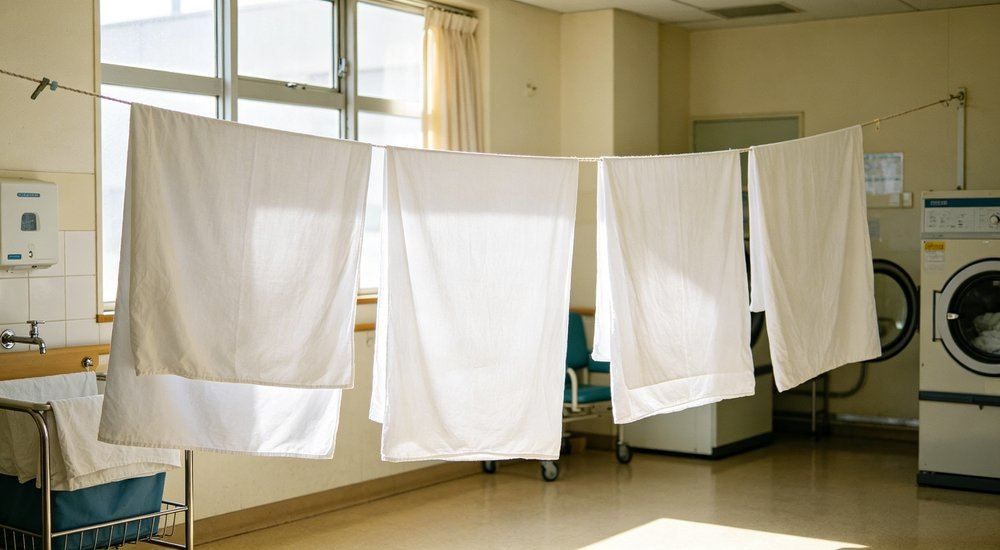
Care homes reorder over years, and a new batch that looks different stands out on a resident's bed. We manage color so reorders match the archived standard.
Each approved color is tied to a reference and stored in our system. On a reorder you reference the original order, and we pull the archived standard. Calm residential colors such as soft blue, beige and green are chosen because they read as restful and hygienic, and they hide minor wear better than pure white. A confirmation swatch can be sent before production if you want to check a new run yourself.
A care home does not buy all its linen once and never again. Beds wear out, rooms expand, and residents need fresh sets, so reorders happen over years. When a new delivery arrives, it goes onto beds mixed with older sets, and a shade that is even slightly off stands out. Tying every reorder to the archived color standard means the new linen blends in, so the home looks uniform rather than patched together. For a director managing a multi-facility group, this consistency across buildings and batches is part of presenting a clean, well-run home. We send a pre-production swatch on request so you can sign off the color before the full run is cut.

Care home orders arrive at a busy facility, so packaging that housekeeping can handle matters. We pack and ship around the receiving team's workflow.
Carton marks and palletization keep the floor distribution fast and reduce damage on arrival.
Sea freight is economical for large standing orders, while express courier handles small top-ups. Loading quantities per container are estimates confirmed in your quotation rather than fixed. Because care homes often run on a tight laundry cycle, we plan delivery so your linen arrives before the existing stock runs out, and carton marks help housekeeping route sets to the right floor.

A care home delivery lands in a busy building, not a warehouse. Cartons arrive on pallets, and housekeeping needs to move sets straight to the right floors rather than unpacking a giant pile. We mark each carton with the floor or building code you give us, so receiving staff can wheel pallets to the correct corridor without sorting everything on the loading dock. Folding sets into manageable bundles means staff can grab a full room's linen in one trip. For a multi-story home, this small logistics planning saves the laundry team real time on delivery day.
Large standing orders go by sea, which is the economical choice for bulk care linen but takes longer in transit. Small top-up or sample orders go by express courier for speed. Because care homes plan against their existing stock running down, we align the shipping mode with your timeline: sea for planned budgeted replenishment, express for urgent shortfalls. We confirm estimated transit and unloading time in your quotation so the home can schedule receiving staff. Loading quantities per container are given as estimates confirmed against your final order, rather than fixed numbers.

Before outfitting a whole home, directors want to feel the fabric and wash a sample. Our sample process keeps that risk low.
Start with a swatch card in your colors and weights, then move to a finished resident-room sample. When you evaluate, wash it in your own laundry to confirm softness retention and shrinkage, check the fitted sheet on an adjustable bed, and run it through the stain routine you actually use. Sample fees depend on customization and are confirmed before producing. Once approved, the sample becomes the quality bar for every future reorder.
The most useful sample test is the one your laundry actually performs. Put a finished set through your hottest wash, dry it, and check whether it still feels soft and whether the fitted sheet still fits the mattress. Run an incontinence-style stain and confirm it lifts. Tuck it onto a real adjustable bed and raise and lower the frame to see if the sheet holds. These practical checks reveal far more than feeling a swatch in the office, because care linen is judged after washing, not before. If the sample survives your real routine, the bulk order will too. Keep the approved sample archived, because it is the reference for every future delivery.
Once a sample is approved, the path to a full order is straightforward. Confirm the final bed sizes, colors and quantities, and we lock the approved sample as the production standard. The first production run is built to match that sample exactly, and every reorder afterwards ties back to the same archived standard. This means the bedding on a resident's bed in year one and the refresh delivery in year four feel the same. For a care home director, that continuity is what turns a one-off supplier into a long-term linen partner, and it removes the uncertainty of guessing whether the next batch will match.

MOQ depends on fabric, color and customization. Standard colors and sizes usually have a lower minimum, while embroidery or special treatments raise it. The exact figure is confirmed in your quotation and order contract. As a nursing home bedding supplier, standard colors and sizes start at a lower volume, while custom embroidery or incontinence-friendly treatment raises the minimum.
100 percent cotton feels softest against thin elderly skin and takes hot washes for infection control, which is why resident rooms most often specify cotton or a cotton-rich blend.
Yes. Poly-cotton and durable cotton weaves are built for the frequent industrial washing of a care home, with reinforced seams and colorfast dyes that hold up to repeated cycles.
Yes. Deep-pocket fitted sheets with strong all-round elastic stay on as the adjustable bed tilts and raises, which is preferred over flat sheets in most care rooms.
Yes. Cotton and poly-cotton take the hot washes and stain removal that incontinence requires. Stain-resistant weaves and colorfast dyes help linen stay serviceable through repeated spills.
Yes. Hypoallergenic weaves are available for residents with sensitive skin, and OEKO-TEX certification confirms the fabric is free from harmful residues.
Calm residential tones such as soft blue, beige and green read as restful and hygienic, and they hide minor wear better than pure white. We match to your facility palette.
We provide company certificates, ISO 9001, OEKO-TEX, product test data and factory audit support, and can format the technical section to your bid document.

Because care homes wash almost daily, plan several sets in circulation per resident plus spares for incontinence and replacements. Exact planning is confirmed against your laundry cycle.
Yes. Embroidery on pillowcases adds identity and helps track linen across floors, and it survives repeated industrial washing.
We choose weaves that stay soft through hundreds of washes, so a resident's bed feels comfortable on day one and after a year of laundering. Washing the sample in your own machine is the best test.
Review the full range on our institutional bulk linen overview, alongside medical grade bedding for clinical rooms.
Buying nursing home bedding wholesale lets you standardize on one washable poly-cotton spec across resident rooms, deep-pocket fitted sheets for adjustable beds, and calm colors that hide minor wear. Wholesale aged care linen from China includes hot-washable fabric, hypoallergenic options and embroidered home names for floor-to-floor tracking.

Choosing the right linen for a care home is about resident comfort, infection control and budget discipline at the same time. Cotton-rich weaves that survive 60 to 90 degree washing stay soft on elderly skin, deep-pocket fitted sheets stay on adjustable beds, and color-matched batches keep every floor looking consistent. Send us your bed types, laundry routine and resident mix, and we will recommend a fabric, weight and rotation plan tailored to your home.

Previous :
Workforce Camp Bedding Wholesale for Mining and Site DormitoriesNext :
Emergency Relief Bedding Wholesale Cot Linen for Shelter Camps YRF-Wholesale Vanuatu Extremely absorbent towels,Police Blue blended Wool blanket,Double bed Bedding
Our bedding sets for emergency relief and humanitarian assistance. Military and national defense. Fire department, medical care department. Prison facilities, government agencies and the police. Camping, picnicking and outdoor leisure are proud to provide high-quality bedding solutions. We are committed to bringing innovation and technology to every user to make you have a good dream every day.
 YRF-WholesaleIndonesia High quality Green wash towels,Medical Care Gray Wool blended Blanket,Green Bed Quilt Cover
Our bedding sets for emergency relief and humanitarian assistance. Military and national defense. Fire department, medical care department. Prison facilities, government agencies and the police. Camping, picnicking and outdoor leisure are proud to provide high-quality bedding solutions. We are committed to bringing innovation and technology to every user to make you have a good dream every day.
 YRF-Made in ChinaJordan High quality Green wash towels,Police Blue blended Wool blanket,Maximum comfort Mattress Pad
Our bedding sets for emergency relief and humanitarian assistance. Military and national defense. Fire department, medical care department. Prison facilities, government agencies and the police. Camping, picnicking and outdoor leisure are proud to provide high-quality bedding solutions. We are committed to bringing innovation and technology to every user to make you have a good dream every day.
 YRF-ManufacturerJordan 100% cotton Green hand towels,Police Blue blended Wool blanket,anti-bacterial Quilt
Our bedding sets for emergency relief and humanitarian assistance. Military and national defense. Fire department, medical care department. Prison facilities, government agencies and the police. Camping, picnicking and outdoor leisure are proud to provide high-quality bedding solutions. We are committed to bringing innovation and technology to every user to make you have a good dream every day.
 YRF-Wholesale Georgia Soft cotton Blue Bath towels,Police Blue blended Wool blanket,Cotton Fabric Quilt Cover
Our Military 100% Cotton Bedding Set for emergency relief and humanitarian assistance. Military and national defense. Fire department, medical care department. Prison facilities, government agencies and the police. Camping, picnicking and outdoor leisure are proud to provide high-quality bedding solutions. We are committed to bringing innovation and technology to every user to make you have a good dream every day.
 YRF- Canary Islands Government Agencies blended Wool blanket,Extremely absorbent towels,Beige Quilt,Best Price
Our Encampment 100% Cotton Sets Bedding for emergency relief and humanitarian assistance. Military and national defense. Fire department, medical care department. Prison facilities, government agencies and the police. Camping, picnicking and outdoor leisure are proud to provide high-quality bedding solutions. We are committed to bringing innovation and technology to every user to make you have a good dream every day.
Copyright © Custom Disaster - Relief Bedding: Tents, Sleeping Bags, Blankets All Rights Reserved
the professional team to service !


