


We supply full series industrial emergency response equipment including Level A hazmat suits, SCBA, gas detectors and rescue tripods. Certified safety gear for petrochemical, confined space and fire hazard scenarios, available for bulk wholesale and institutional procurement.
Note: Price for reference only. Exact price based on quantity, size, weight and custom details.
model no. :
XFF-19Brand:
YRFmarket price :
$119.8sale price :
$59.9price range :
30-100/$59.9Color :
Multiple Colorsport of dispatch :
Guangdong/GuangzhouPayment :
TT, Paypal, Western Unionmin order :
30original region :
Made in ChinaLead Time :
5-15daysIndustrial Fire Rescue Gear | Chemical Suit SCBA
Foam Wholesale
Our industrial fire rescue program pairs chemical protective suits, extended duration SCBA, foam suppression, gas detection and confined space retrieval into one configurable package. Built for factory fire response at chemical plants, warehouses, substations and tank farms, this factory fire equipment kit is sourced for industrial firefighting teams, emergency response officers and government tenders that need tested, documented gear built for real shifts on site.

 |

|
1. Industrial Fire Challenge Overview
6. Confined Space Rescue Equipment
2. Chemical Protective Suits for Hazmat
7. Recommended Factory Fire Response Equipment Packages
3. Extended Duration SCBA
8. Government Procurement & Tender Support
4. Foam Fire Suppression for Hazardous Materials Fires
9. Related Products
5. Gas Detection & Monitoring
10. FAQ
Industrial Fire Challenge Overview
An ordinary warehouse fire and a chemical plant fire are two different events. The first asks for ventilation and hose line work. The second asks responders to manage flammable liquid runoff, toxic vapor clouds, pressure vessels and electrical hazards at the same time. A plant that buys only structural turnout gear will under-equip its emergency response team for exactly the hazards that cause serious injury. This page walks through each major industrial fire scenario and matches it to the industrial fire rescue gear that actually controls it.
Factory fires differ from building fires in three structural ways. Fuels are stored in bulk. Releases happen under pressure. Ignition sources are hard to isolate. A single pallet rack fire can involve plastic shrink wrap, cardboard and pallets, but a neighboring battery room adds thermal runaway. A loading dock fire can suddenly feed on diesel that spills from a truck. Procurement officers who write a generic spec often end up with gear that cannot address any of these transitions. This is why every factory fire equipment order should start from the hazard register, not from a catalog.
Common Industrial Fire Types
Industrial fires fall into five recurring categories. Chemical fires in tank farms and reactors produce flammable liquid pools and toxic vapor. Warehouse fires generate dense smoke and rapid rack collapse. Confined space fires inside tanks, vessels and utility tunnels combine oxygen deficiency with heat. Electrical fires in substations bring arc flash and energized equipment. Industrial gas leaks at LPG stations and refrigeration plants push mixtures inside the explosive range before any flame appears. Each category demands a different balance of suits, breathing apparatus and extinguishing agent.
Why Factory Fires Differ from Building Fires
In a commercial building, the fuel load is furniture and finishes. In a factory, the fuel load is the product. A coating line, a solvent storage room, a lithium battery workshop and a flammable gas manifold each change the fire behavior within minutes. Runoff from sprinkler water can spread burning liquid across a concrete floor, which is why factory fire equipment must include foam capability, not only water hose streams. Workers on site are also untrained volunteers at the moment of alarm, so the response kit has to be intuitive, stored near the hazard and documented in the site emergency plan.
Hazardous materials response planning starts with asking how to prepare for a hazmat spill. Hazardous materials incidents require Level A or B suits depending on the chemical for chemical plant fire response starts with reading the SDS sheet for every stored chemical, mapping isolation valves, and staging the right PPE at each zone. Procurement teams shopping for the suitable industrial fire equipment often compare chemical protective suit levels, SCBA duration and foam concentrate types side by side. This is also why buyers search for hazmat suit for sale options that ship as matched kits rather than loose items, and why a gas detector for industrial use must live on every entry team. A confined space rescue tripod and winch, in particular, is gear that a plant only buys once but keeps on the roster for years. The end goal is a coherent chemical plant emergency response plan, not a pile of unrelated catalog items.
Risk Assessment Checklist
A useful factory fire safety checklist starts with fuel inventory, then moves to ignition control, isolation valves, detection coverage, access roads, water supply and ventilation. It continues with PPE levels per zone, SCBA cylinder stock, foam concentrate volume, gas detector calibration schedule and confined space entry permits. The final line records who has authority to call the external brigade and where the muster point sits. Read this checklist alongside chemical plant fire emergency planning templates used by industrial insurers.
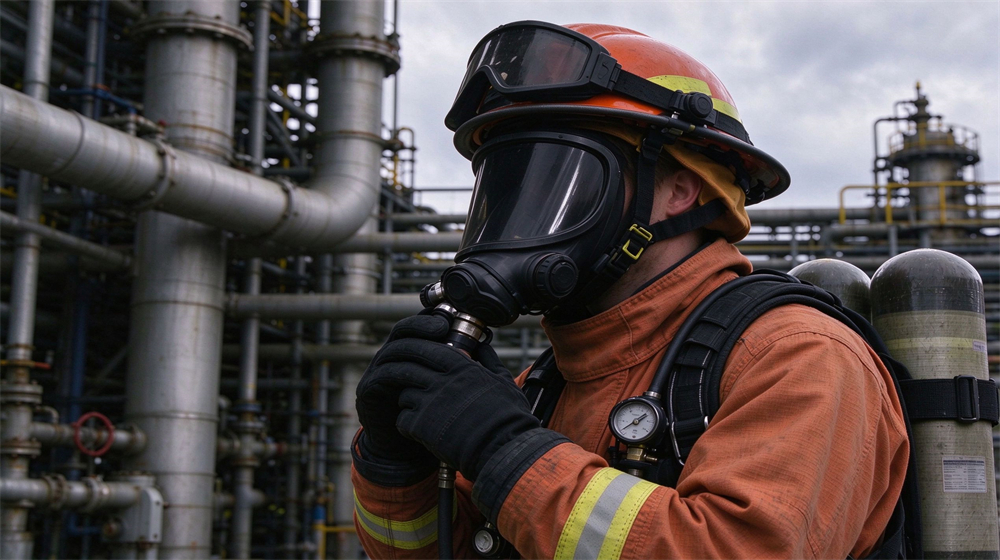
Head and face protection is the next layer: a helmet blocks falling debris, a sealed full face mask keeps contaminated air out.
Industrial firefighting procurement teams often underestimate hazard-to-locker distance. A cabinet in the admin office costs the crew three minutes of walking time before the first suit is on. Place lockers at the tank farm, solvent room, loading dock and main workshop, each stocked for its surrounding hazards.
Fire Type
Typical Scene
Main Threat
Key Gear
Chemical fire
Chemical plant, tank farm
BLEVE, toxic vapor, flowing liquid
Chemical suit, foam, SCBA
Warehouse fire
Logistics warehouse, cold store
Dense smoke, rack collapse
SCBA, fire blanket, escape rope
Confined space fire
Tank interior, pipe, tunnel
Oxygen deficit, toxic gas
Gas detector, tripod, SCBA
Electrical fire
Substation, switch room
Shock, arc flash, toxic smoke
Insulated PPE, CO2, SCBA
Gas leak
LPG station, refrigeration
Poisoning, asphyxiation, explosion range
Gas detector, suit, SCBA
Chemical Protective Suits for Hazmat Response
When the hazard is a chemical spill or a vapor release, structural turnout gear is not enough. Turnout gear blocks heat and water, but it does not block permeation by solvents, acids or corrosive gases. A dedicated chemical protective suit is the outer shell that keeps liquid and vapor off the skin, and it must be matched to the measured atmosphere. Buying the wrong level leaves the worker either overheated in a suit the task does not need, or under-protected in a splash suit when the air itself is toxic. This is the core hazmat gear decision that every chemical plant fire safety program starts with.
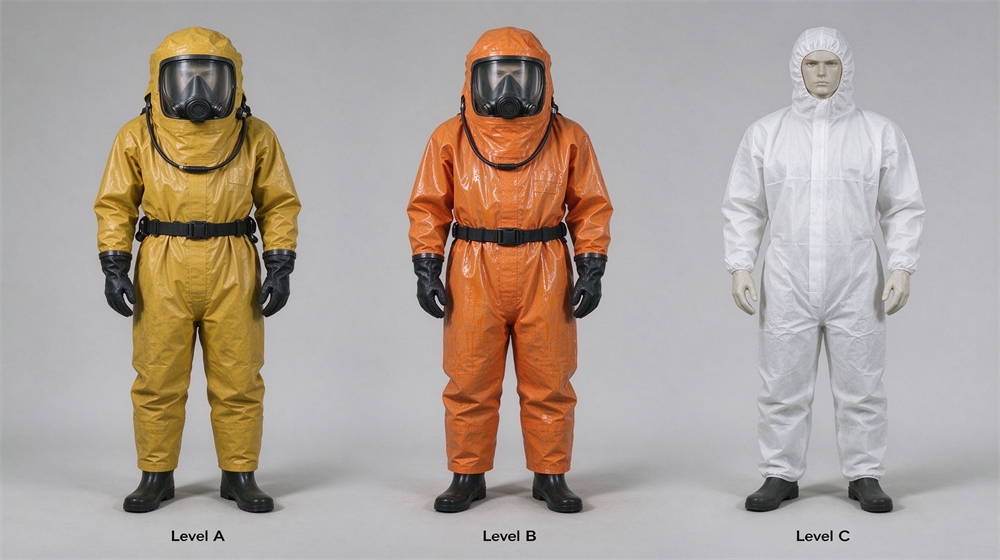
Level A Fully Encapsulating Suits
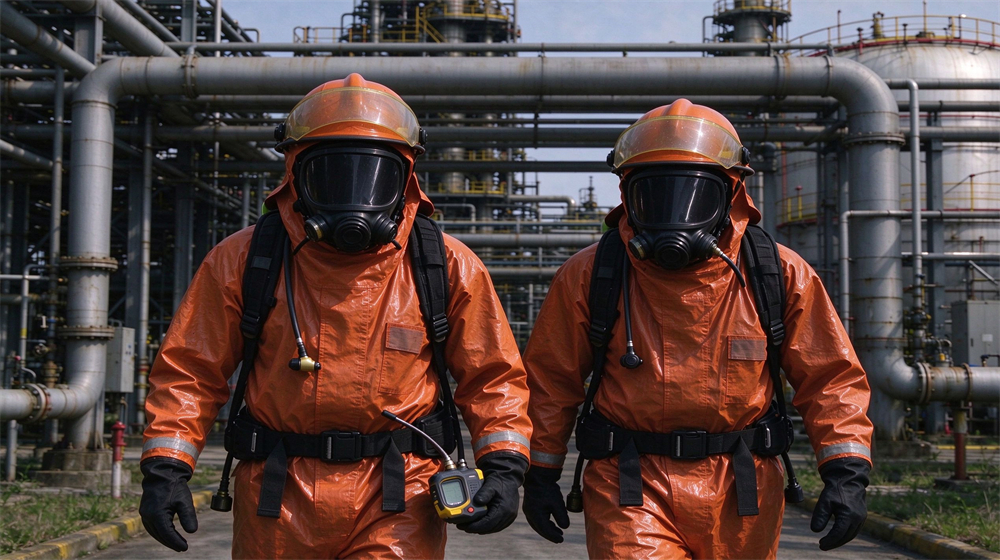
A Level A suit is the highest vapor protection. It is fully encapsulating, airtight at the zipper, gloves and boots, and the SCBA sits inside the suit envelope. Use Level A when the atmosphere is unknown, when vapor concentrations exceed IDLH, or when unknown corrosive liquid may splash onto the worker. Materials such as Tychem TK equivalents are selected for low permeation against aggressive chemicals. The suit must be pressure tested before each entry and inspected for pinholes between shifts.
Level B and C Splash Protection
A Level B suit protects against liquid splash but not against vapor ingress, so the SCBA is worn outside the suit. Level B fits tasks where the atmosphere has been measured and vapor is below IDLH, but liquid splash remains possible. Level C is a lower splash and particulate suit, used with half mask air purification when airborne concentrations are known and below PEL. The tiered approach means workers only wear the heaviest suit when the measurement demands it, which controls heat stress and extends working time.
Material Selection: Tychem and Beyond
Suit fabric choice is driven by chemical compatibility data. Tychem style multilaminates handle a broad range of acids, bases and solvents at thin weights for lower heat load. Heavier butyl and neoprene combinations serve acid and caustic tasks. Tyvek style spunbond polypropylene is adequate for particulate and light liquid splash in Level C duty. Always cross check the permeation chart against the specific chemical on site, because no single fabric blocks everything. We supply suit systems tested to EN 943 series and NFPA 1991 style requirements depending on destination market.
Heat stress is the silent failure in Level A operations. A sealed suit in a 35 degree plant can push core temperature up inside 20 minutes even before hard work starts. Procurement should therefore stage cooling vests, ice packs and a shaded decontamination lane near the entry point. Suits must be sized over base layers, not over street clothes, and each worker should know how long his crew can safely remain in the envelope before the heat stress becomes the primary hazard. Documentation of decon procedures is as important as the suit itself.
Once the suit level is chosen, the next decision is how long the worker can stay inside it. That is decided by the breathing apparatus on the back, not the suit fabric. A longer duration cylinder removes the clock pressure that forces rushed valve operations.
|
Level |
Protection Type |
Typical Material |
Typical Scene |
Respiratory Match |
|
Level A |
Fully encapsulating vapor tight |
Tychem TK style multilayer |
Unknown vapor, high splash |
Inner SCBA |
|
Level B |
Liquid splash protection |
Tychem F style laminate |
Known low vapor, liquid splash |
Outer SCBA |
|
Level C |
Particulate, low liquid splash |
Tyvek style spunbond |
Measured low concentration |
Half mask respirator |
|
Level D |
Basic work coverall |
Flame retardant cotton blend |
No immediate hazard |
None required |

Extended Duration SCBA for Industrial Firefighting Environments
A standard 6.8 liter, 300 bar cylinder gives about 25 to 30 minutes of actual working time under moderate effort. That is tight enough for a structural attack, but it is too short for a chemical entry, a confined space rescue or a long foam application. Extended duration SCBA is the piece that changes the operation from a fast hit and exit to a controlled entry that can ventilate, sample, isolate valves and retrieve a worker without rushing.
60-Minute and Dual Cylinder Options
Industrial firefighting crews rely on this. A 9 liter, 300 bar cylinder raises nominal duration to 60 minutes and actual working time to roughly 35 to 40 minutes. A dual cylinder SCBA with two 6.8 liter bottles pushes actual working air to around 55 to 60 minutes. Both configurations keep the same 55 plus or minus 5 bar low pressure alarm and the same regulator logic, tested to EN 137 or GA 124 depending on destination. Cylinders are carbon fiber wrapped with a 15 year service interval on most markets, and visual inspection before every shift is mandatory. For a factory emergency response team that must wait for outside backup, a 60 minute SCBA means the difference between abandoning the isolation valves and actually shutting them.
Industrial SCBA versus Fire Service SCBA
Fire service sets are tuned for heat resistance, low profile under a helmet and fast donning in a gear room. Industrial SCBA sets are tuned for long duration, chemical compatibility, radio communication and compatibility with fully encapsulating suits. The face piece seals against a Level A suit neck ring, the harness resists chemical splash, and the low pressure alarm is loud enough to be heard through a suit hood. Both families are tested to EN 137, but the selection is driven by the task, not by the rating sticker.
Air Management in Hazmat Zones
Air management is the discipline that prevents an out of air emergency inside a contaminated zone. Factory fire response entry officers track each cylinder on the board, mark the working air limit at 50 percent, and trigger withdrawal when any team member crosses 33 percent. Two in, two out, always. A 60 minute SCBA gives margin for slow, deliberate work rather than rushing through valves and flanges. Buddy breathing and a spare cylinder staged at the hot line round out the system. For a deeper dive on respiratory protection, see the SCBA air breathing apparatus page.
Cylinder hydrostatic testing is another procurement detail that buyers forget until audit time. Carbon fiber wrapped cylinders require periodic visual inspection and, on most markets, periodic hydrostatic retest. We mark each cylinder with a unique serial number and a date tag so the safety officer can build a retest calendar. Spare cylinders should be filled, sealed and stored upright in a ventilated cabinet, never near heat sources or direct sunlight. A full cylinder that has not been inspected is not a spare, it is a liability.
Foam Fire Suppression Systems
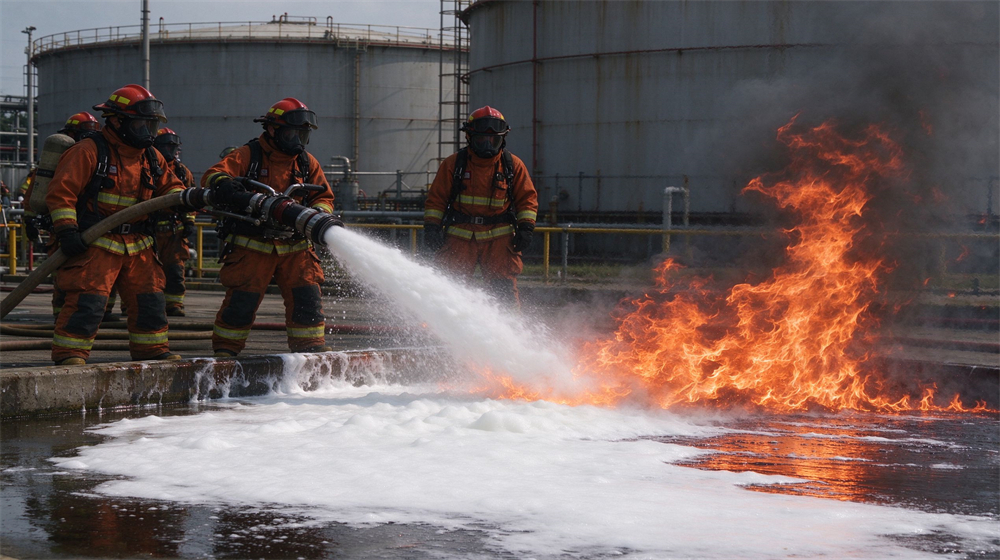
Water spreads burning liquid. It does not put out a solvent pool. Foam fire suppression forms a vapor-sealing blanket on the fuel surface, stops reignition and cuts radiant heat back to the crew. For any plant that stores hydrocarbons, alcohols, ketones or mixed solvents, foam is the agent that turns a small spill fire into a controlled event. This section walks through the foam chemistry and the proportioning hardware that industrial buyers actually spec.
AFFF and Alcohol-Resistant Foam
AFFF foam, aqueous film forming foam, seals hydrocarbon fuels such as gasoline and diesel at 3 percent or 6 percent proportioning. Polar solvents such as methanol, acetone and isopropanol break standard AFFF foam down, so they need alcohol resistant foam, AR-AFFF, which forms a gel barrier on the solvent surface. High expansion foam is reserved for sealed volumes such as basements, cable trenches and ship holds where flooding the space with bubbles displaces heat and oxygen. Selecting the wrong concentrate is one of the most common and costly procurement mismatches. Stock both AFFF foam and AR-AFFF drums when the site handles mixed fuels, and label each drum clearly so the nozzle operator never grabs the wrong concentrate under pressure.
Proportioners and Foam Application Equipment
A foam proportioner meters concentrate into the water stream at the designed ratio. Balanced pressure systems use a diaphragm between water and concentrate tanks, inline inductors pull concentrate through a venturi, and portable foam nozzles draw concentrate from a side can. Application hardware ranges from handheld foam guns for small spills to roof mounted foam monitors for tank farms. Each piece must match the chosen concentrate ratio, because running 3 percent concentrate through a 6 percent inductor leaves too little film on the fuel.
Selecting Foam for Industrial Fuel Fires
A selection rule: list every fuel on site, group into hydrocarbons and polar solvents, then size concentrate storage to the largest incident plus ten percent reserve. Add a mobile foam connection for large plants. For BLEVE protection, pair foam with fixed water spray cooling on the shell of any pressurized vessel exposed to flame. That combination is what keeps a tank rupture from turning into a fireball. This is the core of BLEVE protection in plant design.
Foam concentrate has a shelf life. AFFF drums rotate on a five to ten year cycle depending on storage temperature, and alcohol resistant foam needs its own inspection schedule. Procurement should track drum numbers on the inventory sheet, because a drum that has sat in a hot container yard for three summers may separate into layers and fail at the nozzle. Annual rotation, agitation records and stock by fuel type are the three lines that keep the foam system real rather than ceremonial.
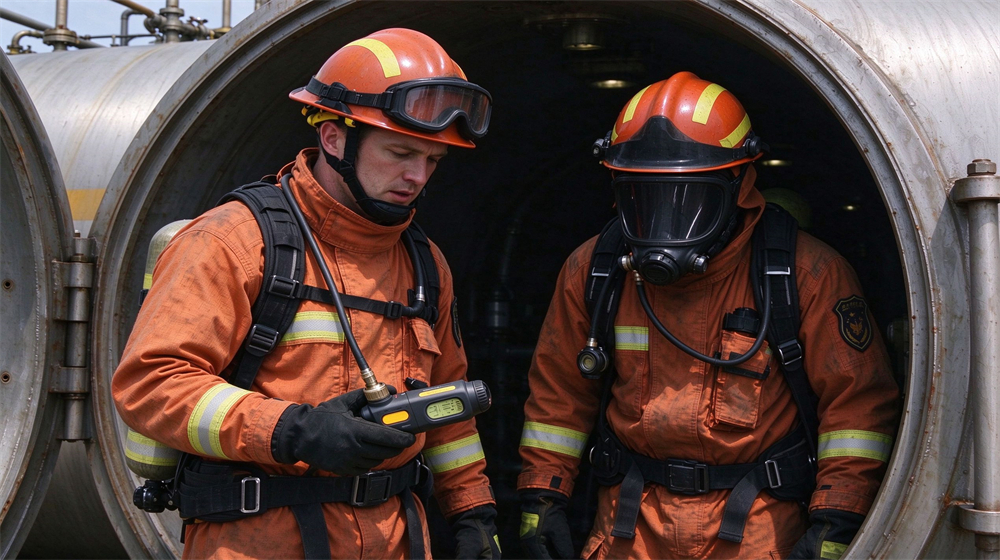
Gas Detection for Industrial Fire Response
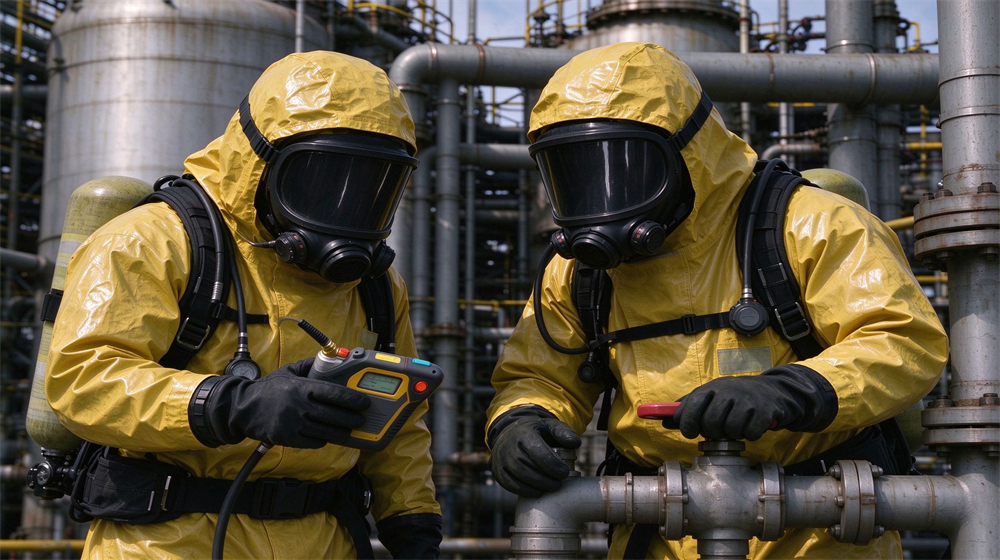
You cannot enter what you have not measured. Gas detection is the gate that decides whether a worker crosses the boundary, whether the ventilation fan runs, and whether the entry permit is issued. A modern industrial setup pairs fixed detectors at high risk locations with portable multi gas monitors on each responder. The two systems cross-check: fixed units can drift, portables can fail. A reliable multi gas detector is the cheapest insurance a chemical plant fire safety program buys, and it sits inside every factory emergency response locker on site. For example, layered emergency lighting for industrial fire rescue.
Multi-Gas Monitors: LEL, O2, CO, H2S
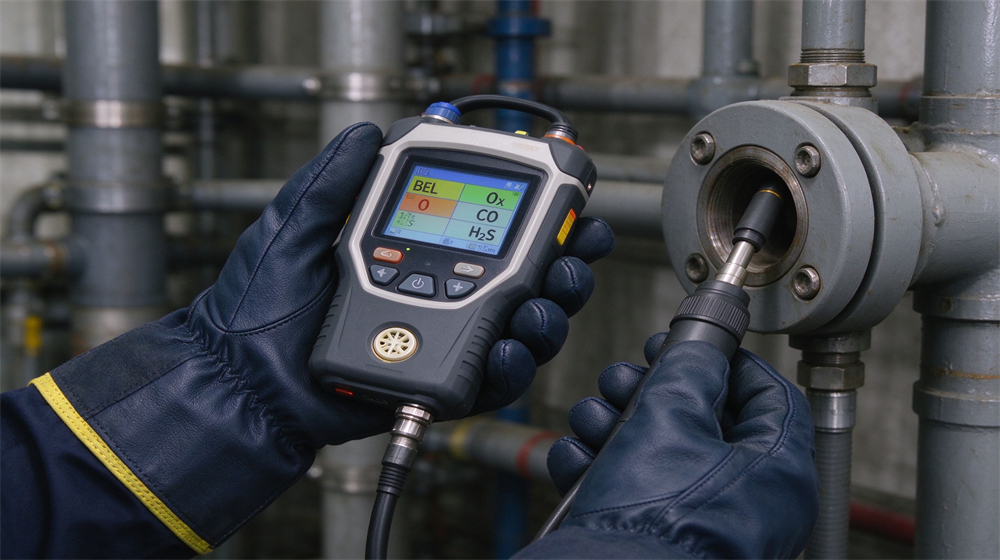
A standard multi gas monitor reads four channels at the breathing zone: LEL percent for combustibles, oxygen percent by volume, carbon monoxide in parts per million, and hydrogen sulfide in parts per million. Typical alarms sit at 10 and 25 percent LEL, 19.5 and 23.5 percent oxygen, 25 and 50 ppm for CO, and 10 to 15 ppm for H2S. The instrument logs the whole shift so the safety officer can review exposure trends after the event. Bump tests before each shift and full calibration on schedule are non-negotiable. In practice, every entry team carries a multi gas detector clipped to the harness, so no one crosses the boundary without a live reading.
PID for VOC and Toxic Gas
Volatile organic compounds such as benzene, toluene and ammonia slip past a four gas monitor because they are neither combustible at low concentration nor among the four target gases. A PID detector, photoionization detector, measures VOC in parts per million down to single digit levels. PID units are essential at coating lines, printing shops, wastewater treatment plants and any tank washing operation. They require frequent zeroing in clean air and correction factors per chemical, because the reading is only as accurate as the stored factor table.
Placement and Calibration Recommended Practices
Hazardous materials monitoring requires this. Sensor placement follows the gas behavior. Heavy gases like LPG and gasoline vapor collect low, so sample points sit near floor level. Light gases like hydrogen and methane collect high, so sensors mount near ceilings. Oxygen and CO sensors sit at breathing zone height. Calibration gas cylinders must be in date and the regulator flow checked. A detector that reads zero in a known clean room is a detector you can trust; a detector that reads zero after a bump test failed is a paperweight. Test instruments to EN 50270 where required by spec.
Fixed and portable detection should agree before entry. A fixed monitor that reads zero LEL while a portable unit alarms means one of them is wrong, and the crew should stop and find out which one. Cross checking at the boundary is a habit that costs one minute and prevents a false entry. Data logging on modern units also feeds the site safety review after the incident, which is how a plant improves its detection coverage year over year rather than rebuilding the system from a near miss.
Confined Space Rescue Equipment
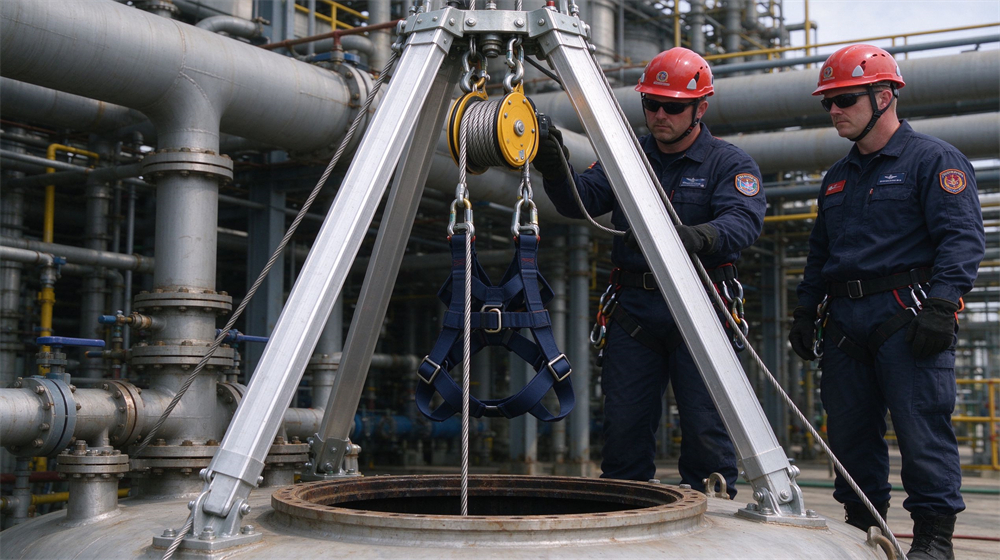
A tank, a vessel, a utility tunnel or a sump is a confined space: limited entry, poor ventilation, and atmosphere that can kill in seconds. Entry is common for inspection, welding, coating and cleaning. Confined space rescue is not the same as a fire attack. It is a rope and mechanical system designed to lift a worker out vertically while the attendant stays on the surface and the atmosphere stays under measurement. For example, portable flood lights for industrial emergency response.
Tripods, Winches and Retrieval Systems
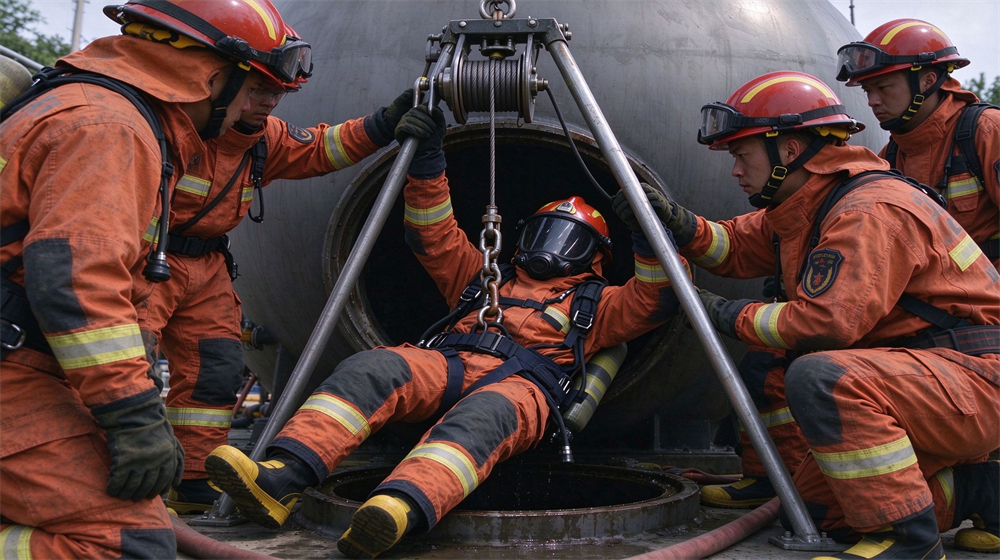
A rescue tripod spans the manway, anchors the winch and gives the attendant a stable overhead point. Aluminum models weigh under 18 kg yet support static loads above 250 kg, tested to EN 795. The winch system, manual or electric, carries 20 meters of stainless steel cable and uses a 5 to 1 brake so a fallen worker can be lifted without straining the attendant. A retrieval line attached to the harness lets the attendant pull an unconscious worker out without entering the space, which is the whole point of the rig.
Harnesses and Descending Devices
A safety harness for rescue is a five point full body harness with front and rear D rings, leg straps that distribute suspension load and a chest D ring for vertical lift. It is tested to EN 361. Static rope, 10.5 mm kernmantle, tested to EN 892, carries descent and belay. Descending devices let a trained rescuer lower into a shaft in a controlled way, while a second attendant handles the winch. All webbing and rope is retired on a fixed schedule, not when it looks worn.
Pre-Planning for Tank and Vessel Entry
For hazardous materials confined space entry, before any entry, the tank must be isolated, drained, purged and ventilated with an ATEX rated blower. The gas detector reads LEL, oxygen, CO, H2S and any specific process gas. The permit lists the attendant, the rescuer, the communications plan and the rescue rig on standby. A worker entering without this rig is not making an entry, he is volunteering to be recovered. For rope and harness background beyond rescue, see the escape rope and safety harness page.
Retrieval without entry is the preferred rescue path. If a worker is overcome inside a vessel, the attendant on the surface uses the winch to lift him straight out on the retrieval line, rather than lowering a second rescuer into the same toxic atmosphere. That is why the harness is required even when the task looks routine. Two attendants, one blower, one spare cylinder and a practiced drill every quarter turn a theoretical rig into a rescue that actually works when the clock is running.
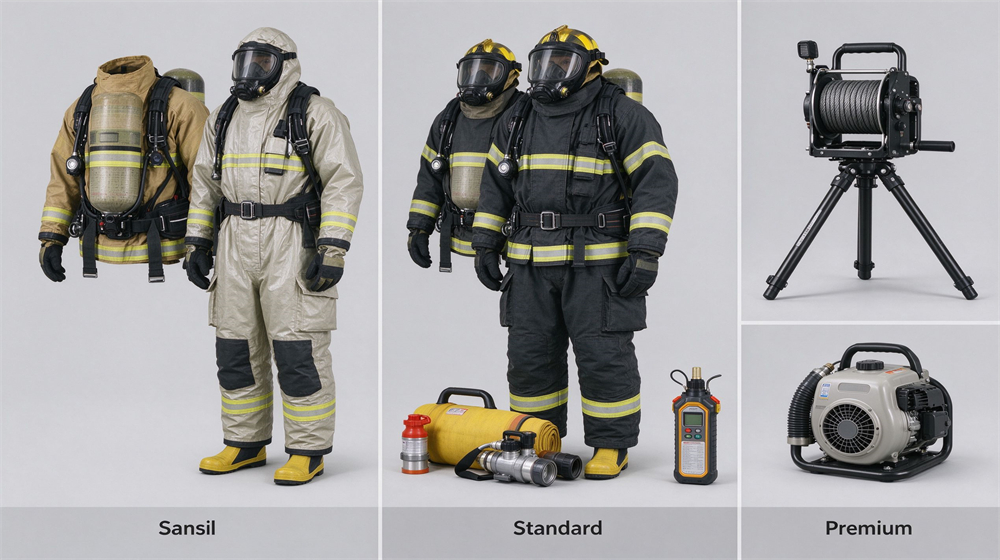
Recommended Equipment Packages
Buyers usually come with a plant, not a product list. They need to know what sits in the emergency locker, how many sets to stage, and which corner of the factory gets which kit. The three tiers below give a starting configuration that procurement officers can tune to their own hazard register. Each tier is an equipment package rather than a single SKU, so the locker shows up as a matched, documented set. For example, flood rescue clothing and gear for complex disaster response.
Basic Industrial Response Kit
The basic kit serves warehouses, light manufacturing and logistics hubs. It pairs one SCBA, one Level C splash suit, a four gas monitor, portable extinguishers and a short escape rope. It is sized for small spill, smoke evacuation and electrical alarm response before the external brigade arrives. It is not designed for Level A entry or large flowing liquid fire, and the site risk assessment should say so on the cabinet door. For buyers starting an industrial fire rescue equipment wholesale order, this tier is the entry point that proves the locker model works before scaling up.
Standard Chemical Plant Package
The standard package adds Level B splash suits, a 60 minute SCBA, a portable AFFF foam nozzle and concentrate, plus a multi gas monitor with PID. It is configured for coating lines, solvent storage rooms, loading racks and pump stations. Two entry teams of two workers each, plus a spare cylinder set, means the plant can sustain a one hour response without waiting on outside resources. This tier is the workhorse hazmat gear setup for most medium chemical plants.
Premium Hazmat and Confined Space Package
The premium tier adds a Level A fully encapsulating suit, dual cylinder SCBA, the tripod winch rig, an ATEX forced ventilator, alcohol resistant foam stock and a PID configured for the specific VOC on site. It is the industrial emergency response setup for refineries, fertilizer plants, tank farms and wastewater treatment works. The whole package is staged in a locked, ventilated cabinet with inspection tags and a contents manifest.
Each package ships with a contents manifest taped inside the cabinet door, so the safety officer can walk the locker in under two minutes after a drill. Sizes are grouped by entry team, cylinders are tagged with the next hydro test date, and the decon supplies sit in a separate bin so they are not mixed with entry PPE. That level of organization is what turns a procurement box into a response system that shifts after shift without a rebuild. Whether the buyer is standing up a new chemical plant fire safety program or refreshing an existing locker, the three tier structure scales without re-specifying every line item.
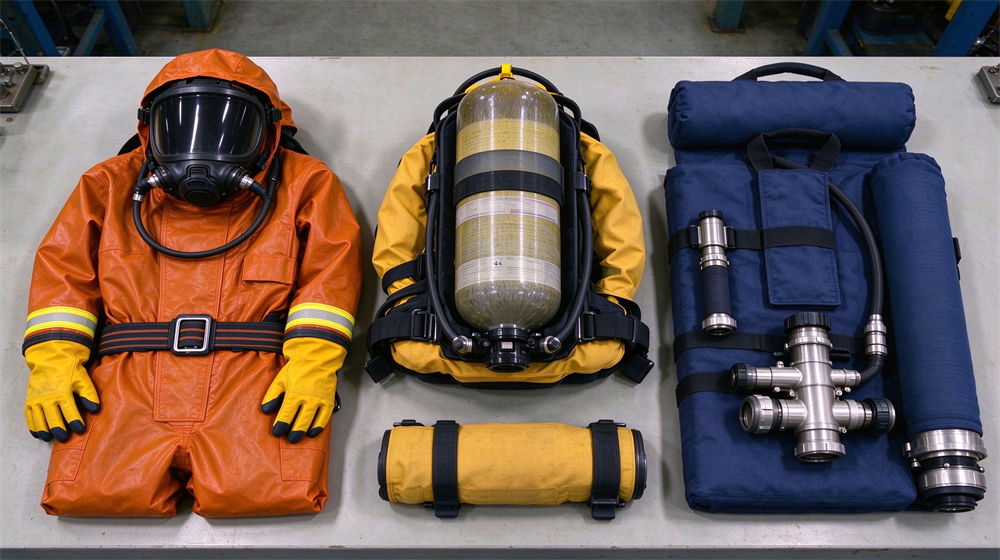
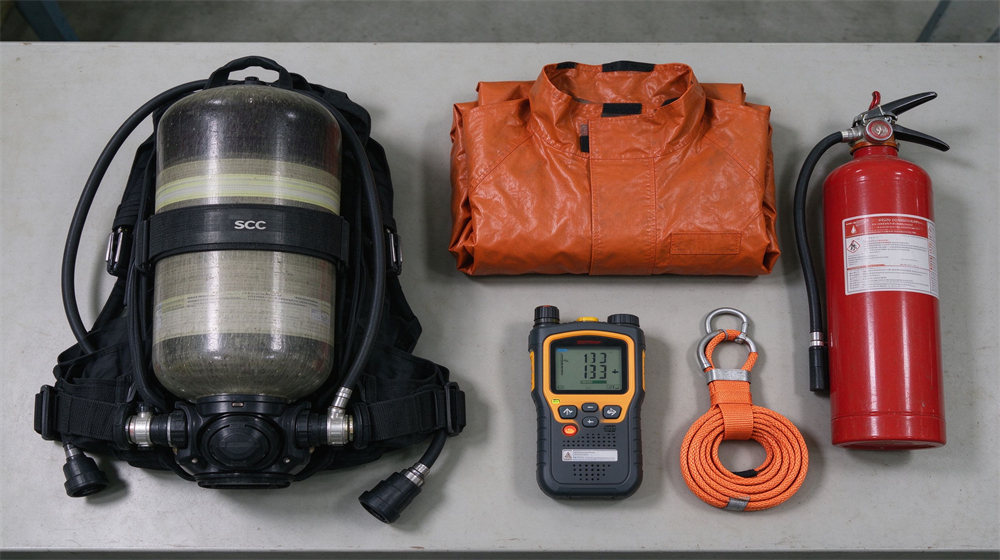
A flat lay like this is what the procurement officer expects staged inside the emergency locker: every piece present, tagged, and ready. The difference between a usable program and a shelf of random gear is the contents manifest, sizing roster and inspection cadence.
|
Category |
Key Spec |
Typical Scene |
Test Standard |
|
Level A suit |
Vapor tight, inner SCBA |
Unknown vapor entry |
EN 943 |
|
Extended SCBA |
9 L 300 bar, 60 min nominal |
Chemical entry, long operation |
EN 137 / GA 124 |
|
AFFF proportioner |
3 percent or 6 percent ratio |
Hydrocarbon tank fire |
Foam industry spec |
|
Multi gas monitor |
LEL O2 CO H2S plus PID |
Breathing zone monitoring |
EN 50270 |
|
Rescue tripod |
Aluminum, over 250 kg load |
Tank and vessel entry |
EN 795 |
|
Full body harness |
Five point, front and rear D ring |
Retrieval and fall arrest |
EN 361 |

Tier
Core Gear
Typical Scene
Configuration
Basic
Standard SCBA, Level C suit, four gas monitor, extinguishers
Warehouse, light factory
2 entry sets, 1 locker
Standard
60 min SCBA, Level B suit, AFFF nozzle, PID monitor
Chemical plant, coating line
4 entry sets, 2 lockers
Premium
Level A suit, dual SCBA, tripod winch, AR foam, ATEX blower
Refinery, tank farm, confined space
6 entry sets, 3 lockers
Government Procurement and Tender Support
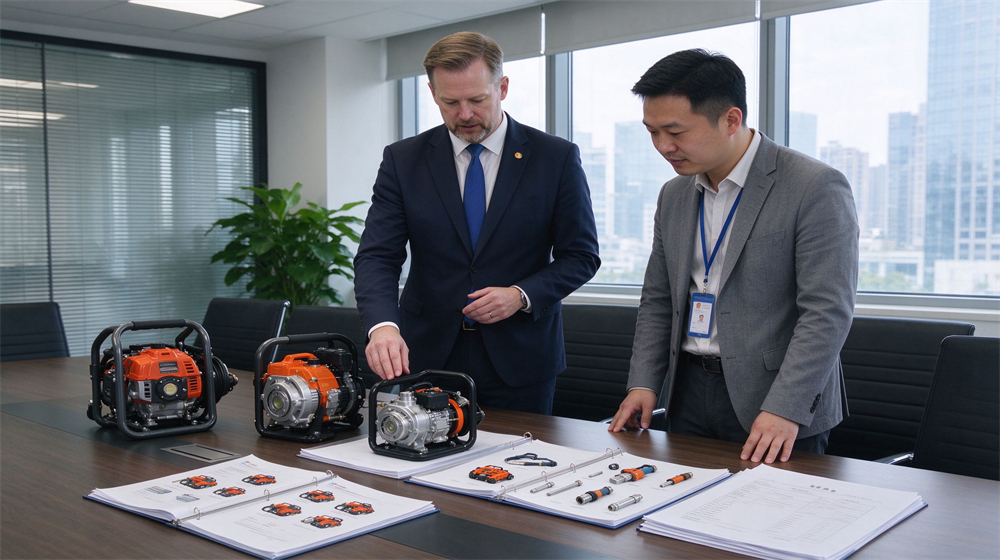
Government, military, hospital and school procurement cycles ask for documentation that a retail buyer never sees. The tender specifies test reports, batch traceability, packaging standards and payment terms. Our wholesale program is built around that paperwork, not around a sales call. This section covers what to expect when an industrial fire rescue equipment wholesale order goes out to bid.
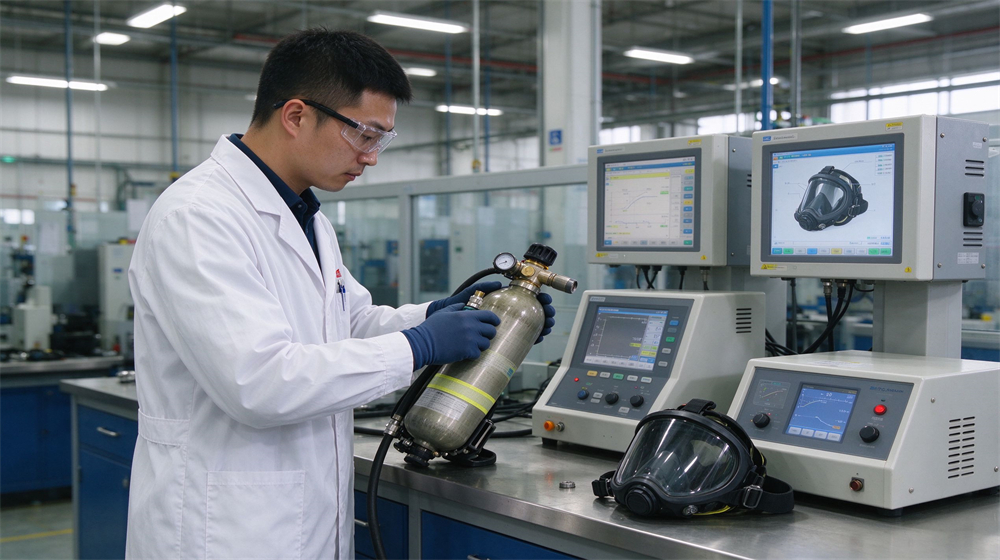
Documentation and Test Reports
Each lot ships with datasheets, third party test reports and a compliance matrix mapped to the tender clauses. SCBA reports reference EN 137 or GA 124. Suit reports reference EN 943. Gas detector reports reference EN 50270. Tripod and harness reports reference EN 795, EN 1496 and EN 361. We do not state certification on equipment that has not been tested; wording on datasheets uses tested to the relevant standard, and the report file backs the claim. Buyers evaluating industrial fire gear price compare should ask for the full report set before signing, because a gear price quote without test files is only half a procurement.
Bulk Configuration and LOGO
Bulk orders can size suits across a measured crew roster, pair each SCBA with a unique cylinder number, and embroider or heat apply department LOGO on suit shoulder panels and helmet fronts. PMS color matching keeps the marking consistent across lots. Packaging is export cartons with English shipping marks, palletized and strapped for container loading. This is the configuration that hazmat suit supplier China buyers need when the bid requires traceable, branded, palletized gear.
Tender Process and Payment Terms
Typical flow is inquiry, technical clarification, sample approval, tender submission, award, contract, production, inspection, shipping and post delivery support. Payment terms are agreed in the contract. Bulk government orders commonly use a deposit against balance before shipment, with L/C available for larger contracts. MOQ and lead time are stated per contract rather than as a universal number, because a 50 set order and a 500 set order do not run on the same production line window. This is the standard path for any industrial fire rescue equipment wholesale program that has to satisfy a public bid.

Related Products
Industrial fire rescue does not sit alone. The same buyer who specifies a Level A suit also needs structural turnout gear for the brigade, helmets for protection, blankets and ropes for evacuation, and gloves and boots for the crew. The links below open the corresponding long form pages for deeper specs and configuration.
Firefighter Turnout Gear
For structural attack alongside the chemical entry, the crew needs turnout coat and pants with a thermal liner, moisture barrier and outer shell. Browse the firefighter turnout gear page for shell weights, TPP ratings and layer options that pair with this package.

SCBA and Respiratory Protection
Beyond the extended duration sets used in hazmat entry, standard 6.8 liter SCBA, spare cylinders, face pieces and communication modules are covered on the SCBA air breathing apparatus page. Replacement filters, masks and training units ship alongside the main order.
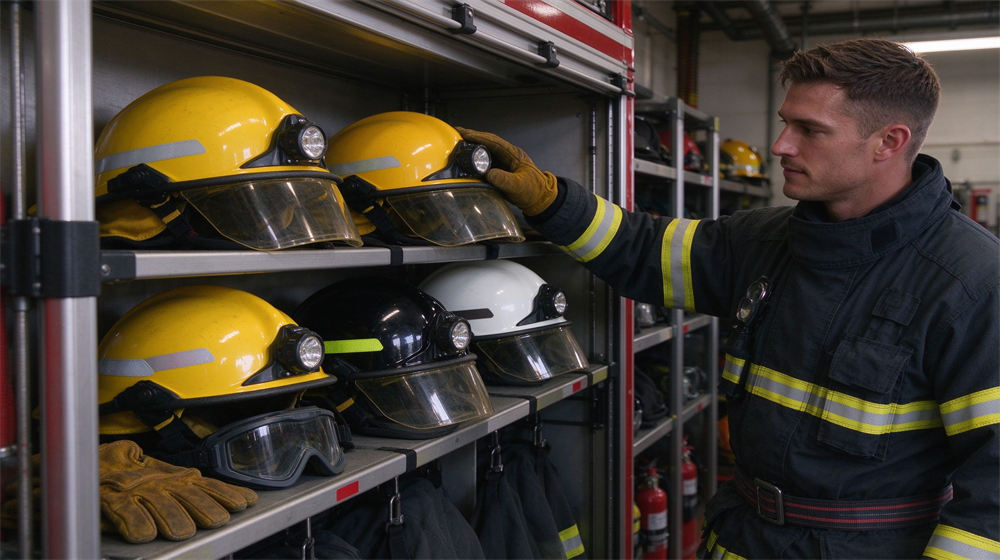
Helmets, Blankets, Ropes and Gloves
A complete locker also carries head protection, thermal blankets for small spill control, escape ropes for evacuation, and gloves and boots for hand and foot protection. Explore the fire helmet page, the fire blanket page, the escape rope page, and the firefighter gloves and boots page to round out the procurement list.
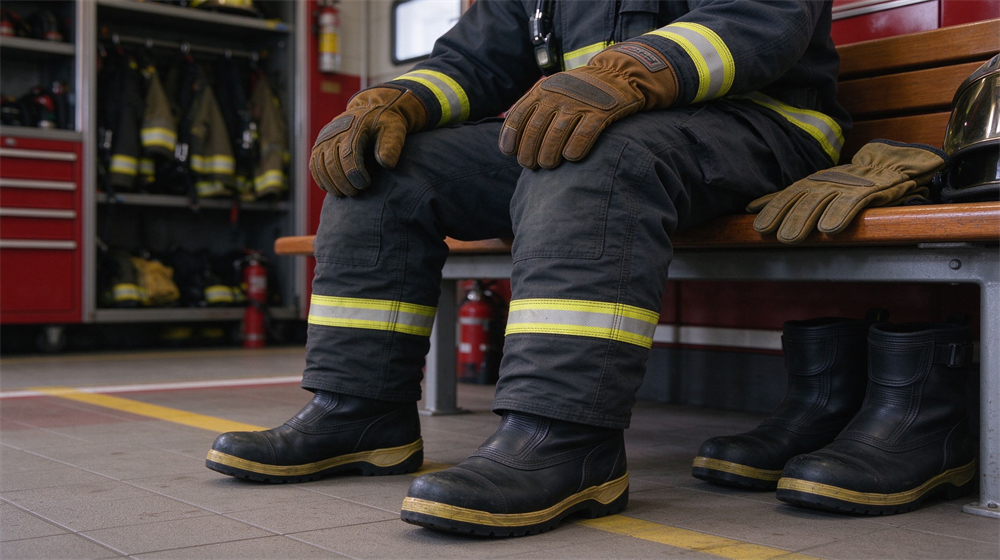
Hand and foot protection is the final layer tying the upper body ensemble to the ground. A worker who can climb, kneel and crawl through broken glass without a punctured glove or boot can actually reach the valve that needs closing. Leather gloves insulate against heat and splash; reinforced boots carry puncture and electric ratings that keep the worker mobile on the floor.
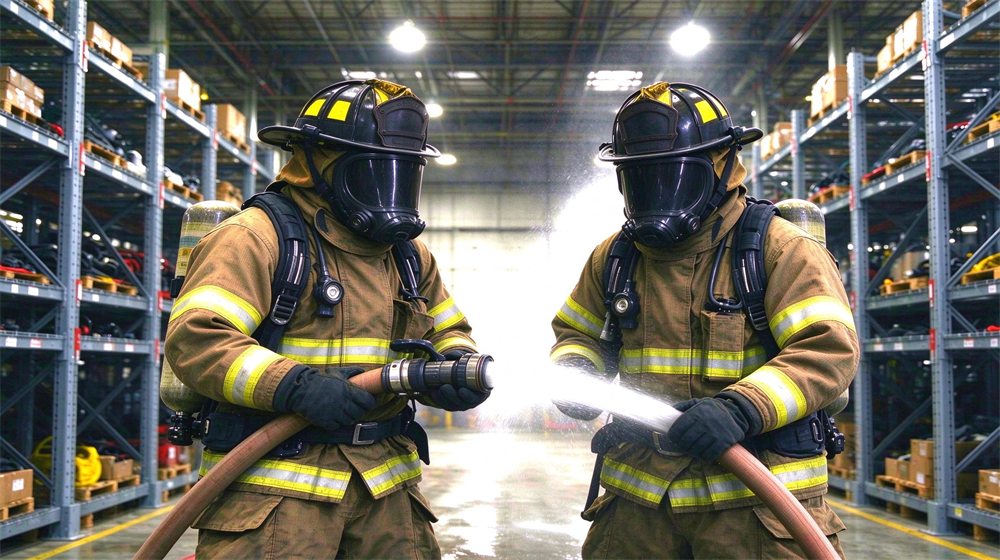
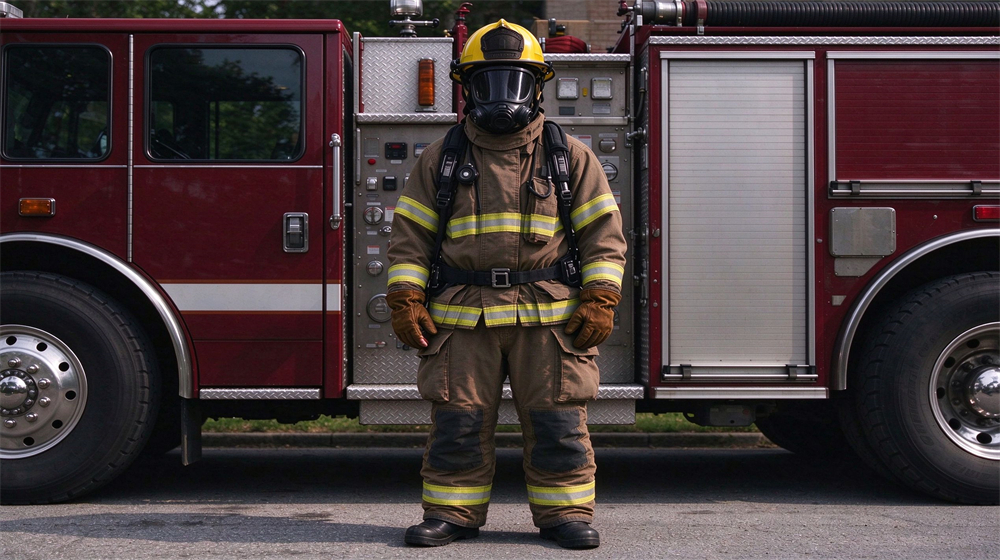
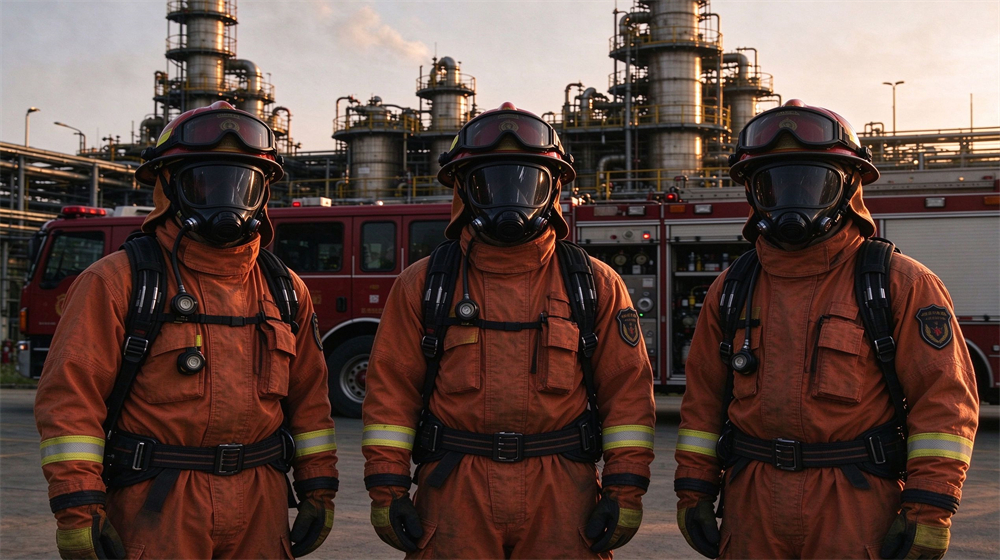
With every layer from suit to boot accounted for, the crew stages as a unified team. The image below shows a full emergency response unit in gear at the plant boundary, demonstrating how individual pieces combine into one deployable formation.
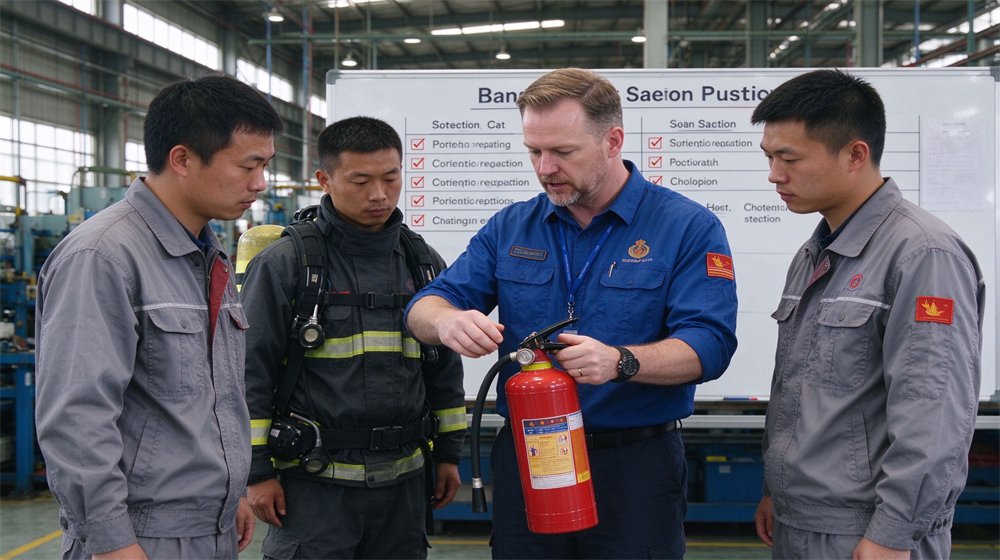
Gear only works if the crew can don it under stress. Regular drills on SCBA donning, foam proportioner setup and tripod rigging turn a stored locker into a practiced response. A team that has run the entry drill on a training afternoon reacts in minutes on a real alarm rather than reading the manual at the hot zone.
Industrial Fire Rescue FAQ: Equipment, Hazmat & Compliance
1. What are the most common types of industrial fires?
The most common industrial fires involve flammable liquids in chemical plants and tank farms, combustible materials in warehouses, electrical faults in substations and compressor rooms, hot work ignition, and flammable gas leaks at LPG or refrigeration units. Each threat demands a different gear combination.
2. Why are chemical plant fires more dangerous than ordinary building fires?
Chemical plant fires add boiling liquid expanding vapor explosion risk, toxic vapor release, flowing liquid fire, pressure jet flame and structural collapse from impingement heat. Workers need Level A or B suits plus SCBA and foam monitor capability, not just structural turnout gear.
3. What is a BLEVE and how do I protect against it?
A BLEVE happens when a pressurized vessel holding flammable liquid is weakened by external fire, ruptures and releases a fuel-air cloud that ignites as a fireball. Protection means wide isolation, unmanned foam monitors, fixed water cooling on the shell, and no personnel within the hazard radius during cooling.
4. What is the difference between Level A and Level B chemical protective suits?
Level A is a fully encapsulating vapor-tight suit with inner SCBA for unknown or high vapor concentrations. Level B provides liquid splash protection but allows the SCBA to be worn outside the suit, used when vapor concentrations are known to be below IDLH but liquid splash remains a risk.
5. How long can a worker stay in a Level A hazmat suit?
Working duration depends on SCBA duration and heat stress. A 60 minute cylinder supports roughly 35 to 40 minutes of actual work. In hot environments, rotate crews every 20 minutes and provide cool rest to prevent heat exhaustion.
6. How long does a 60-minute industrial SCBA actually last?
A nominal 60 minute rating is calculated at rest. Under moderate to heavy work, expect 35 to 40 minutes. A dual cylinder setup delivers roughly 55 to 60 minutes of working air. Always rely on the low pressure alarm and buddy breathing protocol.
7. What is the difference between industrial SCBA and fire service SCBA?
Industrial SCBA emphasizes extended duration, communication, chemical resistance and multi gas integration for hazmat entry. Fire service SCBA prioritizes heat resistance, low profile and compatibility with turnout gear. Both are tested to EN 137 or GA 124 depending on market.
8. What type of foam should I use for a chemical or solvent fire?
Hydrocarbon fuels such as gasoline and diesel are controlled with 3 percent or 6 percent AFFF. Polar solvents such as alcohols, ketones and esters require alcohol resistant AR-AFFF. Confined spaces such as basements use high expansion foam to flood the volume.
9. What gases should a multi-gas detector measure in industrial environments?
A standard four gas monitor measures LEL for combustibles, oxygen percent, carbon monoxide and hydrogen sulfide. For VOC, benzene or ammonia tasks add a PID sensor. Place monitors at breathing zone and calibrate on schedule.
10. What equipment do I need for confined space rescue?
A complete confined space rescue rig includes an aluminum tripod rated over 250 kg, a 20 meter winch, a five point full body harness, 50 meter static rope, a forced air ventilator and dedicated SCBA. Test each item to EN 795, EN 1496, EN 361 and EN 892 respectively.
11. How often should gas detectors be calibrated?
Bump tests should be performed before each shift. Full calibration is typically every six months, or sooner if a bump test fails, the sensor is replaced, or the instrument is dropped into a contaminated atmosphere.
12. Can you supply a complete industrial fire rescue equipment package?
Yes. We configure three tier packages: basic for light warehouses, standard for chemical plants, and premium for hazmat plus confined space operations. Each package pairs suits, SCBA, foam, detection and retrieval gear in one procurement.
13. Do you provide test reports and documentation for government tenders?
Yes. We supply third party test reports, datasheets, tender compliance mapping and certification files per lot. Documentation covers EN 137, EN 943, EN 50270, EN 795 and related standards as required by the bid.
14. What is the MOQ and lead time for wholesale industrial rescue equipment?
MOQ and lead time are agreed per contract based on configuration, sizing and LOGO. Sample orders for evaluation are available. Bulk orders typically ship in the window stated on the proforma invoice.
YRF Industrial Fire Rescue Program
Wholesale chemical protective suits, extended duration SCBA, foam fire suppression systems, multi gas detectors and confined space rescue equipment for factories, chemical plants, warehouses and government emergency response procurement. Documentation per contract.
 Wholesale Firefighter Gear For Fire Departments And Procurement
Our certified firefighter PPE range includes structural turnout suit, wildland fire suit, technical rescue suit, FR workwear, gloves, helmet and boots. Made of Nomex and Cordura, meet NFPA & ANSI standards. Available for fire department bulk procurement and OEM customization. Note: Price for reference only. Exact price based on quantity, size, weight and custom details.
 Firefighter Gear Buying Guide For Fire Department Procurement
Wide range of NFPA certified firefighter PPE including structural turnout suit, wildland gear, rescue suit, FR workwear, helmet, gloves, boots and SCBA. Made of Nomex IIIA, with 3M reflective tape, suitable for fire rescue, industrial and road safety scenarios. Note: Price for reference only. Exact price based on quantity, size, weight and custom details.
 Comfortable Cottage Cotton Soft Plain Duvet Covers
Refresh any space with a luxurious hotel duvet cover. In 100% cotton, super soft Comfortable Cottage Cotton Soft Plain Duvet Covers bedding kit with understated style and comfortable feel, a restful and warm night sleep.
 190x70cm Antifungal Foldable Bed - Isolation Unit Use, China
This 190x70cm antifungal foldable bed is specifically designed for isolation unit use. Made from high-strength, recyclable materials, it offers excellent durability and eco-friendliness. Suitable for military operations, disaster relief, and isolation scenarios, this bed provides a sanitary and comfortable resting solution even in damp and extreme environments.
Copyright © Custom Disaster - Relief Bedding: Tents, Sleeping Bags, Blankets All Rights Reserved
the professional team to service !


