


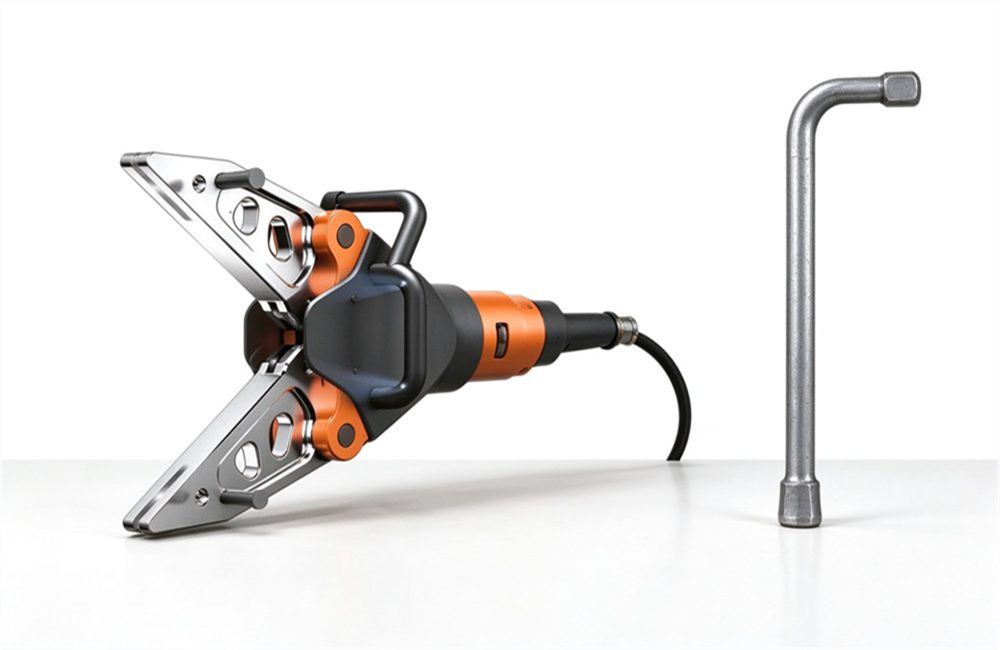
Hydraulic spreader for fire rescue and vehicle extrication. Electric and manual types available, fitted with replaceable tips and pulling chain set. It is used for accident rescue, collapse rescue and regular rescue training.
Note: Price for reference only. Exact price based on quantity, size, weight and custom details.
model no. :
H-03Brand:
YRFmarket price :
$3600sale price :
$1800price range :
10-30/$1800Color :
Multiple Colorsport of dispatch :
Guangdong/GuangzhouPayment :
TT, Paypal, Western Unionmin order :
10original region :
Made in ChinaLead Time :
5-15days
Hydraulic Spreader for Rescue – 42-62kN Vehicle
Extrication Tool
A hydraulic spreader is a high-force rescue tool powered by a hydraulic pump. It pries open crushed car doors, lifts structural loads and widens gaps around trapped victims. Our hydraulic spreader for rescue teams delivers 42-62kN force with a 680mm opening, ready for vehicle extrication, collapse response and industrial rescue.

 |

|
Contents
Spreader Overview
Spreader Key Specs
Spreader How It Works
Choosing the Right Tool
Rescue Applications
Power Options
Spreader Attachments
Quality and Testing
Packaging and Delivery
Customization
Maintenance and Training
FAQ

These spreading tools cover A hydraulic spreader turns hydraulic pressure into mechanical prying force through two arms that open like a jaw. The GYKZ-42-62/680 hydraulic spreader for rescue runs at a rated 63MPa and delivers 42-62kN of spreading force.
That is enough to push apart a crushed door frame in one controlled stroke.
The working idea is simple and field-proven. A pump pushes hydraulic oil through the hose into the cylinder. The cylinder drives the piston forward, and the piston forces the two arms apart at the tip.
The hydraulic spreader multiplies pump pressure at the arm tips.
This means a compact body opens gaps that a manual pry bar cannot. Compared with crowbars, a hydraulic spreader for rescue opens the same gap in seconds instead of minutes.
Crews save critical time at the scene, and the operator spends far less physical effort.
The body is built from hardened alloy steel. It carries replaceable tips for spreading, lifting and tearing jobs. The arms open to 680mm and pull with up to 34kN of traction.
This makes the tool the working head of a full hydraulic rescue tool set.
Operator safety is designed in. An automatic pressure-relief valve releases excess force on overload. The grip handle keeps the operator in control during heavy prying. The all-steel body has no exposed wiring, which keeps field servicing simple.
Because the tool produces no sparks and no heat, it is safe beside fuel tanks and dust. That is why fire crews list this hydraulic spreader for rescue as a primary forcible entry tool on the engine.
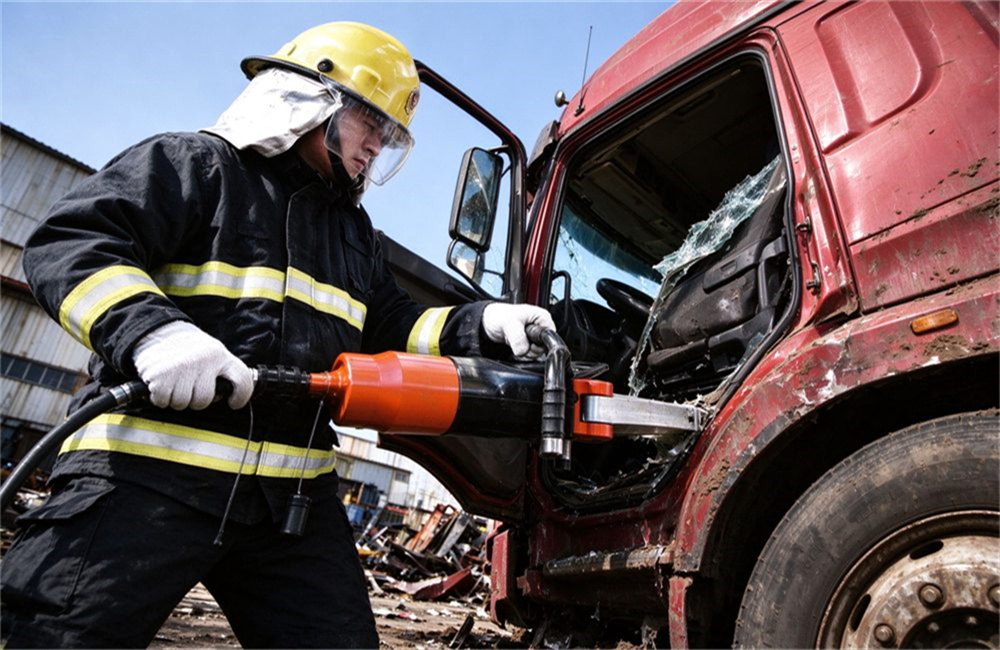
Early forcible entry relied on pry bars, wedges and hand jacks. Those tools depend on raw arm strength and fatigue the crew fast. A hydraulic spreader for rescue transfers that workload to a pump and a sealed cylinder.
The rescuer steers the tool, while the oil carries the force.
This shift matters most at long extrications. A manual bar needs constant leverage, and a tired rescuer loses control near the patient. The hydraulic head holds its position with one trigger hold.
Crews can pause, reassess the patient and resume without re-straining the tool.
Modern rescue doctrine now treats spreading, cutting and ramming as separate tool roles. The hydraulic spreader owns the opening and lifting role. It is rarely asked to shear thick steel, because that job belongs to a dedicated cutter.
A hydraulic spreader performs spreading, pulling and clamping with one head. Spreading pushes the tips apart to open gaps. Pulling uses the arms to drag materials with a pulling chain set.
Clamping grips a member between the tips while a cutter works.
The arms carry replaceable tips with hardened teeth that grip steel without slipping. When oil enters the cylinder, the piston extends and forces the arms outward at the pivot.
The same hydraulic circuit in reverse pulls the arms together for clamping.
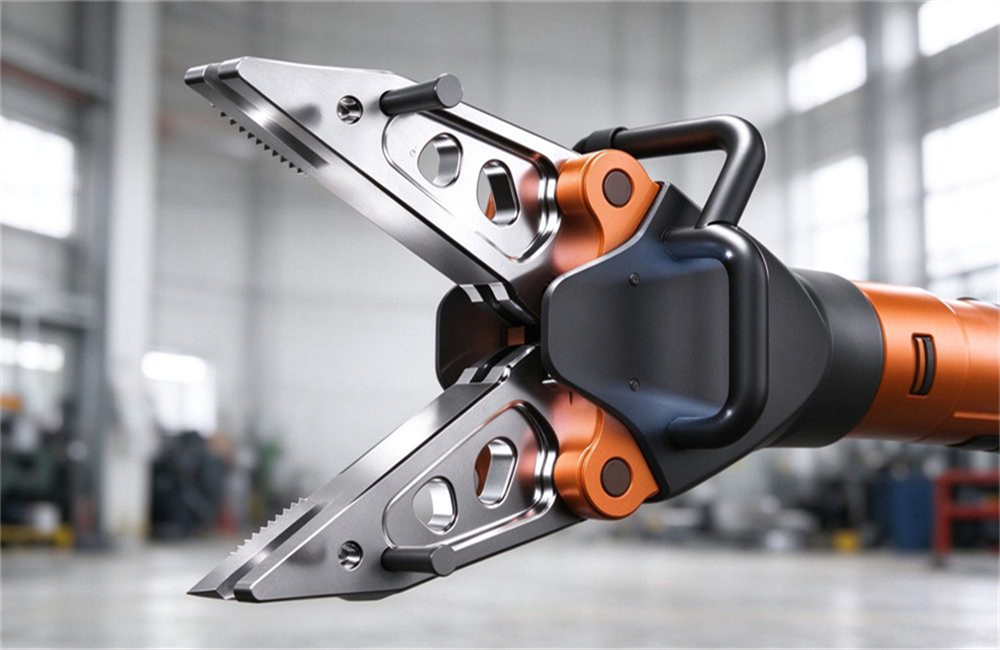
The hardened teeth on every hydraulic spreader for rescue tip bite into painted and bare steel. A sharp tip corners more material than a flat pad, which lowers the risk of slipping mid-lift.
Worn tips are swapped in seconds with simple hand tools.
Each spreader attachment is matched to a job. A lifting ram tip raises slabs. A door wedge forces locked shutters. A piercing tool opens thin panels.
This is why a single multi purpose spreader body covers more tasks than a fixed-head tool.
Buyers usually ask which hydraulic spreader for rescue fits their fleet. Start with the vehicles you open most. Passenger cars need less force than buses and trucks. Match the tool to your hardest typical call, not your easiest one.
These spreading tools cover doors, dashboards and window frames. Three numbers decide the choice. First is spreading force in kilonewtons. Second is opening distance in millimeters. Third is whether you need an external pump or a cordless electric head.
Compare these against the pump your station already owns.
If your crews run mixed calls, the GYKZ-42-62/680 covers most vehicle work at a modest weight. If you often lift slabs or open heavy frames, step up to the GYKZ72-720 multi purpose spreader.
If space is tight and one-person work is the norm, choose the electric GYKZD-37-46/650.
Avoid buying on price alone. A cheap head that fails a pressure test delays a rescue. Confirm the tool comes with a test record, spare tips and a pulling chain set for pulling work.
These extras decide whether the tool earns its place on the truck.
Set your budget around the whole kit, not the head alone. The pump, hoses, spare tips, a second battery for electric units and a carrying case all belong in the cost.
A well-priced head with an undersized pump will not open frames on call day. Ask for a full-kit offer so the comparison is fair.
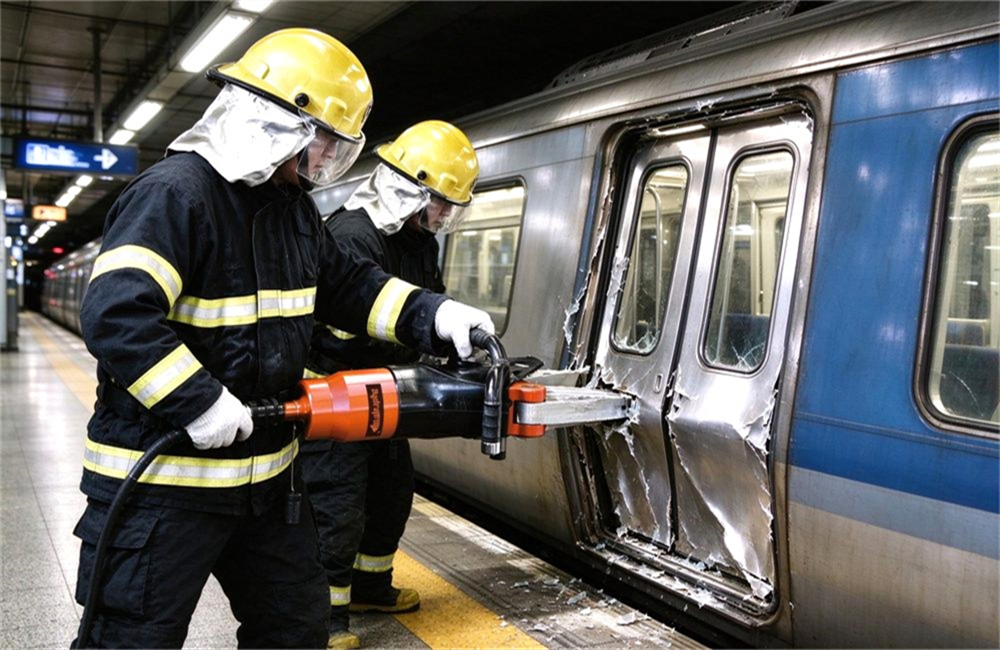
The table below compares the hydraulic spreader for rescue models we supply. All are rated at 63-72MPa working pressure and tested before shipment. Choose by spreading force, opening distance and power style.
|
Model of Hydraulic Spreader |
Spreading Force |
Opening |
Weight |
|
GYKZ-42-62/680. |
42-62 kN. |
≥680 mm. |
≤18 kg. |
|
GYKZD-37-46/650 (Electric). |
37-46 kN at tips. |
650 mm. |
22.8 kg. |
|
GYKZ72-720 (Multi Purpose). |
Up to 397 kN. |
720 mm. |
15.8 kg. |
|
GYKZ-47~64/685 (Single Hose). |
47-155 kN. |
685 mm. |
≤17.3 kg. |
The second sheet details the GYKZ-42-62/680 hydraulic spreader for rescue covered on this page. It lists rated pressure, spreading force, opening, traction and weight for one side-by-side comparison.

|
Parameter for Hydraulic Spreader |
Specification |
|
Model. |
GYKZ-42-62/680. |
|
Rated working pressure. |
≥63 MPa. |
|
Spreading force. |
42-62 kN. |
|
Spreading distance. |
≥680 mm. |
|
Traction force. |
25-34 kN. |
|
No-load cycle time. |
8-10 seconds. |
|
Weight. |
≤18 kg. |
|
Dimensions. |
770 × 290 × 175 mm. |
The standard opening covers 680mm, with an 8-10 second no-load cycle that keeps operations fast. Every unit ships with two replaceable tips, a high-pressure hose set and a carrying case.
Pump matching follows one rule: the pump must reach the working pressure of the hydraulic spreader.
A manual pump suits occasional jobs. A higher-flow motor pump speeds up the cycle for continuous work. Quick-couplers on our hose sets match standard rescue pump brands.
We confirm the coupling type before shipment, so your existing pump fleet drives this hydraulic spreader for rescue without adapter changes.
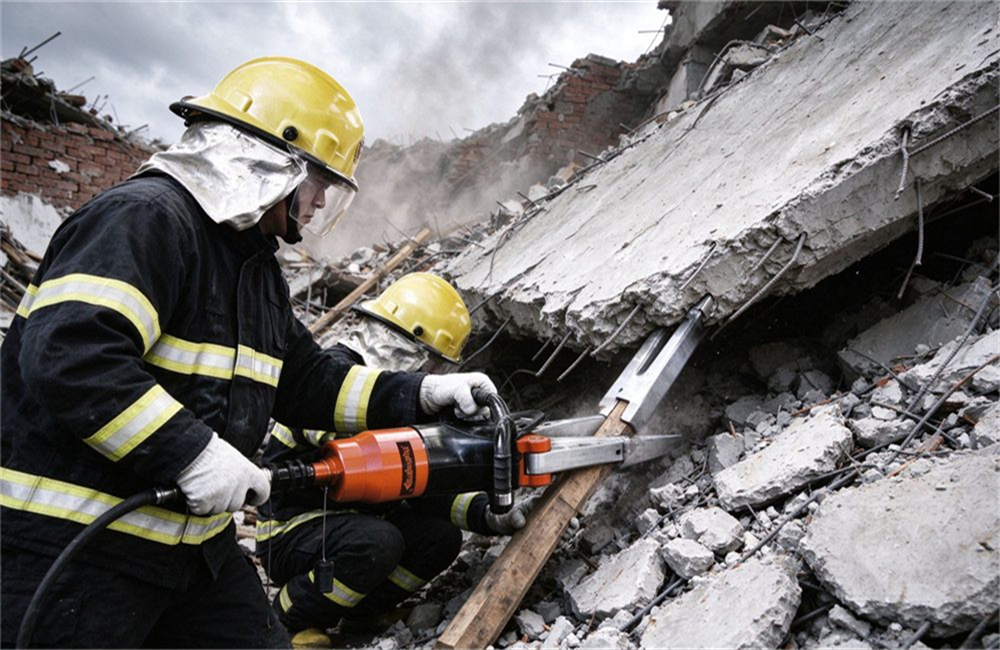
The vehicle and structural rescue applications of this tool start exactly here: spreading force and opening distance are the two numbers that define a hydraulic spreader for rescue. Force decides whether the arms can push apart the material at your scene.
Opening distance decides how wide a gap the head can create before the arms reach their limit.
Oil flow controls speed, while pressure controls force. A pump that delivers high flow opens the arms faster. A pump that holds pressure holds the gap open steadily.
Operators run the tool in short bursts to position tips, then hold pressure while the team cuts or pulls.
Force numbers are not abstract on the truck. A 42kN tip will spread a family sedan frame in seconds. A 150kN rating is reserved for heavy commercial frames where mild force barely moves the steel.
Matching the rating to your fleet's typical vehicles prevents both underpowered calls and buying more tool than you need.
Because the hydraulic spreader holds force without continuous effort, one operator can hold a lifted slab while others work underneath. This frees hands for patient care and tool handling at a busy extrication scene.
The hydraulic circuit is closed and sealed, so dust and water cannot easily enter the cylinder. A relief valve protects the body from overload. When pressure drops, the arms retract smoothly instead of dropping suddenly.
These details keep both the rescuer and the victim safe during long operations.
Hose length is a practical buying point. Standard twin hoses are long enough for roadside calls, but industrial and collapse scenes may need extended reaches.
We can supply longer hoses in matched pairs, and we mark the coupling type on each set so the wrong connection never reaches the truck.
Quick-couplers are designed for gloved hands. The locking ring prevents accidental disconnection under pressure. Before every call, the operator listens for the click that confirms the couple is seated.
A loose couple is the most common field fault, and it is caught in seconds with a visual and tug check.
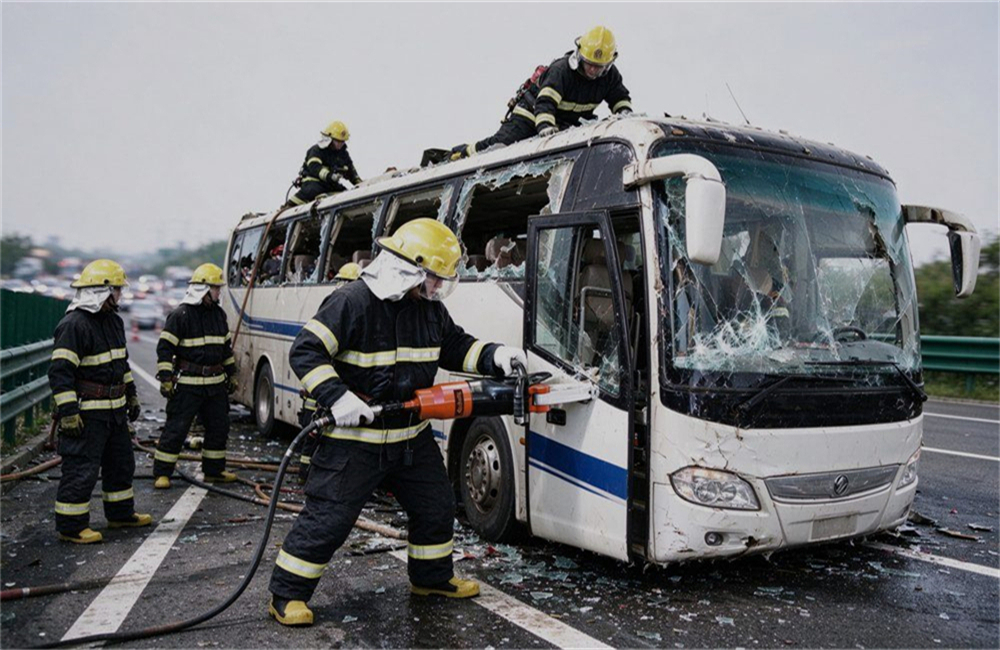
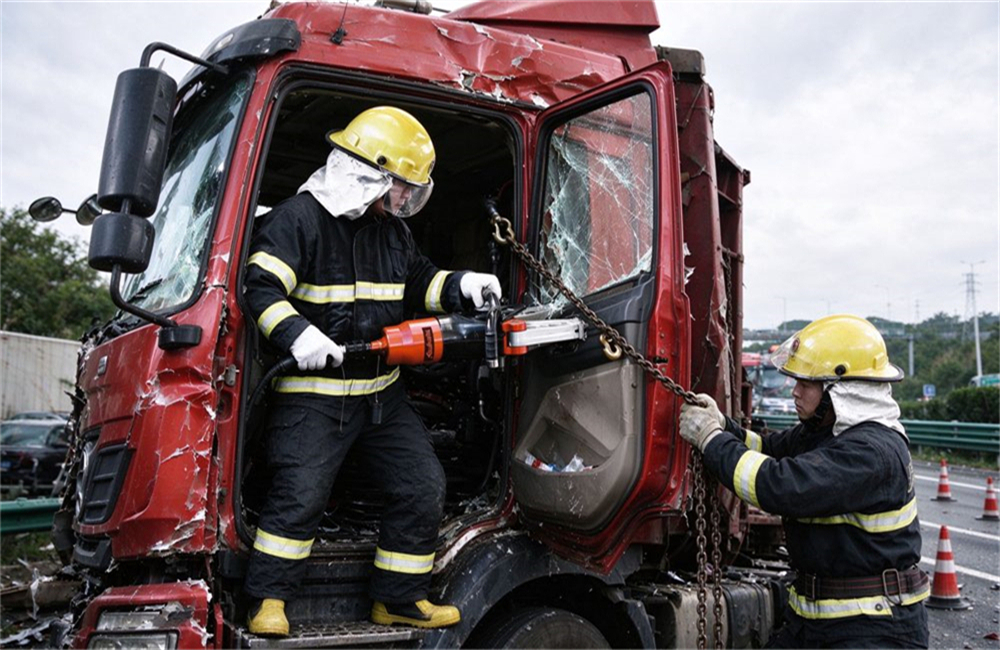
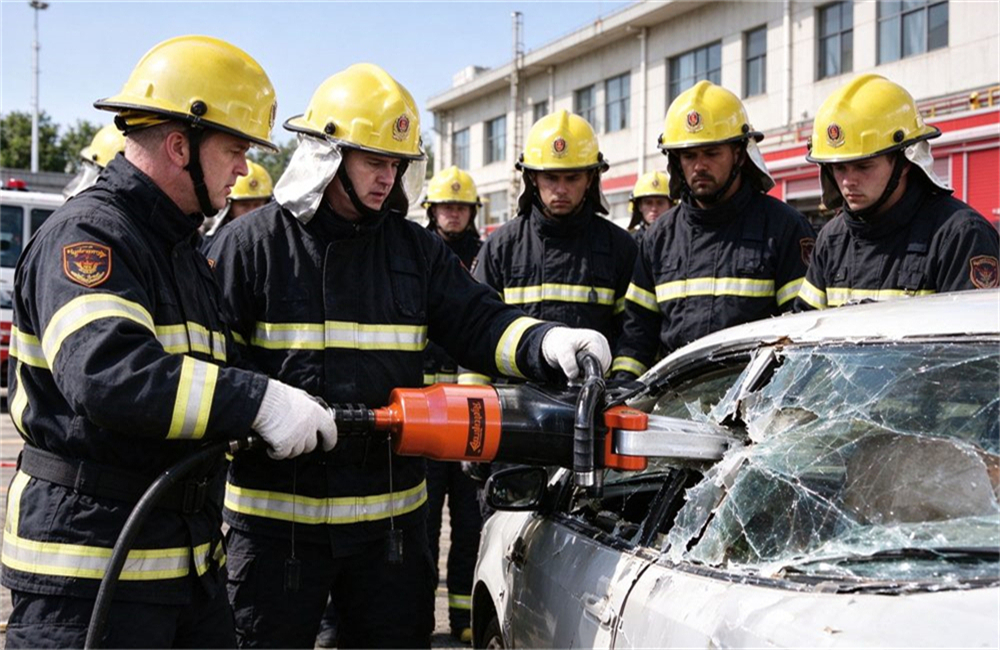
In car crashes, jammed doors and crushed frames trap occupants within seconds. A hydraulic spreader for rescue forces the frame apart at the hinge side. The team then peels the door open to expose the patient area.
The 680mm opening reaches tight gaps between roof panel and body frame.
Crews spread the latch point first, then reposition tips to lift the dashboard or push the frame. The 42-62kN force opens hardened steel without damaging the occupant space. The tool pairs with cutters and rams for a full extrication workflow.
On modern cars with high-strength boron pillars, the spreader works best at known pinch points. Crews avoid pushing on laminated glass and hardened roof rails, where a tip can slip.
Instead they seat the teeth on lower A-pillars and rocker panels that yield under controlled force.
After an earthquake or building collapse, fallen beams block access to trapped people. The tips slip into narrow gaps under a slab and push upward.
This creates a lifting force that raises the load enough for teams to reach survivors quickly.
In confined rubble, a hydraulic spreader is easier to maneuver than a jack or a torch. It produces no flame and no heat build-up. It is safe near dust, gas lines and fuel residues that are common at collapse sites.
When lifting a slab, crews place the tips on the strongest edge and lift in small steps. They never walk under a lifted load, and they stage wooden cribbing as the gap grows.
The spreader holds the gap while the cribbing takes the load, which is why rescue drills pair spreading with shoring practice.
After the slab is raised enough, rescue personnel crawl under to assess the victim. The operator keeps a hand on the trigger the whole time, ready to lower the load if it shifts.
This controlled, staged lifting is far safer than raising a whole beam at once. It is the routine a trained crew follows on every collapse call, one small lift at a time with cribbing staged under the gap.
Disaster-response planning also references emergency management guidance from FEMA.
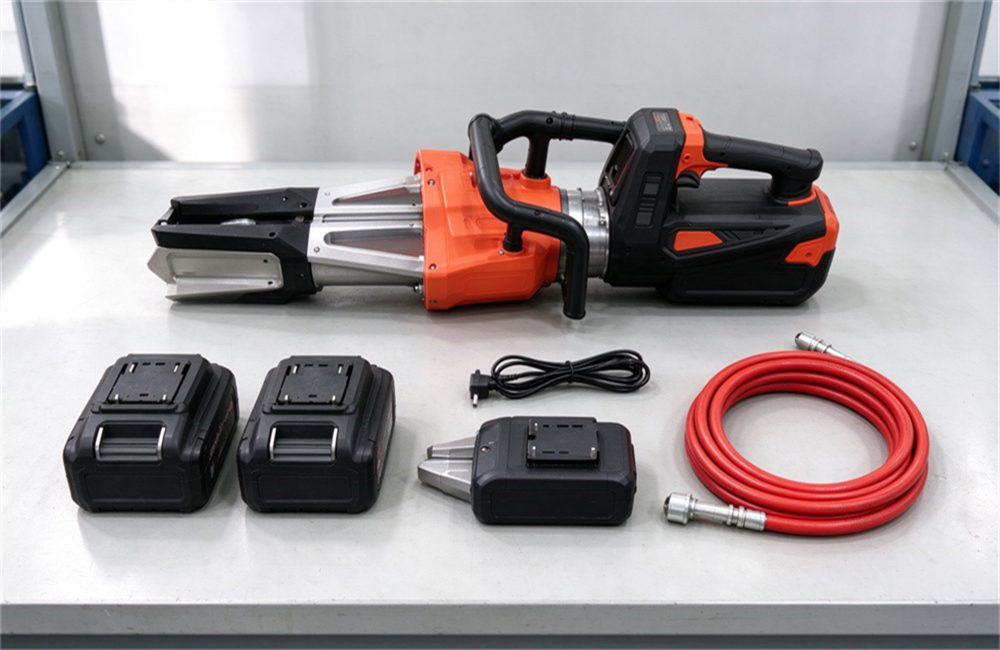
Hydraulic spreaders also serve rail accidents, bus crashes and heavy vehicle incidents where steel frames must open fast. The multi purpose spreader GYKZ72-720 uses a lifting ram tip for heavy loads and a tearing tip for welded panels.
For pulling work, the pulling chain set connects to the arms to drag steering columns and dashboards outward. This combination covers the full sequence from first gap opening to patient access.
A trained crew follows a repeatable sequence. First they stabilize the vehicle and assess the patient. Next they position the hydraulic spreader for rescue at the latch point and open the door gap.
Then they reposition tips to free the dashboard or roof.
Once a wide enough gap exists, the team moves the patient onto a spine board. The pulling chain set is used when a steering column must be drawn away from the legs.
A cutter trims the roof, and a ram holds the opening while the patient exits.
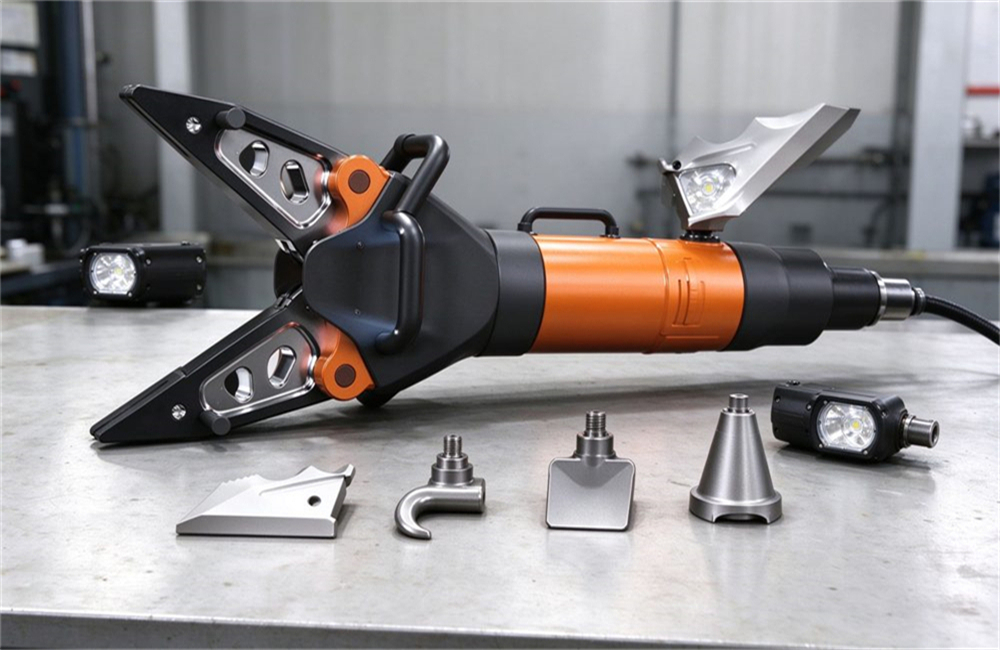
A hydraulic spreader is a working head, not a complete machine. It needs a power source to push oil through the hose and open the arms.
Three options cover every rescue team, and the model you choose decides what arrives with the head.
Standard GYKZ-42-62/680 (external pump required). This hydraulic spreader for rescue works with a manual, motor or electric pump connected by two high-pressure hoses. The pump sits beside the team and supplies oil flow, while the operator holds only the head.
Electric GYKZD-37-46/650 (battery, no pump). The battery, motor and micro pump sit inside the body. Charge the lithium pack, press the trigger, and the hydraulic spreader starts in about one second.
It suits one-person, quiet and indoor work without a separate engine.
Multi purpose GYKZ72-720 (removable tips). This multi purpose spreader runs from an external pump and accepts COE.EA removable tips. One body handles spreading, cutting, lifting and tearing without tool changes. Two LED lamps support night operation.
One buying note for the standard model: the GYKZ-42-62/680 needs a separate pump and hose set to run. We supply the complete kit, which includes the spreader, twin hoses and the pump type you choose.
Wholesale buyers ordering fleets often mix standard and electric heads for mixed crews.
Not every pump suits every hydraulic spreader for rescue. The pump must reach 63MPa, and its flow rate decides arm speed. A low-flow pump works but cycles slowly. A high-flow pump opens the arms in the rated 8-10 seconds.
If your station already owns a pump, send us the brand and coupling type. We confirm compatibility before dispatch. If you buy new, we bundle the pump, hoses and spreader as one tested kit.
This removes the guesswork from fleet procurement.
The electric GYKZD-37-46/650 runs on a swappable lithium pack. A full charge supports dozens of spread cycles, and a spare battery keeps the tool on duty during long training drills.
The charger works from a standard mains outlet, so the station can top up between calls.
Teams that choose the cordless head value speed on arrival. There is no engine to start, no pull cord and no exhaust near the patient.
Trade-off is weight: the electric head is heavier than the external-pump model, so crews plan it for one-person or indoor calls rather than marathon lifts.
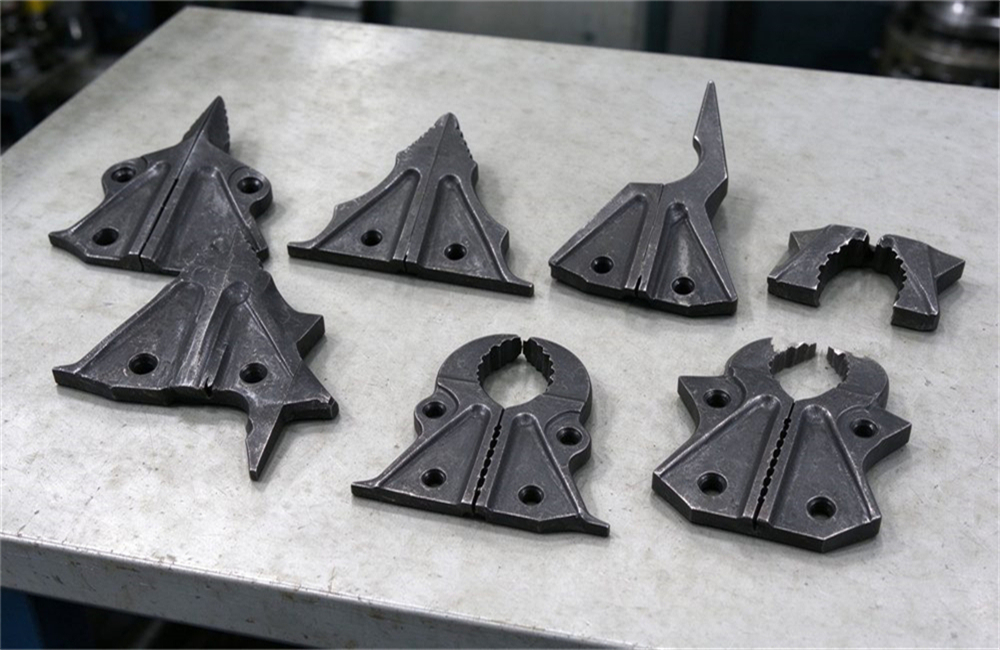
The COE.EA accessory group turns one body into six tools, and the pulling chain set adds traction work. Each spreader attachment is selected by job. The table lists the set we supply with the multi purpose spreader.
|
Spreader Accessory |
Weight |
Typical Rescue Job |
|
Cutting and pulling tip. |
1.7 kg. |
Cut and pull metal members. |
|
Lifting ram tip. |
2.4 kg. |
Raise heavy structural loads. |
|
Door-opening wedge. |
2.4 kg. |
Force locked doors and shutters. |
|
Concrete breaker. |
1.4 kg. |
Break thin concrete panels. |
|
Spreading and tearing tip. |
1.4 kg. |
Tear and spread deformed metal. |
|
Piercing tool. |
1.2 kg. |
Pierce panels and sheet metal. |
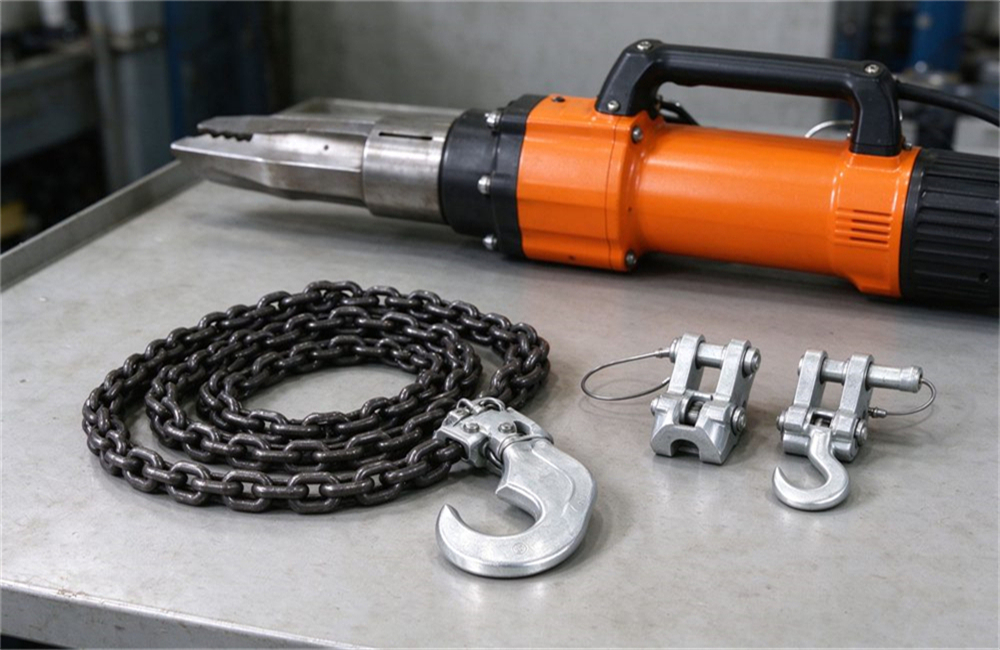
The S300 pulling chain set includes a universal hook, a 2.7-meter chain and multi-function chain clamps. Connected to the arms, it pulls steering columns, dashboards and jammed doors outward after the tips open a gap.
This single spreader attachment set extends the reach of every hydraulic spreader for rescue on the truck.
When you order a hydraulic spreader for rescue, tell us your common extrication tasks. We then pack the matching tip set and a spare pulling chain set. Extra tip sets are stocked separately for fast reorder between deployments.
Each spreader attachment locks onto the arm with the same quick mount, so crews swap tips without tools mid-call. The concrete breaker is popular at collapse sites. The door wedge opens shuttered shopfronts and industrial gates.
The piercing tool starts holes in thin panels where a tip cannot bite cleanly.
Hardened tips wear slowly, but teeth round off after repeated use on thick steel. A worn tip slips instead of biting, which slows the opening and raises risk.
Inspect the teeth before each call and swap any tip that looks blunt or nicked.
Keep a spare spreader attachment set and an extra pulling chain set in the truck locker. The chain links and clamps should be checked for bent pins, and the universal hook inspected for cracks.
Replacement parts ship the same way as the main tool, with a test record.
A hydraulic spreader for rescue is often paired with a hydraulic cutter and a hydraulic ram. When the spreader opens the gap, the cutter trims the roof, and the ram pushes the dashboard away.
Teams carrying all three finish patient access faster and keep the scene safer.
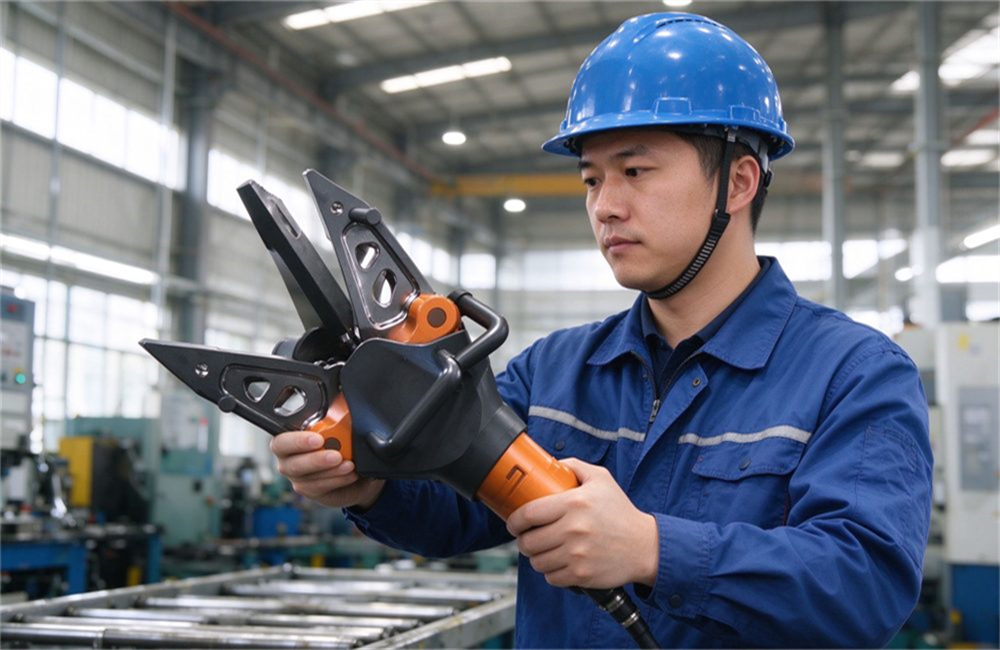
Quality control starts with incoming material. The alloy steel for the hydraulic spreader body and tips is checked against the mill certificate. Seals and hoses are inspected on delivery, so defects stop before assembly.
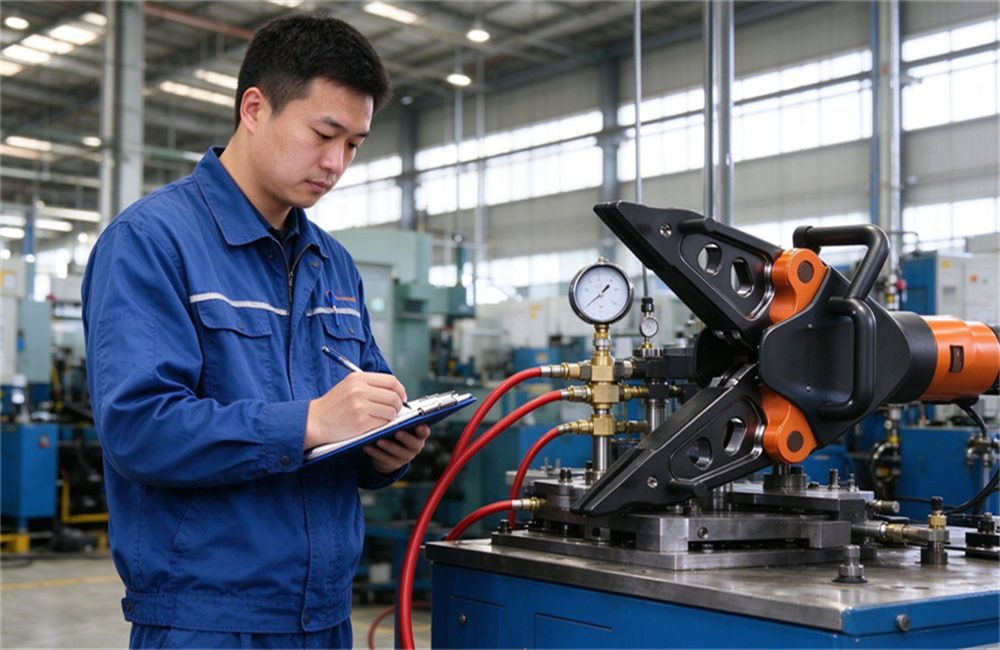
Every hydraulic spreader for rescue passes a 63MPa pressure test before leaving the factory. Tips are hardness-checked, and seals are inspected for leaks under working pressure. This keeps spreading force stable and operation safe in the field.
We also run a full-cycle test that opens and closes the arms repeatedly to confirm smooth movement. A sample record accompanies each batch, so you can verify test results before shipment.
This matters for government and institutional procurement that requires documented evidence.
Our inspection covers four checkpoints: tip hardness, seal integrity, hose coupling fit and paint finish. Any unit that fails a checkpoint is reworked and retested, never shipped as-is.
The body and tips use hardened alloy steel with a corrosion-resistant coating for wet rescue conditions.
Every batch of alloy steel arrives with a mill certificate. We keep that certificate linked to the serial numbers produced from that batch.
If a tip ever shows unexpected wear, we can trace the exact heat of steel and the inspection record behind it.
Hydraulic seals and hoses are sourced to the same pressure class as the cylinder. We do not mix cheaper generic seals into a rescue-grade tool.
This traceability is what lets a hydraulic spreader for rescue hold a valid test record for years after it leaves the factory.
Before a hydraulic spreader for rescue leaves the workshop, the inspector signs off on each item below. This checklist is the same for a single unit and for a bulk fleet order.
Each hydraulic spreader for rescue carries a serial number. Our after-sales team keeps the test record for every unit shipped, which speeds up warranty checks.
Rescue crews worldwide rely on documented test data to sign off new equipment before it enters service.
When a unit returns for service, the same serial number pulls its full history of pressure tests and seal replacements. This makes warranty claims faster and keeps a clear maintenance log for the tool's working life.
Request the serial and test record with any spare-parts order, and we match it to the batch.
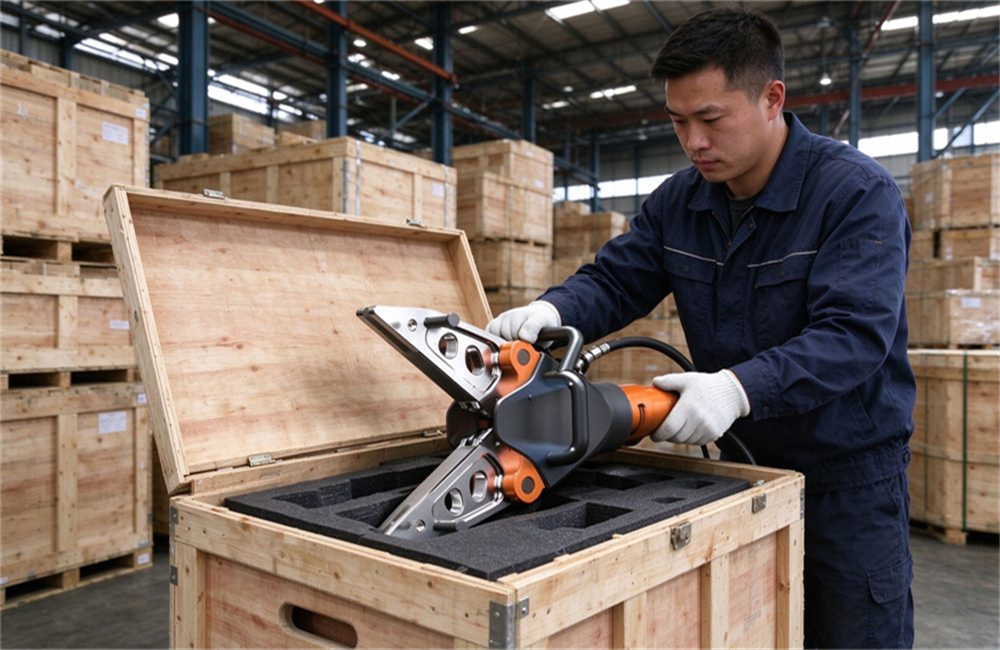
Each hydraulic spreader for rescue is packed in a reinforced wooden case with foam positioning. The foam protects the arms and body during sea freight. Spare tips and hoses wrap separately.
MOQ, lead time and payment terms are confirmed per contract.
For sea shipment, wooden cases stack with interlocking corners and strap to pallets. For air freight, we use lighter plywood cases with extra internal foam. Export documents follow your destination customs requirements.
The case label carries model, serial number, gross weight and handling marks for full traceability.
Wood is chosen because it breathes and survives container humidity better than plastic. The foam insert is cut to the spreader's outline, so the arms do not shift against the body during rough ocean transit.
This packing method has carried these tools to ports worldwide without transit damage to the precision tips.
We keep a packing photo of every wooden case in the shipment record. That photo is useful if a claim or customs check needs evidence of the as-loaded condition.
For wholesale orders, we consolidate several units onto one pallet to lower freight cost per unit.
Each shipment includes the packing list, commercial invoice and the test record for every hydraulic spreader for rescue. We can also supply photos of the loaded container.
Tell us your destination port and we plan the pallet count and case layout.
For bulk government tenders, we stage production to a single delivery date. This avoids split shipments that complicate customs. A tracking contact stays on the shipment from our warehouse to your receiving dock.
Lead times are confirmed per contract, never promised as a fixed number in advance.
A hydraulic spreader for rescue sits ready on the truck or in a station locker most of the year. Store it with the arms half-open to relieve seal pressure, and keep the tip teeth lightly greased.
Wipe off road salt and mud after winter calls.
Before a planned exercise, cycle the tool through three open-close movements to confirm smooth action. A tool that has sat for months should also get a quick pressure check.
These small habits keep the spreader reliable on the first real call.
Customization is available on the body, tips and hose set. We can fit different tip shapes for spreading, lifting and tearing.
We adjust hose length to your operating habits and print your brand on the tool body, carrying case and export documents.
Configuration is confirmed in writing before production starts, so there are no surprises at delivery. Tell us your typical rescue workflow and we will recommend the matching hydraulic spreader for rescue configuration.
Private label and OEM orders are welcome for distributors and training centers.
Spare parts and training are part of the choice too. A hydraulic rescue tool set with spare tips, hose sets and seal kits keeps the spreader available in busy seasons.
Send us your fleet size and usage pattern, and we will size a spare parts package to match.
Who buys this tool in volume? Fire departments, emergency management agencies and training centers order fleets. Distributors stock a standard multi purpose spreader plus spare tips for local resale.
Industrial safety teams in mining, rail and chemical plants keep one for site rescue.
Training centers buy a matched mix of spreader, cutter and ram so students learn the full toolkit. They also order extra spreader attachment sets, because practice frames wear tips fast.
For these customers, we recommend a steady spare-parts contract instead of one-off reorders.
For a first-time buyer, we suggest starting with one complete kit, a spare tip set and a pulling chain set. This covers the most common vehicle and structural calls without over-ordering.
Once crews know their workflow, you can add the electric head or the higher-force multi purpose body.
We do not quote a fixed price or MOQ on the page, because order size, customization and shipping all change the number. Send your model list and destination, and we return a clear offer per contract.
Bulk orders, OEM branding and spare parts packages are all handled in the same procurement file.
When a hydraulic spreader for rescue reaches your dock, open the case before signing. Confirm the body, two tips, twin hoses, the carrying case and the test record are all present.
Match the serial number on the body to the number on the test record.
Run one slow open-close cycle with the pump before storing the tool. Watch for smooth arm movement and check the couplings for any weep.
Report anything odd within the claim window, and keep the wooden case and foam until the tool has passed its first in-house inspection.
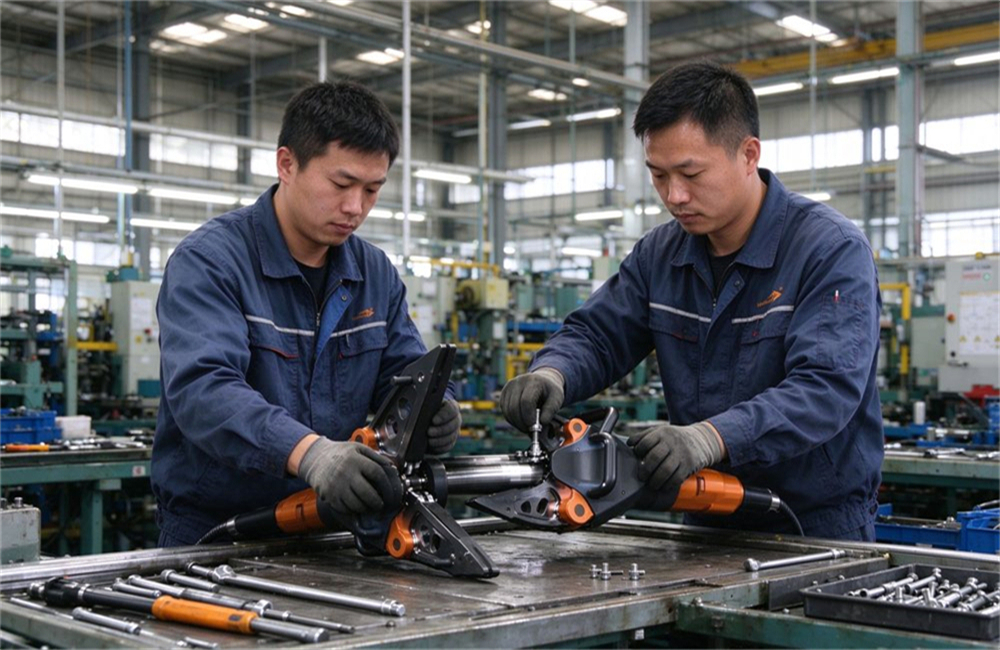
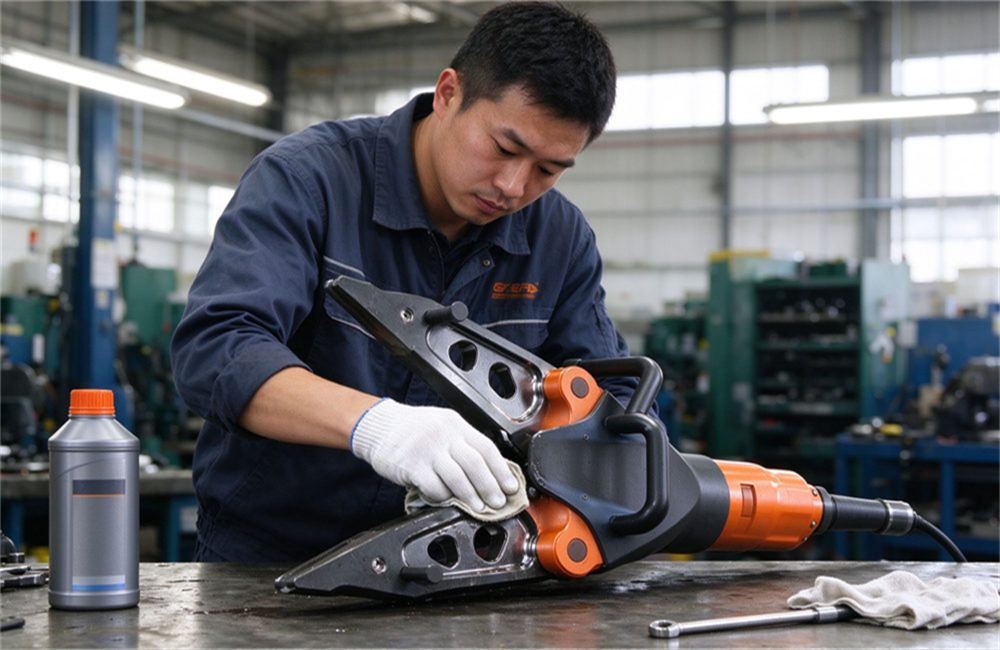
Regular maintenance keeps a hydraulic spreader for rescue reliable between inspections. The schedule covers cleaning, seal checks, pressure verification and lubrication, so the tool keeps full force when it is needed.
Maintenance Check Point for Hydraulic Spreader
Frequency
Action
Spreader tips.
Before each use.
Visual check for wear; replace worn tips.
Hose couplings.
Before each use.
Leak check under pressure; tighten seals.
Hydraulic oil level.
Monthly.
Top up with the specified oil grade.
Seals and O-rings.
Yearly or 500 cycles.
Full seal service by trained technicians.
Pump connection.
Every deployment.
Confirm quick-couplers engage fully.
We provide operating instructions and online guidance so your team practices spreading techniques safely. Training covers connection, operation and daily checks before deployment. A simple new-crew drill takes one day, with half on connection and half on practice frames.
Teams follow workplace safety practices such as those outlined by OSHA.
After-sales support covers spare tips, hose sets, seal kits and technical answers. Keep a pulling chain set and a spare spreader attachment in the truck locker, so a worn part never benches the tool during a busy season.
A good drill repeats the full call, not just tool operation. Crews practice approaching a practice vehicle, stabilizing it, spreading the door, freeing the dashboard and moving a dummy patient.
The drill reveals where a team hesitates, and that hesitation is what training removes before a real emergency.
For force and speed, a hydraulic spreader for rescue outperforms manual pry bars on deformed steel. Manual tools remain useful for small tasks, but at major incidents the hydraulic option is the faster and safer choice.
The hydraulic cylinder does the heavy work, not the rescuer's back.
The spreader and the cutter are not interchangeable. The spreader pries, widens, lifts and clamps. The cutter shears solid metal with short, sharp blades.
A team that owns only one tool will overwork it, while a matched set of spreader, cutter and ram covers every rescue job with the right head.
When choosing a hydraulic spreader, focus on three numbers: spreading force, opening distance and working pressure. A 42-62kN model covers most vehicle extrication. A 72MPa model suits heavier structural work.
Compare these against the pump you already run and choose the match.
Public safety guidance for rescue tool use is available from bodies such as the NFPA.
1. How much spreading force does the GYKZ-42-62/680 provide?
It delivers 42-62kN at a rated 63MPa, enough to push apart crushed doors and deformed frames in one controlled stroke. This makes it a standard hydraulic spreader for rescue fleets that open passenger vehicles daily. Heavier bus and truck work moves up to the GYKZ72-720.
2. What is the maximum spreading distance of this hydraulic spreader?
The standard GYKZ-42-62/680 opens to at least 680mm. The multi purpose spreader GYKZ72-720 opens to 720mm, and the cordless electric GYKZD-37-46/650 opens to 650mm. Choose opening by the gap your crews must create between roof and rocker.
3. How does a hydraulic spreader work in rescue operations?
A pump pushes oil through the hose into the cylinder. The piston extends and forces the two arms apart at the pivot, converting pump pressure into mechanical prying force at the hardened tips. Reversing the circuit pulls the arms together for clamping or pulling work.
4. What spreader attachments are available for rescue work?
The COE.EA group includes cutting and pulling tips, a lifting ram tip, door wedges, a concrete breaker, tearing tips and a piercing tool. The S300 pulling chain set adds traction work to any hydraulic spreader for rescue. Each spreader attachment swaps on the arm without tools.
5. How heavy is this hydraulic spreader for rescue?
The standard model weighs no more than 18kg at 770×290×175mm, manageable for two rescuers in tight spaces. The electric version trades a little extra weight for cordless freedom. The multi purpose body is the lightest at 15.8kg for its force class.
6. Does it work with our existing pump?
Mostly yes. Quick-couplers match standard rescue pump brands, and we confirm the coupling type before shipment. The pump must reach the 63MPa working pressure of the hydraulic spreader for rescue. Send us your pump brand and we will confirm the fit.
7. Can the spreading tips be replaced on site during service?
Yes. Every tip is replaceable and hardened for repeated use. Spare tip sets for spreading, lifting and tearing are stocked for fast reorder between deployments. Inspect tooth shape before each call and swap any tip that looks blunt or nicked.
8. What spreader force is needed for car door work?
For typical passenger vehicles, 42-62kN is enough to open latch points and door frames. For heavy trucks, buses or rail equipment, crews choose the higher-force GYKZ72-720 multi purpose spreader rated up to 397kN.
9. Single-hose or twin-hose, which is better for rescue teams?
Single-hose connects faster for one-tool rescue. Twin-hose gives steadier flow when several tools run from one pump at the same scene. We supply both configurations for a hydraulic spreader for rescue fleet, so you can match hose count to your pump layout.
10. Do you support OEM and private label?
Yes. We can print your brand on the body, carrying case and export documents, and adjust tip geometry or hose length to local habits. Configuration is confirmed in writing before production. Distributors and training centers order private label units regularly.
11. What is the lead time and MOQ?
Lead time and MOQ are confirmed per contract after specification. Standard models schedule faster than custom builds, and we share a production schedule so you know the shipment date. Bulk tenders can be staged to a single delivery.
12. Do you supply spare parts and training?
Yes. We stock spare tips, hose sets, seal kits and offer online operation guidance. Tell us your fleet size and we will build a maintenance package that fits your hydraulic spreader for rescue operation, including a spare spreader attachment and pulling chain set.

From the first gap on a jammed car door to a lifted slab after a collapse, the right hydraulic spreader for rescue turns seconds into safer outcomes.
Pick the force class that matches your hardest call, then pair it with a compatible pump.
Keep a spare spreader attachment and a pulling chain set close at hand. Every unit ships tested, packed and ready to connect to your fleet.
Tell us your typical calls and we will match the tool, the pump and the spares to your operation.
Buying a hydraulic spreader for rescue in bulk or for OEM private label? Send us your fleet size, pump model and target price — we reply with a matched quotation, batch test records and export documents in one email.
YRF Rescue Equipment · China · Wholesale Hydraulic Spreader for Rescue Operations
Previous :
Hydraulic Combi Tool for Rescue – Cut and Spread SupplierNext :
Hydraulic Cutter for Rescue Wholesale Cutting Tool Sets and Spare Blades Hydraulic Cutter for Rescue Wholesale Cutting Tool Sets and Spare Blades
Our hydraulic cutter delivers 420kN cutting force for fast vehicle extrication and structural collapse rescue. Compatible with manual, motor and battery power units. Equipped with interchangeable blades, tested strictly, ideal for fire departments, government stock and Red Cross procurement. Note: Price for reference only. Exact price based on quantity, size, weight and custom details.
 Hydraulic Combi Tool for Rescue – Cut and Spread Supplier
Hydraulic combi rescue tool for vehicle extrication and collapse rescue. Electric, manual and portable versions available. It can cut and spread metal structures, widely used for fire rescue and emergency extrication work. Note: Price for reference only. Exact price based on quantity, size, weight and custom details.
 Hydraulic Rescue Ram | GYCD-120/450-750 Lifting & Stabilization
Hydraulic rescue ram delivers stable high pushing force for vehicle extrication, earthquake collapse shoring and road accident rescue. Widely used by fire departments, emergency teams and disaster relief organizations. Compact, durable and easy to operate in tight rescue spaces. Note: Price for reference only. Exact price based on quantity, size, weight and custom details.
 Hydraulic Power Unit for Rescue Tools – 63MPa Pump Supplier
This 63MPa hydraulic power unit supplies stable high pressure power for cutters, spreaders and rams. Multiple types including petrol, diesel, electric, manual and backpack versions. Dual outlet design supports synchronous operation of rescue tools for road accident and collapse rescue. Note: Price for reference only. Exact price based on quantity, size, weight and custom details.
 Electric Hydraulic Rescue Tools – Battery Cutter Supplier China
Cordless battery hydraulic rescue tools for vehicle extrication and confined space rescue. Cutter, spreader, ram and combi tool available. Powered by 24V lithium batteries, silent and hose-free. High output force, easy for high-rise and remote emergency rescue. Note: Price for reference only. Exact price based on quantity, size, weight and custom details.
 Terry Cloth Hotel Professional Deluxe Wash Cloth
This towel isn't just absorbent and soft, it's also undyed and unbleached — in fact it's made without the use of chemicals at all. So it's helping keep the environment clean too. Terry Cloth Hotel Professional Deluxe Wash Cloth
Copyright © Custom Disaster - Relief Bedding: Tents, Sleeping Bags, Blankets All Rights Reserved
the professional team to service !


