


Heavy Duty Flame Resistant CBRN Suit With Aluminized Outer Layer Offers Dual Heat And Chemical Protection. Complete Kit Comes With Hood, Gloves And Boot Covers. Ideal For Fire And Chemical Leak Emergency Response, Available For Wholesale Bulk Procurement For Industrial Safety Teams.
Note: Price for reference only. Exact price based on quantity, size, weight and custom details.
model no. :
XFF-12Brand:
YRFmarket price :
$119.8sale price :
$59.9price range :
30-100/$59.9Color :
Multiple Colorsport of dispatch :
Guangdong/GuangzhouPayment :
TT, Paypal, Western Unionmin order :
30original region :
Made in ChinaLead Time :
5-15daysFlame Resistant CBRN Suit | Chemical Biological
Radiological
We supply fire resistant chemical protective suits in bulk from China for CBRN response and industrial fire-chemical dual hazard scenarios. Dual fire and chemical protection with aluminized fire-resistant outer layer plus chemical barrier membrane handles both flame heat and hazardous chemical exposure in one garment. Full specs, certification, sizing, OEM options, and wholesale pricing below.

 |

|
Some incidents combine the two worst hazards at once: fire and chemicals. A tank farm fire with leaking solvents, a plant blaze with decomposing materials, a CBRN scene where heat meets contamination. In each case, protecting against one hazard while ignoring the other leaves a responder exposed exactly where the incident is worst.
A fire resistant chemical suit is built for this combination. The outer layer reflects radiant heat and resists flame; the inner construction blocks chemical penetration. One garment, two protection systems, designed for scenes where single-purpose equipment cannot do the job.
Teams that carry both fire and chemical missions look for exactly this crossover capability when they evaluate protective clothing for wholesale purchase.

The construction does the work. The outer layer is aluminized fire-proof fabric that reflects heat and resists ignition, keeping the garment surface cool during approach. Beneath it, a multi-layer chemical-resistant flame-retardant construction blocks acid, alkali and chemical media while staying flame-safe.
This is not a fire suit or a chemical suit; it is a flame retardant hazmat suit engineered for the crossover scenes where both hazards arrive together. For response teams entering industrial fire-leak environments, this dual protection is the practical definition of readiness.
The layering is fixed at the factory, which means every suit in a batch carries the same barrier sequence and the same documented standard. The aluminum coating is applied evenly so the reflection is consistent across the whole surface, and the substrate keeps its strength through flexing and cleaning cycles.
During inspection, the operator checks the coating, the edges and the seams where the layer meets the rest of the garment. The reflective finish is also practical: it keeps the suit cooler in radiant heat, which extends working time near the source.

CBRN protective clothing raises the stakes further. Where chemical, biological and radiological agents may combine with fire and heat, equipment must hold on multiple fronts. A fire resistant chemical suit with full-body coverage—integrated hood, sealed closures and chemical-resistant layers—gives responders a single protection platform for these complex scenes.
The hood seals around the visor area, the closures run the length of the garment, and the layered fabric stops media at the surface. The rating is verified by test reports per batch, so the delivered garments carry the same standard the specification promises.
For procurement teams, that verification is the difference between a quote and a documented capability.

Protection is a system of choices. A pure fire suit reflects heat but does not block chemical penetration; a heat resistant chemical suit closes that gap. A pure chemical suit blocks media but burns. The fire-chemical dual protection suit closes the gap between the two, giving response teams one garment for the crossover band of tasks.
For teams that carry both missions—structural fire and chemical response—one dual suit can cover the crossover scenarios, with the single-purpose suits retained for their core duties. Matching equipment to the scene matrix keeps the response correct and the budget honest.
When buyers map their incident types against suit classes, the dual-protection category appears wherever fire and chemical hazards overlap.

1. Why Fire + Chemical Dual Protection?
2. Where Do CBRN & Industrial Fire-Leak Scenar
3. How Is the Aluminized Fire-Chemical Fabric Built?
4. What Does This Suit Protect Against?
5. Where to Source Fire Resistant Chemical Suits Wholesale?
6. FAQ

Why Fire + Chemical Dual Protection?
Fire and chemical hazards rarely arrive separately. A tank fire releases heat and toxic vapor at the same moment, and a leaking process line can ignite while workers are still assessing the spill. A dual-protection suit closes that gap with one kit: the aluminized outer layer reflects radiant heat, while the inner chemical barrier slows penetration of acids, alkalis and solvents. Teams that cover both threats with a single garment simplify sizing, training and inventory.
Buyers range from municipal fire brigades to chemical plant safety officers and industrial distributors. Each group needs the same core: documented test reports, batch traceability and a supplier that confirms configuration at quotation. That combination is what turns a garment purchase into a response capability.
Dual-hazard scenes are where single-purpose suits fail. Understanding why fire and chemical protection belong together is the first step in choosing this equipment for your team. The aluminized outer layer and the chemical barrier liner are engineered and tested as one assembly, which is the core of every fire resistant chemical suit ordering decision.
Bulk buyers compare the tested layers before placing fire resistant chemical suit orders.

Industrial incidents rarely come in single-hazard form. A burning storage area contains fire, smoke, heat and the chemicals it held. A ruptured reactor may burn and leak at the same time. A transport incident can combine fuel, cargo chemicals and flame in one scene.
In all of these, a suit that only protects against one hazard leaves the responder exposed to the other. A fire chemical dual protection suit is the equipment designed for that reality: the outer layer manages heat and flame, the inner layers manage chemical media.
Buyers evaluating fire resistant chemical suits for wholesale orders start by listing the incident types their teams actually enter, then match the suit to the crossover hazards in those scenes.
The hazard list for such scenes is never one item long: heat, smoke, vapor, liquid media and the debris of the fire itself all compete for the responder's attention. That is why the protection decision is made from the written scene assessment rather than from habit.
Procurement teams use the same list when they specify the suit, so the garment ordered is the garment the scene actually requires.

The structure is the product. The aluminized outer layer reflects radiant heat and resists flame spread, buying working time near a burning source. Beneath it, a multi-layer composite of chemical-resistant flame-retardant material blocks acid, alkali and solvent media.
The two systems work in sequence: heat is stopped at the surface, chemicals are stopped before the skin. This is what CBRN protective clothing means at the equipment level—protection that holds on multiple axes at once.
The seam lines and closures are engineered to keep both barriers continuous, because a break in either layer would reduce the whole system. That integrated construction is why the suit is specified and tested as one garment.
The order of the layers is deliberate: heat is met first by the reflective surface, then by the fire-proof substrate, and chemical media are stopped by the inner composite before they reach the skin. Each layer has a single job, and the layers work as one sequence.
That is why the garment is tested as a complete system rather than as separate fabrics, and why the batch test report covers the assembled suit.

The comparison is honest. chemical barrier; a chemical suit blocks media but may not survive. Teams that analyze their scenarios find a band of dual protection is the correct, economical choice.
The trade-off is weight, and teams manage it by we Incident reviews show the same gap: fire-only team. he table below compares single-purpose and dual protection.
|
Suit Type |
Heat/Flame |
Chemical Media |
Best for |
|
Fire suit |
Yes |
Limited |
Structural fire |
|
Chemical suit |
Limited |
Yes |
Chemical response |
|
Fire-chemical dual suit |
Yes |
Yes |
Fire-leak crossover |
|
Level A gas-tight |
Limited |
Gas-tight |
Toxic gas scenes |

A CBRN-level event, a solvent tank fire and a confined-space rescue each demand different approach tactics, but they share one requirement: a barrier that holds under heat and chemical exposure at the same time. In plant fire-leak operations, the suit protects during approach, suppression and mop-up phases, so crews can move between radiant zones and contaminated areas without changing garments. That continuity reduces exposure time and keeps response teams in the field longer, safely.
The third case is maintenance and sampling work: opening a flange, draining a line or taking a sample where residual chemical may be present. Operators in dual-protection suits can complete the task without a second trip for different PPE.
Dual protection earns its value in specific scenes. Two families of scenarios define where this suit belongs, and a third case adds to the list.

Industrial fire-leak scenes combine heat with chemical release: a heat resistant chemical suit covers both hazards in one garment. A storage tank fire with leaking solvents, a processing line blaze with decomposing feed, a transport incident where fuel meets cargo chemicals. An industrial fire chemical hazard suit covers the responder through approach, assessment and containment.
The heat-reflecting outer layer buys working time near the fire, and the chemical barrier handles the media released by the incident—a flame retardant hazmat suit rated for both fronts. The responder can work closer, stay longer and move through the assessment phase without changing garments.
For plant safety teams, this single-suit coverage simplifies the equipment list for fire-leak drills and real response alike,.
The sequence is predictable once it starts: the fire heats the container, the container releases its contents, and the responder must approach through both hazards. The dual suit covers the full sequence without a change of garment, which keeps the response time short and the procedure simple.
The incident commander verifies one standard across the crew instead of juggling two suit classes on one scene.

CBRN protective clothing raises the bar: agents may be chemical, biological or radiological, and the scene may include fire or ordnance. A fire resistant chemical suit gives responders a single platform for these complex environments. The full-body coverage—hood, sealed closures and chemical-resistant layers—holds contamination at the surface while the responder operates. The NIOSH chemical safety guidance covers agent classification for teams preparing these procedures.
The aluminized surface also reflects the radiant heat that can accompany such incidents. For teams with CBRN duties, this CBRN emergency response suit is a core piece of the kit, and CBRN protective clothing of this class is worn with the response procedures that govern entry, monitoring and exit.
Equipment plus procedure equals capability, and the suit is the physical half of that equation. The suit does not work alone in these scenes; it works with the entry procedure, the monitoring equipment and the decontamination plan. The responder's training is part of the protection system, and the suit is the physical half.
Teams that already carry CBRN procedures integrate the dual suit as the garment for scenes where heat is added to the agent list, which is common in industrial settings.

Confined and complex scenes add the third case: vaults, basements and process enclosures where fire and chemicals meet in tight space.
Mobility matters as much as protection, and the dual suit's layered construction is cut to allow movement—shoulder articulation, room in the arms, and a cut that does not bind when the responder reaches, kneels or carries equipment.
Correct sizing keeps the garment matched to the individual; In a vault or process enclosure there is no room for a second garment and no time for a change-over.
The response plan accounts for exit time and the buddy check before entry, so the garment is worn as part of a complete procedure rather than as a single item.

Scene assessment separates the tasks. Before choosing any suit, the team writes down the hazards it actually faces: The OSHA PPE selection guidance is the reference teams use when writing this assessment.
Fit checks matter before the kit leaves the factory. When every wearer confirms shoulder mobility, cuff seal and boot fit at the workshop stage, field problems drop sharply. The fabric stack underneath those fittings is what turns a garment into a barrier system, so the next section walks through each layer and what it does.

How Is the Aluminized Fire-Chemical Fabric Built?
Inside the aluminized shell sits a multi-layer composite: a flame-retardant substrate, a chemical barrier film and a comfort lining. Each layer is bonded rather than stitched through, so the barrier stays continuous along the garment body. Sealed seams add another line of defense, because most vapor and splash penetration happens at needle holes and fold points rather than through the fabric itself.
Inspection follows the same logic: operators check the aluminized surface for creases or wear, confirm seam sealing and verify the visor gasket before a suit is boxed. Batch records tie each production run to the materials used, which is what buyers ask for at the sample stage.
The fabric stack is where dual protection is actually engineered. Understanding the layers explains what the suit can and cannot do.

The heat resistant chemical suit starts with an aluminized outer layer. Aluminum coating reflects radiant heat away from the garment, and the fire-proof substrate resists ignition and flame spread. This is the same family of technology used in proximity fire suits, applied here to a chemical mission.
The reflective surface also signals the suit's role at a glance—response teams recognize the silver garment as dual-hazard equipment. The aluminum layer does not carry the chemical barrier alone; it is the first line that keeps heat off the inner construction.
When buyers inspect the fabric, they look for even coating, no peeling at the edges and a substrate that stays intact through repeated flexing. These checks are part of the per-batch inspection before export.

Beneath the outer layer sits the chemical barrier: a multi-layer composite of flame-retardant, chemical-resistant material. It blocks acid, alkali and solvent media while maintaining flame safety. The two systems are bonded into one garment, and the seams and closures are engineered to hold both barriers.
An aluminized fire chemical suit is not two suits sewn together; it is one integrated construction with two protection functions. The inner layers are the part that touches the body, so they are also checked for comfort, flex resistance and durability through decontamination cycles.
The inner layer is also the comfort layer, so it is tested for flexibility and durability through repeated donning and decontamination. Buyers receive the fabric specification with the order, which lets the safety officer compare the barrier against the scene's chemical list and confirm the CBRN protective clothing rating before the suit enters service.

The dual suit is heavier than a single-purpose garment, and that weight is the price of two barriers. Teams manage it with correct sizing, fit training and scene-appropriate use—wearing the dual suit for crossover tasks and lighter suits for single-hazard work.
The flame retardant hazmat suit earns its weight exactly where the scene demands both protections. New teams should run a fit drill before the suit goes into service, checking reach, squat, stair climb and donning time.
A suit that fits well becomes part of the responder's routine; one that does not gets left behind, which defeats the whole procurement. The dual suit is not the garment for every task, and it is not sold as one.
It is the garment for the crossover band, and the team wears it only when the scene assessment calls for both protections. That discipline keeps the heavier suit out of single-hazard work and keeps the responders comfortable. Fit training at receipt—squat, reach, stair climb, donning time—turns the weight trade-off into a managed routine.
Sealed cuffs and a wide visor are only part of the protection story. The suit works as a system, and that system has to stay intact through an entire response, from approach to withdrawal. After exposure, decontamination becomes the critical second half of the operation, so crews need a defined corridor and a clear wash-down sequence to stay safe.

What Does This Suit Protect Against?
Before every use, the wearer checks the suit: visor clarity, gasket condition, zipper function and exhaust valve movement. During the response, exposure time is managed by plan, not by guesswork, because barrier performance depends on the chemical, the concentration and the duration of contact. After the task, the defined decontamination sequence removes residue before the suit is stored, so the next deployment starts from a clean, inspected garment.
Routine maintenance is simple: wipe the aluminized surface, store away from direct sunlight and re-inspect the seams periodically. Replacing gloves, boots or the hood as separate components extends the life of the whole system.
Precision matters with protective equipment: knowing exactly what the suit stops—and what it does not—keeps teams safe.

The heat resistant chemical suit protects against radiant heat and flame contact, plus chemical media including acids, alkalis and many solvents at working concentrations. It is built for fire-leak crossover scenes where both hazards are present. The chemical flame resistant coverall classification reflects this dual mission.
Test reports per batch confirm the delivered garments meet the specification, so the protection is verified, not assumed. The documented range lets the safety officer match the suit to the hazard list and train crews on what the garment will and will not do.
That written boundary is as important as the fabric itself, because it decides when the suit goes on and when a different class of protection takes over. The documented scope is deliberately specific: radiant heat, flame contact and liquid chemical media at working concentrations.
It is not a vapor barrier and not a gas-tight garment, and the specification says so. The safety officer uses this scope to set the operating envelope for the team, and the training brief repeats it so every responder knows what the suit will and will not do.
The scope is the contract between the equipment and the scene.

Equally important is what this suit is not. It is not a gas-tight Level A suit—that role belongs to fully encapsulated equipment with SCBA for toxic gas scenes. It is not a structural firefighting coat for prolonged flame exposure. Knowing these boundaries prevents misuse. ISO 13982-1 covers type 1 gas-tight suits; the two classes are distinguished by scene assessment.
The scene assessment names the hazards; the suit covers its named range; and the team plans around both. For example, an entry into a vapor-filled confined space requires a different protection class, and a prolonged structural fire attack requires turnout gear. Specifying the dual suit for those tasks would put the responder at risk.
The boundary is written into the selection routine: vapor or gas hazards send the team to a different protection class—gas-tight CBRN protective clothing—and prolonged structural fire sends it to turnout gear.
The dual suit sits between those two classes, covering the fire-leak crossover. Keeping the boundary written prevents the most common misuse, which is wearing one capable suit for a scene outside its range because it is the only suit at hand.

Decontamination and maintenance keep the suit ready. After a dual-hazard response, the suit follows the staged corridor:

Where to Source Fire Resistant Chemical Suits Wholesale?
The procurement path starts with samples: buyers confirm fabric, fit and test reports before volume orders. Once the specification is agreed, we confirm configuration, packaging and production timeline at quotation, with terms based on the actual order. We accept T/T payment and do not offer L/C terms, which keeps the process straightforward for both sides.
Wholesale buyers receive batch test documentation with each shipment, and OEM branding is available for consistent fleet presentation. Because every order is configured individually, MOQ and lead time are confirmed per kit type at quotation rather than fixed in advance.
Planning sessions turn paperwork into field readiness. Duty officers map the hazard, set exposure limits and assign suit types before deployment, which is why buyers look for documented performance rather than vague promises. The procurement path below covers exactly what a complete dual-protection kit should include and how terms are confirmed.
Buying dual-protection equipment follows the system logic: complete kit, verified terms, documented performance. This section covers the procurement path.
A complete-system order gives the incident commander one quality bar to verify across the whole crew.Reviewing test reports at the sample stage is standard practice for serious buyers. They check the standards cited, the batch records and the fabric specification before placing volume orders. Once terms are agreed, production moves to the packing line, where each suit is folded, sealed and prepared for export.

Order the complete system:
Wholesale buyers often specify spares with the initial order, so the kit stays ready between rotations without a second procurement round.

Sizing follows chest and height against the factory chart at quotation, with a team mix and spares for rotation. Custom marking—unit identification on the suit—supports accountability and training records. OEM terms including artwork and timeline are confirmed at quotation before production.
A team order is normally cut across several sizes, and the chart at quotation converts measurements into suit sizes without guesswork. Unit marking lets each garment be tracked to a responder and a training record, which matters for audit and for maintenance scheduling.
The artwork is confirmed before production starts, so the marking appears exactly as approved. The chart converts the measurement into a suit size, and the order is cut across the team's size mix with spares for rotation.
Custom marking adds a unit identification to each garment, which ties the suit to a responder and a training record for audit purposes. The marking artwork is approved at quotation so the production run carries exactly the approved identification.
Order terms are confirmed in writing before production:
|
Order Item |
How to Configure |
Notes |
|
Suit level |
Dual protection from scene assessment |
Match to hazards |
|
Size selection |
Chest and height vs factory chart |
Chart at quotation |
|
Accessories |
Hood, gloves, boot covers |
Supplied together |
|
Marking |
Unit identification |
OEM terms at quotation |
Documentation makes the order auditable. Each order carries product parameters, the standards applied, per-batch test reports and the packing list, so a safety department or tender committee can verify delivered garments against the specification without relying on verbal claims.
If a custom certificate or third-party test is required, it is discussed at quotation and added only if it can be supported. The documentation trail is therefore a true record of what was tested and shipped.
Certification folders back up every claim a supplier makes, which is why compliance review is part of any responsible purchase. When the documents match the delivered goods, the whole transaction is easier to audit. From there the order moves to the warehouse, where suits are palletized and prepared for wholesale delivery.
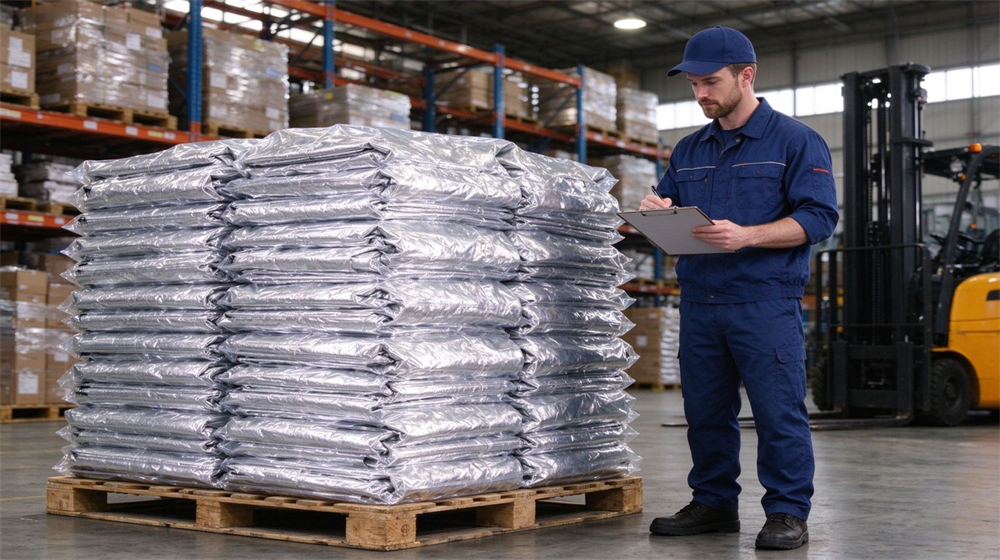
Wholesale deliveries leave the warehouse in vacuum-packed or folded form to protect the aluminized surface during transit. Once the cartons arrive at the customer side, correct storage matters just as much: hanging or flat-folding suits in a dry, dark space keeps the barrier layers serviceable until the next deployment.
Proper rotation keeps the stock fresh: suits that sit longest move out first, and each incoming batch is logged against the same records. Warehouses that follow this discipline always have serviceable units ready for the next call.
Rotation logs also record which batch each suit came from, so the oldest stock always leaves the shelf first and nothing sits past its inspection window.

Additional CBRN Suit Specifications
What is a fire resistant chemical suit?
A dual-protection garment with an aluminized outer layer for heat and flame and a chemical-resistant inner construction for media, built for scenes where fire and chemicals occur together; the heat resistant chemical suit fits this crossover band. It is specified and tested as one integrated garment, not as two suits combined.
When is CBRN protective clothing required?
For CBRN response and industrial fire-leak scenes where heat and chemical agents may combine—tank farm fires, reactor incidents and complex response environments. The hazard list decides it: when both heat and chemical media appear, dual protection fits.
What does the flame retardant hazmat suit protect against?
Radiant heat, flame contact, and acid, alkali and many solvents at working concentrations. Test reports per batch verify actual performance, so the delivered garments are checked against the specification rather than assumed to meet it.
What standards apply to this suit?
It meets GB 24539-2021 and XF 770-2008 for chemical protection and GB/T 33536-2017 for fire-resistant performance. Test reports per batch are provided with the order, and the equivalent classification can be confirmed at quotation.
How is this different from a Level A gas-tight suit?
This suit adds heat and flame protection on top of chemical barriers for fire-leak crossover scenes; a Level A gas-tight suit is fully encapsulating for toxic gas environments with SCBA. The two cover different scenes and are specified by different hazard lists.

What accessories are available with the Flame Resistant CBRN Suit?
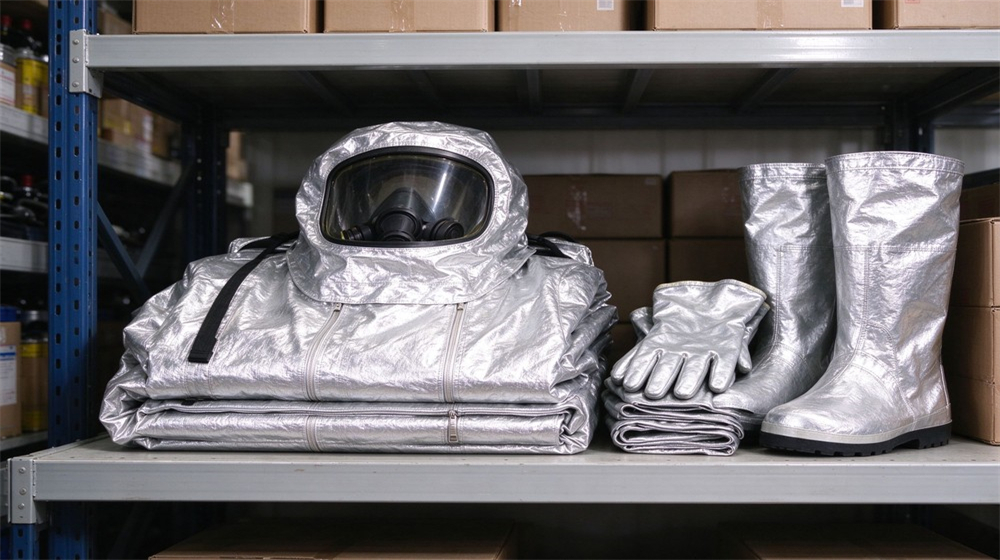
The integrated hood, chemical-resistant gloves and boot covers can be supplied together as a complete system, with spare components available to keep the set ready between rotations.
How should the Flame Resistant CBRN Suit be decontaminated after exposure?
Follow the staged corridor—rinse, remove in sequence, clean per manufacturer procedure, inspect and store. Seams and closures are checked before the next use, and each use is recorded.
Is the Flame Resistant CBRN Suit reusable after decontamination?
Yes, within its rated service it can be cleaned, inspected and reused; each use is recorded and inspected before the next, and worn parts such as gloves or boot covers can be replaced without retiring the suit.
What is the minimum order quantity for the Flame Resistant CBRN Suit?
MOQ varies by configuration and is confirmed at quotation; a sample suit can validate fit and layering first, and the sample approval locks the specification for the batch.
Can we add unit marking or custom logos to the Flame Resistant CBRN Suit?
Yes, custom identification on the suit is available for accountability and training records; the artwork and timeline are confirmed at quotation before production.

Send us your scene scenarios and team size, and we will match the dual-protection configuration to your operation.
Previous :
Aluminized High Temp Coverall | 500-1000°C Radiant Heat FoundryNext :
Class A Gas Tight Hazmat Suit | Fully Encapsulated Level A Suit Deep Blue Firefighting Suit Set, Forest Fire Fighting Specialized, Full-body Protection
This Deep Blue firefighting suit set is specially designed for forest fire fighting, using special flame-retardant fabric that can withstand 700°C open flames in the wild, with a thermal protection value (TPP) of 25CAL/AM2. The vivid Deep Blue color combined with enhanced reflective strips enables identification from 500 meters away in forest smoke. The lightweight design of only 4.5KG does not affect mountain action speed, with a waterproof rating >40KPA, adapting to camping fire fighting and long-term field operations. The anti-plant puncture design increases wear resistance by 50%, making it professional equipment for forest firefighting, mountain rescue, and outdoor fire fighting actions, providing all-around body protection for forest firefighters.
 High-temperature Resistant Firefighting Suit Set, Emergency Rescue, Quick-wear
This high-temperature resistant firefighting suit set is made of professional-grade flame-retardant materials, capable of withstanding extreme temperatures up to 750°C, with a thermal protection value (TPP) of 26CAL/AM2, providing reliable protection for emergency rescue. The innovative quick-wear design allows complete dressing in 40 seconds during emergencies, with hydrostatic pressure resistance >45KPA and excellent breathability. Designed according to ergonomic principles, weighing only 4.8KG, it effectively reduces the burden on rescue personnel and is suitable for high-risk scenarios such as building fires, tunnel rescues, and industrial firefighting, making it an ideal equipment choice for professional firefighting teams.
 Professional Firefighting Suit Set, Flame-retardant Protection, Rescue Essential, 14-3C Certified
This professional firefighting suit set is made of high-grade flame-retardant cotton fabric, 14-3C certified, capable of withstanding extreme temperatures up to 800°C, with a thermal protection TPP value of not less than 28CAL/AM2. The three-layer composite protection structure, with waterproof static pressure resistance >50KPA and breathability >5000G/M²·24H, ensures comprehensive safety for rescue personnel in complex environments such as building fires, forest fires, and special chemical plant fires. Available in three models: 97/02/14, meeting different rescue scenario requirements.
 02 Firefighting Suit Multi-layer Composite Material Rescue Protection
This Type 02 firefighting suit is made of professional flame-retardant materials with excellent heat resistance, fire protection grade meeting international rescue standards, and waterproof puncture resistance rate of 98%. The deep blue body is equipped with eye-catching yellow reflective strips, increasing night visibility by 85%. The complete six-piece configuration provides comprehensive protection for firefighting, forest firefighting, earthquake rescue, and other scenarios, providing reliable protection for 300+ professional rescue teams.
 Forest Fire Rescue Service with Heat-Resistant Design
This professional forest fire rescue service uses flame-retardant heat-resistant material, achieving GB8624-A2 fire rating standard with heat resistance up to 800°C, and features high-visibility reflective strips visible from 300 meters away. It's suitable for emergency rescue scenarios such as forest fires, mountain rescues, and industrial disasters, providing comprehensive personal safety protection. Each set has undergone 10,000 abrasion tests and proven its reliability and safety in over 1,500 rescue operations nationwide.
 Fire Rescue Cap, Aramid Flame-Resistant Material, Forest Fire Emergency
This professional-grade forest firefighting vest and hat set is made of polyester/cotton blended flame-retardant fabric, with reflective visibility up to 300 meters, capable of resisting short-term flame contact, improving protection efficiency by 85%. The bright orange design with double-layer reflective strips complies with international rescue standards, ensuring 360° visibility in smoke and low light environments. Suitable for forest fire fighting, wilderness emergency rescue, post-earthquake sites, and other emergency disaster relief scenarios, providing comprehensive protection for rescue personnel.
Copyright © Custom Disaster - Relief Bedding: Tents, Sleeping Bags, Blankets All Rights Reserved
the professional team to service !


