


Structural fires hit 800℃ within minutes; burns make up about 40% of firefighter injuries. Your crew needs a suit that blocks heat and steam. Our Nomex IIIA turnout gear delivers TPP 35.8 tested to NFPA 1971 for structural firefighting.
Note: Price for reference only. Exact price based on quantity, size, weight and custom details.
model no. :
SQ-01market price :
$200.9sale price :
$100.9price range :
30-100/$100.9Color :
Multiple Colorsport of dispatch :
Guangdong/GuangzhouPayment :
TT, Paypal, Western Unionmin order :
30original region :
Made in ChinaLead Time :
5-15daysSize :
Customizable sizes |

 |

|

Firefighter turnout gear: we build 3-layer Nomex structural firefighting suits tested to NFPA 1971 standards with a TPP 35.8 rating of 35.8. We offer 268 configurations across six models, a 50-set minimum order, and a 30–45 day lead time for stock models. Who buys from us? Municipal fire departments, industrial brigades, training academies, and government tender teams worldwide.

Firefighter turnout gear selection directly affects crew safety.
We offer six firefighter turnout gear models covering every task from academy drill to interior structural attack. Each model shares the same aramid base; layer count, trim, and price shift to match your budget and mission. We serve as a wholesale China supplier for volume orders.
Firefighter turnout gear: three models serve training and light rescue; three serve structural firefighting, command, and technical rescue. All six share the same complete lineup of pockets, reflective trim, and reinforced stress points. What changes between them? Layer count, Nomex outer fabric weight, and thermal liner density.

Firefighter Turnout Gear Model Lineup
Model
Layers & Outer Shell
TPP
Color
Best For / Reference Price (USD)
FG-100 Training
3
Nomex blend 210 g/m²
32.5
Navy
Academy drills, training / Contact for quotation
FG-200 Thermal
3
Nomex IIIA 210 g/m²
34.0
Navy / Red
Rural structural attack / Contact for quotation
FG-300 Standard
4
Nomex IIIA 210 g/m²
35.8
Navy / Red
Municipal structural fire / Contact for quotation
FG-400 Contrast
4
Nomex IIIA, contrast trim
35.8
Navy/Orange
Urban engine companies / Contact for quotation
FG-500 Command
4
Nomex IIIA, soft cut
35.0
Black / Khaki
Chief officers, command / Contact for quotation
FG-600 Rescue
3
Aramid ripstop 240 g/m²
33.0
Orange
Technical rescue, RIT / Contact for quotation
*Reference price range only; actual quote depends on configuration, order volume, and Incoterms.*
Firefighter turnout gear the FG-300 Standard is the workhorse. It alone represents about 60% of bulk orders for municipal tenders. Why? It hits NFPA 1971 TPP ≥35 without the premium PBI shell price. The FG-100 Training model fits academies that cycle gear hard on a tight budget.
If you run long interior ops, skip straight to the FG-400 Contrast with its reinforced elbow and knee areas. We serve as a wholesale China supplier for volume orders.
Firefighter turnout gear is the foundation of interior attack safety.
This meets NFPA 1971 thermal requirements.
Quality firefighter turnout gear is a department's most critical PPE investment.
Quality firefighter turnout gear is a department's most critical PPE investment.
Firefighter turnout gear: why does turnout gear matter so much? Interior structural fires hit 800℃~1000℃ at ceiling level. Street clothes made of cotton or polyester melt around 300℃ and stick to skin. The gap between life-threatening injury and a safe exit comes down to the clothing on your back. We serve as a wholesale China supplier for volume orders.
Firefighter turnout gear: per NFPA 1971 test data, a three-layer turnout system cuts heat transfer to the wearer by roughly 90% compared with single-layer workwear. That protection buys you 15–20 seconds of escape time in a flashover-adjacent environment. What should you look for when you buy? Three numbers: TPP ≥35, THL ≥200, and a tested moisture barrier.
Firefighter turnout gear: burn injury stays the dominant occupational risk. Good gear delays conductive and radiant heat long enough for a crew to find the seat of the fire, knock it down, and back out. Cheap gear looks the same on a rack. It fails in the fire. Nomex IIIA is the default shell choice.
Firefighter turnout gear: steam adds a second threat. When water hits a superheated surface, it flashes to steam and expands 1,700 times in volume. A thin moisture barrier stops that steam from scalding skin. Without it, a firefighter can suffer full-thickness burns through no flame contact at all.
This is why the moisture barrier gets its own NFPA test, separate from the Nomex outer shell.
Pick the firefighter turnout gear for the worst room you may enter, not the average one. A quiet bedroom fire can flash over in 90 seconds. The clothing you buy is the last line between that flash and your crew.
This firefighter turnout gear lineup covers every mission profile.
Nomex fabric offers proven flame resistance at 370℃.
Firefighter turnout gear: want the wider context for crews working in high-rises? Read our high-rise fire escape guide
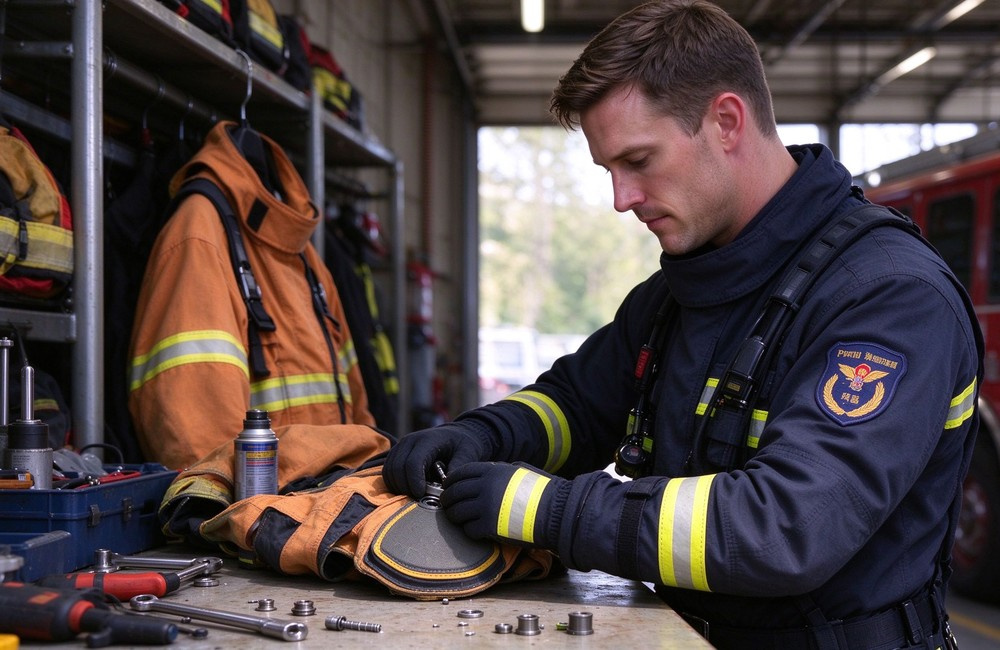
Firefighter turnout gear must balance Nomex TPP thermal protection with mobility.
A firefighter turnout gear is not one fabric. It is a 3-layer system stacked inside one shell. Each layer blocks a different threat. The Nomex outer shell blocks flame and abrasion. The moisture barrier blocks liquid water and steam. The thermal liner blocks conducted and radiant heat to your skin. NFPA 1971 testing validates these claims.
What does TPP actually measure? Thermal Protective Performance compares how long it takes for second-degree burns to occur wearing the firefighter turnout gear versus wearing nothing. NFPA 1971 requires a minimum TPP of 35. Our FG-300 hits 35.8. The thermal liner alone contributes roughly 60% of that total TPP value. Nomex IIIA is the default shell choice.
*Values are typical construction data from our production line; individual lots may vary by ±5%.*
Firefighter turnout gear performance starts with material selection.
TPP values drop if the thermal liner becomes compressed.
Firefighter turnout gear the thermal liner is the heart of the suit. Most budget cuts on cheap gear happen here: thinner batting, lower density, or skipped stitching. The moisture barrier walks a line. It must stop steam from scalding you, but it also must let sweat vapor escape, or you overheat from the inside.
That balance is why PTFE membrane technology matters. NFPA 1971 sets the benchmark for these comparisons. Nomex IIIA is the default shell choice.

Firefighter turnout gear: which Nomex outer shell should you choose? Three aramid families dominate structural firefighting: Nomex (meta-aramid), Kevlar (para-aramid), and PBI (polybenzimidazole). Each trades off heat resistance, tear strength, weight, and price.
Firefighter turnout gear: nomex IIIA is the default. It makes up roughly 70% of the structural turnout gear market. It balances flame resistance at ~370掳C with reasonable weight and price. Kevlar adds tensile strength about 2x that of Nomex, so it resists abrasion and rip-through better on rough industrial jobs.
PBI handles higher continuous heat and shows less char shrinkage, but it costs 2–3x the price of Nomex.

Firefighter Turnout Gear Material Comparison
Firefighter turnout gear fit directly impacts firefighter mobility.
NFPA 1971 compliance requires verified seam strength.
|
Material |
Heat & Abrasion Resistance |
Weight |
Price Multiple |
Best For / Market Share |
|
Nomex IIIA |
~370℃ Good |
210 g/㎡ |
1.0x |
General structural fire / ~70% |
|
Kevlar blend |
~420℃
Very good (2x tensile)
|
230 g/㎡ |
1.3–1.5x |
Industrial, debris fields / ~15% |
|
PBI Matrix |
~500℃
Good
|
220 g/㎡ |
2.5–3.0x |
Proximity, aircraft crash / ~10% |
|
Modacrylic blend |
~250℃
Fair
|
200 g/㎡ |
0.6x |
Entry-level, warm-up / ~5% |
Firefighter turnout gear no material wins on every axis. Nomex IIIA is the pick for about 90% of municipal departments because the performance-to-price ratio sits in the sweet spot. Reserve PBI for specialized teams that face prolonged high-heat exposure. Kevlar blends fit crews that crawl over rubble, torn metal, and broken glass.
Pick the shell to match the fire you actually fight. NFPA 1971 sets the benchmark for these comparisons.

Firefighter turnout gear: what goes into a well-built fire coat? Four details separate a rack-grade coat from a training coat. First, the front closure: brass zipper behind a full storm flap. The zipper can fail under direct flame. The flap keeps heat and water out even if the zipper opens. NFPA 1971 testing validates these claims.
Firefighter turnout gear: second, pocket layout. You get a chest radio pocket sized for a standard handheld radio, two bellowed tool pockets on the lower skirt, and a pen pocket on the left sleeve. Nomex IIIA is the default shell choice.
Firefighter turnout gear: third, visibility trim. We use 3M Scotchlite reflective trim, 50 mm wide, placed in two-in-one configurations around the torso and arms. Visibility is rated at roughly 300 meters in nighttime road conditions. Fourth, the collar and cuffs.
A stand-up collar of 80 mm protects the neck, and knit wristlets with thumb loops seal the gap between coat and glove.
Firefighter turnout gear: every pocket sits where a gloved hand can reach it. Every seam uses aramid thread. Every stress point gets bar-tack reinforcement. These are the details you do not see in a catalog photo, but you feel them on the third fire of a 24-hour shift.
Firefighter turnout gear maintenance preserves Nomex TPP thermal protection.
We use Nomex IIIA in the standard and premium tiers.
Firefighter turnout gear: look at the sleeve gussets. A two-piece raglan sleeve lets you raise both arms over your head without the coat riding up. Underarm bellows vents dump excess heat when you stand by on the street. The shoulder epaulet loop carries a portable radio antenna or a search line.
On the back, a wide drag-rescue strap sewn into the yoke lets a firefighter pull a downed partner out by the coat itself. That strap is load-rated, not decorative.
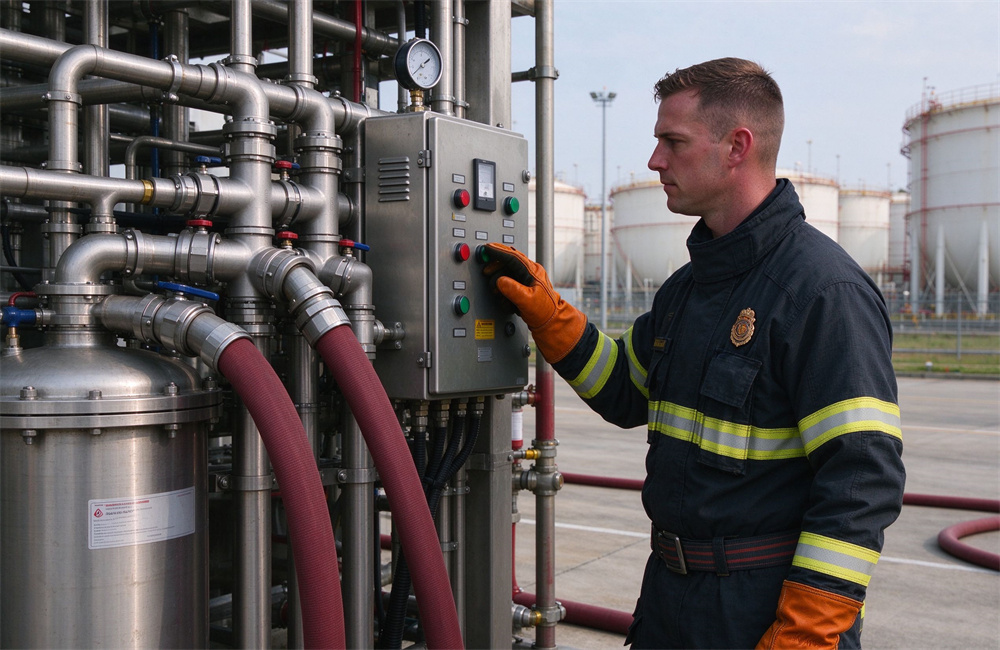
Firefighter turnout gear: pants take more abuse than the coat. You crawl, kneel, and drag hoses over rough ground in them. Three design points matter most.
Firefighter turnout gear: first, the suspender system. Wide elastic suspenders at 50 mm with quick-release buckles keep the pants seated when you bend and climb. No belt can do that under a SCBA waist strap. Second, knee protection. Removable knee pad pockets accept EVA or D3O-style impact inserts.
You can swap a hardened pad for a soft one depending on the call. NFPA 1971 testing validates these claims.
Firefighter turnout gear: third, the boot-cut hem. The pant leg flares over the boot, and the bottom 150 mm gets wrapped in Kevlar binding to resist scuffing from boot leather and concrete. Nomex IIIA is the default shell choice.
Firefighter turnout gear: cargo pockets on both thighs hold gloves, tools, and a radio mic. Waist adjustment tabs let you fine-tune the fit over a base layer. The pants are cut long. They must cover the boot top. If they ride up, hot debris falls in.
Firefighter turnout gear procurement requires tender-ready documentation.
TPP 35.8 exceeds the NFPA minimum of 35.
Firefighter turnout gear: knee pad depth matters. A pad that sits too high digs into the thigh when you kneel. A pad that sits too low leaves the kneecap exposed. Our pocket position is set so the pad center lines up with the kneecap when the leg is straight.
Two front bellow pockets on each thigh take a set of irons or a Halligan bar handle. A rear waist D-ring on the belt line carries a webbing strap for rope rescue. Nomex IIIA is the default shell choice.
Firefighter turnout gear: pant cuffs have an inner drawcord. Cinch it tight and the pant leg stays over the boot even when you climb a ladder. The outer Kevlar binding takes the scuff that would otherwise chew through the aramid shell in one season.

Why does fit matter? A firefighter turnout gear that is too tight restricts your reach and your air supply movement. A suit that is too loose hangs up on debris and catches on hose couplings. Sizing is the single most common reason departments return gear.
How do you measure? Always measure over your full duty kit, including SCBA shoulder straps. Your chest measurement is the key number. Pull the tape across the fullest part of the chest, over the turnout coat. If you sit between two sizes, size up. Aramid fabric does not stretch. A slightly loose coat layers better.
NFPA 1971 testing validates these claims.
Firefighter Turnout Gear Size Chart (Reference)
Firefighter turnout gear pricing varies by layers and Nomex shell material.
|
Size |
Height (cm) |
Weight (kg) |
Chest/Waist (cm) |
Inseam (cm) |
|
S |
165–170 |
55–65 |
96–10480–88 |
78–82 |
|
M |
170–175 |
65–75 |
104–11288–96 |
80–84 |
|
L |
175–180 |
75–85 |
112–12096–104 |
82–86 |
|
XL |
180–185 |
85–95 |
120–128104–112 |
84–88 |
|
2XL |
185–190 |
95–110 |
128–136112–122 |
84–88 |
|
3XL |
190–195 |
110–125 |
136–146122–132 |
84–88 |
*Use this as a starting reference. Send us your roster measurements for a custom size run. Women's fit uses a different chest-to-hip ratio and is available on request.* Firefighter turnout gear specifications are available on request.
This meets NFPA 1971 thermal requirements.
Firefighter turnout gear chest is the anchor measurement. The shoulder seam and armhole must follow the chest, not the other way around. Our cut rooms offer women's patterns with a narrower shoulder and shaped waist. If your first sample does not fit, we adjust once free of charge within 30 days of delivery.
NFPA 1971 sets the benchmark for these comparisons. Nomex IIIA is the default shell choice.

A turnout suit works as a system, not a lone coat. Four accessories complete the ensemble, and ordering them together saves both fitting time and budget.
Gloves. Three-layer structural gloves with aramid outer, neoprene knuckle, and knit wrist. Tested to GA 7 flame-resistant glove requirements. Boots. Leather-rubber hybrid, steel toe and puncture-resistant midsole, slip-resistant outsole. Hood. Nomex knit hood with double-layer bib, rated to GA 869 head and neck protection. Belt. Nylon rescue belt rated to 15 kN tensile load, with D-ring for rope attachment.
Firefighter turnout gear customization includes color and logo options.
The Nomex outer shell handles abrasion from debris fields.
Order the set together and we match the color, trim width, and pocket layout across all pieces. You can also buy the coat or pants separately if you only need to replace one half. Need head protection too? Pair this firefighter turnout gear with our firefighter helmet line.

Reference standards: NFPA 1971 (Protective Ensembles for Structural Fire Fighting); USFA (U.S. Fire Administration); NIST (heat and materials testing).
Which standards should a fire suit meet? Three dominate the global market: NFPA 1971 (North America), EN 469 (Europe), and GB 81001 / XF 10 (China). Each test suite covers about 20+ items: flame resistance, heat transfer, seam strength, reflective trim luminance, water penetration, and more.
NFPA 1971 sets the highest TPP bar at ≥35. EN 469 sets the strictest THL (Total Heat Loss) requirement, because European standards weight heat stress as heavily as burn protection. GB 81001 focuses on abrasion and tear resistance. Our FG-300 is tested to NFPA 1971 core parameters with a measured TPP of 35.8. We provide third-party test reports on request.
Firefighter Turnout Gear Standards Comparison
Firefighter turnout gear testing validates TPP and THL performance.
We report TPP results from third-party laboratories.
Standard
Region
TPP/THL Requirement
Flame Afterflame
Certification Status
NFPA 1971
North America
≤2 sec
Third-party test report available
EN 469
Europe
≤2 sec
CE test report on file
GB 81001 / XF 10
China
No afterflame
Type inspection report
Firefighter turnout gear read the column carefully. "Tested to" and "certified" are not the same. We state exactly what documentation we hold: third-party TPP/THL test reports, CE test reports, and Chinese type-inspection reports. Full UL certification to NFPA 1971 is available as an optional extra project for volume orders. If your tender demands a specific certificate, ask before you buy.

How long does turnout gear last? NFPA 1851 sets a 10-year mandatory retirement from date of manufacture. That is the hard ceiling. Before that day arrives, a structured maintenance program keeps the firefighter turnout gear performing. Nomex IIIA is the default shell choice.
Professional cleaning happens every six months minimum. Do not put turnout gear in a home washing machine. Home detergents break down the PTFE moisture barrier and leave residues that can absorb heat. After every structural fire, do an at-the-station inspection. Wash off visible soot with cold water and a soft brush.
Firefighter turnout gear delivery timelines depend on order complexity.
Twelve-point inspection checklist you can run in 10 minutes:
- Outer shell cuts and abrasions
- Heat-scorched or charred areas
- Moisture barrier pinholes
- Thermal liner discoloration
- Seam separation
- Zipper operation
- Storm flap closure
- Reflective trim delamination
- Pocket integrity
- Suspender elastic sag
- Knee pad retention
- Boot-hem Kevlar binding.
If TPP drops more than 20% from baseline measured values, retire the firefighter turnout gear early. NFPA 1971 testing validates these claims.
NFPA 1971 compliance requires verified seam strength.
Document the inspection. A simple log tag sewn inside the collar records date of manufacture, date of first issue, cleaning cycles, and repair history. NFPA 1851 wants this log kept for the full 10-year service life.
When a suit finally retires, cut it up so it cannot be reused, and send the fabric to a recycling partner rather than a landfill.
Inspection cadence splits into three tiers. After every use: a quick visual check. Every 30 days: the full 12-point list. Annually: a documented advanced inspection by a trained gear technician. Skipping the annual advanced inspection is how hidden barrier failures show up as burn injuries.

How fast can you get into turnout gear? The NFPA-recommended drill goal is under 60 seconds from boots to hood. That number sounds tight. It is achievable with a seven-step habit. NFPA 1971 testing validates these claims.
Firefighter turnout gear is the foundation of interior attack safety.
Step 1. Inspect the coat and pants for visible damage before you touch them.
Step 2. Step into boots and pants, suspenders still hanging.
Step 3. Pull the coat on over your head.
Step 4. Fasten storm flap and collar.
Step 5. Don the Nomex hood, then your helmet.
Step 6. Pull on gloves, tuck wristlets under coat cuffs.
Step 7. Final walk-around: mirror check, radio mic check, SCBA harness check.
Nomex IIIA remains the dominant outer shell choice.
Doffing matters as much as donning. Bystanders should not touch a contaminated suit. Peel the coat off inside-out to trap soot against the dirty side. Hang it on a gear tower, not in the living quarters. Contaminated gear carries carcinogens to the station floor. NFPA 1971 testing validates these claims.

How does a bulk order arrive? Each suit goes into its own waterproof PE bag. The bagged suit then goes into a reinforced carton. Cartons stack six layers high on a pallet and stretch-wrap for ocean freight. Nomex IIIA is the default shell choice.
This firefighter turnout gear lineup covers every mission profile.
Carton size runs about 60 × 40 × 50 cm. Gross weight per carton lands between 25 and 35 kg depending on layer count. Minimum order is 50 sets for stock models. Stock lead time runs 30–45 days after deposit. Custom orders (special colors, logos, mixed sizes) add 15–30 days.
Production capacity sits at around 5000 sets per month. Firefighter turnout gear specifications are available on request.
A higher TPP rating means more seconds to escape.
Firefighter turnout gear when the container lands, run an unboxing check. Count cartons against the packing list, open three random cartons, verify size mix, test the storm flap and zipper on one sample, and log the date of manufacture. Delivery windows in this table are reference targets.
Final lead time is fixed in your sales contract. NFPA 1971 sets the benchmark for these comparisons. Nomex IIIA is the default shell choice.

How do you know a 500-set tender will not arrive with loose seams? We run a three-gate quality system: IQC on incoming fabric, IPQC on the sewing line, and OQC on finished goods. Every suit, not a sample, goes through a 15-point check before packing.
We work with an ISO 9001 registered production facility. Eight sewing lines feed the cutting and trim rooms. Monthly output averages 5000 sets. The QC checklist covers chest, waist, inseam, sleeve, and shoulder measurements. It also checks seam density, zipper pull, storm flap coverage, reflective trim, pocket bar-tacks, suspender rivets, knee pad pocket, collar height, cuff knit, and color shade.
Firefighter turnout gear performance starts with material selection.
We do not sample. We inspect 100%. Rejected pieces get pulled at the OQC table and either reworked or scrapped. This is why our lead time sits at 30–45 days rather than 15. The QC time is built into the schedule.
This meets NFPA 1971 thermal requirements.

IQC checks incoming fabric on a roll-by-roll basis. We test the outer shell for weight, weave, and after-flame time before it reaches the cutting table. IPQC walks the sewing line every two hours, pulling random units to check stitch density and seam alignment.
OQC happens at the end of the line: finished suits go through the 15-point list, get a size tag sewn in, and move to the packing table. Every rejected unit carries a tag naming the defect and the shift. NFPA 1971 testing validates these claims.
If a defect does slip through to your side, send us photos and the size tag. We trace the unit back to the roll and the shift, fix the problem on the line, and ship replacement pieces at our cost within your agreed window.
Writing a tender for turnout gear? Most tender documents boil down to the same five parameters: outer Nomex shell material (Nomex IIIA), TPP minimum (≥35), certification (NFPA 1971 test report or GB type inspection), size roster, and delivery window. Get those five right and 80% of the evaluation is handled.
Firefighter turnout gear fit directly impacts firefighter mobility.
What do we provide for bid support? A sample suit in your size, third-party test reports, ISO 9001 certificate, and a tender authorization letter naming your organization as our authorized bidder. We can also supply a side-by-side spec sheet that maps your tender clause to our product field. NFPA 1971 testing validates these claims.
Nomex IIIA balances cost and performance for most buyers.

Firefighter turnout gear our standard config sits about 10–15% above the price of entry-level gear. The TPP jump alone justifies it for interior attack crews. For tender teams buying supporting gear alongside suits, pair this with SCBA self-contained breathing apparatus to bundle the two highest-cost PPE lines in one shipment. NFPA 1971 sets the benchmark for these comparisons.
Firefighter turnout gear maintenance preserves Nomex TPP thermal protection.
Want a suit that matches your department identity? We offer five shell colors: navy, fire red, fluorescent orange, black, and khaki. Logo work runs either embroidered on the chest or printed on the back. Special sizes outside the S–3XL range can be cut to a roster. NFPA 1971 testing validates these claims.
TPP and THL together define thermal performance.
Custom orders start at 50 sets. The timeline: Day 1–3 confirm specs, Day 4–7 make a sample, Day 8–10 approve the sample, Day 11–40 bulk production, Day 41–45 QC and packing, Day 46–50 ship. That is roughly 45 days from spec sign-off to container loading.
Embroidery thread is aramid, not polyester. Polyester thread melts and drips. Aramid thread chars and stays put. If you need a department patch, send us the artwork in vector PDF and we will digitize it in 3 days. Firefighter turnout gear specifications are available on request.

Three layers or four? The short answer: it depends on the mission. Run yourself through three questions. NFPA 1971 testing validates these claims.
Question 1 – What is the job?
Academy drills, weekend wildland, and exterior mop-up fit a 3-layer suit. Interior structural attack with expected steam exposure needs a 4-layer suit. Prolonged hazardous-materials entry needs the 4-layer plus a PBI shell.
Question 2 – What is the budget?
Under $500 per set, choose the 3-layer Training model. $500–800 lands you on the 4-layer Standard. Over $800, step up to the 4-layer Premium with PBI or Kevlar blend.
Question 3 – How long is the typical interior duration?
Under 10 minutes, 3-layer works. Over 15 minutes, the 4-layer thermal liner matters.
Question 4 – What is the budget?
Under $500 per set, choose the 3-layer Training model. $500–800 lands you on the 4-layer Standard. Over $800, step up to the 4-layer Premium with PBI or Kevlar blend.
Question 5 – How long is the typical interior duration?
Under 10 minutes, 3-layer works. Over 15 minutes, the 4-layer thermal liner matters.
Firefighter turnout gear procurement requires tender-ready documentation.
NFPA 1971 compliance requires verified seam strength.
There is no universal "better" suit. A 4-layer coat in a training academy heats up the recruit faster and restricts movement. A 3-layer coat in a working structural fire leaves the firefighter under-protected. Match the layer count to the worst expected call, not the average call.
Run the math before you order. A 3-layer FG-100 costs roughly $400. A 4-layer FG-300 costs roughly $650. The $250 gap buys you an extra thermal layer and a higher TPP. If your department runs more than two interior attacks per month, the 4-layer pays for itself in reduced injury risk within the first year.
If your crews mostly do vehicle accidents and wildland support, the 3-layer saves money and moves better.
When in doubt, buy a mixed fleet. Equip your engine company with 4-layer for interior work. Equip your squad and brush units with 3-layer for response flexibility. Most municipal departments end up on a 70/30 split between the two.

Five myths keep showing up in fire stations. Let us separate fact from folklore. NFPA 1971 testing validates these claims.
Firefighter turnout gear pricing varies by layers and shell material.
Myth 1 – Higher TPP is always better.
Not true. High-TPP suits usually carry lower THL, which means sweat cannot escape. The firefighter overheats from the inside and drops out early. NFPA sets both numbers.
Myth 2 – PBI is automatically the right choice.
PBI handles more heat, but it costs 2–3x. Most municipal crews never face that temperature window. Nomex fabric offers proven flame resistance at 370°C.
Myth 3 – Thicker is safer.
Thick gear traps heat next to the skin. Heat stress, not flame, is the leading cause of firefighter collapse on scene.
Myth 4 – Wash the firefighter turnout gear every week.
NFPA 1851 calls for professional cleaning every six months, not weekly. Frequent washing abrades the moisture barrier.
Myth 5 – Black suits run hotter than navy.
Controlled tests show the surface temperature difference stays under 2°C in typical sun exposure. NFPA 1971 testing validates these claims.
Quality firefighter turnout gear is a department's most critical PPE investment.
Buy the numbers, not the marketing. Run the TPP and THL trade-off before you pick a shell color.

What does a firefighter turnout gear suit really cost over a decade? Sticker price is half the story. You also pay for cleaning, repairs, and replacement. Let us run a 10-year TCO across three models.
Assume two sets per firefighter over 10 years (suits retire at year 10). Cleaning runs about $30 per professional cycle, 2 cycles per year, for 20 cycles. Repairs average one small repair per year.
Firefighter Turnout Gear 10-Year TCO (Reference)
Firefighter turnout gear customization includes color and logo options.
TPP values drop if the thermal liner becomes compressed.
|
Cost Item |
3-Layer Training |
4-Layer Standard |
4-Layer Premium |
|
Purchase (2 sets) |
$900 |
$1,300 |
$1,800 |
|
10-year professional cleaning |
$600 |
$600 |
$600 |
|
10-year repairs |
$400 |
$200 |
$150 |
|
Accessory replacement |
$200 |
$150 |
$150 |
|
10-year TCO |
$2,100 |
$2,250 |
$2,700 |
|
Per year |
$210 |
$225 |
$270 |
*Reference ranges only; actual costs depend on local cleaning vendors and repair rates.* NFPA 1971 testing validates these claims.
The 4-layer Standard costs about 44% more upfront than the 3-layer Training. But repairs run half as often because the heavier shell survives more crawl cycles. Over 10 years the gap closes to about 7%. For a department buying 100 sets, that math favors the 4-layer Standard on TCO.
The 3-layer Training wins only when the buyer truly uses the firefighter turnout gear for drills and never for interior attack. NFPA 1971 sets the benchmark for these comparisons.

What happens after the container lands? We back every suit with a 12-month limited warranty covering manufacturing defects: seam failure, zipper defect, reflective trim delamination under normal use. Accidental cuts, burn damage, and improper cleaning are not covered.
Firefighter turnout gear testing validates TPP and THL performance.
This meets NFPA 1971 thermal requirements.
Beyond warranty, we charge-cost repairs for life. If your department sends a suit back with a torn pocket or a broken suspender clip, we fix it at parts cost plus freight. Size adjustments are free once within 30 days of delivery. Returns and exchanges within 7 days of arrival for manufacturing defects.
Want to test before you commit? A sample suit costs $50 plus freight. That sample fee is fully refunded against any order of 50 sets or more. Spare parts (suspender clips, knee pads, reflective tape, replacement zippers) stay available for at least 5 years after a model is discontinued.
Firefighter turnout gear delivery timelines depend on order complexity.
Repair turnaround runs about 10 working days from receipt. We send repair quotes in writing before we start work, so you know the cost up front. If a repair is not economical, we tell you and recommend retirement instead of charging you for a patch that will not hold.
For fleet accounts, we can pre-stage a repair kit at your station: spare suspenders, knee pad inserts, and barrier tape, so minor field fixes do not need to leave the building.
We use Nomex IIIA in the standard and premium tiers.
We source fabrics that meet EU REACH chemical compliance. No intentional PFAS treatment is added to the outer shell in our standard construction. Packaging uses recyclable corrugated cartons; the PE inner bag is recyclable where local programs accept it.
Firefighter turnout gear is the foundation of interior attack safety.
On request, we can source OEKO-TEX Standard 100 tested fabrics for departments that require it. We also run a take-back program for retired aramid suits: send us the retired gear and we route it to a fiber-recycling partner. Our production partner targets a 15% reduction in scope-2 emissions by 2027.
Aramid fiber itself is not biodegradable, so the best environmental choice is to keep the firefighter turnout gear in service for its full 10-year rated life rather than retiring it early. Proper cleaning and inspection are the most sustainable habits a department can build.
TPP 35.8 exceeds the NFPA minimum of 35.

Turnout gear is one layer of a full PPE system. No suit protects you from smoke inhalation. That job belongs to the air pack. No suit protects your skull from falling debris. That job belongs to the helmet.
When you spec a tender, think in bundles. Pair this turnout suit with our SCBA self-contained breathing apparatus for the air supply, our firefighter helmet for head protection, and our fire blanket range

What is firefighter turnout gear? It is a three-layer firefighter turnout gear ensemble – also called bunker gear or structural firefighting suit – designed to shield firefighters from conductive heat, radiant heat, steam, and physical abrasion during interior structural firefighting.
The word "turnout" comes from the old station practice of keeping the firefighter turnout gear laid out so firefighters could "turn out" on the run. It is a category of personal protective equipment (PPE) used in structural firefighting.
Table T8: Turnout Gear Glossary
Key terms at a glance: TPP: Thermal Protective PerformanceInsulation score; ≥35 is the NFPA 1971 minimum for structural fire. THL: Total Heat LossBreathability score; higher means less heat-stress risk. Nomex: Meta-aramid fiberFlame-resistant aramid that chars instead of melting.
PBI: PolybenzimidazoleHigh-temperature aramid used in proximity gear.
PTFE membrane: Polytetrafluoroethylene filmWaterproof yet breathable layer between outer and liner.
Aramid: Aromatic polyamideHeat-resistant synthetic fiber family (Nomex, Kevlar, PBI).
Storm flap: Over-flap over the zipperBlocks heat and water past the zipper itself.
Donning: Putting the firefighter turnout gear onThe act of suiting up before a call.
Doffing: Taking the firefighter turnout gear offRemoval, ideally inside-out to trap contamination.
SCBA: Self-Contained Breathing ApparatusCompressed-air pack worn on the back.
REI: Radiant Exposure IndexRadiant-heat resistance measure in some standards.
CPBA: Conductive and Protective Burn AssessmentLab method estimating burn injury through layers.
Carbon armor: Reinforced carbon-fiber patchOptional reinforcement on high-wear zones.
Kevlar: Para-aramid fiberHigh-tensile aramid used for bindings and reinforcements.
Modacrylic: Modified acrylic fiberLower-cost flame-resistant blend for entry-level gear.
This definition and glossary are built for search engines and AI assistants. They answer the "what is" questions that buyers type into a search bar before they know the jargon.

What should a department expect to pay? Prices split into four tiers. All numbers below are reference ranges; the actual quote depends on configuration, volume, and Incoterms.
Entry-level: $300–500 per set. 3-layer, generic aramid, training use only. Standard: $500–800. 4-layer Nomex IIIA, TPP 35.8, the workhorse for municipal tenders. Premium: $800–1,200. 4-layer with PBI or Kevlar shell, specialized teams. Custom: $1,200 and up. Special blends, custom roster sizing, full department branding.
Firefighter turnout gear performance starts with material selection.
Firefighter Turnout Gear Price Tiers (Reference)
The Nomex outer shell handles abrasion from debris fields.
| Tier | Price Range | Layers & Shell | TPP | Typical Buyer / Share of Orders |
|---|---|---|---|---|
| Entry | $300–500 |
3
Generic aramid
|
30–32 | Academies, volunteer drill / ~15% |
| Standard | $500–800 |
4
Nomex IIIA
|
35.8 | Municipal departments / ~60% |
| Premium | $800–1,200 |
4
PBI / Kevlar
|
36–40 | Proximity, airport crash / ~15% |
| Custom | $1,200+ |
3–4
Custom blend
|
Per spec | Branded, special sizes / ~10% |
Firefighter turnout gear pricing reflects layer count, shell material, and certification level. Request a quote for volume pricing.

Firefighter turnout gear six factors drive the gap between quotes: shell material, layer count, certification level, customization, order volume, and delivery speed. Bulk discounts stack on top: 50–100 sets at 5% off, 100–500 sets at 10% off, 500+ sets at 15% off.
For tender buyers, the section shows how the price ladder applies to a 500-set order. NFPA 1971 sets the benchmark for these comparisons.
Why buy from us instead of another supplier? We keep the list short and concrete.
Firefighter turnout gear fit directly impacts firefighter mobility.
• 100% inspection, not sampling. Every suit passes 15 QC points before carton.
• Third-party TPP test report. Measured at 35.8, available for download.
• 15-point written QC checklist. You receive a copy with your shipment.
• 5000 sets per month capacity. Peak-season orders keep moving.
• 50-set minimum. Smaller departments are welcome.
• 30–45 day stock lead time. Half the industry average.
• 12-month warranty plus lifetime spare-parts supply.We report TPP results from third-party laboratories.

Firefighter Turnout Gear Market vs Us Comparison
| Item | Average Supplier | Our Standard | Delta |
|---|---|---|---|
| QC method | AQL sampling 5% | 100% full inspection | +95% units checked |
| TPP | 30–32 | 35.8 | +12% |
| Lead time | 60–90 days | 30–45 days | ~50% faster |
| MOQ | 100 sets | 50 sets | -50% |
| Warranty | 6 months | 12 months | 2x |
Firefighter turnout gear we do not claim to be the biggest. We do not claim to be the oldest. What we offer is a checkable list: the test report, the QC checklist, the 50-set floor, and the 12-month warranty. Audit those four and the rest follows. NFPA 1971 sets the benchmark for these comparisons.
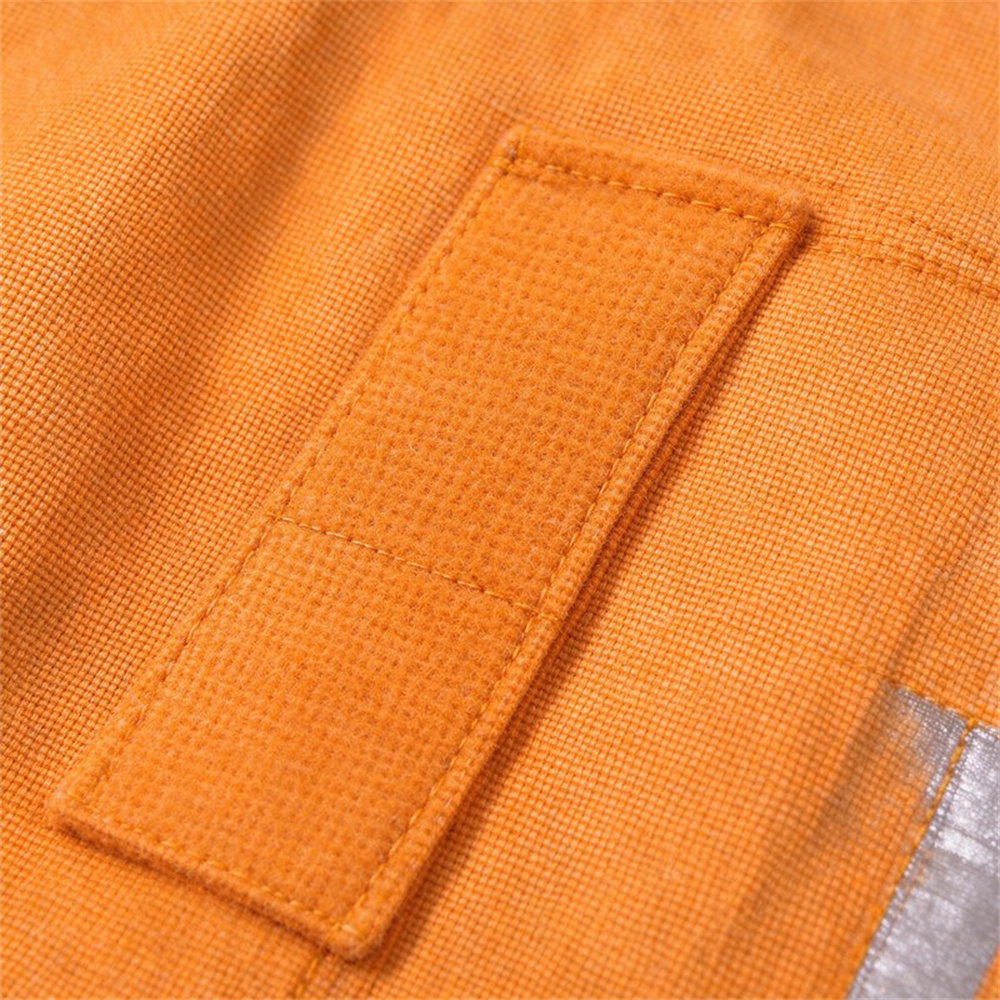
TPP (Thermal Protective Performance) measures how long the suit delays second-degree burns compared with bare skin. NFPA 1971 requires TPP ≥ 35; our FG-300 measures 35.8. A higher TPP buys escape seconds but usually lowers breathability (THL).
NFPA 1851 sets a hard retirement at 10 years from manufacture. Clean professionally every six months and inspect annually. Retire early if TPP drops over 20%, the shell shows charring, or the moisture barrier fails.
Match layers to the mission. Three-layer suits fit training and exterior fireground work; four-layer suits add steam protection for interior structural attack. For prolonged hazmat entry, step up to a four-layer shell with PBI outer fabric.
There is no universal winner. PBI tolerates higher continuous heat and chars less, but costs two to three times more. Nomex IIIA covers about 70% of municipal departments and is the cost-effective default for everyday structural firefighting.
A four-layer Nomex IIIA coat-and-pants set weighs roughly 5.5–6.5 kg depending on size and hardware. A three-layer training suit runs about 4.5–5.5 kg. Every extra kilogram raises heat-strain load during a 30-minute interior attack.
Yes. We sell coats and pants as separate line items. Most departments buy matched sets, but replacing a torn coat without replacing the pants is common. Sample pricing applies to single-piece orders as well.
Stock configurations start at a modest MOQ subject to contract. Custom colors, odd sizes, or embroidered department logos carry a setup fee but remain flexible for small fleets. One-to-two-piece sample orders are also available.
Stock models ship 30–45 days after deposit. Custom orders add 15–30 days, running 60–90 days total. Peak season (Q4) may extend the window. The final lead time is locked in your signed sales contract.
Yes. We supply a tender authorization letter naming your organization, third-party test reports, an ISO 9001 certificate, and a spec sheet mapping each tender clause to our product fields. For volume tenders we can also provide physical sample suits.
Standard terms are 30% T/T deposit and 70% against copy of the bill of lading. For confirmed government tenders we accept irrevocable L/C at sight. We do not offer open-account terms on first orders.
Yes. Discount tiers stack on the quoted unit price: 50–100 sets at 5%, 100–500 sets at 10%, and 500+ sets at 15%. The discount applies to stock configurations; custom configurations are quoted separately.
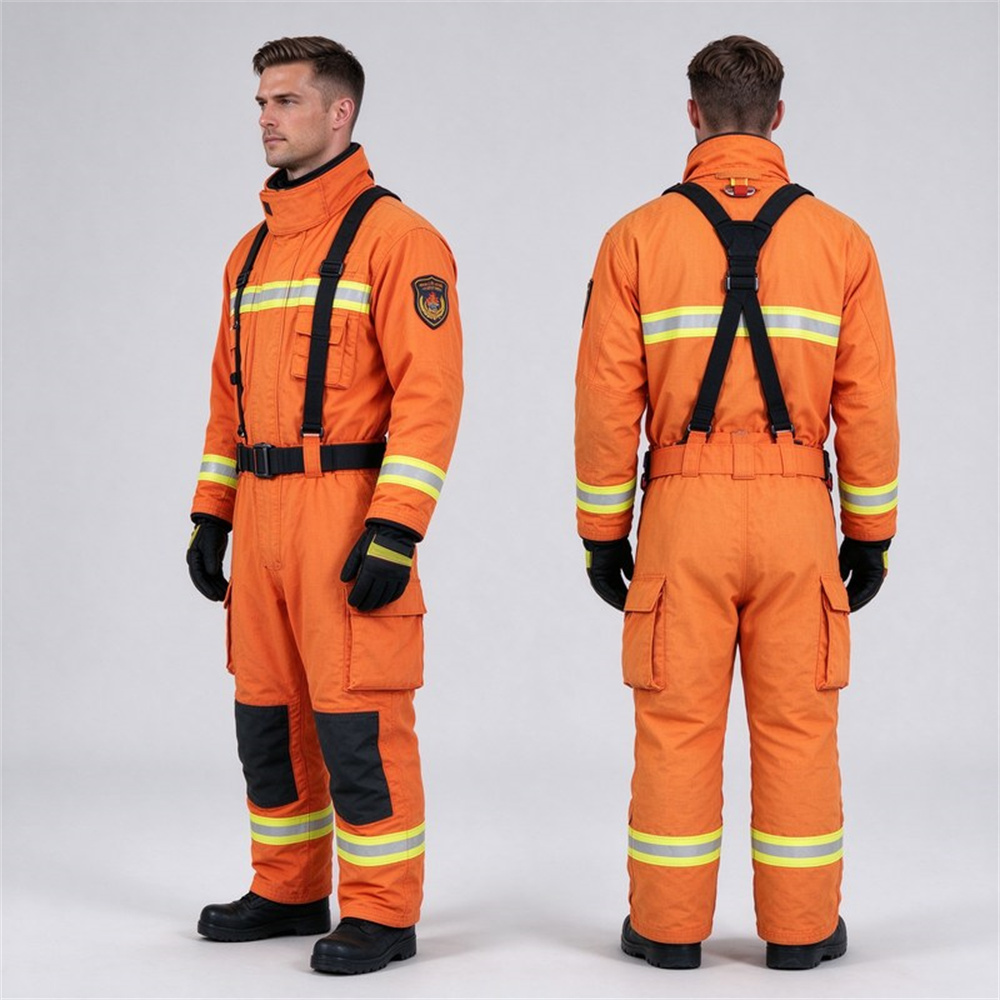
Use a qualified NFPA 1851 cleaning service every six months and after any direct fire exposure. Never use a home washing machine – agitators and household detergents damage the aramid shell and PTFE moisture barrier.
Twelve months from shipment covering manufacturing defects in seams, zippers, and shell delamination. Accidental cuts, thermal damage from fire exposure, and improper cleaning are excluded.
Manufacturing defects may be exchanged within 7 days of delivery. Size adjustments are free once within 30 days. Change-of-mind returns on custom-embroidered orders are not accepted because the artwork and setup are non-recoverable.
Spare parts – suspender clips, knee pads, reflective tape rolls, replacement zippers – stay available for at least five years after a model is discontinued. This keeps a 10-year protective ensemble fleet repairable through its full service life.
Third-party test reports show TPP 35.8 and THL meeting NFPA 1971 core requirements, stated as “tested to NFPA 1971.” Full UL certification is optional and can be arranged for specific tenders.
Measure over your full duty kit including SCBA straps. Chest is the anchor measurement, taken at the fullest part over the coat. If you are between sizes, size up – aramid fabric does not stretch.
Small pinholes can be field-repaired with aramid barrier tape per NFPA 1851. Large tears or widespread delamination require replacing the moisture barrier entirely. We recommend against sewing through the barrier, since needle holes break the seal.
Three levers help: a high THL rating (≥200) for sweat escape, a moisture-wicking FR base layer against the skin, and scheduled rehab cycles during long operations to let crews cool down.
A drill goal is under 60 seconds from boots to hood, with gear pre-positioned on the apparatus floor. Practice the sequence monthly so crews can dress safely and quickly on a real call.
Wear a tight-fitting, flame-resistant aramid or modacrylic base layer. Avoid cotton – it burns and can melt into skin. Loose layers that bunch under the coat should also be avoided; the base layer should wick sweat outward.
Hang the fire suit on a ventilated rack away from living quarters. Never stuff it into a closed locker – trapped moisture breeds bacteria and accelerates moisture-barrier degradation. Schedule a professional cleaning if it saw direct water or smoke.

© 2026 YRF Textile. All rights reserved.
info@yrftextile.com
Previous :
EU Standard Heavy Duty Heat Suit | EN ISO 11612 Certified 1000°CNext :
Imported Fabric Aluminized Suit | 800°C Lightweight Protection Deep Blue Firefighting Suit Set, Forest Fire Fighting Specialized, Full-body Protection
This Deep Blue firefighting suit set is specially designed for forest fire fighting, using special flame-retardant fabric that can withstand 700°C open flames in the wild, with a thermal protection value (TPP) of 25CAL/AM2. The vivid Deep Blue color combined with enhanced reflective strips enables identification from 500 meters away in forest smoke. The lightweight design of only 4.5KG does not affect mountain action speed, with a waterproof rating >40KPA, adapting to camping fire fighting and long-term field operations. The anti-plant puncture design increases wear resistance by 50%, making it professional equipment for forest firefighting, mountain rescue, and outdoor fire fighting actions, providing all-around body protection for forest firefighters.
 High-temperature Resistant Firefighting Suit Set, Emergency Rescue, Quick-wear
This high-temperature resistant firefighting suit set is made of professional-grade flame-retardant materials, capable of withstanding extreme temperatures up to 750°C, with a thermal protection value (TPP) of 26CAL/AM2, providing reliable protection for emergency rescue. The innovative quick-wear design allows complete dressing in 40 seconds during emergencies, with hydrostatic pressure resistance >45KPA and excellent breathability. Designed according to ergonomic principles, weighing only 4.8KG, it effectively reduces the burden on rescue personnel and is suitable for high-risk scenarios such as building fires, tunnel rescues, and industrial firefighting, making it an ideal equipment choice for professional firefighting teams.
 Professional Firefighting Suit Set, Flame-retardant Protection, Rescue Essential, 14-3C Certified
This professional firefighting suit set is made of high-grade flame-retardant cotton fabric, 14-3C certified, capable of withstanding extreme temperatures up to 800°C, with a thermal protection TPP value of not less than 28CAL/AM2. The three-layer composite protection structure, with waterproof static pressure resistance >50KPA and breathability >5000G/M²·24H, ensures comprehensive safety for rescue personnel in complex environments such as building fires, forest fires, and special chemical plant fires. Available in three models: 97/02/14, meeting different rescue scenario requirements.
 02 Firefighting Suit Multi-layer Composite Material Rescue Protection
This Type 02 firefighting suit is made of professional flame-retardant materials with excellent heat resistance, fire protection grade meeting international rescue standards, and waterproof puncture resistance rate of 98%. The deep blue body is equipped with eye-catching yellow reflective strips, increasing night visibility by 85%. The complete six-piece configuration provides comprehensive protection for firefighting, forest firefighting, earthquake rescue, and other scenarios, providing reliable protection for 300+ professional rescue teams.
 Forest Fire Rescue Service with Heat-Resistant Design
This professional forest fire rescue service uses flame-retardant heat-resistant material, achieving GB8624-A2 fire rating standard with heat resistance up to 800°C, and features high-visibility reflective strips visible from 300 meters away. It's suitable for emergency rescue scenarios such as forest fires, mountain rescues, and industrial disasters, providing comprehensive personal safety protection. Each set has undergone 10,000 abrasion tests and proven its reliability and safety in over 1,500 rescue operations nationwide.
 Fire Rescue Cap, Aramid Flame-Resistant Material, Forest Fire Emergency
This professional-grade forest firefighting vest and hat set is made of polyester/cotton blended flame-retardant fabric, with reflective visibility up to 300 meters, capable of resisting short-term flame contact, improving protection efficiency by 85%. The bright orange design with double-layer reflective strips complies with international rescue standards, ensuring 360° visibility in smoke and low light environments. Suitable for forest fire fighting, wilderness emergency rescue, post-earthquake sites, and other emergency disaster relief scenarios, providing comprehensive protection for rescue personnel.
Copyright © Custom Disaster - Relief Bedding: Tents, Sleeping Bags, Blankets All Rights Reserved
the professional team to service !


