


Our aluminized heat protective suit adopts seven-layer Costmir fabric, offering 1000°C radiant heat resistance and reflecting up to 92% radiant heat. It resists molten splash for steel mill, foundry and glass furnace hot work. Certified to EN 407 and NFPA 2113. Available in multiple sizes, reversible design optional, bulk wholesale and custom branding for industrial safety procurement.
Note: Price for reference only. Exact price based on quantity, size, weight and custom details.
model no. :
XFF-01Brand:
YRFmarket price :
$119.8sale price :
$59.9price range :
30-100/$59.9Color :
Multiple Colorsport of dispatch :
Guangdong/GuangzhouPayment :
TT, Paypal, Western Unionmin order :
30original region :
Made in ChinaLead Time :
5-15daysAluminized Heat Suit | 1000°C Radiant Protection for Steel Mills
Buying aluminized heat protective suits for your steel mill and foundry team? You're not buying fabric — you're buying 1000°C radiant heat protection with multi-layer costmir fabric that reflects 95% of radiant heat. This wholesale bulk supply page covers full specifications, sizing charts, certification details, and factory pricing for industrial safety procurement teams worldwide.
 |

|
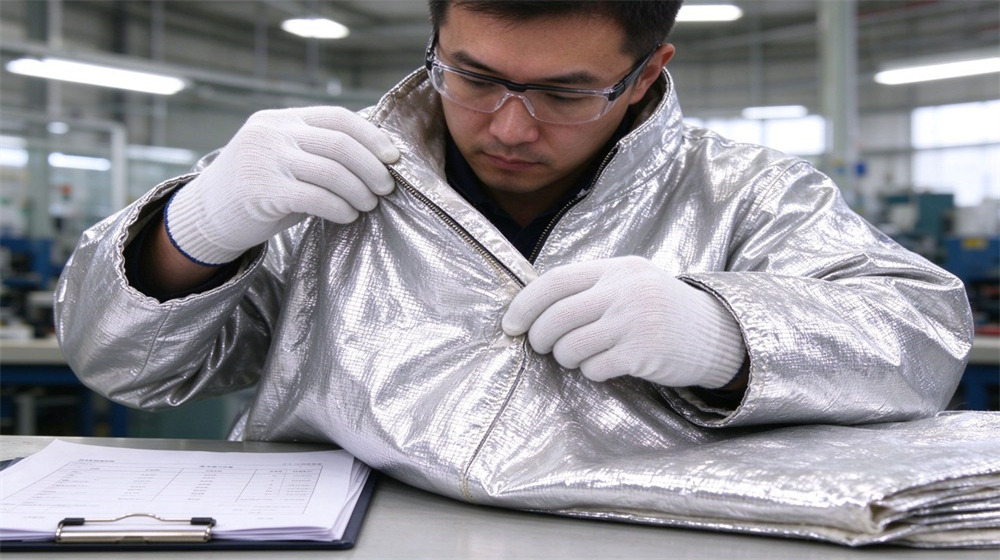
A suit without certification is a gamble. When you buy an aluminized fire suit for a steel plant, the test report tells you exactly how much heat it can block and for how long. Standards like EN 407 and NFPA 2113 define the temperature classes and the way reflectivity is measured. Read the report before you sign the order, and keep it on file for safety audits. An aluminized suit certification document is not paperwork, it is proof that your workers are actually protected.
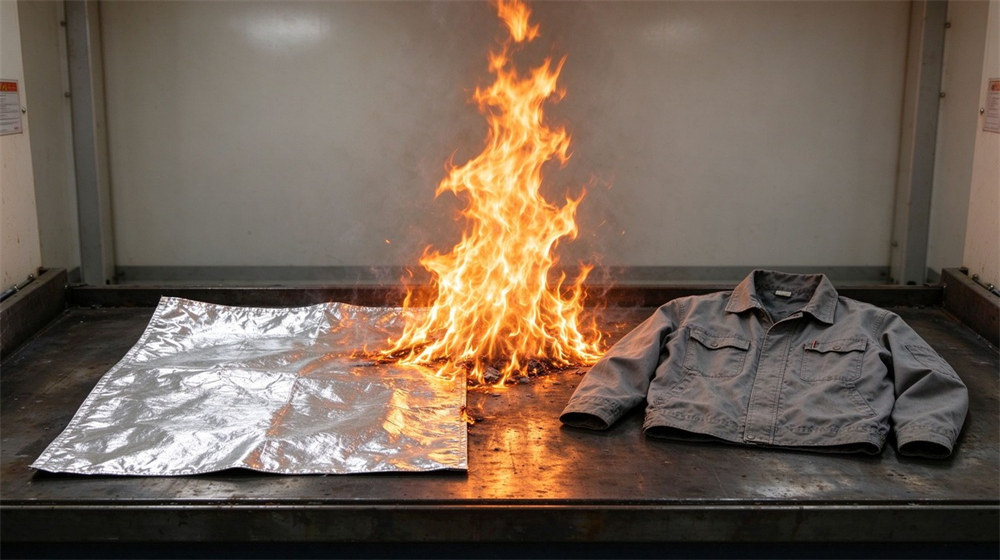
The fabric decides everything. A standard aluminized suit may look identical to a premium one from three meters away, but the two behave very differently on a hot shift. Costmir® aluminized fabric holds a smoother reflective coating, more insulation layers, and tighter stitching than ordinary grades. That difference shows up as longer service life, less heat soak-through, and fewer replacement orders. When you compare prices, compare the reflectivity rating, the fabric weight, and the number of layers, not just the tag.
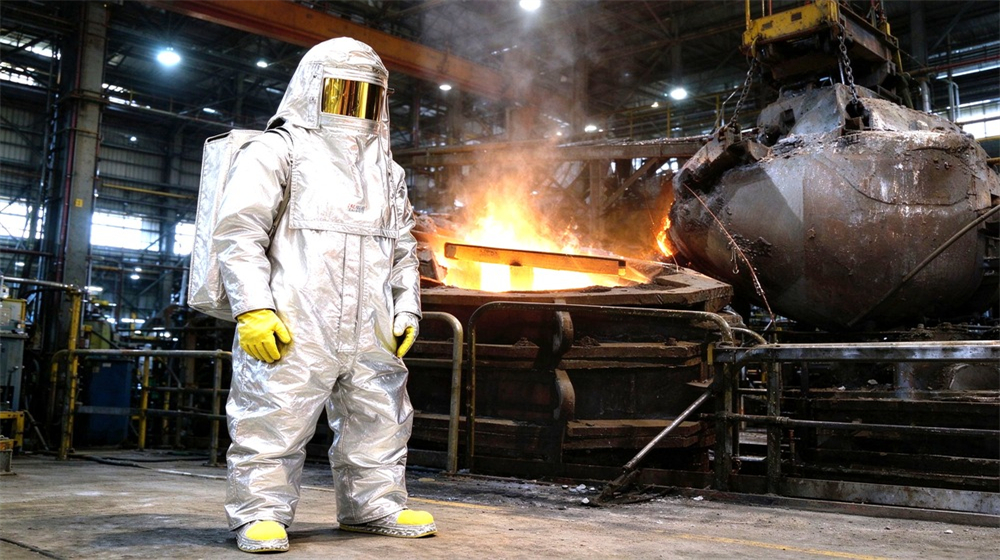
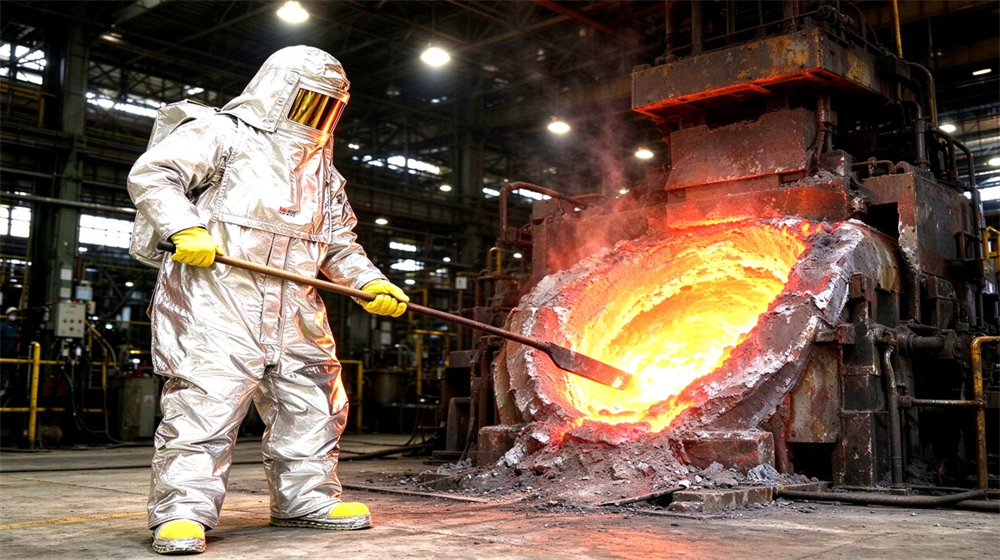
Picture a casting bay at pouring time. The ladle swings over the floor, and molten metal glows below. A foundry worker in a flame resistant aluminized coverall stands closer to that heat than anyone else in the building. The aluminized outer layer bounces most of the radiant heat away, while the insulating core slows the rest. For furnace front protection suit work, that reflected heat is the difference between a safe pour and a burn injury.
One suit is only the start of a protection system. Gloves guard hands near furnace openings, goggles stop glare, and heat resistant boots protect feet on hot floors.
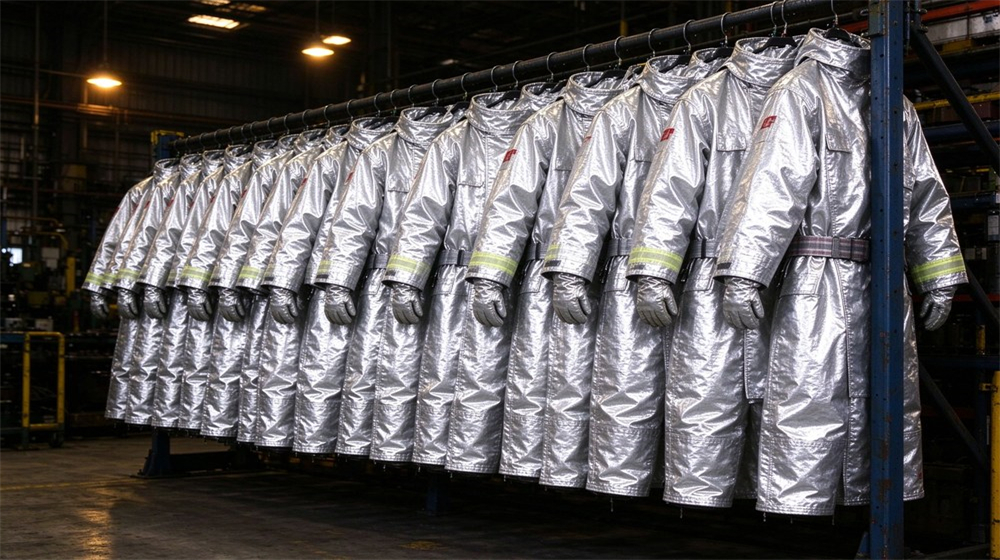
Steel production is one of the few jobs where the hazard is invisible. Radiant heat travels in straight lines and does not need physical contact to burn: a worker ten meters from an open furnace door still absorbs energy that ordinary workwear stores. This is why the industry moved to reflective aluminized clothing decades ago, and why procurement teams treat radiant heat protection as a non-negotiable line item.
The furnace front is a radiation zone, not just a hot room. Molten steel sits at roughly 1500°C and furnace walls run above 1000°C, reaching a worker instantly and compounding through the shift.
Ordinary cotton and polyester clothing block almost none of this. The fabric warms up, the air layer underneath warms up, and the skin absorbs what passes through. A steel mill heat suit is built for this exact condition, with a reflective shell that sends the energy back instead of storing it. The aluminum coating acts like a mirror for infrared: incoming heat bounces off the surface before it reaches the insulation layer beneath.
That is why more plants specify a dedicated aluminized heat suit rather than reusing general workwear. When the threat is radiant heat, reflection beats insulation: a reflective layer stops most energy at the surface where the garment is strongest.
Every furnace door opening creates a radiant heat burst that a reflective shell turns away before it reaches the operator.
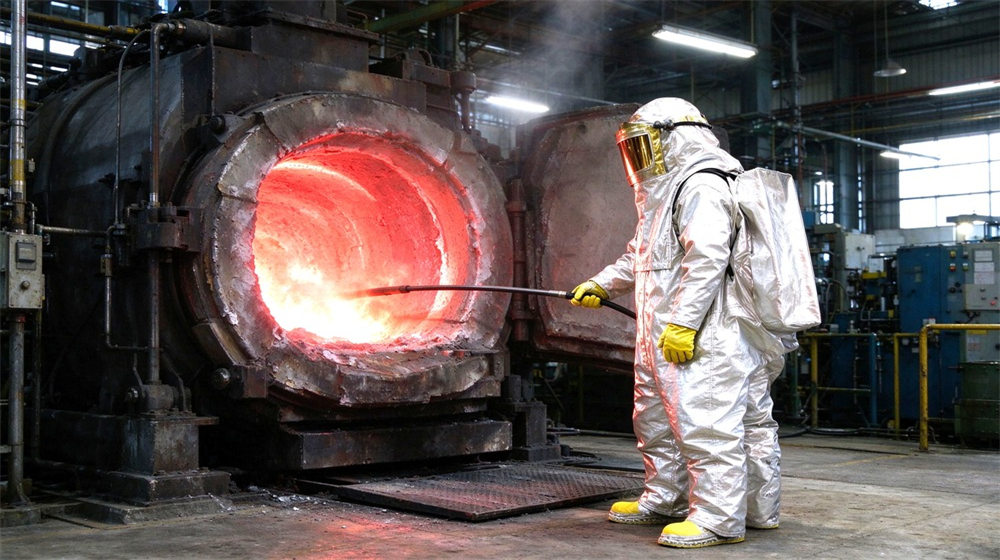
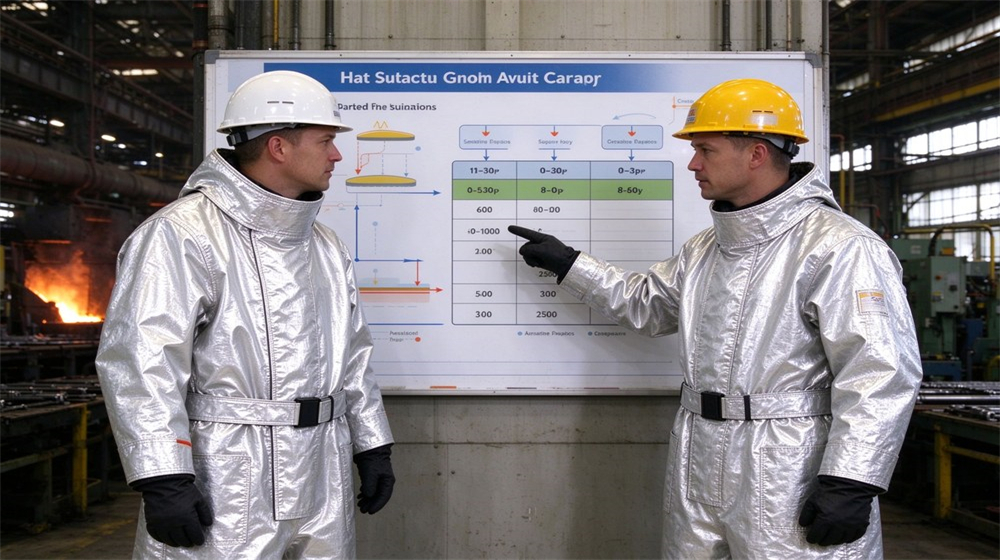
Three groups face the highest exposure in a steel mill: furnace operators at the doors, casting crews moving between ladle and mold, and glass plant workers repairing near 1500°C furnaces. They work at different distances and durations, but all live inside the radiant heat zone for most of their shift.
Each role needs the same principle but a different cut. A foundry worker aluminized suit protects the torso and arms during pouring, while furnace operators add a hood and face shield for door openings. Without the reflective layer, even the best flame-resistant workwear only delays the burn.
|
Job Position |
Radiant Heat °C |
Exposure Pattern |
Required Protection |
|
Furnace operator |
800–1100 |
Repeated door openings |
Full reflective suit + hood |
|
Casting crew |
900–1500 |
Pulsed splash exposure |
Reflective suit + gloves |
|
Glass plant worker |
1200–1500 |
Continuous glare |
Reflective suit + face shield |
|
Ladle repair crew |
700–1000 |
Short frequent entries |
Reversible reflective coverall |
A furnace front protection suit must be matched to the job, not the highest number on the spec sheet. Over-protecting adds fatigue; under-protecting leaves gaps at the exact moments heat arrives. Review the table after every process change in the mill.
According to the OSHA heat stress guidance for steel industry, radiant heat exposure must be managed with both engineering controls and personal protective equipment.
Long-term value matters more than the ticket price. Reflective suits that stay intact through hundreds of heat cycles cost less per shift than cheap suits replaced every season. Buyers who track replacement rates, heat-related downtime, and worker comfort complaints see the difference quickly. Protection is an operating cost, and the right aluminized heat protective suit lowers it.
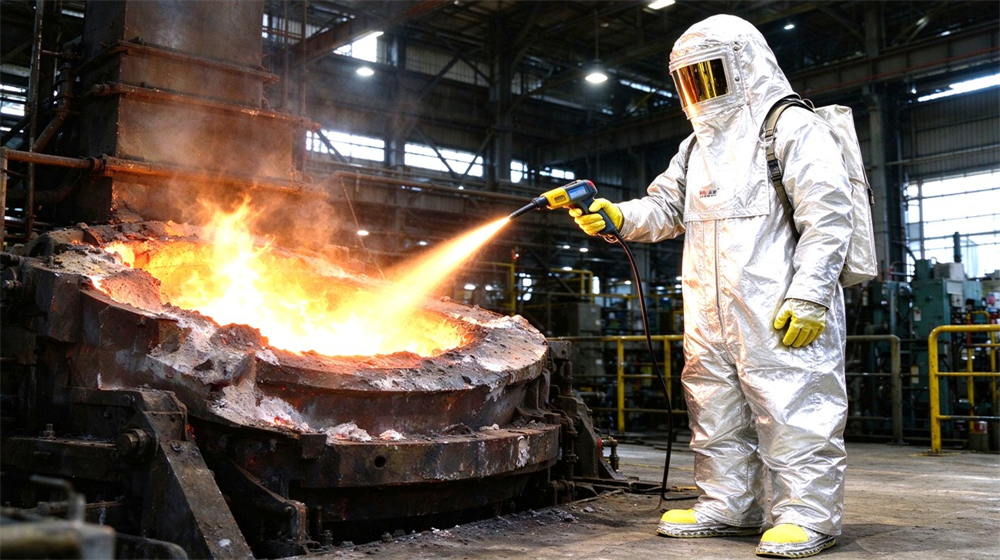
Radiant heat is electromagnetic energy, not hot air. It travels at the speed of light, which means it does not wait for insulation to slowly conduct. Thick cotton works against conductive heat, but against radiant heat it simply absorbs and stores. A reflective layer answers with physics: the aluminum coating turns the garment into a mirror for infrared, sending the energy back toward the source before the insulation layer ever sees it.
See the NIOSH recommendations for work in hot environments for guidance on exposure limits and work-rest schedules in radiant heat conditions.
The practical effect is measurable. In a side-by-side test at a furnace door, a reflective suit stays cooler on the inside after thirty seconds of exposure than a non-reflective suit of double the thickness. That interior temperature difference is what the worker feels on the skin, and it is what decides whether the shift ends comfortably or with heat stress symptoms.
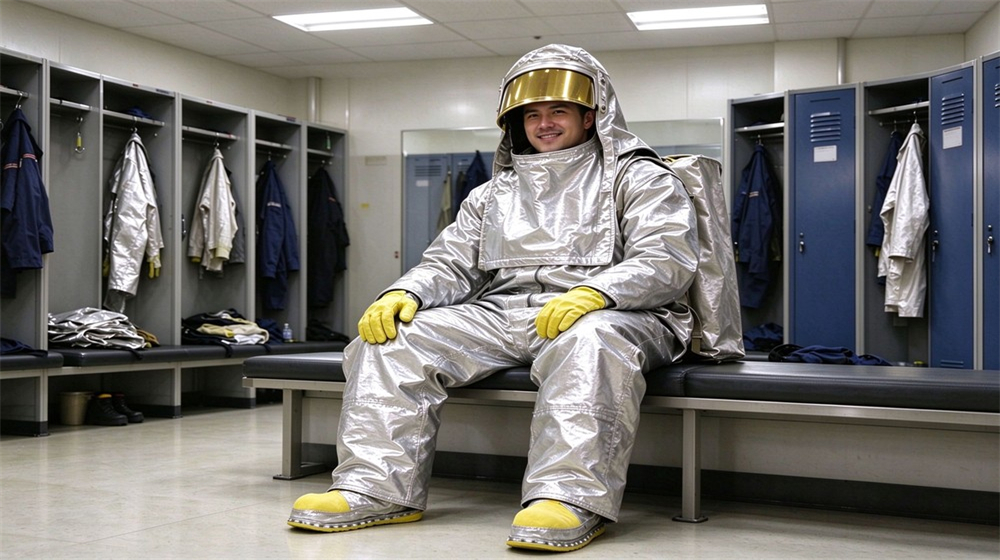
Heat stress is not only a safety issue, it is a productivity issue. Workers who overheat slow down, take longer breaks, and make more mistakes in the afternoon. The cost shows up as reduced output, higher error rates, and turnover among crew who do not want to work in conditions the equipment does not protect against. A reflective aluminized suit is one of the cheapest ways to improve the working environment without changing the furnace.
Procurement teams that calculate the cost of heat-related downtime usually find the payback is short: fewer injuries, fewer lost shifts, and a crew that stays on the job. This is why well-run mills treat the reflective suit as a capital purchase, not a consumable. Heat stress also raises the real cost of labor: tired crews rotate breaks more often, supervisors reassign tasks, and output dips in the afternoon. Industry studies on steel plant productivity consistently link radiant heat exposure to lost working time, which is why reflective aluminized clothing is treated as an equipment investment rather than a garment expense.
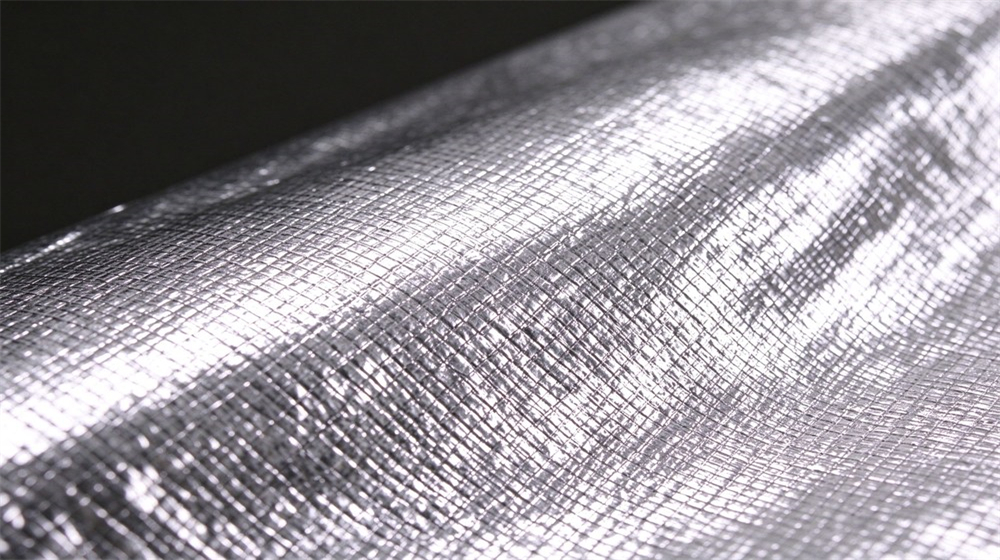
Every aluminized fabric looks silver from a distance. The performance difference is in how the coating is applied, how many insulation layers sit underneath, and how the whole build handles heat over time. Buyers who only compare the outer color of a heat protective suit are comparing the surface, not the protection. This section breaks down the three numbers that actually decide whether a suit protects all shift or just looks metallic.
Costmir® is a controlled aluminizing process. The reflective coating is bonded to the base cloth under stable conditions, so it does not flake after a few hot shifts. Ordinary coated fabric is often sprayed on cheaply, which is why it peels at the shoulders and knees first, The peeling is not cosmetic; once the aluminum layer lifts, the suit stops reflecting and starts absorbing.
For buyers, costmir aluminized fabric is shorthand for coating that survives repeated heat exposure. The aluminum layer is the first line of defence, and it only works while it stays attached. A simple shop test is to flex the fabric at the elbow twenty times and check for cracks. Bonded coatings hold; sprayed coatings show fine lines that grow into flakes.
Three numbers matter on a spec sheet: reflectivity, fabric weight, and layer count. Reflectivity tells you how much energy bounces away, weight tells you how much fatigue the crew carries, and layer count tells you how much insulation remains after the shell reflects what it can.
Buyers comparing flame resistant aluminized coverall options weigh exactly these variables. Reflectivity decides how much energy bounces away, weight decides how long the crew can wear it, and durability decides when the next order happens. Together they are the real cost of ownership, and they should be written into the comparison, not the brochure.
Layer order matters more than layer count: put the aluminized shell first to reflect, the comfort layer against the skin for hours of wear. This is why heat protective clothing for furnace work is specified by layer structure, not just the outer fabric name.
Property
Costmir® Aluminized
Ordinary Coated
What It Means
Radiant reflection
Up to 92%
60–75%
Less heat passes to the body
Heat resistance
1000°C flame exposure
400–600°C
Longer safe working window
Weight per suit
Lower, less fatigue
Heavier, more sweat
Longer comfortable shifts
Coating durability
Bonded, resists flaking
Prone to peeling
Fewer replacements per year
Service life
Longer with care
Shorter, early replacement
Lower cost per shift
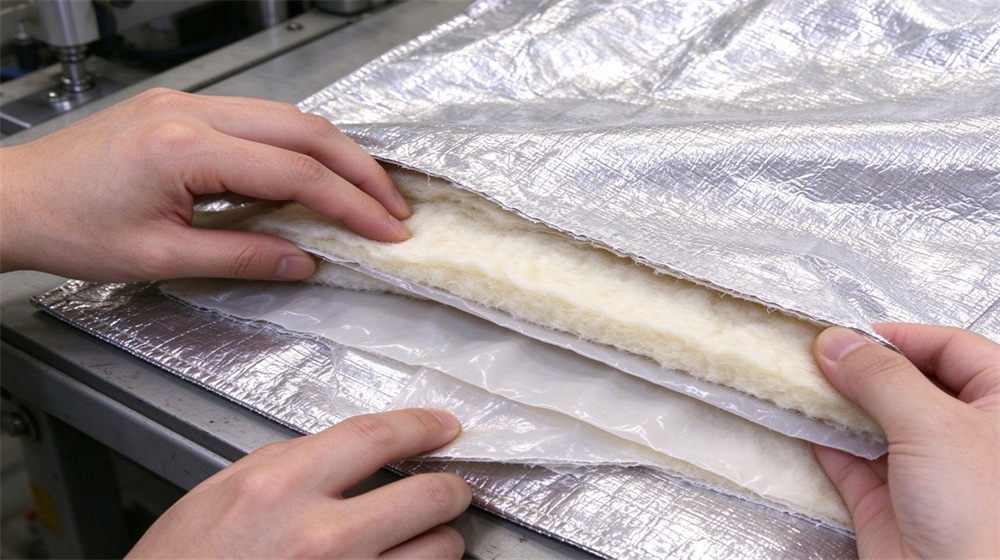
The seven-layer construction is not marketing, it is a sequence. The outer shell reflects incoming radiant heat, the insulation felt blocks conducted heat that passes the shell, the moisture barrier seals against steam and keeps insulation dry, and the comfort layer reduces heat buildup and sweat. Aramid fire-resistant thread keeps seams intact, the face shield blocks radiant glare, and reinforced closures seal heat out at wrists, ankles, and the front closure.
Each layer has one job, and the jobs are ordered. Reflect first, insulate second, seal third, comfort last. A suit with one thick layer may feel heavy but transfers heat on long exposures, while a layered suit distributes the same energy across several barriers. That is the difference between surviving one burst and working through an entire shift.
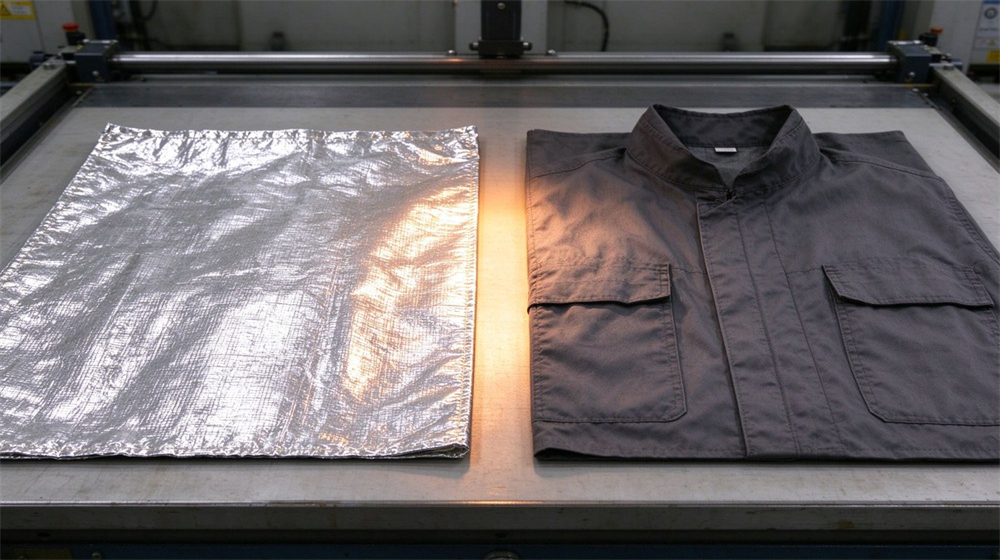
The side-by-side comparison shows why coating quality matters: the bonded Costmir® layer stays smooth and continuous, while an ordinary sprayed coating shows fine cracks along the flex points. That crack pattern is the exact failure point that decides how many seasons a suit survives on the furnace floor. Below, the seven-layer diagram shows how each barrier works in sequence to stop radiant heat.
Reflectivity is reported as a percentage of radiant energy bounced away from the surface. A figure of 90% means nine tenths of the incoming infrared never enters the insulation layer. The measurement is done under controlled light in a laboratory, and the result is printed on the test report. Buyers should look for the reflectivity figure next to the temperature class, because the two numbers together describe real protection.
Not all silver coatings reach the same number—thickness, base cloth smoothness, and bonding all affect reflectivity.
Aluminized coatings in this class typically reflect 90% or more of incoming infrared; the insulation layers behind the shell handle the rest.
Position
Exposure
Reflection Effect
Furnace front
High, continuous
Reflects most infrared before it hits the insulation
Casting bay
High + splash
Reflects heat while sealed seams block splashes
Glass hot zones
Moderate
Keeps surface cool for full-shift wear
Maintenance near equipment
Intermittent
Keeps the suit light for close work
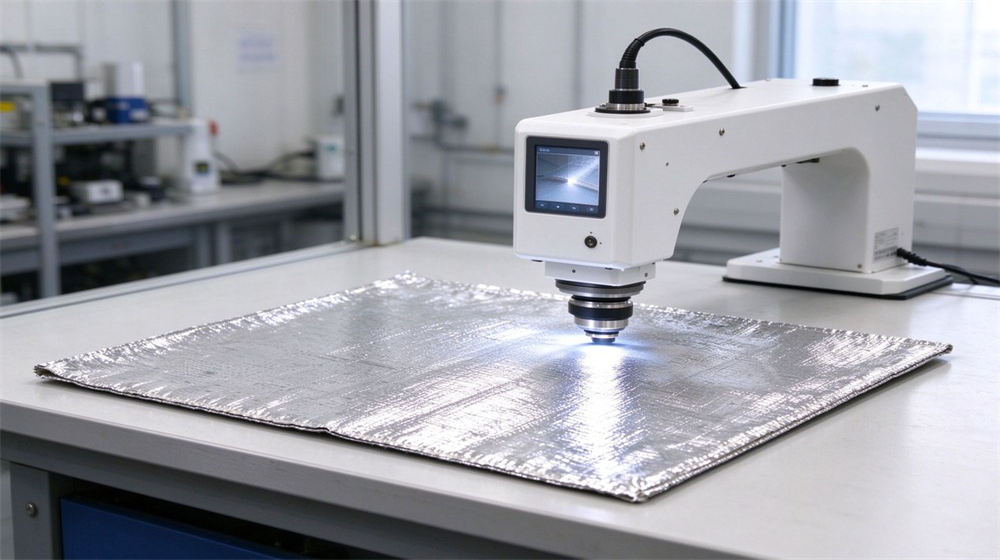
Weight is the number the crew feels, not the one on the brochure. A suit that is too heavy reduces mobility and increases sweat, which is itself a hazard because wet clothing conducts heat better. The design goal is to reach high reflectivity without stacking unnecessary layers. That balance is what separates a well-engineered aluminized suit from one that simply piles on material.
For furnace front work, the practical range is around 1.8 to 2.5 kilograms for a full suit. Heavier suits are for fire entry, lighter ones for inspection tasks. Matching the weight to the job keeps the crew safe without slowing them down, and it reduces the fatigue that leads to safety errors late in the shift.
Buyers who set up a simple inspection routine find problems early, when the fix is cheap, and prevent a crew member from entering the heat with a compromised garment.
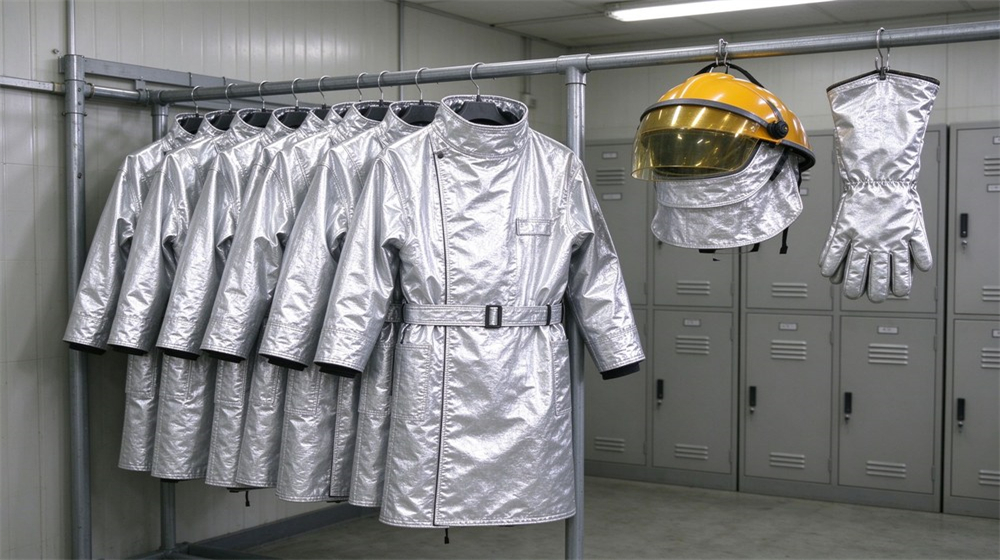
The aluminized suit earns its cost in three industrial settings. Each one stresses the garment differently, and each one needs a slightly different kit. Understanding the three application profiles helps buyers order the right accessories at the same time, instead of discovering gaps after the suits arrive.
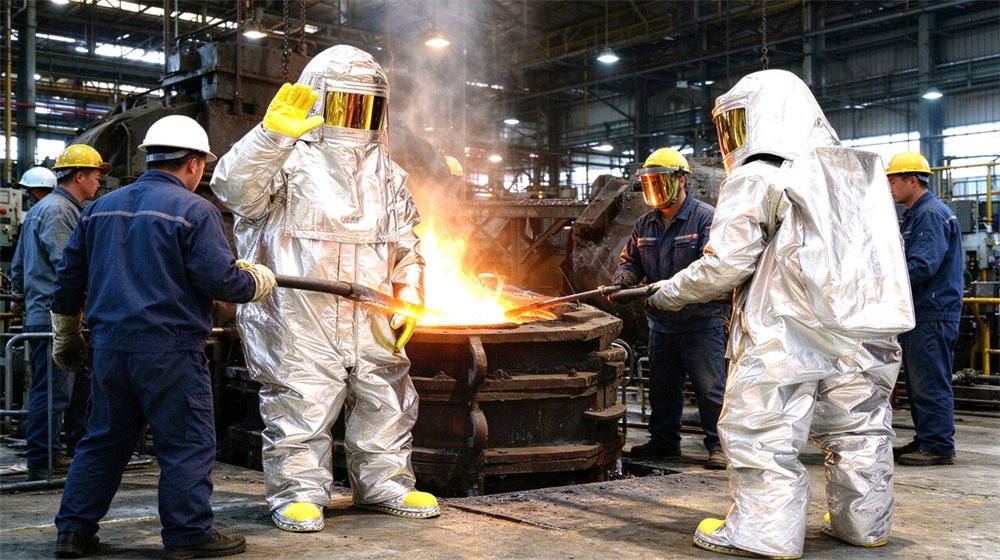
Operators near open furnace doors face continuous radiant heat plus splash risk. The suit must reflect steady energy while sealed closures keep out molten droplets. A furnace front protection suit built for repeated door-opening exposure covers the torso fully and pairs with heat resistant gloves. The reflective shell handles the radiant load, which is why this furnace front protection suit pairs sealed closures with a waterproof membrane. Together they protect the two ways heat arrives during a tap.
Door-opening moments are the highest risk. The operator steps forward, the door lifts, and a wall of infrared hits the body instantly. A suit that reflects 90% of that energy turns a dangerous moment into a routine one. The same reflective layer that protects all day earns its value in those five-second bursts.
Casting crews pour molten metal into molds, moving between ladle and mold repeatedly. Radiant exposure is pulsed, so the suit must handle rapid heat spikes. The layered build absorbs each spike and releases it slowly, protecting casters through the pour cycle.
Pouring also brings a different threat: molten splash that can reach the forearm and thigh. That is why casting suits add reinforced cuffs and high collars. Buyers for foundries should order the casting configuration rather than the furnace configuration, because the closure systems are positioned differently.
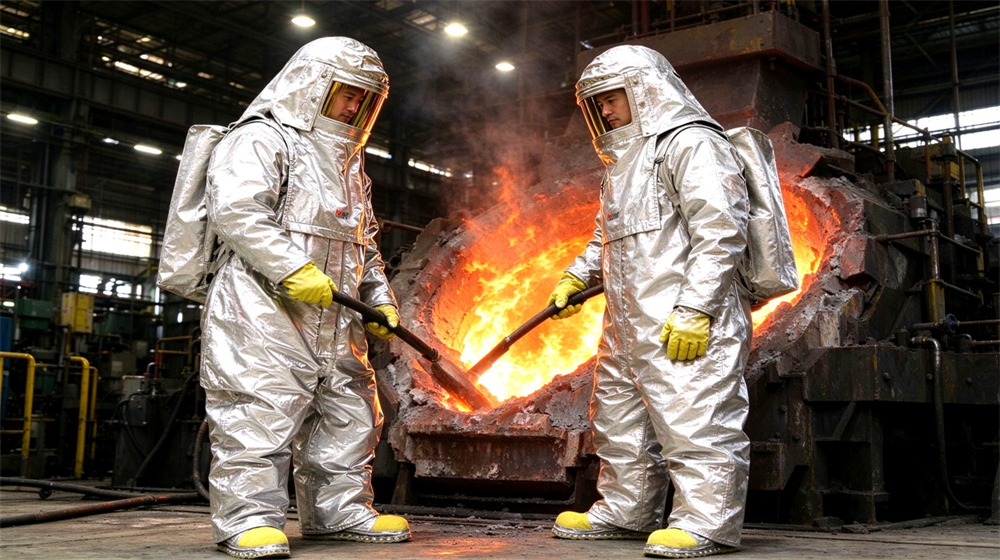
Glass furnaces operate around 1500°C with intense radiant glare. Operators measure, adjust, and repair near furnace openings where the energy load is severe. Glass plant heat protective clothing needs the same reflective shell plus a face shield that blocks glare while keeping vision clear. The shield is a real requirement in glass plants, because the glare itself becomes a safety issue even when the heat is controlled, so every glass plant heat suit should include one.
Each of the three settings buys the same core garment but different accessories. Buyers who plan the full kit at ordering time avoid mismatched gloves or hoods later. It is cheaper to include the correct hood and shield in one order than to chase single accessories across two suppliers.
Application photos rarely show the whole story. The same suit that protects a furnace operator also serves a glass inspector, as long as the sizing, hood, and face shield match the role. When writing a specification, list the application first and the garment second, so the supplier matches the right configuration.
Some jobs require stepping into the heat zone many times an hour. Ladle repair crews, quality inspectors, and furnace sampling teams enter for short bursts and step back out to write notes or check gauges. For this pattern, a reversible aluminized coverall makes sense: the worker puts it on over normal workwear in seconds and takes it off just as fast. The reflective side faces out during the entry, and the coverall protects the clothing underneath.
Reversible designs are popular in steel plants because they match the actual rhythm of the work. Instead of a full donning procedure for a two-minute entry, the worker shrugs into the coverall, does the job, and returns to the control room. The protection is the same, but the compliance rate is higher because it is easy.
Aluminized suits wear fastest in the hot season, when exposure is longest and the crew sweats more. Smart buyers plan replacement orders before the hot months instead of reacting to failures mid-season. That means ordering samples in the cooler months, approving the fit, and placing the bulk order with enough lead time for production and shipping.
Planning ahead also locks in sizing data. Once a crew has standard sizes on record, the next order is faster and more accurate. The sample-and-standardize routine is worth the small delay the first time, because every later order uses the same sizes and the same spec.
A suit only protects when worn correctly. Training covers pre-use checks, closing the front and cuffs, and spotting coating damage.
Correct use extends service life: suits stored hanging and inspected weekly fail far less often.
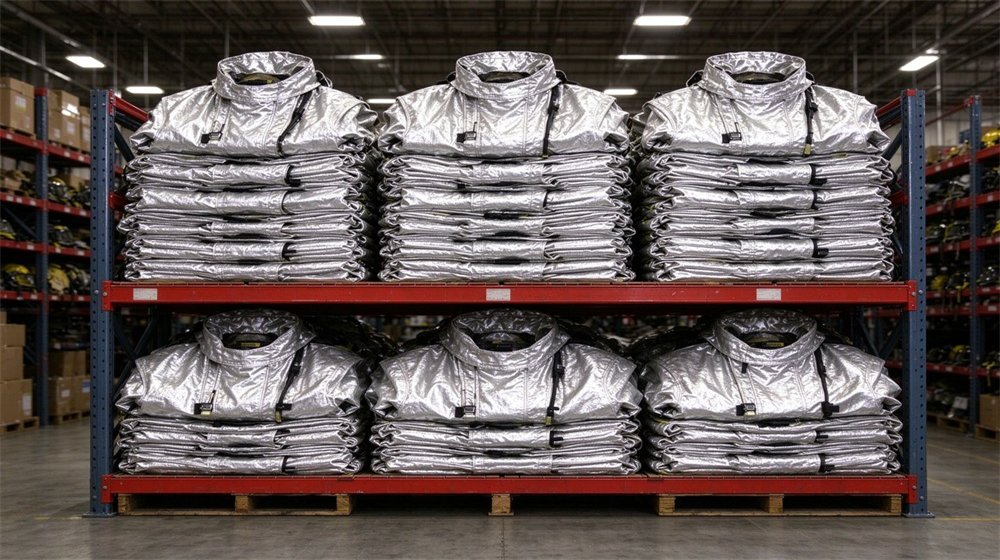
Compliance is not optional in metal processing. An aluminized suit certification is the document that turns a fabric claim into a verifiable fact. Procurement teams should verify certificates before ordering, not after. A test report answers the questions a safety officer will ask: what temperature class, what exposure time, what reflectivity, and under which standard was it measured.
EN 407 covers heat protection for protective clothing and defines how radiant heat resistance is tested, including the temperature levels and the way results are reported. NFPA 2113 covers industrial fire brigade clothing and tells buyers what a compliant industrial suit must withstand during hot work. Together they give a framework for comparing suits from different suppliers on the same measurement basis.
EN 407 levels describe what each test measures—read the report to see which levels your exact model achieved.
The NFPA 2113 industrial fire brigade clothing standard defines the minimum requirements for garments used during hot work and industrial fire response.
Different markets apply different standards—check which one your destination expects before ordering.
Level
Tests
Why It Matters
A
Flame spread
Shell must not keep burning
B
Convective heat
Hot air flows and furnace openings
C
Radiant heat
Core figure for aluminized suits
D
Molten splash
Casting and pouring positions
E
Contact heat
Handling hot tools
F
Large splashes
Extreme pouring applications
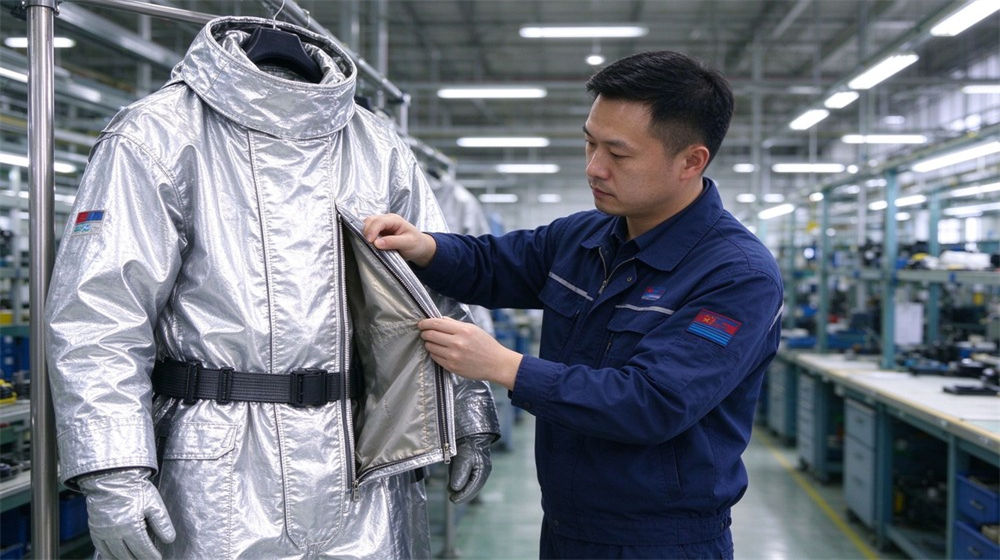
A test report has three numbers worth reading. The temperature class shows the highest radiant rating; performance levels and the test date complete the picture.
When sourcing, ask the supplier for the current test report, check the rated temperature matches your working conditions, and keep the document for safety audits. A heat suit for steel workers without a matching certificate is a procurement risk, because the same fabric claim can mean very different protection depending on how it was tested.
Certification also protects the buyer. If a safety inspector asks for evidence, the test report answers immediately. If an incident happens, the record shows what the garment was rated to do. Keeping certificates in the same file as the purchase order makes the next audit faster and keeps the safety program defensible.
Standard
Scope
What to Check
GB38453-2019
Fire-resistant protective clothing requirements
Flame spread, heat resistance
XF634-2015
Protective clothing for fire proximity operations
Radiant heat performance
GB8965.1-2020
Flame-retardant protective clothing general requirements
Burning behavior, seam strength
EN 407
heat protective clothing (EU)
Radiant heat, flame, molten splash
Standards differ by market, and buyers should specify the one that applies to their destination. European buyers commonly reference EN 407 for heat protective clothing. North American buyers look for NFPA 2113 for industrial fire brigade clothing and OSHA guidance for workplace heat exposure. Chinese and regional buyers use GB standards for fire-resistant protective clothing. A supplier that can document more than one standard makes international procurement simpler.
When comparing certificates, check the test method matches your condition. Two suits can carry the same temperature rating but be tested under different exposure times; the report should state both level and duration.
Before placing an order, ask for four documents: the current test report, the certificate number and issue date, the standards the garment meets, and the care routine. The certificate number allows verification; the issue date shows the test is current.
Ask also how the certificate maps to the specific model you are ordering. Certificates are issued per model and per configuration, so a document for a different version does not automatically cover your order. Matching the certificate to the exact model is a small step that prevents a big gap in documentation later.
Standards and test methods are updated over time, and certificates can expire. Build a simple review cycle: check each certificate's issue date at order time, and re-request documents when a standard is revised. Keeping the documentation current protects the buyer during audits and ensures the next order still matches the latest requirements.
For teams managing multiple sites, keep one file per product model with the certificate, the care label, and the approved supplier list. It makes the next procurement faster and gives safety officers a single place to verify compliance.
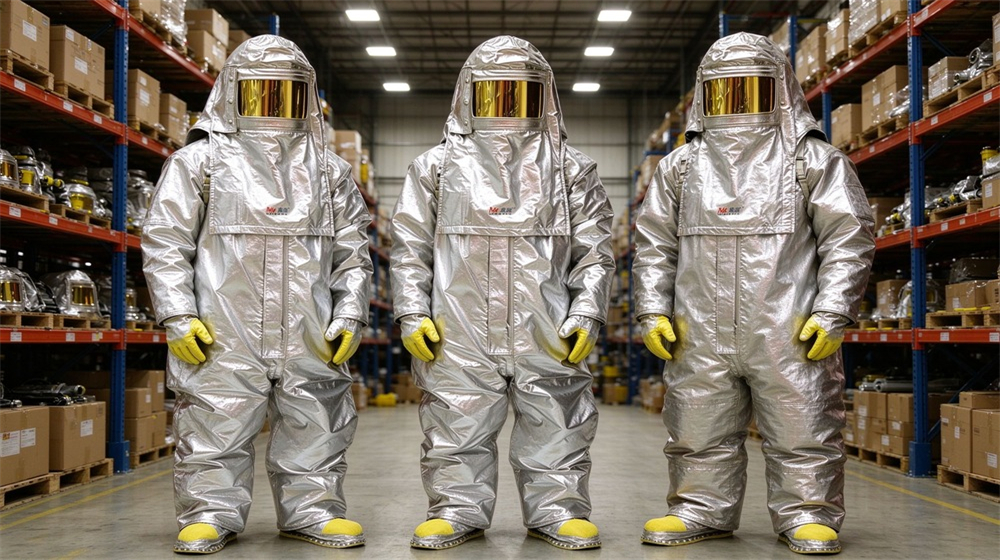
Choosing the right heat suit for steel workers starts with the real working temperature at the furnace front, not the fabric's maximum rating. Measure where workers stand, select to cover the worst case, and match the grade to each workstation.
A 1000°C-rated suit is different from a 600°C-rated suit in layer count and weight. For most furnace front jobs, a 1000°C radiant heat suit is the practical middle ground. It handles door-opening bursts without the weight of an entry suit, and it keeps the crew mobile enough to work a full shift. The 600°C grade suits ladle repair and shorter exposures; the 1600°C grade is for fire entry teams, not daily furnace work.
Temperature is not the only variable. Exposure time, distance, and splash risk all change the specification: two plants can run the same furnace and need different suits because one has automated doors and the other sends a worker in by hand.
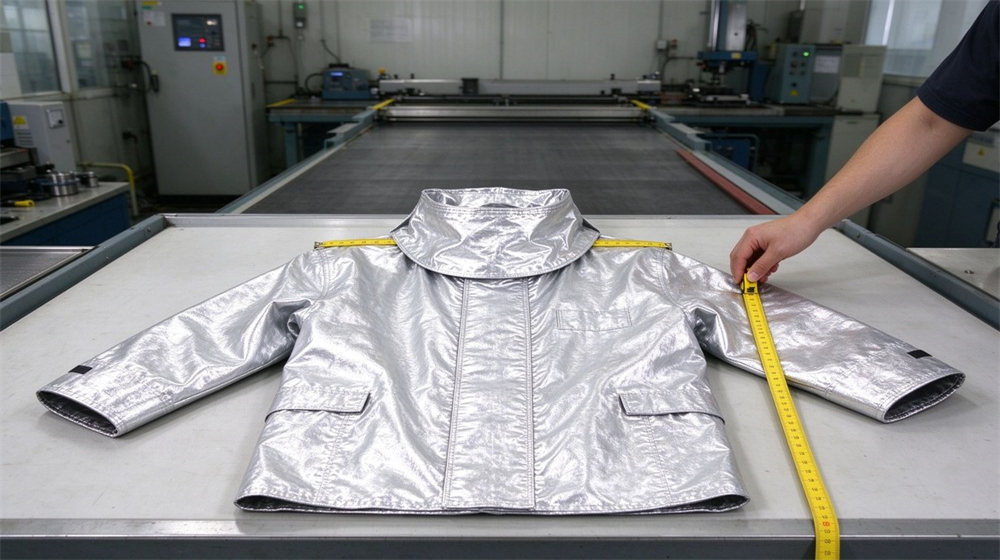
Aluminized suits are available from M to XXXL, with full-coverage cuts that work over standard workwear. Confirm the size chart against your crew's measurements, order one sample, fit-test it with a real operator, then standardize. A furnace suit that binds at the shoulders or drags at the ankles compromises both movement and protection, so the sample fitting is worth the extra week.
Custom branding is available on request for plant logos, and bulk orders can include matched gloves, boots, and hoods in one package. When you plan an aluminized proximity suit wholesale order, list every accessory at quoting time so nothing is missing at delivery. Wholesale buyers also get size standardization support, so the whole crew lands on two or three sizes instead of one-off orders.
Confirm the size chart against crew measurements before standardizing a bulk order, because fit decides both comfort and protection.
Lead time depends on quantity and customization. Standard sizes ship faster than custom-branded runs, so plan seasonal replacement orders early. Order samples first, then schedule the bulk run around approval.
Size
Chest cm
Height cm
Weight kg
M
96–104
165–172
55–65
L
104–112
170–178
65–78
XL
112–120
175–185
75–90
XXL
120–128
182–190
88–105
XXXL
128–136
188–196
100–115

The price tag is the wrong number to compare. A premium aluminized suit costs more upfront but lasts more seasons, so the cost per working shift is often lower than a cheap suit replaced every few months. Buyers who compare total cost of ownership, including replacements and downtime, choose differently than buyers who compare ticket prices.
Track three numbers over a year: purchase price, shifts each suit serves, and replacement rate. A suit that serves three hundred shifts is a better deal than one that serves eighty, even at half the price.
Refer to the OSHA personal protective equipment guidance for employer responsibilities when selecting heat protective clothing.
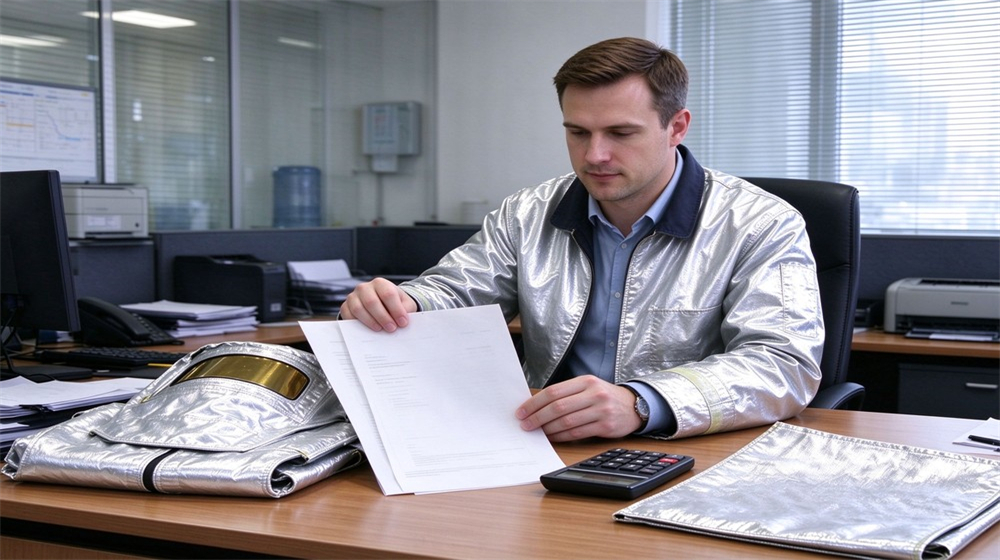
Lead time has two parts: production and shipping. Custom-branded runs take longer; ocean adds weeks over air. Choose by urgency.
A practical timeline is to start two to three months ahead, covering sample approval, production, inspection, and shipping with a buffer for delays.
Protective clothing is a recurring purchase, and a stable supplier who knows your crew sizes, standards, and delivery preferences quotes faster and holds documentation ready.
Look beyond the first quote: sample approvals, wrong-size handling, certificate records.
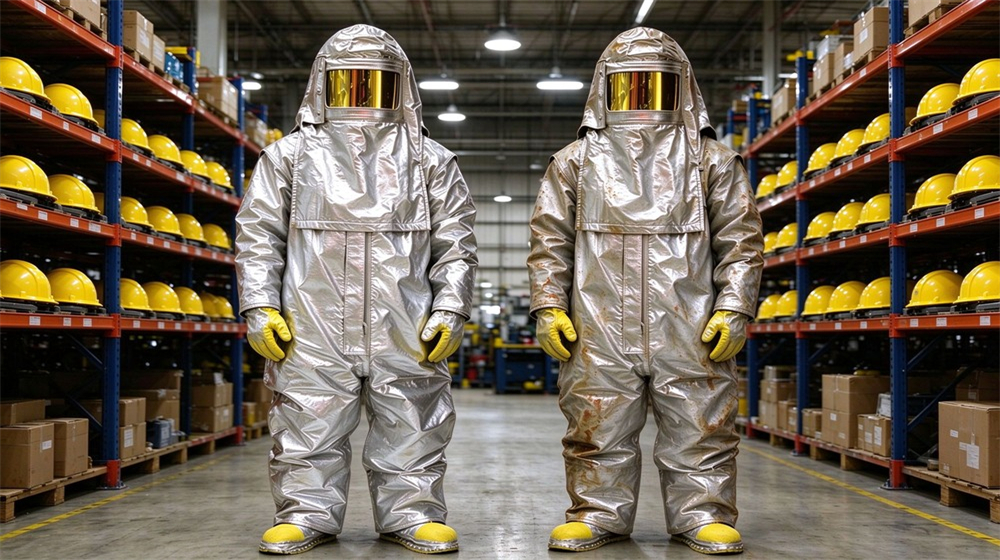
Match the suit to the work position rather than the catalogue:
The most common mistakes: specifying by price alone, ordering without a sample fitting, and ignoring accessories.
Write the specification around the working condition, list every accessory in the same order, and fit-test before the bulk run. These three habits prevent most of the problems that show up after delivery.
Keep this list beside the purchase order.
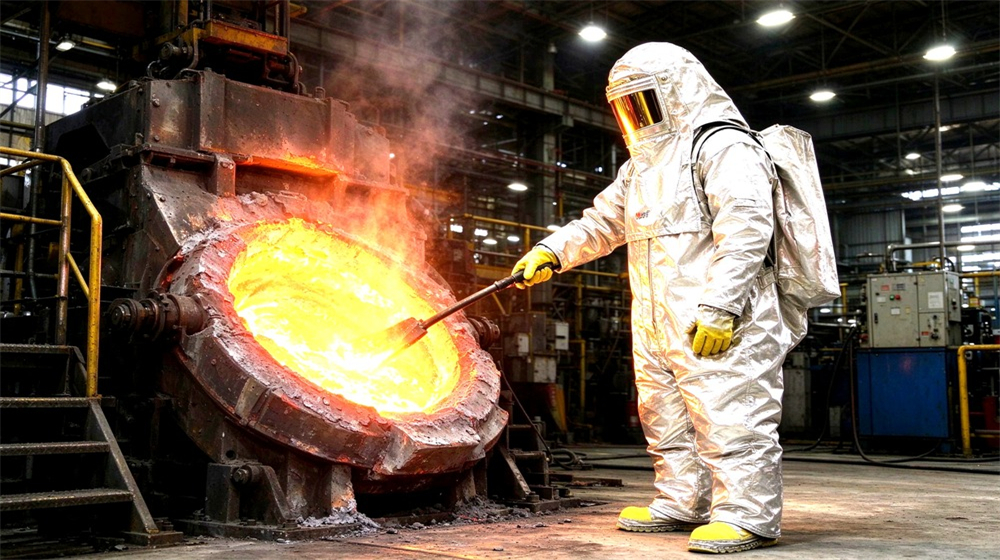
This aluminized heat protective suit is rated for 1000°C flame exposure with a seven-layer construction designed for radiant heat zones. Actual safe working time depends on distance and exposure pattern, so confirm your site temperature before specifying. For most steel mill furnace front work, this grade covers the daily exposure profile.
Yes for steel mill work. The bonded coating and extra insulation layers mean fewer replacements per year, which usually beats the upfront saving of a cheap suit that fails after a season. Cost per shift, not cost per suit, is the number to compare.
Yes. Plant logos and custom colors are available for bulk orders, and branding does not affect reflective performance when applied correctly.
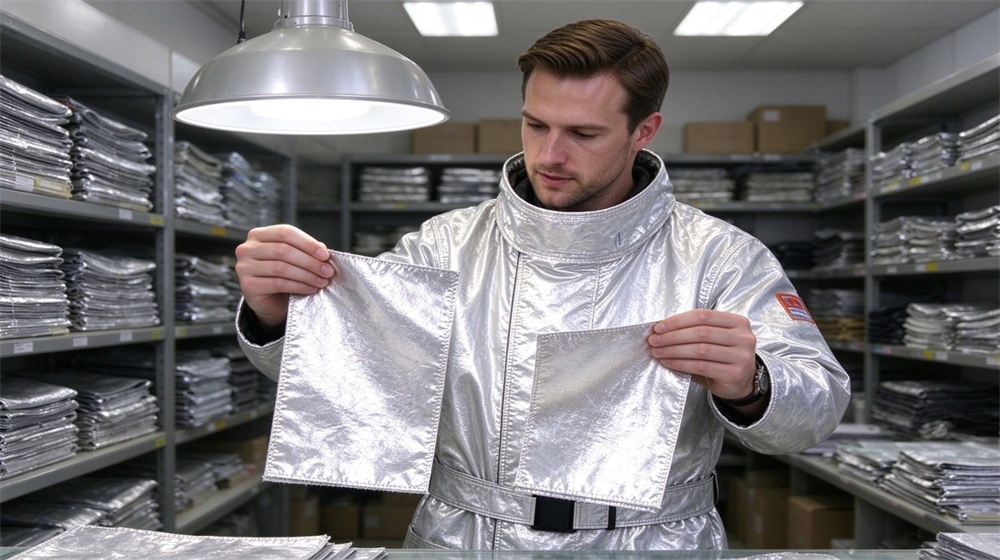
An aluminized proximity suit is for short radiant heat exposure near furnaces; an entry suit is for brief flame entry at much higher temperatures. Steel mills usually need the proximity type.
Yes. Bulk orders can include a full kit with gloves, boots, and hoods, with sizes standardized from a sample fitting before the full run.
Ask the supplier for the current test report and certificate number covering the exact model you are ordering. Standards commonly referenced include GB38453-2019, XF634-2015, GB8965.1-2020 and EN 407, depending on the market.
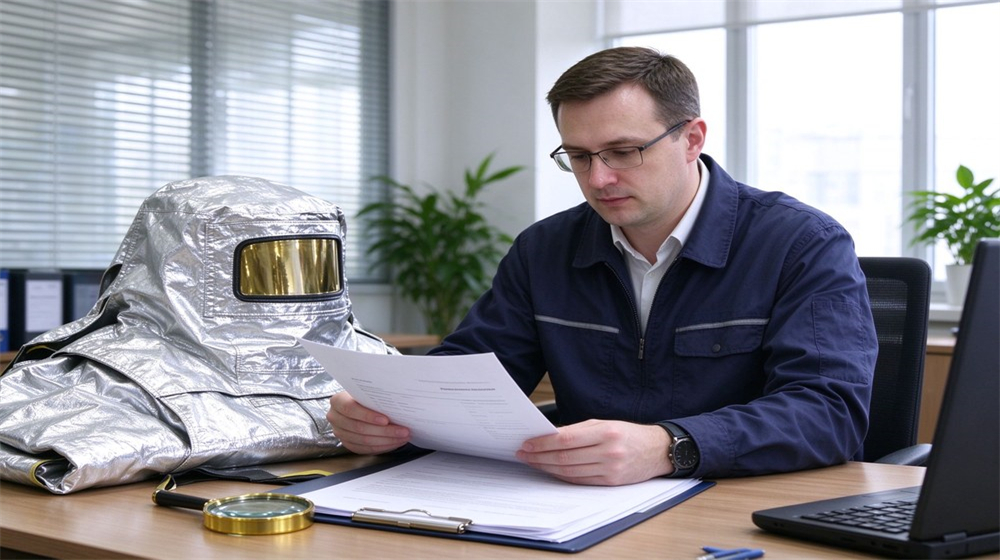
Store the suit hanging, away from direct sunlight, and inspect shoulders, cuffs, and knees before each use. Clean according to the care label and avoid abrasive scrubbing that damages the reflective coating. A simple inspection checklist keeps the garment serviceable and catches damage early.
Yes. The complete kit includes the aluminized suit, heat resistant gloves, protective goggles or face shield, and heat resistant boots. Ordering the kit in one package ensures the accessories match the suit and arrive together with one lead time and one inspection standard.
Choose the reversible coverall for jobs that require frequent short entries into the heat zone, such as ladle repair and inspection. Choose the one-piece suit for continuous furnace front work where full coverage and closure sealing matter more than donning speed.
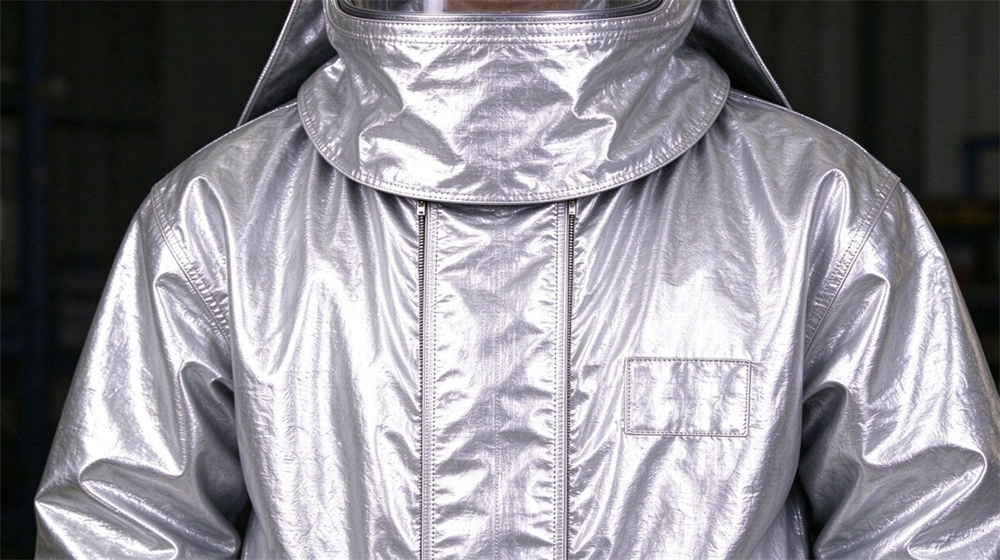
Bulk pricing and minimums depend on the configuration, sizing, and customization. We recommend starting with a sample order for fit testing, then confirming the bulk quantity and lead time at quotation. Every crew-size order is quoted individually.
No, when branding is applied correctly using the approved method. The reflective layer remains intact underneath, and the branded area is positioned so it does not reduce the protected surface. Confirm the branding method at quoting time.
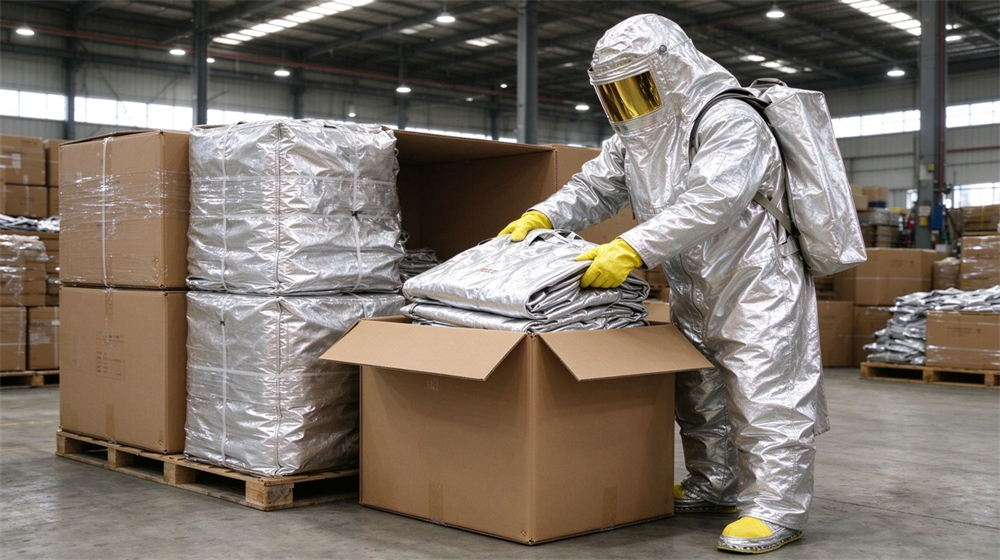
Yes. We export aluminized heat protective suits to buyers worldwide. Export orders are packed in cartons with each suit, hood, and accessories protected from dust and moisture, and shipping lead time is confirmed with the supplier before the order. Packing method and carton quantity are agreed at the quotation stage.
Yes, but the care label matters. Wash in cool water with a mild detergent, dry flat away from direct heat, and never use abrasive cleaners or rough scrubbing on the reflective coating. Hang the suit rather than folding it, and check shoulder, knee, and cuff areas before each use.
Previous :
Imported Fabric Aluminized Suit | 800°C Lightweight ProtectionNext :
Forest Rescue Suit Set of 7, Professional Fireproof, Emergency Equipment Deep Blue Firefighting Suit Set, Forest Fire Fighting Specialized, Full-body Protection
This Deep Blue firefighting suit set is specially designed for forest fire fighting, using special flame-retardant fabric that can withstand 700°C open flames in the wild, with a thermal protection value (TPP) of 25CAL/AM2. The vivid Deep Blue color combined with enhanced reflective strips enables identification from 500 meters away in forest smoke. The lightweight design of only 4.5KG does not affect mountain action speed, with a waterproof rating >40KPA, adapting to camping fire fighting and long-term field operations. The anti-plant puncture design increases wear resistance by 50%, making it professional equipment for forest firefighting, mountain rescue, and outdoor fire fighting actions, providing all-around body protection for forest firefighters.
 High-temperature Resistant Firefighting Suit Set, Emergency Rescue, Quick-wear
This high-temperature resistant firefighting suit set is made of professional-grade flame-retardant materials, capable of withstanding extreme temperatures up to 750°C, with a thermal protection value (TPP) of 26CAL/AM2, providing reliable protection for emergency rescue. The innovative quick-wear design allows complete dressing in 40 seconds during emergencies, with hydrostatic pressure resistance >45KPA and excellent breathability. Designed according to ergonomic principles, weighing only 4.8KG, it effectively reduces the burden on rescue personnel and is suitable for high-risk scenarios such as building fires, tunnel rescues, and industrial firefighting, making it an ideal equipment choice for professional firefighting teams.
 Professional Firefighting Suit Set, Flame-retardant Protection, Rescue Essential, 14-3C Certified
This professional firefighting suit set is made of high-grade flame-retardant cotton fabric, 14-3C certified, capable of withstanding extreme temperatures up to 800°C, with a thermal protection TPP value of not less than 28CAL/AM2. The three-layer composite protection structure, with waterproof static pressure resistance >50KPA and breathability >5000G/M²·24H, ensures comprehensive safety for rescue personnel in complex environments such as building fires, forest fires, and special chemical plant fires. Available in three models: 97/02/14, meeting different rescue scenario requirements.
 02 Firefighting Suit Multi-layer Composite Material Rescue Protection
This Type 02 firefighting suit is made of professional flame-retardant materials with excellent heat resistance, fire protection grade meeting international rescue standards, and waterproof puncture resistance rate of 98%. The deep blue body is equipped with eye-catching yellow reflective strips, increasing night visibility by 85%. The complete six-piece configuration provides comprehensive protection for firefighting, forest firefighting, earthquake rescue, and other scenarios, providing reliable protection for 300+ professional rescue teams.
 Forest Fire Rescue Service with Heat-Resistant Design
This professional forest fire rescue service uses flame-retardant heat-resistant material, achieving GB8624-A2 fire rating standard with heat resistance up to 800°C, and features high-visibility reflective strips visible from 300 meters away. It's suitable for emergency rescue scenarios such as forest fires, mountain rescues, and industrial disasters, providing comprehensive personal safety protection. Each set has undergone 10,000 abrasion tests and proven its reliability and safety in over 1,500 rescue operations nationwide.
 Fire Rescue Cap, Aramid Flame-Resistant Material, Forest Fire Emergency
This professional-grade forest firefighting vest and hat set is made of polyester/cotton blended flame-retardant fabric, with reflective visibility up to 300 meters, capable of resisting short-term flame contact, improving protection efficiency by 85%. The bright orange design with double-layer reflective strips complies with international rescue standards, ensuring 360° visibility in smoke and low light environments. Suitable for forest fire fighting, wilderness emergency rescue, post-earthquake sites, and other emergency disaster relief scenarios, providing comprehensive protection for rescue personnel.
Copyright © Custom Disaster - Relief Bedding: Tents, Sleeping Bags, Blankets All Rights Reserved
the professional team to service !


