


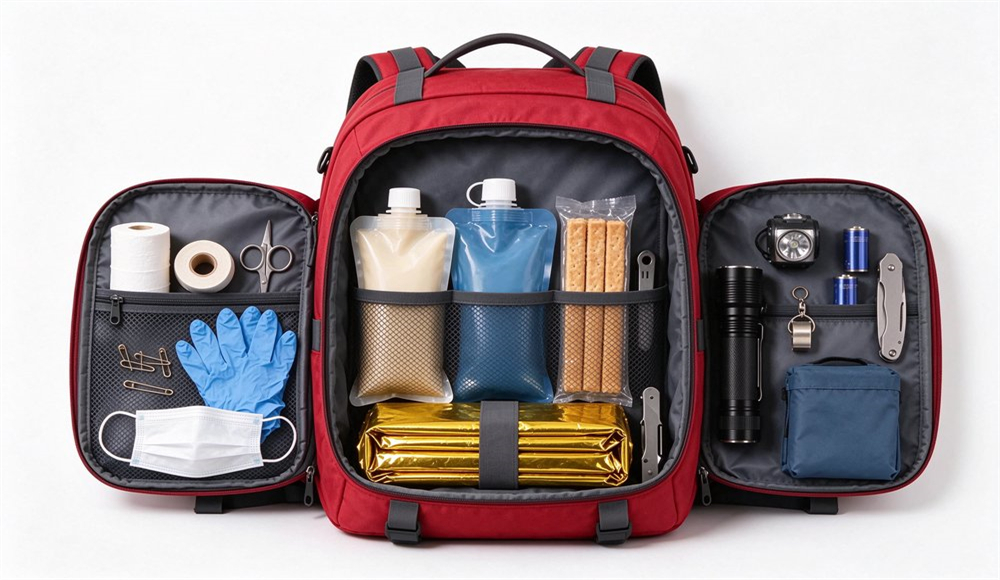
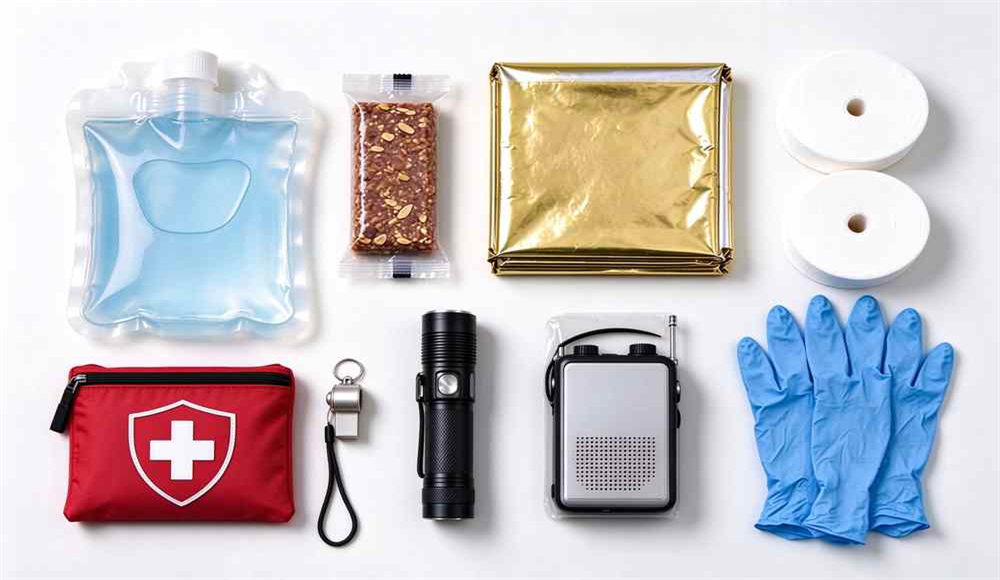
This 72-hour office emergency backpack kit holds water pouches, non-perishable food, foil blanket, flashlight, first-aid supplies and communication tools. Designed for workplace, school and home disaster preparedness. Available in multiple tiers, suitable for bulk procurement by relief organizations and commercial buyers.
Note: Price for reference only. Exact price based on quantity, size, weight and custom details.
model no. :
EK-04Brand:
YRFmarket price :
$39.8sale price :
$19.9price range :
30-500/$19.9Color :
Multiple Colorsport of dispatch :
Guangdong/GuangzhouPayment :
TT, Paypal, Western Unionmin order :
30original region :
Made in ChinaLead Time :
5-15days
Quick Answer: A 72 Hour Emergency Kit for Office keeps workplace water, first aid, light, warning and communication supplies ready for the first 72 hours after an evacuation or outage. Kits are organized by team size in Basic, Standard and Premium tiers, and stored near exits for quick grab. Inspect the office kit every 6 months, restock used first-aid items, and align contents with your workplace safety plan.
An office 72-hour emergency kit is a pre-packed, grab-and-go backpack that holds water, first aid, light, communication and sanitation supplies for employees to use during workplace evacuation until help arrives.
A properly stocked 72 hour emergency kit for office keeps employees safe, hydrated and supplied for up to 72 hours before help arrives after a fire, earthquake, power outage or evacuation. It organizes water, food, first aid, lighting, communication and warmth for shared floors and open-plan areas, aligned with OSHA-oriented workplace preparedness and audit-ready compliance.

 |

|
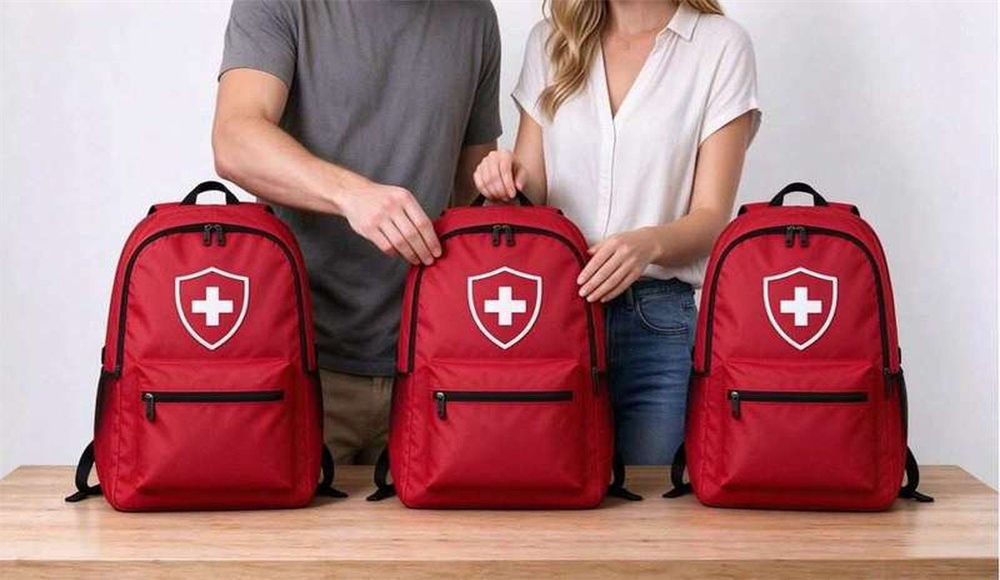
Facility managers, EHS directors, and procurement teams across North America, Europe, and the Middle East choose our business disaster kit because it combines compliance, quality, and customization in one ready-to-grab backpack.

Why buyers choose our workplace emergency kit?
✓ Three tier options (Basic 9-piece / Standard 12-piece / Premium 15-piece)
✓ Sized for 1–50+ employees per floor or department
✓ Aligned with OSHA and ANSI workplace safety expectations
✓ Fully customizable: add/remove items, choose backpack color, print your logo
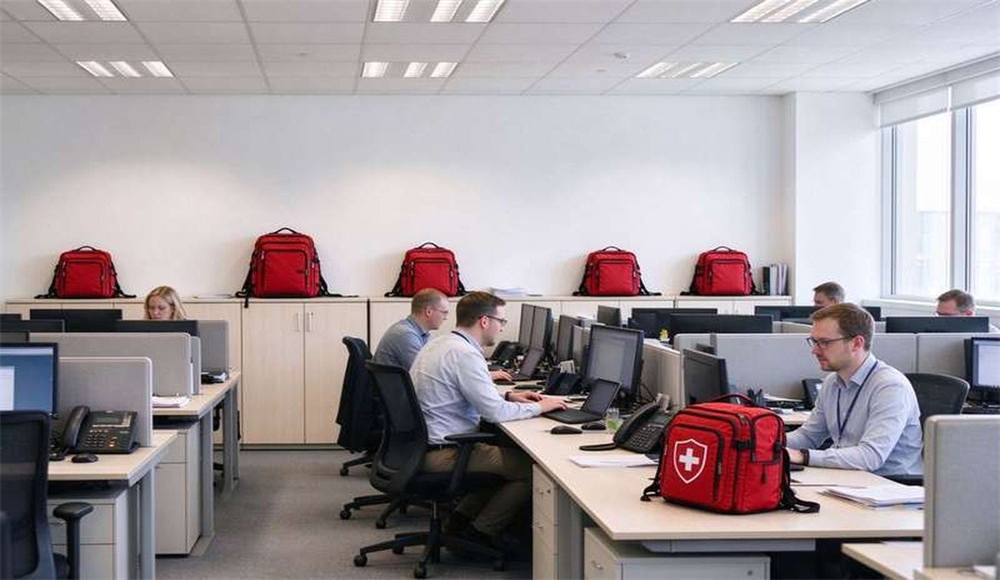
According to the International Red Cross, Ready.gov, and national emergency management agencies around the world, first responders may need up to 72 hours to reach your building after a major earthquake, hurricane, or flood.
This is exactly why a 72 hour emergency kit for office exists — it bridges the gap between the moment disaster hits and the moment professional rescue or restoration teams arrive. With the right supplies on hand, your team waits out the critical three days in safety and dignity instead of chaos.
Picture this: an earthquake rattles your office building. Water pipes burst, elevators lock up, stairwells fill with dust, and the power grid goes dark. Without preparedness supplies, your employees face dehydration, hunger, zero lighting, and no way to communicate with the outside world. A properly stocked workplace emergency kit changes that outcome entirely.
Even in a milder scenario — a multi-day winter storm, a wildfire smoke event, or a municipal water main break — your employees may be asked to shelter in the office until conditions improve. A 72 hour emergency kit turns that uncomfortable wait into a managed, safe experience.
Every workplace faces a different risk profile depending on geography, building type, and industry. The following scenarios are the most common reasons EHS managers invest in a dedicated office emergency preparedness kit:
Earthquakes: Seismic events can shear water mains, knock out elevators, and compromise stairwell access. In earthquake-prone regions such as California, the Pacific Rim, and the Mediterranean, every commercial building must hold emergency supplies on each floor.
Floods: Rising water can inundate ground-floor offices and force vertical evacuation. After the water recedes, the municipal water supply may be contaminated and power may remain down for days.
Hurricanes and typhoons: High winds snap trees and power lines. Office buildings can lose electricity and running water for several days — or even weeks — after a major storm.
Office fires: A building fire triggers immediate evacuation. If you must shelter outside the structure, your workplace disaster survival kit gives your employees water, warmth, and first aid while they wait.
Prolonged power outages: Even without a major disaster, a multi-day blackout disables HVAC, elevators, and kitchen facilities. Having a 72 hour emergency kit on site keeps your team safe, lit, and hydrated until service is restored.
Wildfire smoke and air-quality events: In regions prone to wildfire, office windows may need to stay sealed for days. dust masks and stored drinking water inside the kit become essential.
Active threat and lockdown events: Though rare, lockdown situations require silence, lighting, and basic supplies while police clear the building. A stored office emergency kit in each conference room supports this scenario.
A household 72 hour emergency kit is designed for 2–6 family members. An office, by contrast, typically hosts 10 to 100+ employees on a single floor, often across multiple buildings. The supply logic is fundamentally different.
For example, an office kit must hold more first-aid materials because more people can be injured simultaneously. It must carry more lighting tools because commercial buildings are far larger and darker than homes. It also needs communication gear such as a hand-crank radio so the safety coordinator can reach every department with updates.
Our office emergency kit scales with your headcount. Whether you run a 10-person startup loft or a 5,000-employee corporate campus, we configure the contents to match your floor plan, department count, and local hazard map.
Office kits are also shared assets, not personal items. They live in a central location and are used by trained wardens, not by one individual. This changes the packaging: we use durable, clearly labeled backpacks that survive repeated inspections and rotation.
|
Tier |
Basic (9 pieces) |
Standard (12 pieces) |
Premium (15 pieces) |
|
Recommended headcount |
1–10 people |
10–50 people |
50+ people |
|
Backpack |
20 L, 600D |
25 L, 600D |
30 L, 1000D + PVC |
|
First-aid kit |
Basic |
Standard |
Premium |
|
Water filter straw |
✓ |
✓ |
✓ |
|
LED flashlight |
✓ |
✓ |
✓ |
|
Headlamp |
— |
✓ |
✓ |
|
Hand-crank/solar radio |
✓ |
✓ FM/AM |
✓ FM/AM + NOAA |
|
Emergency blanket |
1 pc |
2 pcs |
2 pcs + sleeping-bag blanket |
|
3-in-1 whistle |
✓ |
✓ |
✓ |
|
Fire starter |
✓ |
✓ |
✓ |
|
Multi-tool card |
— |
✓ |
✓ |
|
Non-slip gloves |
— |
✓ |
✓ |
|
Collapsible water pouch |
1 pc |
2 pcs |
2 pcs + filter pouch |
|
dust mask |
— |
— |
✓ |
|
Wet wipes |
— |
— |
✓ |
|
7-day pill organizer |
— |
— |
✓ |
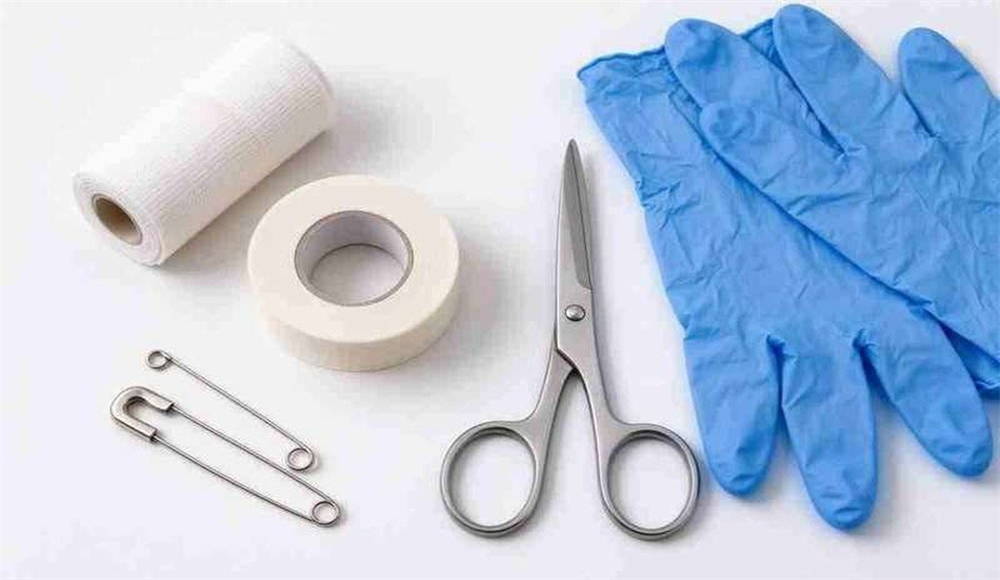
First-aid kit: The office first aid kit in each pouch contains bandages, gauze pads, antiseptic wipes, tweezers, scissors, and adhesive bandages. In a disaster scenario, your safety officer can treat cuts, stop bleeding, and dress wounds while waiting for professional medical response. For larger offices we recommend the Standard or Premium tier because more employees may require care simultaneously.
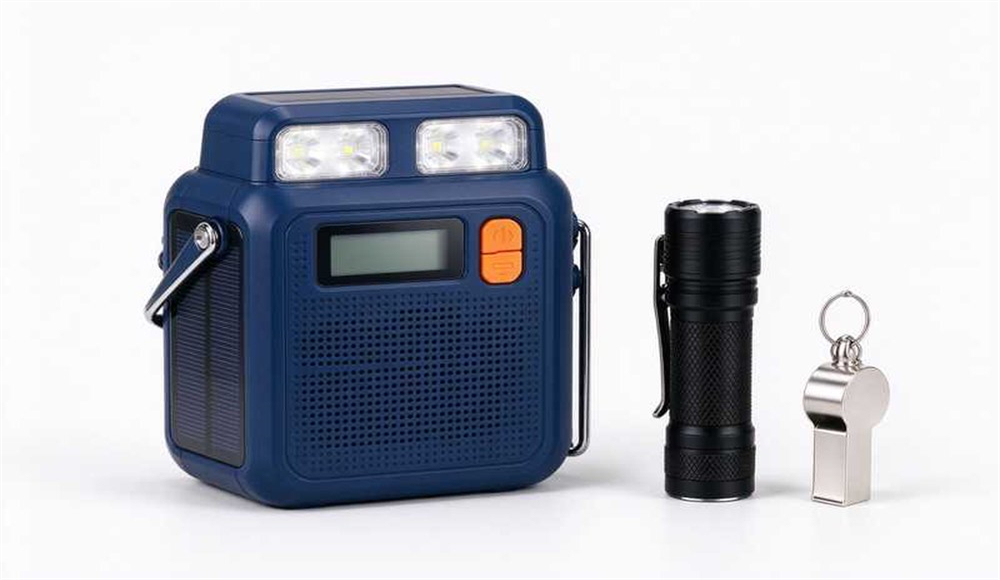
LED flashlight: We include high-brightness LED flashlights powered by AAA batteries, with a burn time of 20+ hours. During a blackout or nighttime evacuation, a flashlight is the most basic and reliable lighting tool; one per floor lets staff grab light in seconds.
Hand-crank emergency radio: When cell towers are overloaded or damaged, a hand-crank radio is the most dependable communication device. It runs without batteries, charges your phone via USB, and tunes to local AM/FM and NOAA weather broadcasts, helping coordinators track storm updates and rescue instructions.
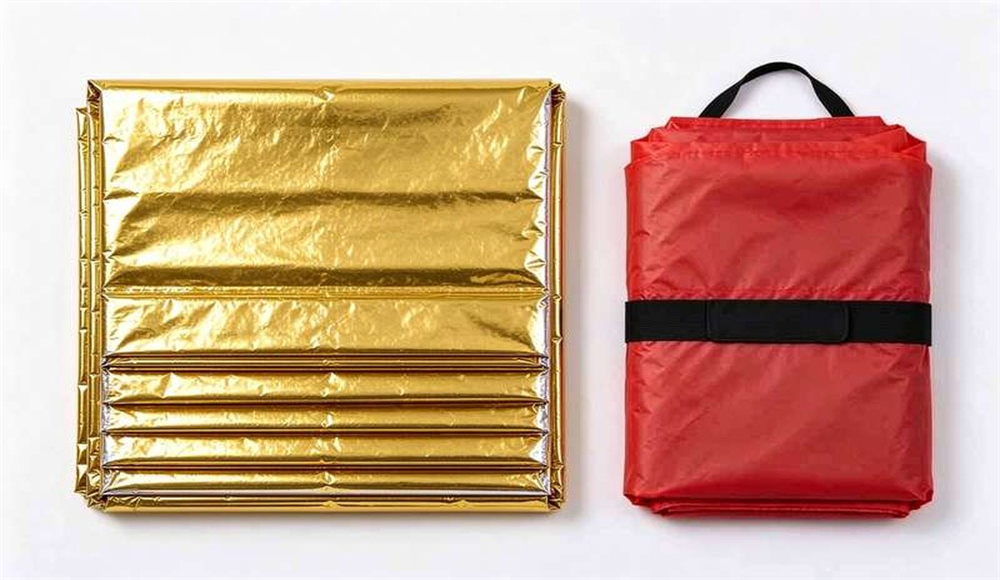
Emergency thermal blanket: Lightweight aluminum-film blankets give waiting employees warmth in an unheated stairwell or an outdoor assembly area, and can double as a sunshade during a hot-weather shelter-in-place. Because office deployments serve a floor or department rather than one person, we size the blanket count to headcount per tier, with extra pieces for cold-climate buildings.
High-decibel whistle: Wardens use whistles to direct floor evacuations and reassure colleagues when the alarm or PA system cannot be heard. The signal cuts through stairwell noise far better than shouting, which makes the whistle a standard floor-level signaling tool in multi-story commercial buildings.
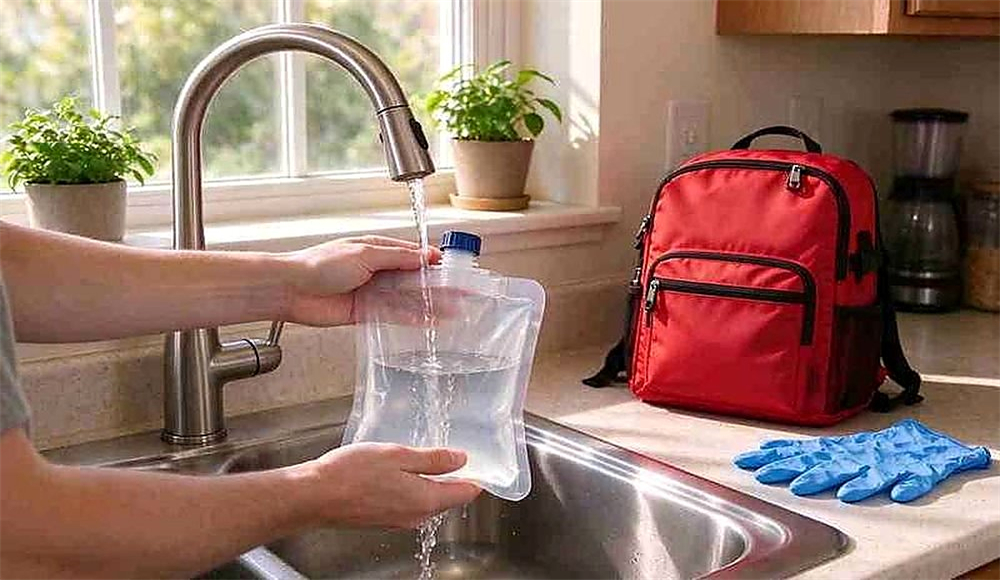
Water filter straw and pouches: After a pipe break, flood, or mains contamination, floor stations may need to rely on stored or alternate water. The filter straw treats emergency sources and the collapsible pouches carry stored drinking water for the team waiting out the outage.
Multi-tool: The Standard and Premium tiers include a compact multi-tool with pliers, blade, screwdriver, and bottle opener. In a disaster, small mechanical problems — a stuck door, a broken seal, a loose panel — often become safety hazards. A multi-tool lets wardens solve these quickly without leaving the floor.
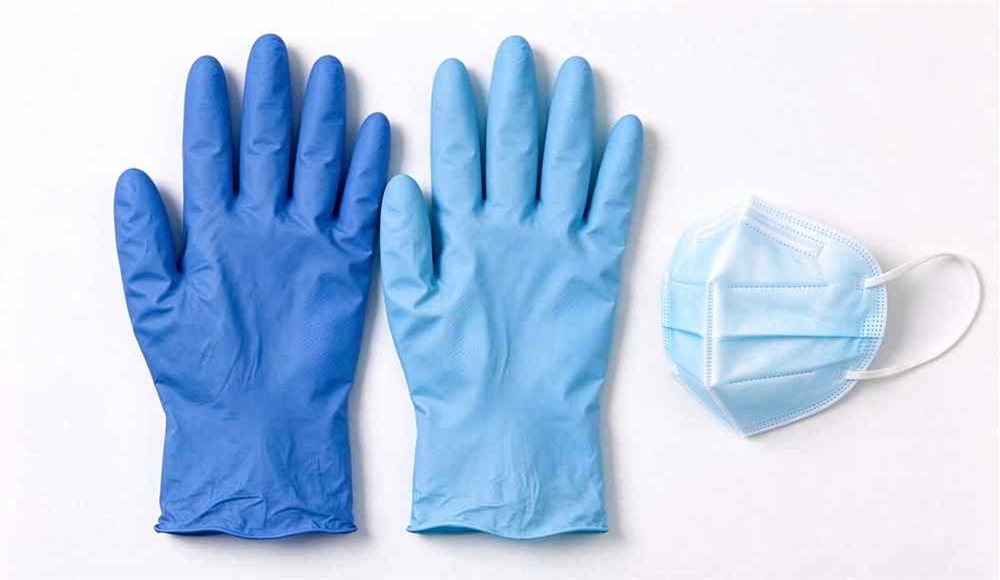
dust masks: After earthquakes, fires, or construction-related incidents, airborne dust and smoke can fill stairwells and lobbies. The Premium tier includes dust masks that protect employees from inhaling fine particles while they evacuate or shelter; we recommend at least one mask per employee for dust-prone regions.
Our OSHA office emergency kit is configured to align with federal workplace emergency expectations. We supply compliance documentation so your safety officer can demonstrate to inspectors that your building holds adequate emergency supplies. This is a practical way to reduce exposure to fines and penalties.
OSHA Standard 1910.38 requires most workplaces to maintain a written emergency action plan covering evacuation routes, alarm systems, and procedures for reporting fires and other incidents. A compliant plan also names employees who can direct evacuation and assist visitors. Our office safety kit supports this plan by holding the supplies wardens need on every floor.
The ANSI Z308.1-2015 standard defines the types and quantities of first-aid items expected for workplaces of different sizes. Kits are graded by class, with higher classes covering larger headcounts and more severe injuries.
The first-aid pouch in our range is mapped to these item lists, so your EHS team can match the class to your floor population. The office first aid kit supplies bandages, gauze, antiseptic wipes and dressings for cuts and minor injuries while professional medical help is on the way.
Inspectors and third-party auditors typically check three things: whether emergency supplies are present, whether they are accessible and labeled, and whether expiration dates are current. They also look for drill records and a designated emergency coordinator. A properly stocked 72 hour emergency kit, an inspection log, and dated drill records are the core of a passing review.
Beyond federal requirements, many global buyers also reference FEMA guidance, fire safety standards, and local fire code requirements. We can align the kit with whichever framework your audit team uses, and provide a clear contents list that maps to each standard.
When an incident occurs, follow this sequence with your workplace emergency kit:
Step 1 — Stay calm and assess the situation. Do not panic. Identify whether the threat is an earthquake, fire, flood, or lockdown, and whether the right action is shelter-in-place or evacuation.
Step 2 — Grab the office emergency kit. It should be stored in an easily accessible location such as a front-desk cabinet, a hallway closet, or a wall-mounted emergency bin on each floor.
Step 3 — Activate your company emergency plan. If evacuation is required, direct employees to the nearest stairwell and the pre-designated assembly point outside the building.
Step 4 — Distribute supplies as needed. Hand out blankets to employees showing signs of cold, bandages to anyone with a cut, and whistles to floor wardens.
Step 5 — Power on the hand-crank radio. Tune to local emergency broadcasts to track storm updates, road closures, and official shelter locations.
Step 6 — Help vulnerable employees. Check on pregnant staff, employees with disabilities, and anyone showing signs of distress or dehydration.
A 72 hour emergency kit only works if people know where it is and how to use it. Tell every employee where the kit is stored.
Teach floor wardens how to open the first-aid pouch, operate the hand-crank radio, and use the flashlight. Run a documented evacuation drill at least once per year — preferably every six months for high-risk buildings.
Designate a trained emergency coordinator for each floor or department. This person should hold a current first-aid certification and be empowered to make decisions during the first critical hours after a disaster strikes.
Training should also cover the psychological side of emergency response. Employees who have never practiced a drill often freeze or make risky choices under stress. A short, documented drill every six months reduces that freeze response dramatically. As a 72 hour emergency kit for office program, the pack works best when every department knows its role before the alarm sounds.
Cell networks often jam immediately after a major disaster. Your communication plan must not depend on smartphones alone. Assign a floor warden structure, keep a printed emergency contact list inside the kit, and use the hand-crank radio to receive official updates.
Many large offices also install a public address system so the safety coordinator can broadcast instructions across every floor. Post evacuation route maps in every hallway and near every elevator bank. When employees already know the layout, evacuation happens in minutes instead of panicked confusion.
We also recommend a documented call-tree: a list of phone numbers the safety coordinator calls in sequence to confirm that remote employees are safe after the incident. This call-tree can be printed and stored inside the office emergency kit so it never goes missing.
Buying an office emergency kit is only the first step. Proper storage and routine maintenance keep the contents usable when you need them most.
Storage location: Place the kit in a visible, unlocked spot on every floor. All employees should know exactly where it is. Keep the pathway clear so it can be grabbed in under ten seconds during an evacuation.
Temperature control: Store the kit in a cool, dry room away from direct sunlight and extreme heat. High temperatures shorten the shelf life of food, stored water, and medical supplies.
Six-month inspection: Every six months, open the kit, check expiration dates, and replace expired food, water, and first-aid consumables. Test the flashlight batteries and the hand-crank radio. Assign one named employee to own this maintenance task.
Refresh training: Reorient new hires on kit location and evacuation routes during onboarding. Run a documented drill at least annually so the plan stays fresh in everyone's memory.
Rotation schedule: Build a simple rotation calendar. Mark each inspection date on the backpack itself, and set a reminder in your facility management system. Over time, this creates an audit trail that inspectors appreciate.
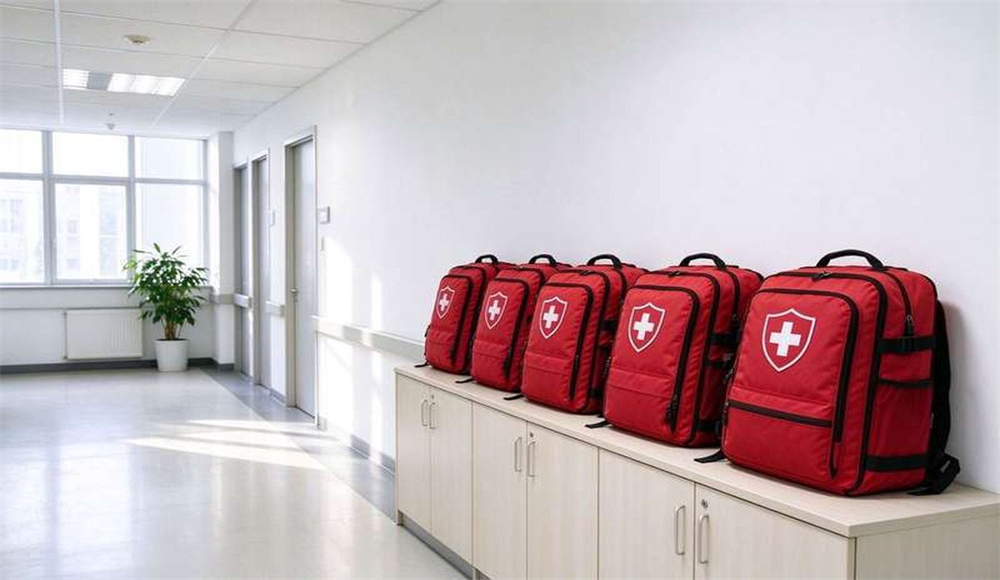
Looking at how real companies used their workplace emergency kit makes the value tangible.
Case 1 — Earthquake aftermath: After a magnitude 6.4 earthquake, an office building lost power and water. The on-site 72 hour emergency kit supplied 50 trapped employees with drinking water, thermal blankets, and LED lighting. Employees waited safely until utility crews restored service.
Case 2 — Hurricane outage: A coastal office lost power for five days after a major hurricane. The Standard-tier kit supplied 20 employees with three days of stored water, radio updates, and first-aid materials while they sheltered in place.
These cases illustrate a simple truth: preparedness converts chaos into controlled waiting. The cost of a single office emergency kit is trivial compared with the cost of an uncontrolled evacuation or a compliance violation.
Q: How many emergency kits does my office need?
A: We recommend at least one Standard-tier kit per floor, or one per 10–15 employees. For a multi-story corporate campus, place one on every floor and keep a backup at the main reception.
Q: Are your kits OSHA-compliant?
A: Our OSHA office emergency kit is configured to align with federal and ANSI emergency supply expectations. We provide documentation that helps your EHS team demonstrate readiness during inspections. Contact us for the compliance package.
Q: How often should I inspect the office emergency kit?
A: Every six months. Check expiration dates on food, water, and dressings, test batteries, and confirm that no first-aid item has been used or damaged.
Q: Where should the office emergency kit be stored?
A: In a visible, unlocked location such as a front-desk cabinet, hallway closet, or wall-mounted bin on each floor. Never store it in a basement or attic that becomes unreachable during a disaster.
Q: Should I assemble the kit myself or buy a pre-built one?
A: A pre-built 72 hour emergency kit saves time and ensures every item meets quality standards. We then customize the contents to match your floor plan, headcount, and local hazards.
Q: Can you print our company logo on the backpack?
A: Yes. We offer logo printing on the backpack exterior in one or two colors. This helps employees recognize the kit at a glance and signals to inspectors that the building has a dedicated preparedness program.
Q: What is the timing for a custom order?
A: Standard in-stock kits ship on a typical timing suited to purchase orders. Custom configurations with logo printing and modified contents take an additional preparation window, depending on order volume; the exact timing is confirmed in the written quotation.
Q: What is the difference between an office kit and a home kit?
A: An office kit is a shared asset for many employees, so it carries more first-aid materials, lighting tools, and signaling gear. A home kit serves a small family and focuses on daily living comforts. Our range is configured for dense, multi-person workplaces rather than household use.
Q: Should I train employees to use the kit?
A: Yes. A kit only works if people know where it is and how to use it. Train floor wardens to open the first-aid pouch, operate the hand-crank radio, and use the flashlight, then run a documented drill at least once a year.
Q: What documentation do you provide for audits?
A: Each order includes a printed contents list that maps items to relevant standards, plus expiration dates for consumables. We can also provide inspection record templates so your EHS team can log every six-month check and rotation.
Q: Do you offer bulk pricing for large orders?
A: Yes. Multi-floor and multi-building orders are priced by tier and volume. Tell us your headcount, floor count, and target delivery date, and we will share a tiered quote for the whole rollout.
Q: Are these kits suitable for construction sites?
A: Construction and higher-risk sites can add protective gloves, goggles and other protective items alongside the general first-aid and lighting supplies, selected against the site hazards.
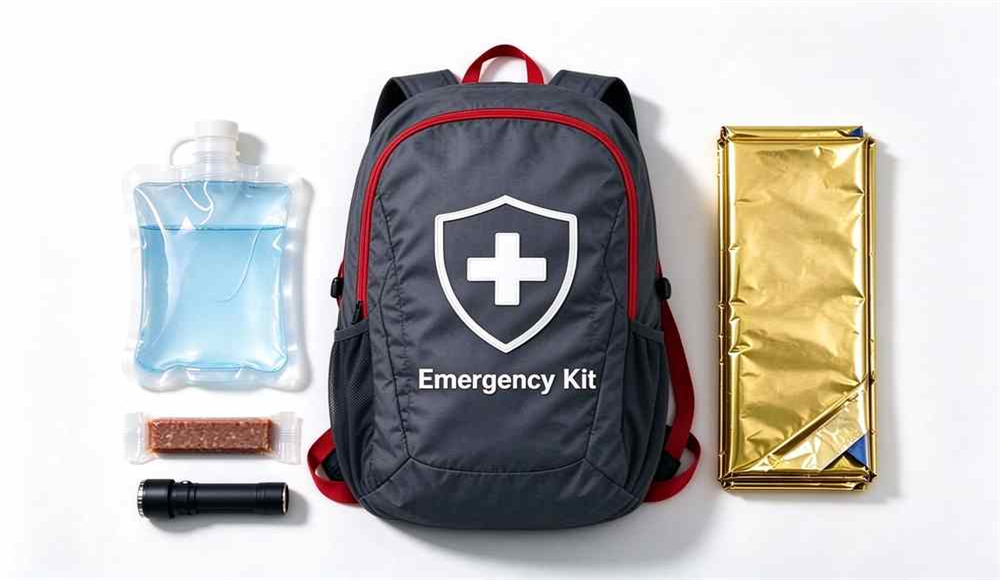
A small startup loft or branch office with 1–10 people needs a compact but complete kit. The Basic tier (9 pieces, 20 L backpack, about 1.5 kg, 30×20×15 cm) covers the essentials in a 600D Oxford pack.
Because small offices rarely have a dedicated medical room, we also recommend mounting a wall first-aid station near the kitchen. Write a simple one-page emergency plan: name the floor warden, mark the evacuation route, and run a drill once a year.
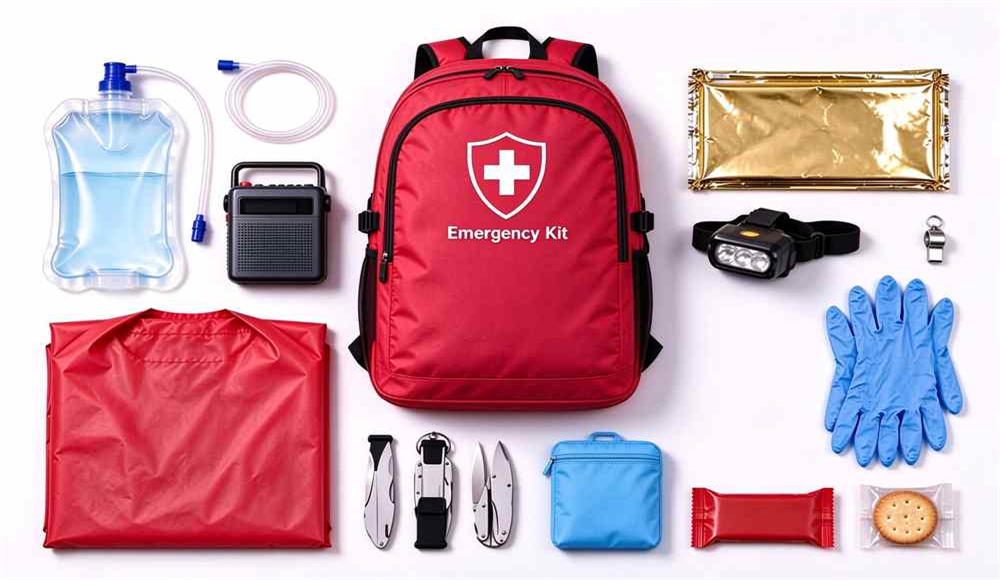
A mid-size office with 10–50 employees needs the Standard tier (12 pieces, 25 L backpack, about 2.5 kg, 35×25×18 cm). It adds the headlamp, multi-tool card and non-slip gloves, a first-aid pouch, two blankets and two water pouches. Place one Standard kit on each occupied floor and keep a larger first-aid station near reception.
For this size, build a more detailed plan: assign a warden per department, identify the external assembly point, and run a drill every six months. Document attendance so the plan stays audit-ready.
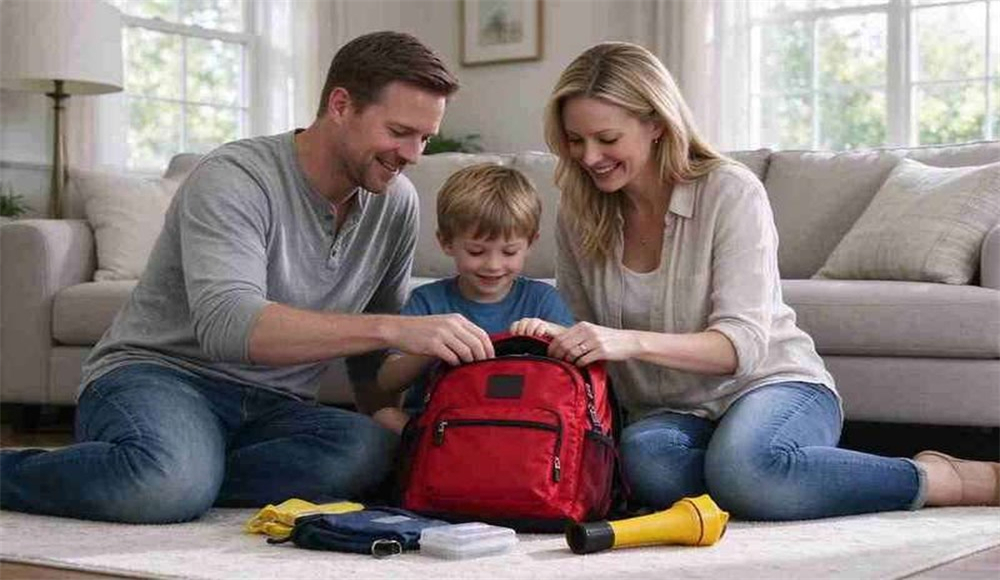
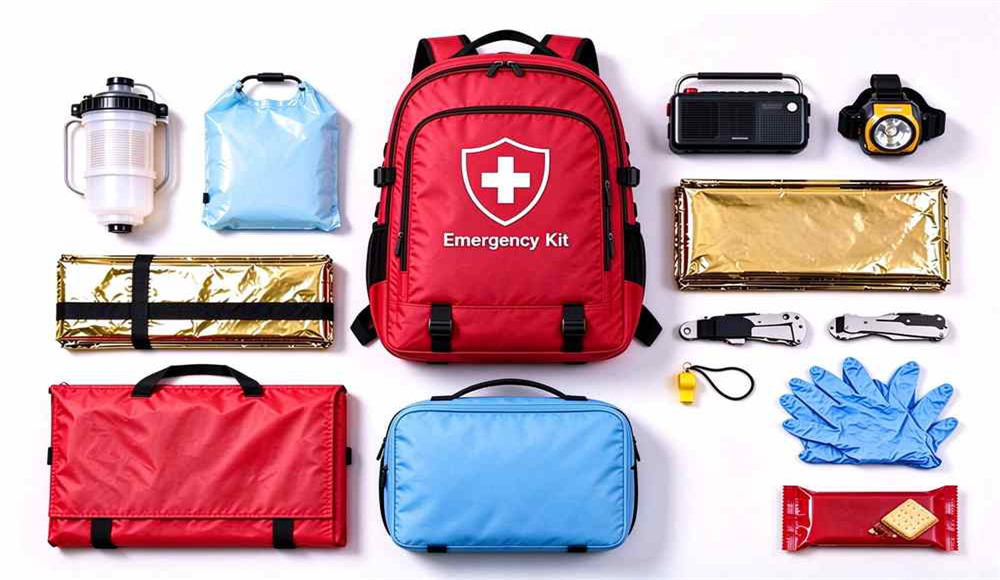
A large corporate campus with 50+ employees should use the Premium tier (15 pieces, 30 L backpack, about 3.5 kg, 40×30×20 cm) in a 1000D Oxford pack with PVC coating. It adds dust masks, wet wipes, a 7-day pill organizer, a sleeping-bag-style blanket and a filter pouch, with a first-aid pouch and NOAA weather radio. Place one Premium kit on every floor and in every major department, and consider a dedicated on-site medical room.
Large offices need a very detailed plan: wardens per floor and department, a confirmed assembly point far from the building, and drills every six months. Coordinate with building security and local emergency management where applicable.
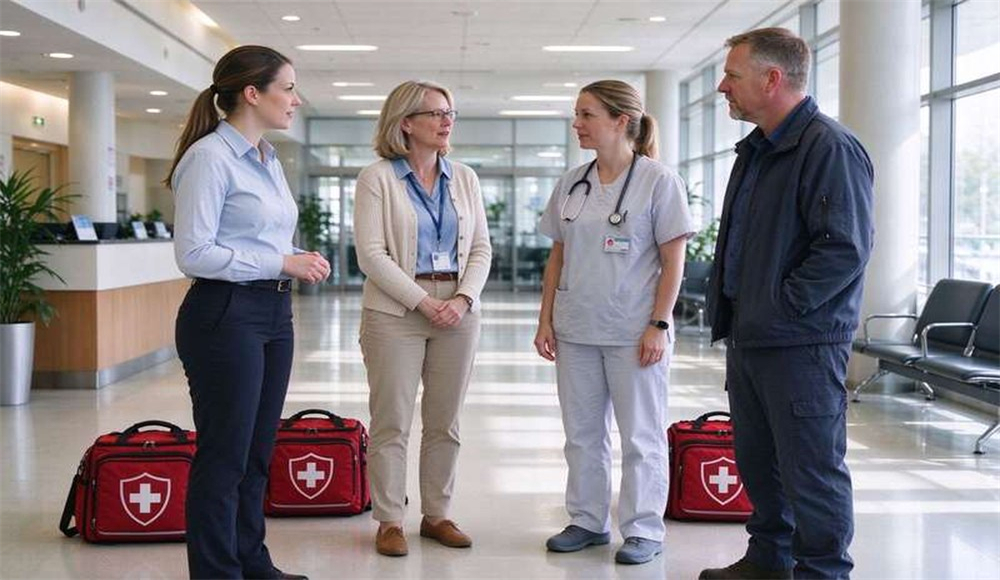
The right number of kits depends on your headcount, the number of floors, and how departments are spread across the building. The table below matches common office sizes to a recommended tier, quantity per floor, storage location, and inspection rhythm, so EHS managers can plan a compliant rollout without guessing.
Use this table as a starting point, then adjust for local hazards and building layout. A floor with a server room or chemical storage should add a small dedicated pouch near that room. Whichever tier you choose, keep one named owner per kit and record every inspection date so the program stays audit-ready.
Office size
Recommended tier
Kits per floor
Storage location
Inspection frequency
1–10 people (startup loft, branch office)
Basic
1 per office
Reception cabinet or hallway closet
Every 6 months
10–50 people (mid-size floor)
Standard
1 per occupied floor
Wall-mounted bin near stairwell
Every 6 months
50+ people (corporate campus, multi-floor)
Premium
1 per floor plus 1 backup at reception
Central facilities stock plus floor bins
Every 3 months
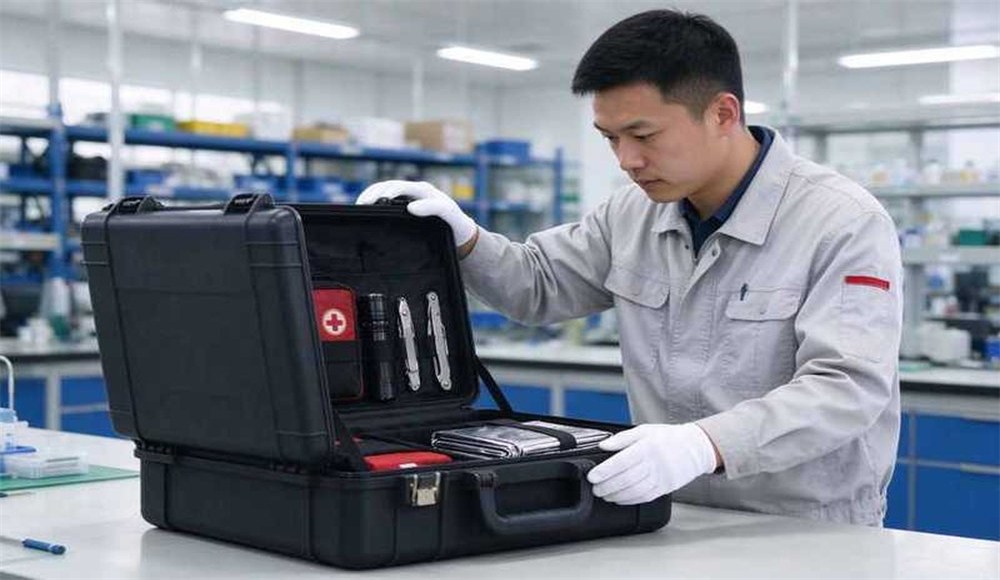
Not every office is the same. Different industries face different risks, and your office emergency kit should reflect that.
Tech and software offices: Open-plan floors with many laptops and servers need a kit that supports fast evacuation. dust masks and thermal blankets matter more than heavy tools. A hand-crank radio that also charges phones is especially valuable.
Financial and legal offices: These environments handle sensitive documents and high-pressure work. Add a fire-resistant document pouch and a printed emergency contact list. Employees should also know how to lock file cabinets before evacuating.
Healthcare-adjacent offices: Clinics, dental offices, and medical administration buildings need expanded first-aid supplies, gloves, and biohazard bags. We can upgrade the first-aid pouch to meet clinical expectations.
Industrial and manufacturing offices: Office staff inside a manufacturing facility need hearing protection, safety goggles, and a more robust multi-tool. Coordinate the kit with the plant's existing lockout/tagout procedures.
A workplace evacuation kit is only one piece of preparedness. You also need a written evacuation plan. Here are the essentials.
Evacuation route maps: Post a route map in every conference room, hallway, and elevator lobby. Mark the nearest two exits from each zone so employees have a backup route if one stairwell is blocked.
Exit signage: Confirm that every exit has illuminated signage and that exit pathways are never blocked by stored boxes, furniture, or AV equipment.
Assembly point: Identify one or two assembly points at a safe distance from the building. The point should be far enough away that falling debris or glass cannot reach waiting employees.
Roll call: At the assembly point, department wardens take attendance and report missing headcount to the incident commander. This is how rescue teams know who is still inside.
Special-needs employees: Have a written plan to assist employees with disabilities, pregnant staff, or anyone using mobility aids. Pre-identify volunteer buddies for these employees before disaster strikes.
Together, the written plan and the workplace evacuation kit let everyone leave safely and be accounted for afterward.
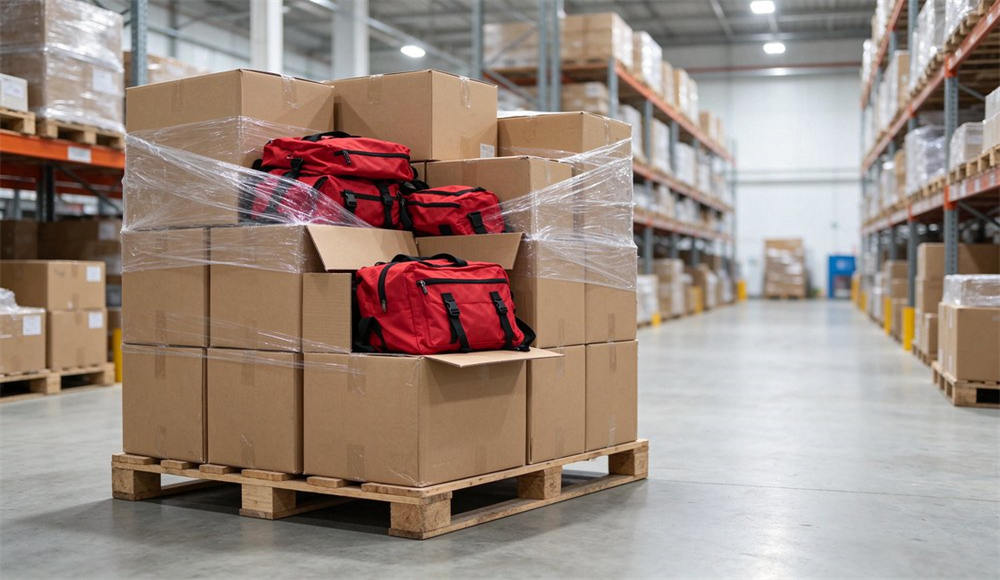
Supplies and plans are useless without trained people. Invest in regular office safety kit training for every employee, so each person knows how the kit supports the response plan.
New-hire onboarding: Every new employee should learn the evacuation route, the location of the nearest 72 hour emergency kit, and the emergency contact list during day one.
Scheduled drills: Run a documented evacuation drill every six months. Record the time to evacuate, the attendance count, and any issues discovered so the plan can be improved.
First-aid training: Certify a subset of employees in CPR and first aid. These are the people who will open the office first aid kit and treat injuries during the first critical hours.
Fire extinguisher training: Teach employees how to operate a portable fire extinguisher and when to evacuate instead of fighting a small fire.
Beyond safety, regular preparedness training builds team cohesion. Employees feel more confident that the company looks after them, which improves retention and morale.
An office emergency kit is not just a home kit dropped into a backpack. It is designed for a shared, dense workplace.
Shared supplies: In an office, supplies are shared across the team rather than assigned to one person. The kit is stored centrally — at reception, in a hallway closet, or on each floor — and distributed by wardens during an incident.
Evacuation efficiency: In a fire or earthquake, speed matters. The kit therefore includes signaling tools (whistles, route maps, glow markers) that help wardens move dozens of employees out of a multi-story building in minutes.
Special equipment: Offices contain servers, printers, lab equipment, and hazardous chemicals. Your emergency plan should include procedures to shut down critical systems and isolate chemical zones before evacuation.
Employee training: Unlike a home kit, which one family uses, an office kit depends on a trained warden network. Without training, even the best 72 hour emergency kit sits unused in a closet during a real crisis.
Many facility managers ask whether an office emergency kit is worth the budget. The data says yes.
According to emergency management research, every dollar invested in preparedness saves roughly four dollars in post-disaster recovery costs. The Standard tier suits a small 10-person office; the per-unit figure is quoted by configuration and volume. Without a stocked kit, the same office could lose far more in downtime, damaged equipment, and lost productivity after a disaster.
The American Red Cross also reports that a significant share of small businesses never reopen after a major disaster. Preparedness is not a luxury — it is one of the cheapest forms of business continuity insurance.
To overcome budget hesitation, start small. Buy the Basic tier first, then upgrade to Standard and Premium as your budget allows. Many governments and local chambers also offer preparedness grants that can offset part of the cost.
When an office group spans regions, the hand-crank radio in each workplace kit must match local broadcast allocations. Here is what EHS buyers typically request.
United States offices: The radio tunes to local AM/FM broadcasts and the NOAA Weather Radio band, so floor wardens receive official storm and emergency alerts.
European Union offices: The radio receives local AM/FM and weather-band broadcasts; EU-bound devices can be supplied with the conformity paperwork your audit expects.
Other regions: For Middle Eastern, Southeast Asian, or Latin American deployments, we configure the receiver to the local allocation used in each destination country. Tell us your office locations, and we will match the band settings per region.
"We ordered workplace emergency kits for several regional offices. The quality exceeded expectations, and the custom logo printing on the backpack looked professional. Our safety team found the contents easy to inventory and refresh."
"Our EHS manager wanted a 72 hour emergency kit that satisfied internal audit. The compliance documentation and clear labeling made the review straightforward. Recommend for any multi-floor office."
When you buy an office emergency kit, you are buying trust — the trust that every item inside will actually work when an employee needs it. That is why we treat quality assurance as the core of our product, not as an afterthought.
For workplace deployments, each component is selected for repeated floor use and verified before packing: lighting units are checked for output and battery condition, blankets for seal integrity, first-aid pouches against ANSI item lists, and pouches for a clearly printed expiry date.
We provide a clear contents list with each order, so your EHS team can audit the kit without unpacking it. The list maps each item to the relevant standard — OSHA, ANSI, or local fire code — so compliance reviewers can see at a glance why each piece is included.
Modern workplaces are not confined to a single office building. Hybrid employees split time between home, co-working spaces, and remote sites. A forward-thinking workplace emergency kit program should extend beyond the corporate office.
For remote workers, we offer a compact home-office emergency kit sized for one or two people. It includes a mini first-aid pouch, an LED flashlight, a hand-crank USB charger, two thermal blankets, a whistle, and a collapsible water pouch. This kit fits under a home desk or in a car trunk.
For field staff — sales reps, auditors, service technicians — we recommend adding a car emergency pouch with a reflective vest, jumper cable, and compact tool roll. This ensures that no matter where your employees work, they have a basic 72 hour emergency kit within reach.
An office kit is not a set-it-and-forget-it purchase. Consumables, batteries, and dressings expire on different cycles, so EHS teams run rotation alongside the six-month inspection.
Office rotation practice: Check expiry dates on the water filter pouches and first-aid dressings during each six-month floor inspection. Replace alkaline flashlight batteries at the two-year mark regardless of visible function, because leaking cells can damage the unit.
Inspect the crank handle and USB port on the radio annually. Blankets and whistles have no fixed expiry but are checked for tears or cracks each cycle.
Item-by-item shelf-life intervals for water pouches, dressings, batteries, and food are covered in the general contents checklist. Print the rotation calendar, attach it inside each backpack, and log every inspection so the record is ready for an audit.
If you are buying an office emergency kit for the first time, use this checklist to compare options objectively:
Does the supplier provide a written contents list mapped to federal / ANSI standards?
Are expiration dates printed on every consumable, with the rotation owner named on each floor?
Is the radio tuned to the correct band for each office region you cover?
Can backpack color and logo be customized, with labels readable under low light?
Are tiered sizes offered for small, mid-size, and large floors, with a per-floor deployment layout?
Is the timing documented in writing for both stock and custom orders?
Are replacement and rotation consumables supported after the initial order?
Can shipments consolidate across regional offices to simplify receiving?
Use this checklist in your next RFP. It removes subjective preference from the decision and focuses on the factors that actually matter during a real emergency.
Procurement teams often repeat the same avoidable mistakes. Here are the most common ones.
Mistake 1 — Choosing only on unit price. A bargain kit may cut corners on lighting, blanket quality, or pouch and filter freshness, exactly the items that have to work on a dark floor after hours.
Mistake 2 — Placing a single kit for the whole building. A bag locked in the ground-floor closet cannot help colleagues trapped on the 12th floor; deployment has to follow floors and departments.
Mistake 3 — Leaving the warden network untrained. A bag no one can locate or open is no better than no kit; every deployed kit needs a trained owner and a documented drill.
Mistake 4 — Matching contents to the wrong risk. An earthquake-focused setup may lack wildfire masks; a hurricane-focused one may lack flood gear. Map the kit to your region's actual hazard list.
Mistake 5 — Treating purchase as completion. Expired pouches and leaking batteries accumulate in kits that are never reopened; a calendar reminder and named owner prevent that.
Supplies alone do not protect a building; staff have to know where the kit is and how to use it. The approach below is built around the warden network EHS teams already run.
Assign roles ahead of time: Name a lead safety coordinator, floor and department wardens, a timekeeper, and a note-taker. Each warden carries the department headcount and knows which exit serves their zone.
Run the drill from the building alarm or PA: Wardens walk their floor, escorting colleagues to the nearest stairwell; employees with mobility aids are paired with a buddy before they move.
Take roll call outside: Department wardens account for their people and report any missing headcount to the lead coordinator; the note-taker records total evacuation time.
Debrief the wardens: Review which stairwell was slowest, whether anyone missed the alarm, and whether a designated person grabbed the floor kit. Record three improvements for the next cycle.
Keep the audit trail: File drill date, attendance, evacuation time, and debrief notes. This is the record inspectors request, and it protects the company if a real incident occurs.
A 72 hour emergency kit is the first line of a larger business continuity plan. The kit keeps people safe; the plan keeps the company operating.
After the immediate crisis, your continuity plan should address: which critical systems need to be restored first, which employees can work from home, how customers will be notified, and when the office can reopen. The workplace emergency kit ensures that employees are physically safe during the first 72 hours, which is the prerequisite for any later recovery work.
Companies that invest in both a business disaster kit and a written continuity plan recover faster after disasters. They also tend to have lower insurance premiums and stronger employee retention, because staff feel that the company takes their safety seriously.
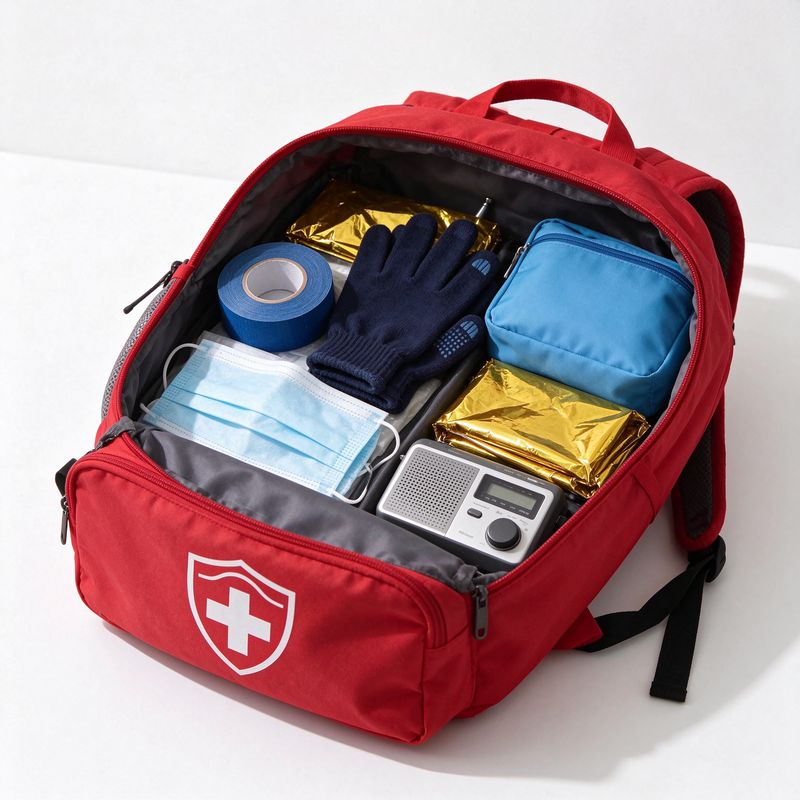
When your office emergency kit arrives, you will receive a printed contents list. Reading it correctly helps your EHS team audit the kit and plan rotations.
Each line on the list shows the item name, the quantity, the unit, and the relevant standard. For example, "First-aid pouch, 1 unit, ANSI Z308.1" tells you that the pouch meets the American National Standards Institute first-aid standard.
The list also prints the expiration dates of consumable items, so you can build your rotation calendar without opening the backpack.
We recommend laminating the contents list and taping it to the inside of the kit flap. Every six months, when you inspect the kit, you can compare the physical items against the list and note any discrepancies.
Buyers who are new to workplace emergency preparedness often ask whether they need a separate kit for the reception desk, the mail room, and the server room.
Our general guidance is: one Standard kit per occupied floor, plus one compact kit near reception for immediate access. If your building has a server room or chemical storage, add a small dedicated pouch with gloves and goggles near that door.
For multi-building campuses, we also recommend a central stock kit at the facilities office. This backup kit holds replacement batteries, extra first-aid supplies, and additional thermal blankets. It lets you restock floor-level kits between scheduled rotations.
One final note: many buyers ask whether they should also store bottled water inside the office emergency kit. Bottled water is heavy and takes up space.
Instead, store sealed jugs of water near each floor's emergency station, and keep the filter straw and water pouches inside the backpack. This keeps the kit light enough to carry while ensuring safe drinking water for the full 72 hours.
If you have a specific question about your floor plan, headcount, or local hazard map, our team is happy to review your situation and recommend the right tier and configuration for your building.
We specialize in workplace emergency preparedness and understand the needs of EHS managers, facility directors, and procurement teams. Our kits are built to international standards and shipped to buyers across North America, Europe, the Middle East, and Asia.
We offer three tiers — Basic, Standard, and Premium — so you can match the kit to your headcount and budget. If you need special items such as satellite messengers, dust masks, or department-specific supplies, we customize the contents. Our team replies to every inquiry promptly.
If you are looking for a reliable office emergency kit for your building, contact us today for a free quotation. Tell us your headcount, floor plan, and local hazard map, and we will recommend the right tier.
A well-chosen 72 hour emergency kit for office is one of the most cost-effective workplace safety investments you can make. It supports emergency preparedness across your team and keeps the right supplies on hand when disaster strikes.
Whether you need an office safety kit for a single floor or a business disaster kit for a full corporate campus, our lineup is built to last. Every floor with a stocked kit can respond confidently to an earthquake, hurricane, or prolonged blackout.

Key Takeaways
Previous :
Earthquake Emergency Kit | Bulk Seismic Preparedness PacksNext :
72 Hour Emergency Kit for Family Complete Home Preparedness Factory Customized Red Cross Disaster relief Med Kit Bag With Multi-purpose compass
GREAT DESIGN - Comfortable design is perfect for all uses and for carrying a wide variety of tools and equipment. You'll find that, whatever you're looking to carry, the YRF Custom Oxford Material Multi Functional Camouflage Tactical Waist Bags is the perfect choice.
 Medical Care Stockpile Metal wire saw Card tool Survival Aid Kit with 16 Pcs Safety Kit
GREAT DESIGN - Comfortable design is perfect for all uses and for carrying a wide variety of tools and equipment. You'll find that, whatever you're looking to carry, the YRF Molle Tactical First Aid Kits Medical Bag Tablets is the perfect choice.
 Outdoor Medical Care Disaster relief First Aid Kit Empty Pouch And Ice Pack Emergency Tool
GREAT DESIGN - Comfortable design is perfect for all uses and for carrying a wide variety of tools and equipment. You'll find that, whatever you're looking to carry, the YRF Mini First Aid Kit Bags And Pouches is the perfect choice.
 High Quality Camping Emergency Face Mask Survival First Aid Kit for Institutional Donation
GREAT DESIGN - Comfortable design is perfect for all uses and for carrying a wide variety of tools and equipment. You'll find that, whatever you're looking to carry, the YRF Outdoor Camping Emergency Kits Tactical First Aid is the perfect choice.
 ICRC Supplies Fluorescent stick first aid medical bags 600d Nylon Emergency Safety Tools Kit
GREAT DESIGN - Comfortable design is perfect for all uses and for carrying a wide variety of tools and equipment. You'll find that, whatever you're looking to carry, the YRF Hunting Survival First Aid Kit Bag Molle Tactical is the perfect choice.
 Hot Selling Governmental Institutions List Descender Firefighting Tools Empty Pull Rod First Aid Kit
GREAT DESIGN - Comfortable design is perfect for all uses and for carrying a wide variety of tools and equipment. You'll find that, whatever you're looking to carry, the YRF Tactical Complete First Aid Kit is the perfect choice.
Copyright © Custom Disaster - Relief Bedding: Tents, Sleeping Bags, Blankets All Rights Reserved
the professional team to service !


