


This portable CO2 pneumatic line thrower is built for flood, river and marine rescue. It fires buoyant projectiles carrying rescue rope across wide water gaps. Rugged reinforced structure supports repeated missions. Supplied as a full kit with rope, CO2 cartridges and protective aluminum case for rescue teams and government procurement.
Note: Price for reference only. Exact price based on quantity, size, weight and custom details.
model no. :
LT-04Brand:
YRFmarket price :
$300sale price :
$158.9price range :
30-100/$158.9 100-500/$158.5Color :
Multiple Colorsport of dispatch :
Guangdong/GuangzhouPayment :
TT, Paypal, Western Unionmin order :
30original region :
Made in ChinaLead Time :
5-15days
The aiming position beside the forested river keeps the pneumatic line thrower level while the operator reads the wind and the drop zone. Under 3kg, this portable unit lets one rescuer move fast along the bank and launch from a standing or kneeling stance. For teams that answer flood calls on foot, the light frame means the launcher is already in hand when they reach the scene, not back at the truck. One rescuer can manage the whole kit without a second helper.

 |

|
Kneeling on the pebble shoal gives a low, stable firing base for the pneumatic line thrower, ideal when the bank is uneven or slick after rain. The operator braces the stock and lets the buoyant line carry across the shallow water to the far side. This low posture also keeps the shooter below the wind line, so the rope flies straighter over the first half of the gap. The low stance also keeps the shooter below the wind line on open banks.
Two rescuers check the portable pneumatic line thrower on a sand field before the drill starts, one inspecting the cartridge and the other running the rope back through the pack. This pre-launch check catches a wet rope or a loose fitting before it matters. Rescue units build this habit into every shift, because a portable thrower only helps if it fires clean on the first pull. A clean pre-check makes the first launch reliable in wet conditions.

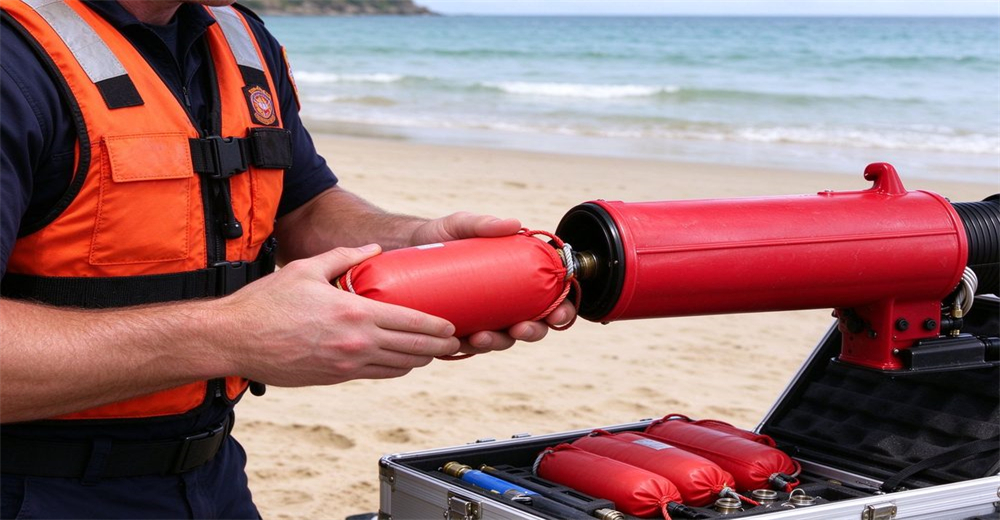
On the sandy beach with the blue ocean behind, the pneumatic line thrower shows its coastal role beyond river floods. Surf rescue teams and harbor units use the same launcher for swimmer lines and boat-to-shore connections, where the floating rope rides on salt water without sinking. One kit therefore covers river, lake, harbor and open-coast scenarios for the same budget. The same unit backs up the main boat when the deck is crowded.
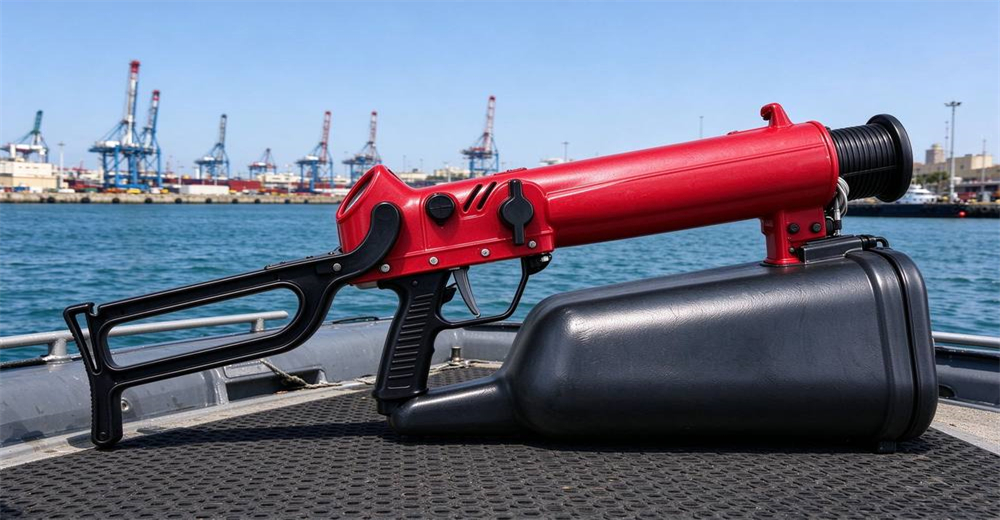
Staged on a work boat deck, the portable pneumatic line thrower fires a line across the harbor during professional flood operations. The compact case stores beside the helm, so the crew can launch within seconds of reaching the casualty. Harbor pilots and marine keep this unit on board for man-overboard and transfer-line work, where speed matters more than range. The same unit backs up the main boat when the deck is crowded.


What Is the Portable Pneumatic Line Thrower?
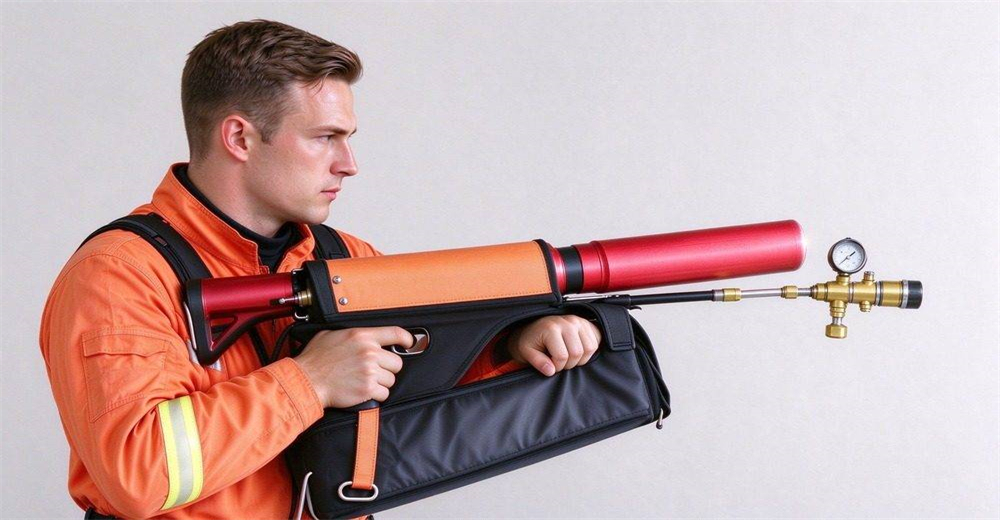
The portable thrower is a slim tube-style backpack portable line throwerhandheld life line thrower.Where the Korean unit looks like a backpack rig with an external air tank, this
Backpack portable line thrower is a single compact unit under 3kg.
The gas source , 33g and 16g CO2 cartridges , mounts directly on the launcher body.No hose, no external cylinder, no separate air bank.For teams that have outgrown throw bag rescue at close range but cannot carry a full air-bank rig, this is the ideal middle ground.
The lower 7MPa pressure is the key difference.
Higher pressure units (20MPa / 200bar) require breathing air compressors and external scuba tanks.
This 7MPa system uses disposable CO2 cartridges.
Which means a rescue team can walk in without any air support equipment.
The tradeoff is slightly shorter range than the 20MPa units , but 170m land and 120m water covers most river and flood scenarios.
This pneumatic line thrower is built for teams that need mobility over maximum range.
Water on foot patrol, flood relief teams wading through debris, and hydrology station staff who hike to remote river crossings , they carry this backpack portable line thrower in a shoulder bag, not on their back like a bulky rig.
As a handheld life line thrower, it deploys in under 60 seconds , no setup, no air bank, just charge and fire.
Why 7MPa Instead of 20MPa?
This is the question every buyer asks.
The Korean backpack unit runs at 20MPa (200bar) using breathing air from an external scuba tank.
It reaches 126m on land.
And 79m over water.
This portable model runs at 7MPa using built-in CO2 cartridges.
It reaches 170m on land and 120m over water.
How does a lower-pressure system throw farther?
The answer is in the projectile design.
The 20MPa Korean unit fires a heavy shell with an auto-inflating lifebuoy.
The shell alone weighs over 1.5kg.
The high pressure is needed to push.
That heavy projectile.
The portable 7MPa unit fires a lighter projectile with a thinner 3mm rope.
Less weight means less drag means more distance.
The tradeoff: the 3mm rope is thinner, so it is for line transfer and rescue, not for heavy loads like anchor hook descent.This makes the portable pneumatic line thrower
The right choice for river and flood work, where you need range and mobility rather than heavy anchor loads.
Think of it this way: a 20MPa system is a fire hose.
It pushes a lot of volume at high pressure.
A 7MPa CO2 system is an air rifle.
It uses a small, precise gas charge to fire a light projectile accurately.
Both are rescue tools.
They just solve different problems.
For a team that already owns breathing air compressors and scuba tanks, the 20MPa Korean unit makes sense.
For a team that hikes in with nothing but what they carry on their back, the 7MPa portable unit is the only option.
You cannot carry a 6.8L carbon fiber tank through knee-deep flood water and debris.

Technical Parameters
|
Parameter |
Value |
Unit |
Note |
|
Model |
PTQ7.0-Y150S100 |
, |
Portable slim tube |
|
Working pressure |
7.0 |
MPa |
CO2 gas source |
|
Land range |
170 |
meters |
Optimal angle |
|
Water range |
120 |
meters |
Open water |
|
Launcher weight |
≤ 3 |
kg |
Complete body |
|
Rope diameter |
3 |
mm |
Floating rescue line |
|
Rope length |
120 |
meters |
Per spool |
|
Rope breaking strength |
≥ 2000 |
N |
Minimum |
|
CO2 cartridge 33g |
8 |
pcs |
Main shots |
|
CO2 cartridge 16g |
4 |
pcs |
Lifebuoy inflation |
|
Standard |
GB/T 27906-2011 |
China national standard |
|
About the 3mm Rope
The portable unit uses a 3mm floating rescue rope, 120 meters long, minimum breaking strength 2000N.
This is thinner than the Korean unit's 6mm rope.
Why go thinner?
Thin rope flies farther.
A 3mm rope has less drag and less weight.
It cuts through wind better and lands.
where you aim.
The tradeoff is load capacity: 2000N is enough for one-person water rescue , holding a swimmer, pulling a line across.
It is not enough for anchor hook loads of 330kg.
If you need to pull a heavy load or support a rope rescue descent, see the American gun with dual ropes and titanium anchor hook.
The rope is polyester floating line, designed to stay on the water surface rather than sink.
Color is high-visibility orange or red, so rescuers can spot it from the bank or a boat.
After use, rinse with fresh water and dry before rewinding onto the spool.
About the CO2 Cartridges
The kit ships with eight 33g CO2 cartridges and four 16g cartridges.
The 33g cartridges power the main launching shots.
Each 33g cartridge supports roughly 5-8 launches depending on temperature.
In warm weather, closer to 8 shots.
In cold weather below 10°C, expect 4-5 shots per cartridge , that is why we include eight, not four.
The 16g cartridges are for the auto-inflating lifebuoy projectile.
When the shell hits water, a water-soluble tablet dissolves and triggers the 16g CO2, inflating the life ring in under 5 seconds with over 8kg buoyancy.
After use, replace the 16g cartridge and tablet to reset the shell.
CO2 cartridges are single-use consumables.
They are not refillable.
For repeat orders, we supply 33g and 16g cartridges by the box.
Store them in a cool, dry place, away from direct sunlight.
Shelf life is several years if kept sealed.
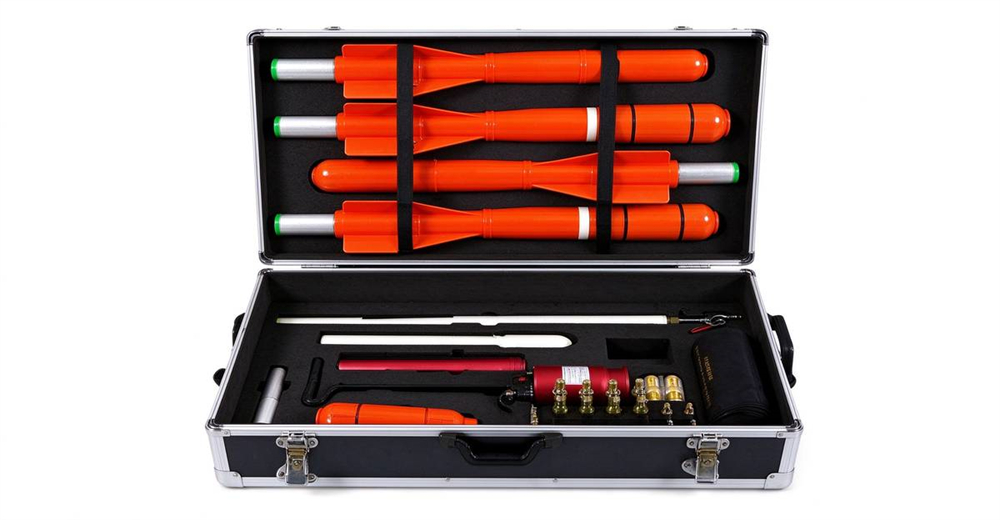
What's in the Box
The portable kit ships in a shoulder carry bag.
The pneumatic line thrower is ready on every flood response vehicle.
A training video covers the pneumatic line thrower step by step.
Everything fits in one compact package , no separate air tank to strap on.
The 33g cartridges power the main launching shots.
The 16g cartridges inflate the auto-lifebuoy projectile when it hits water.
After use, swap cartridges and recover shells for the next shot.
#
Item
Qty
Purpose
1
Launcher body
1 pc
7MPa portable unit
2
Rope spool 3mm
120m
Floating rescue line
3
CO2 cartridge 33g
8 pcs
Launching gas source
4
CO2 cartridge 16g
4 pcs
Lifebuoy inflation
5
Projectile shells
2 pcs
Reusable casings
6
Shoulder carry bag
1 pc
Transport and storage

Auto-Inflating Lifebuoy
Each projectile shell contains a folded life ring, a 16g CO2 cartridge and a water-soluble tablet.
When the shell hits the water, the tablet dissolves in seconds, triggering the CO2 valve.
The life ring inflates in under 5 seconds with over 8kg buoyancy.
This is what makes the system effective: you fire the line, and the moment it hits the water, a flotation device pops up right next to the person in the water.
They do not need to swim to grab a rope.
The rope comes to them, and the life ring is already floating.
After use, the shell is recovered, the spent 16g cartridge is replaced with a new one, a fresh water-soluble tablet is installed, and the life ring is re-folded into the shell.
The life ring itself is reusable , only the CO2 cartridge and tablet are single-use.
Without the auto-inflating lifebuoy, you could fire a plain floating rope.
The person in the water grabs the rope and the team pulls them in.
The lifebuoy adds flotation right at the landing point, which helps tired or injured swimmers who cannot hold onto a bare rope.
The pneumatic line thrower carries the rescue line where boats cannot go.
Throwing Distance: 170m Land / 120m Water
The spec sheet says 170 meters on land and 120 meters over water.
The pneumatic line thrower keeps working in rain and spray.
In real field use, expect 10-15% less depending on wind, angle and rope condition.
This pneumatic line thrower sits between the Korean 126m backpack unit and the 230m long range series.
It reaches farther than the Korean model but stays light enough for one-person carry.
The 120m water range covers most mid-size rivers and flood channels.
Realistic planning numbers:
Narrow river crossing: 40-80m , easy
Open flood channel: 80-120m , within range
Lake rescue: 60-100m , practical
Building line transfer: 50-90m , accurate
For 200m+ open water, see the 230m long range thrower.
For ship-to-ship with anchor hook, see the American gun style.
Factors That Affect Real Range
The spec sheet numbers are achieved under ideal conditions: calm wind, 45-degree angle, dry rope, room temperature.
In the field, expect less.
Here is what reduces range and by how much:
Crosswind: A 15km/h sidewind pushes the light 3mm rope several meters off target. Aim into the wind by a small offset.
Wet rope: A rope that has been soaked from a previous shot drags more. Rewind with a dry rope for maximum range.
Temperature: CO2 pressure drops in cold weather. Below 10C, expect 10-15% less range. Below freezing, performance drops further.
Launch angle: 45 degrees is optimal. Firing too flat wastes distance. Firing too high sends the projectile straight up.
CO2 cartridge condition: A partially used or heat-exposed cartridge will not give full power. Always start with a fresh cartridge.
For procurement specifications, we recommend writing "minimum 100m water range" rather than the headline 120m.
This gives a realistic margin for variable field conditions.
Where the Portable Pneumatic Line Thrower Is Used
Flood Relief and Water Rescue
During urban flooding, victims on rooftops or in cars cut off by water need a line thrown to them
Routine maintenance of the pneumatic line thrower takes under five minutes.
On a work boat deck, the pneumatic line thrower fires a line across open water in seconds.
Rescue teams wade through debris where boats cannot reach.
This portable unit goes where the team goes , no vehicle, no air tank, no setup time.
When someone falls into a river, the officer pulls it out, charges with a fresh CO2 cartridge, and fires from the bank.
No need to call a boat or walk to a rescue vehicle.
Hydrology and Industrial Safety
Hydrology stations on remote rivers need a rescue line available at all times.
This unit stores in a waterproof bag on site.
When a worker slips into the water, a colleague fires the line from the bank without needing any support equipment.
Bridge and Overpass Rescue
Bridges over rivers, highways overpasses, and pedestrian overpasses are common rescue scenarios.
If someone falls from a bridge into the river below.
Rescuers on the bridge deck can fire a line straight down.
The portable unit is light enough to carry up stairs or by elevator.
The 120m water range covers most bridge-to-water vertical distances plus horizontal drift.
On a bridge, the key advantage is height.
Firing from above gives gravity a hand , the projectile does not need to fight upward trajectory.
A line fired from a 30-meter bridge deck reaches the water faster than a line fired from the bank.
The rope path is shorter and more direct.
Swimming Areas and Beach Safety
Designated swimming areas, reservoir beaches and water parks need rescue equipment within reach.
This unit sits on a rack at the lifeguard station.
When a swimmer gets in trouble beyond 30 meters , where a hand-thrown bag cannot reach , the lifeguard grabs this and fires.
No need to launch a boat.
Training and Drill
Fire academies and rescue training centers use this unit for basic line thrower certification.
The low 7MPa system is safer for new trainees , less recoil, simpler operation, no external air tank to manage.
Students learn the fundamentals: inspect, load, aim, fire, recover.
Once they master this, they can move up to the higher-pressure units.
Is this the right unit? Best for teams that hike to the rescue scene and need a one-person backpack portable line thrower. If you ship from a vehicle with an external air bank, the Korean 126m backpack unit offers more power per charge. For ship-to-ship or anchor hook, see the American gun.
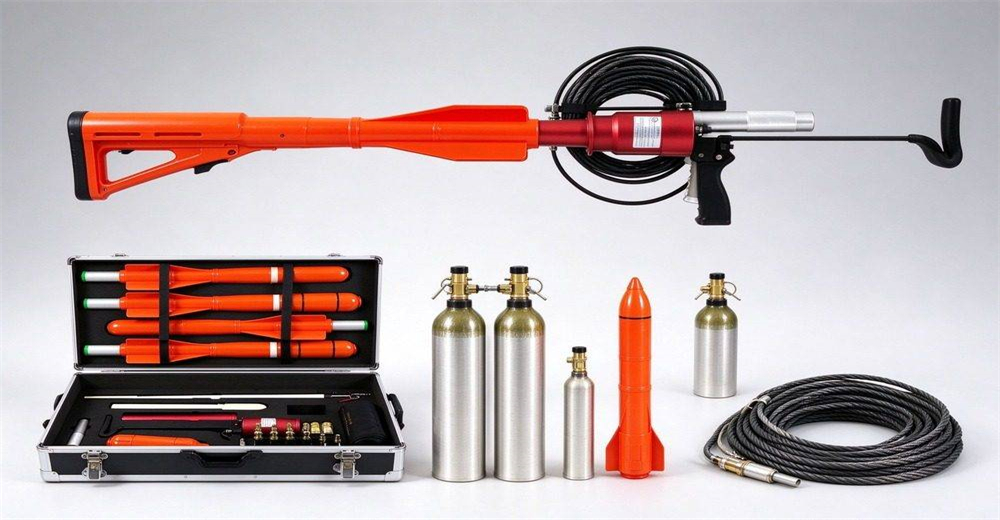
How to Use
A quick dry of the rope keeps the pneumatic line thrower ready for the next call.
One rescuer alone can carry and operate this pneumatic line thrower, which keeps total weight under 3kg.
Step 1: Inspect
Check launcher body, safety switch, rope spool and CO2 cartridges.
Confirm the projectile shell is seated properly.
Step 2: Load CO2 and Projectile
Screw in a 33g CO2 cartridge.
Load the projectile shell with rope attached.
Flip the safety switch to ready.
Step 3: Aim and Fire
Shoulder or hold the launcher.
Aim above the target at about 45 degrees.
Squeeze the trigger.
The projectile flies 3-5 seconds.
Never point at people.
Step 4: Reset
Recover the shell.
Swap empty CO2 cartridge for a fresh one.
Rewind rope.
Ready for the next shot.
For the auto-lifebuoy shell: after the life ring has been used, retrieve it from the water.
Open the shell, remove the spent 16g cartridge, install a new 16g cartridge and a new water-soluble tablet.
Re-fold the life ring into the shell.
The ring itself is reusable for years.
Training is required before live use.
Practice with a low-power cartridge first.
Two-person operation recommended: one fires, one manages the rope.
New operators should practice at least five dry runs and three live shots before deploying on a real rescue call.
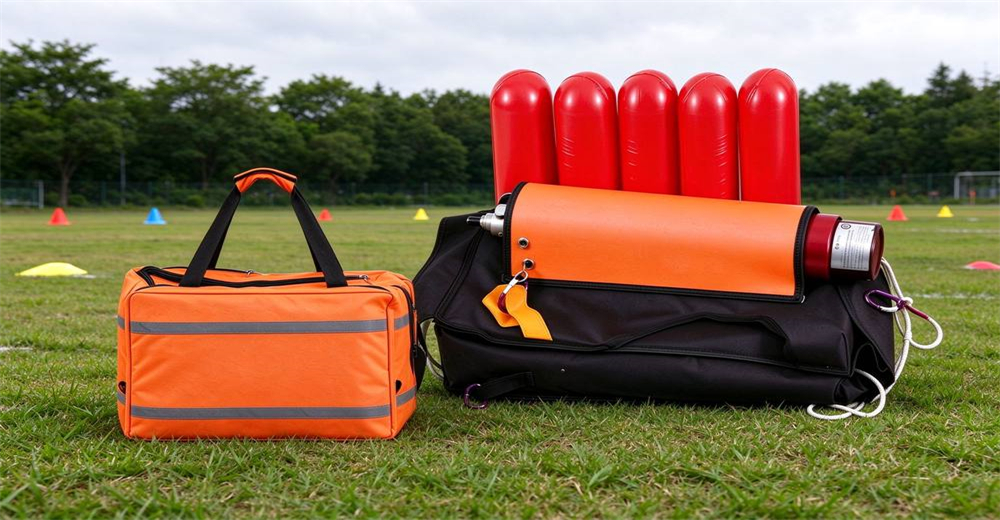
Maintenance Schedule
The launcher body is a durable component.
The seals, rope and CO2 cartridges are consumables.
Store the unit in a cool, dry place with no CO2 cartridges installed during long-term storage.
Install fresh cartridges before deployment.
Item
Portable 170m
Korean 126m
Long Range 230m
Weight
≤3kg
<3.5kg
7.5kg
Pressure
7MPa CO2
20MPa breathing air
8.5MPa
Land range
170m
126m
200-230m
Water range
120m
79m
130-210m
Gas source
Built-in CO2
External 200bar tank
Built-in 1.5L
Best for
Hiking, flood, patrol
Vehicle-based river rescue
Open water offshore
Carry
Shoulder bag
Backpack
Hard case
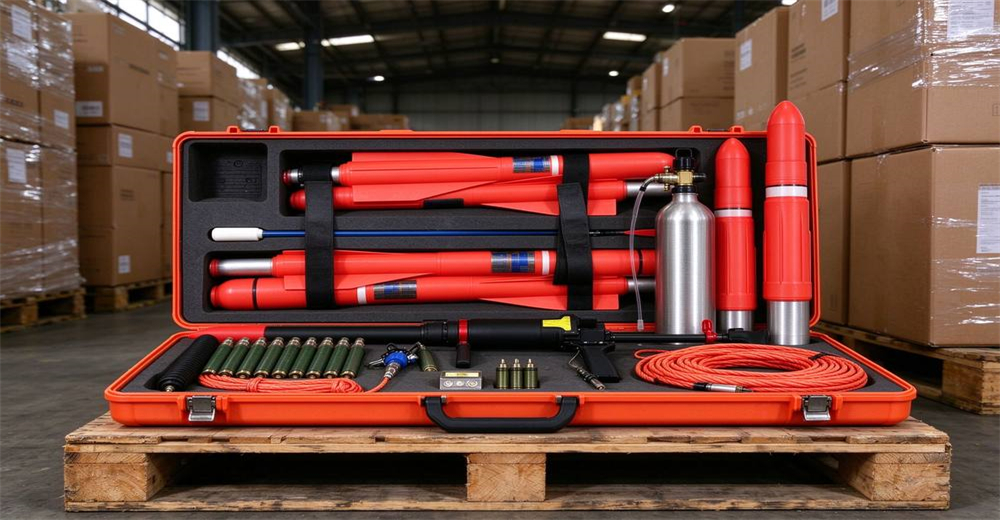
What About Hand-Thrown Throw Bags?
Every water rescue team already carries throw bags , those floating rope bags you throw by hand.
Why add a pneumatic thrower for throw bag rescue scenarios at close range?
A throw bag reaches 15-25 meters.A strong rescuer might hit 30 meters on a good day.This handheld life line thrower reaches 120 meters over water , four to six times farther.
The throw bag is still the right tool for close-range work: a swimmer 10 meters from the bank, a child in shallow water.
But when the gap is 50, 80.
Or 100 meters, a throw bag is simply not enough.
Throw bags also require the rescuer to stand right at the water edge.
Slipping on wet rocks, being pulled into the current by the weight of a swimmer , these are real risks.
A pneumatic thrower fires from several meters back from the bank, keeping the rescuer safe.
Best practice: carry both.
Throw bag for close work, portable thrower for long range.
Many departments do exactly that.
Rope Care and Storage
The 3mm floating rope is the consumable that gets the most use.
After each deployment, rinse it with fresh water to remove mud, sand and river chemicals. fresh water to remove mud, sand and river chemicals.
Dry it before rewinding onto the spool. onto the spool.
Storing a wet rope in the bag will develop mildew and lose strength over time. bag will develop mildew and lose strength over time.
Examine the line before each use.
Check for frayed sections, melted spots from friction, or discoloration. from friction, or discoloration.
If any of these appear, replace the rope.
A line that snaps at the wrong moment is a serious safety failure. the wrong moment is a serious safety failure.
Spare 120m rope spools are available separately.
Store the rope spool in the shoulder bag with the launcher, not in direct sunlight.
UV light weakens polyester rope over time.
A dry, shaded storage space extends rope life significantly. rope life significantly.
Why Choose This Portable Pneumatic Line Thrower?
If your team walks to the rescue scene , hikes, wades, patrols on foot , this backpack portable line thrower
Teams on foot pick this portable rescue thrower for its one-man portability.
No external air tank means you carry everything in one shoulder bag.
The 7MPa CO2 system means you deploy in 60 seconds without any support equipment.
The 170m land and 120m water range covers most river, flood and industrial waterfront scenarios.
If your team operates from a vehicle with breathing air support, the Korean 126m backpack unit offers more shots per fill.
If you need ship-to-ship anchor hook capability, the American gun style with titanium hook is the right choice.
If you need 200m+ open water range, the long range 230m series reaches farther.
We help you pick the right model.
Tell us your typical scenario , river width, water condition, how your team gets to the site , and we recommend the configuration.
We would rather you buy the right unit once than the wrong one twice.
Who Buys This Portable Model?
Based on our export experience, the portable 7MPa unit is most commonly ordered by: water and river patrol teams who work on foot; flood relief and civil defense organizations.
that deploy to remote flood zones; hydrology and water authority stations on remote rivers; industrial safety teams at dams, reservoirs and water treatment plants; and training centers.
That need a lightweight trainer for new rescue operators.
Less common buyers: tugboat and ship crews (they prefer the American gun with anchor hook); offshore oil rigs (they need the long range 230m unit).
And mountain rescue units (they often choose the anchor hook model for cliff work)
If you are not sure which category fits, email us your scenario and we will recommend.
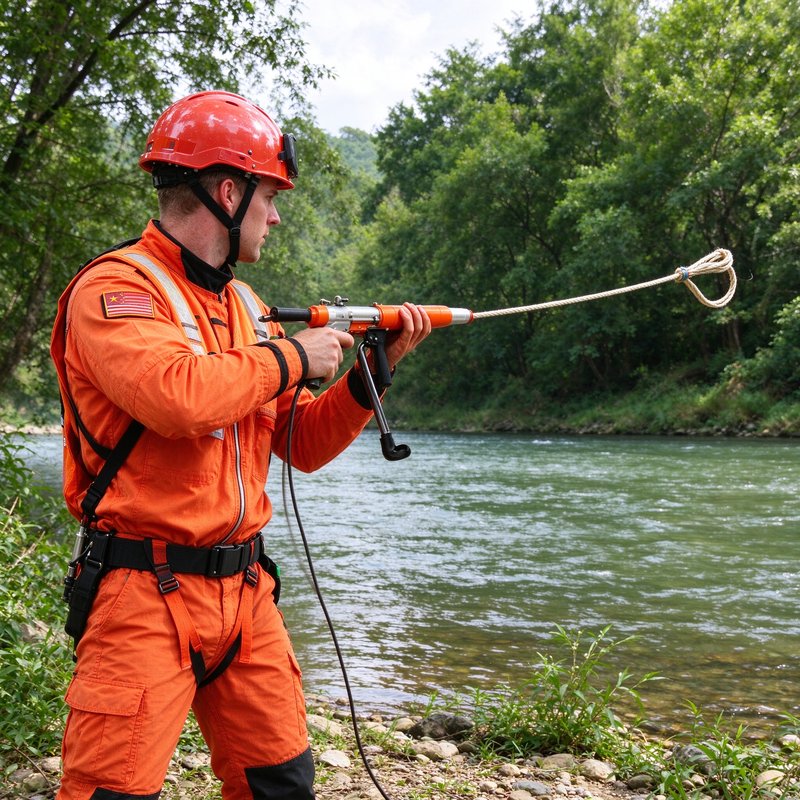
Packaging and Shipping for This Portable Pneumatic Line Thrower
Each unit packs into a shoulder carry bag, then into an export carton.
The kit ships with a spare CO2 set, so the pneumatic line thrower stays ready after one long day.
Carton approx.
45x35x30cm, gross weight approx.
6-8kg including CO2 cartridges.
Sample orders: express delivery 7-10 days.
Bulk orders: sea freight, FOB/CIF/EXW accepted.
CO2 cartridges: Class 2.2 dangerous goods, shipped separately.
Consumables available for repeat orders: CO2 cartridges (33g/16g), spare rope spools, replacement shells and seals.
Sample orders: We recommend ordering one sample unit first for your team to test in real water conditions.
Run a few practice shots, see how the CO2 system feels, check the weight on a long hike.
If it fits your team, then order bulk.
This approach avoids buying 20 units that nobody knows how to use.
Custom options: OEM logo on the launcher body and shoulder bag is available for bulk orders.
Pantone color matching for the bag.
Custom rope colors.
Custom packaging with your company branding.
All custom work confirmed per contract.
Safety Warnings
This pneumatic line thrower fires a projectile at significant velocity.
Every pneumatic line thrower is function-tested before it leaves the factory.
Store the pneumatic line thrower with the cylinder removed and the valve closed.
Treat it with respect even though it uses CO2 rather than gunpowder.
Never point the launcher at people, animals or property.
Keep the safety switch engaged until ready to fire.
Do not exceed the recommended CO2 cartridge type. Use only 33g for launching and 16g for lifebuoy.
Wear eye protection during practice shots.
Bystanders should stay behind the firing position.
Do not disassemble the launcher body. It is not user-serviceable internally.
Store with no CO2 cartridge installed during long-term storage.
Proper training is required before live rescue use.
This is not a toy.
Untrained operation can cause injury.
Teams should conduct at least a half-day familiarization drill before deploying in real rescue scenarios.
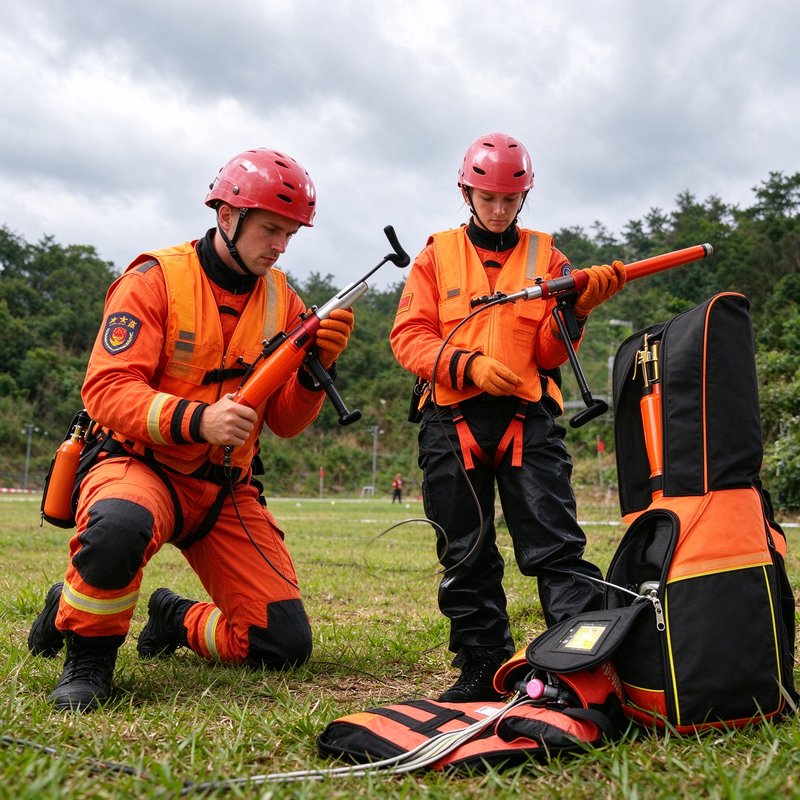
What Happens When You Pull the Trigger?
When the operator pulls the trigger, a valve opens.
And CO2 gas rushes from the cartridge into the launching chamber.
The expanding gas pushes the projectile forward down the barrel.
The projectile weighs about 1kg.
And leaves the barrel at around 60 meters per second.
The rope pays out behind it from the spool.
The entire flight from barrel to landing takes 3 to 5 seconds, depending on range and angle.
The recoil on this 7MPa portable unit is manageable for one person.
It is not a rifle , it is more like a large paintball marker.
A firm two-handed hold and proper stance are enough.
New operators should expect a surprise on the first shot.
Practice with low power first.
For teams that have outgrown throw bag rescue but cannot carry a full air-bank rig, this backpack portable line thrower fills the gap.
As a handheld life line thrower, it weighs under 3kg and deploys in 60 seconds , no compressor, no external cylinder, just a fresh CO2 cartridge.
FAQ About This Portable Pneumatic Line Thrower
This unit meets GB/T 27906-2011.
Every pneumatic line thrower ships with a protective carry case.
The portable pneumatic line thrower is CE-compliant hardware for water rescue teams, and the full kit fits standard rescue storage.
Product spec sheets available for reference.
As a China supplier, we export worldwide.
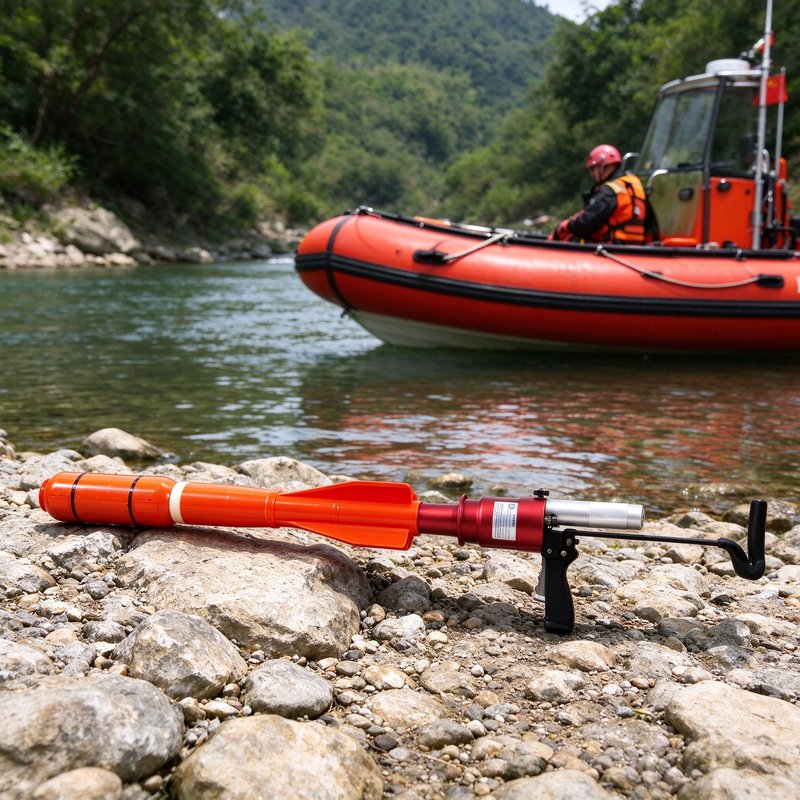
How much does it weigh?
Under 3kg launcher body.
Easy to carry by one person on foot patrol or hiking to remote river crossings.
What is the real range?
Spec is 170m land / 120m water.
Real range depends on angle, wind and rope condition.
Allow for the lower number in open water. open water.
What pressure does it use?
7MPa working pressure from built-in CO2 cartridges.
No external breathing air tank needed , that is the main advantage of this portable design.
Is it certified for rescue use?
Meets GB/T 27906-2011 national standard.
Product spec sheets on request for your tender file. tender file.
Contact us with specific requirements.
What is the MOQ?
Flexible MOQ.
Sample orders welcome for evaluation.
Bulk pricing confirmed per contract.
Can you print our logo?
Yes.
OEM logo on launcher body and shoulder bag for bulk orders.
Pantone color matching available.
What comes in the standard package?
Launcher body, 3mm rope 120m, 33g CO2 x8, 16g CO2 x4, projectile shells and shoulder carry bag.
How many shots per CO2 cartridge?
One 33g cartridge supports multiple launches depending on pressure and projectile type.
Field teams carry 8 cartridges for extended operations.

Can I use it below zero?
Operating range approximately -10C to 45C.
In freezing conditions, confirm cartridges are not frozen before use.
What shipping terms do you accept?
FOB, CIF and EXW.
CO2 cartridges ship separately as Class 2.2 dangerous goods.
Main unit goes by normal freight.
How does this compare to the Korean backpack unit?
Korean uses 200bar external breathing air tank, weighs 3.5kg, reaches 79m water.
This portable uses built-in CO2, weighs under 3kg, reaches 120m water.
Choose based on whether you carry an air tank or not.
What if I need anchor hook capability?
This portable model does not include anchor hook.
For ship-to-ship anchor hook rescue, see the American gun style with titanium 330kg hook.
How much does a portable pneumatic line thrower cost?
Price depends on quantity, configuration and OEM options.
What documents do you provide for tender?
Spec sheet, packing list and commercial invoice are provided as standard.
For GB/T related documents, email your requirements and we we confirm what can be provided.
Do I need breathing air certification to use it?
No.
This unit uses disposable CO2 cartridges, not breathing air cylinders.
No special certification needed to operate, though training on the launcher is required.
How long does a CO2 cartridge last in storage?
Several years if kept sealed in a cool, dry place away from direct sunlight.
Check the cartridge for damage before use.
Replace any that show corrosion or dents.
Can I buy CO2 cartridges locally?
Standard 33g and 16g CO2 cartridges are common in the beverage and paintball industry.
However, for rescue-grade consistency, we recommend sourcing from us to ensure proper pressure and quality.
What happens if a CO2 cartridge freezes?
CO2 pressure drops in cold weather.
Below -10°C, performance drops significantly.
Store cartridges above freezing and allow them to warm to room temperature before use.
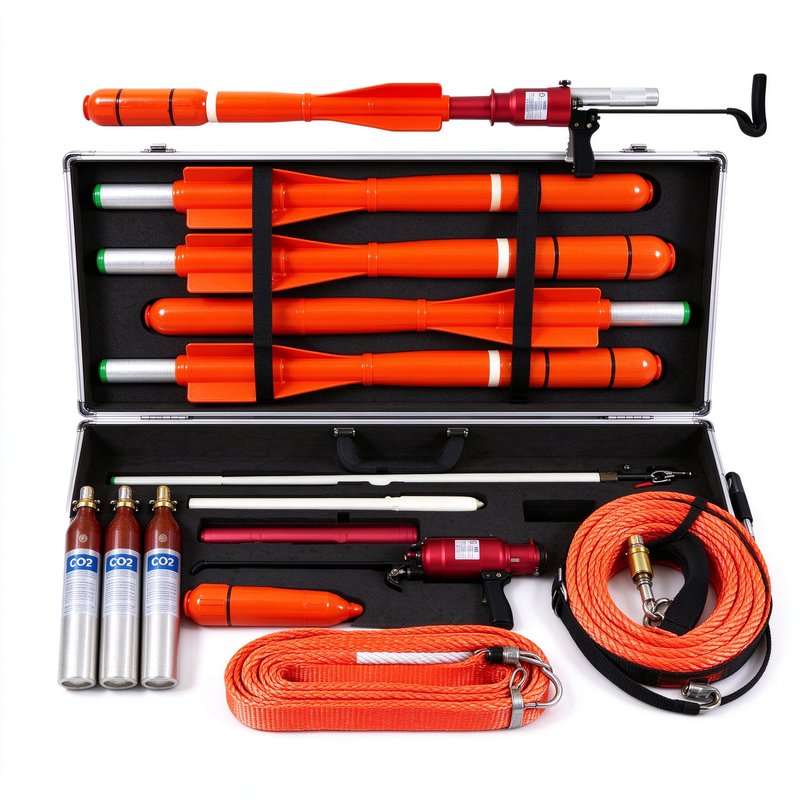
Is the rope replaceable?
Yes.
The 3mm rope spool is removable.
Order spare 120m rope spools separately.
After use, inspect the rope for fraying and replace if worn.
How does this compare to the long range 230m unit?
This portable unit is under 3kg with built-in CO2, reaches 120m water.
The long range unit is 7.5kg with built-in 1.5L tank, reaches 130-210m water.
Choose based on whether you need to hike in or ship from a vehicle.
Not sure if this fits?
Under 80m river rescue: throw bag may be enough. 80-120m on foot: this portable unit. 200m+ open water: long range 230m. Ship-to-ship: American gun. For throw bag rescue gaps longer than 30 meters, this unit fills the gap.
How long does training take?
Most teams spend half a day on familiarization: inspect, load, fire from a safe distance, recover, reset.
Live rescue use requires regular practice , at least monthly drills to maintain proficiency.
Does this meet SOLAS requirements?
SOLAS requires a line throwing appliance on vessels.
This unit meets GB/T 27906-2011.
For specific SOLAS compliance documentation, email us your requirements and we confirm what can be provided.
Previous :
Lightweight Pneumatic Line Thrower with Folding Hook for FireNext :
Anchor Hook Pneumatic Line Thrower for Flood Rescue Professional Rescue Launcher, Aluminum Alloy, Fire Fighting Essential
This orange-yellow professional rescue launcher is made of aviation-grade aluminum alloy, with maximum working pressure of 200bar, throwing distance of 150-230 meters on land and 80-210 meters on water. Certified by the National Fire Equipment Quality Standard, it reaches maximum initial velocity of 60m/s. It provides efficient solutions for fire teams, flood control, and water rescue operations, saving lives in critical moments as essential equipment for all rescue teams.
 Customized Life-saving Thrower, High Strength, Long-range Rescue
This professional life-saving thrower is made of high-strength composite materials, with a throwing distance of 50 meters and a load-bearing capacity of 150kg, achieving a 99% rescue success rate. Its orange-yellow design ensures high visibility on water, equipped with non-slip handle and high-strength rescue rope. Specifically designed for flood control, water rescue and emergency disaster relief, it is essential equipment for fire departments, maritime rescue units, water rescue teams and flood control forces, participating in over 200 flood rescue missions annually.
 High-Pressure Pneumatic Rope Launcher, Rescue Special, 120m Range
This high-pressure pneumatic rope launcher uses compressed air as power source, with projection distance ≥80 meters on water and ≥110 meters on land, equipped with 120-meter high-strength rescue rope. The main body weighs less than 3.5kg, offers simple and quick operation, and features a spark-free design ensuring safe use in flammable environments. The accompanying auto-inflating life ring inflates within 5 seconds with buoyancy >8kg. Ideal for flood disaster relief, water rescue, maritime rescue and other complex scenarios, it's essential equipment for emergency rescue departments.
 Wholesale Pneumatic Line Thrower: 100m–640m Rescue Rope Launcher
This pneumatic line thrower delivers reliable long‑distance rope deployment for swift‑water, flood, maritime and ice rescue scenarios. Multiple configurations cover short, long and ultra‑long throwing distances. Complete kits include launcher, projectiles, rescue ropes, CO2 cylinders and protective carry case. Quick setup, simple operation for fire, coast guard and emergency rescue teams worldwide. Note: Price for reference only. Exact price based on quantity, size, weight and custom details.
 Korean Style Pneumatic Rescue Thrower PTQ20-Y100S70 | 20 MPa ≥100 m Land / ≥70 m Water
Korean Style Pneumatic Rescue Thrower PTQ20-Y100S70, 20 MPa shoulder-fired launcher. ≥100m land range and ≥70m water range, equipped with auto inflating lifebuoy head and 2000N high tensile rope. Complies with GB/T 27906-2011. Complete aluminum hard case kit. Support bulk wholesale, OEM custom logo for fire, coast guard and flood rescue teams. Note: Price for reference only. Exact price based on quantity, size, weight and custom details.
 American Style Anchor Hook Rescue Thrower | PTQ20-Y125S100 & PTQ7-Y150S110Q55
American Style Anchor Hook Pneumatic Rescue Thrower, frame-mounted design with recoil buffer. Equipped with heavy-duty anchor claw for high-rise, cliff and maritime rescue. Delivers long-distance rope deployment for swiftwater, urban flood and offshore emergency rescue. Complete kit with launcher, projectiles, rope and protective case. Support bulk wholesale and OEM customization for fire and coast guard teams. Note: Price for reference only. Exact price based on quantity, size, weight and custom details.
Copyright © Custom Disaster - Relief Bedding: Tents, Sleeping Bags, Blankets All Rights Reserved
the professional team to service !


